Introduction
When national chain restaurants were mandated to display calorie counts on their menus in 2017, public health advocates celebrated a major victory. The logic seemed ironclad: arm consumers with transparent nutritional data, and they will naturally moderate their portions, bypass high-calorie traps, and align their diets with daily energy requirements.
Yet, years later, the data tells a sobering story. Calorie labeling has proven largely ineffective, shaving off an average of a statistically insignificant eight calories per meal. Even more counterintuitive is a fascinating glitch in human psychology: the introduction of a healthy option on a menu does not nudge people toward moderation. Instead, it frequently drives them to make significantly worse choices.
This deep dive explores the mechanics of "vicarious goal fulfillment," the psychology of self-licensing, the "health halo" effect, and what these cognitive biases mean for the future of public health policy and personal nutrition.
1. Main Facts: The Paradox of Choice and the Failure of Transparency
To understand why menus featuring salads and fruit cups can paradoxically lead to higher calorie consumption, researchers have examined the behavioral economics of dining out.
When fast-food giants like McDonald’s voluntarily began publishing calorie counts nationally in 2012—following localized mandates in places like New York City that showed zero behavioral impact—analysts quickly realized something vital. Calorie labeling successfully boosts public perceptions of a restaurant’s concern for consumer well-being, but it does little to deter a craving for a Big Mac.
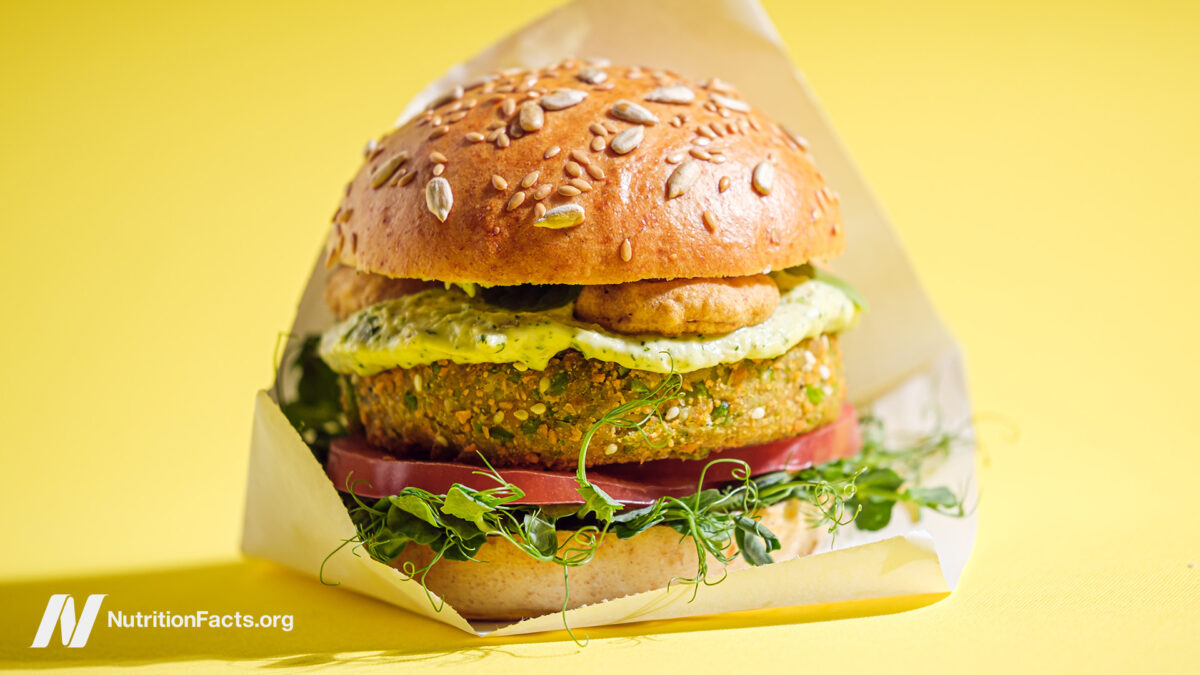
Concurrently, the expansion of menus to include seasonal produce, side salads, veggie burgers, and fruit options was heralded as an unconditional public health win. Surely, giving consumers more choices—including healthy ones—is inherently beneficial.
However, behavioral science reveals that human decision-making is rarely linear or rational. The mere presence of a healthy alternative triggers a psychological loophole. Rather than choosing the salad, consumers often look at it, check the nutritional box in their minds, and use its existence as an excuse to order the most indulgent, calorie-dense item on the menu.
2. Chronology: A Timeline of Menu Labeling and Behavioral Discoveries
The evolution of modern dietary transparency and the uncovering of consumer psychology span over a decade of research and policy implementation:
- 2008–2012 (Local Mandates & Voluntary Compliance): New York City introduces mandatory calorie labeling in chain restaurants. Studies reveal no overall change in consumer behavior. Sensing an opportunity to build goodwill without hurting core sales, chains like McDonald’s voluntarily expand nationwide calorie disclosures by 2012 while simultaneously introducing fresh, seasonal produce.
- 2009 (The Landmark Study): Researchers publish seminal findings on "Vicarious Goal Fulfillment," demonstrating how the mere presence of a healthy menu option ironically triggers indulgent purchasing decisions.
- 2014 (The Weight Loss Supplement Study): Research into the liberating effects of dietary supplements uncovers how perceived health aids lead subjects to consume significantly more calories and candy.
- 2017 (Federal Mandate): National menu labeling for calorie counts becomes a federal requirement across chain restaurants in the United States, hailed as a breakthrough for public health transparency. Subsequent evaluations confirm it shaves off a negligible eight calories per meal.
- Present Day: Behavioral economists and public health experts continue to grapple with "health halos" and the "what-the-hell effect," re-evaluating how food marketing and menu architecture influence everyday eating habits.
3. Supporting Data: The Numbers Behind Behavioral Glitches
Scientific experiments consistently demonstrate how small changes in options or presentation radically warp human choices.
Side Dishes and the Salad Effect
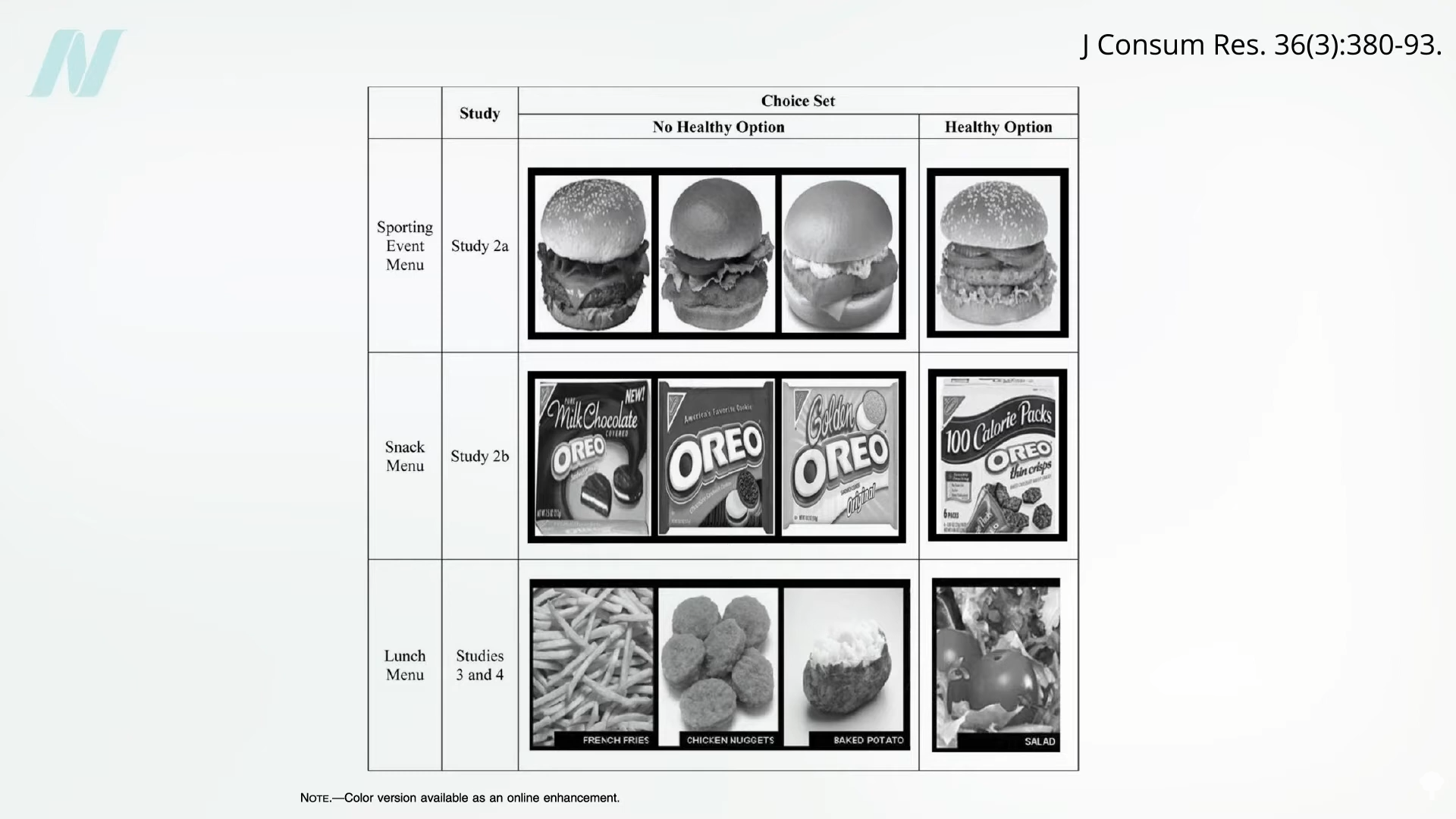
Consider a scenario where consumers choose between an unhealthy side (French fries) and a neutral choice (a baked potato). Without other options, only about 10% of people splurge on the fries.
However, introduce an even healthier third option—such as a side salad—and the dynamic changes completely. Rather than choosing the salad, the presence of the healthy alternative causes the preference for French fries to shoot up to 33%—nearly tripling the initial rate.
Burgers and Oreos
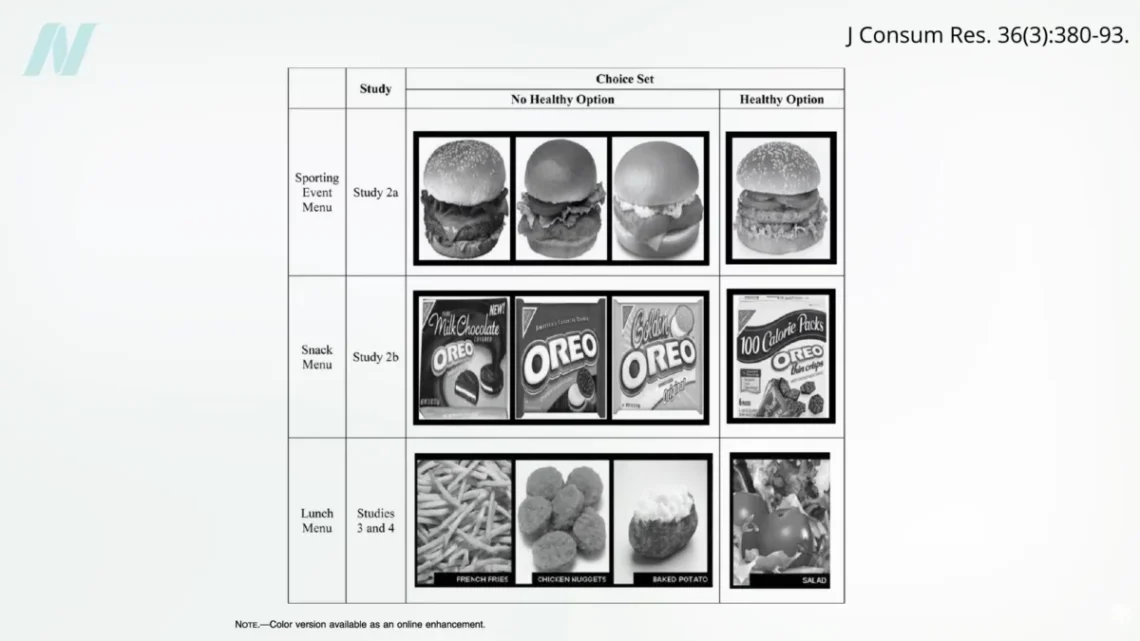
A similar phenomenon occurs with main courses. When offered a choice of a bacon cheeseburger, a chicken sandwich, or a fish sandwich, 17% of participants select the cheeseburger. Swap the fish sandwich for a veggie burger, and the preference for the bacon cheeseburger doubles to 37%.
In dessert experiments involving chocolate-covered Oreos, regular Oreos, and golden Oreos, adding a "lower-calorie" Oreo option doubled the likelihood that participants would go straight for the most indulgent chocolate-covered option.
The "Shrinking" Calorie Illusion
The psychological distortion extends to calorie estimation. When weight-conscious individuals are shown a burger by itself, they estimate its average caloric content at 734 calories.
Show the exact same burger accompanied by three celery sticks, and the average estimate drops to 619 calories. The celery did not have negative calories; rather, the visual juxtaposition of a green vegetable made the entire meal seem healthier, shaving roughly 100 perceived calories off the plate. Similar illusions occur when an apple is paired with a bacon-and-cheese waffle sandwich or carrots are placed next to a cheesesteak.
4. Official Responses and Industry Dynamics
The food industry’s reaction to nutritional regulations and consumer trends offers a fascinating lens into corporate strategy versus public health goals.
When calorie labeling legislation was first proposed, restaurant industry trade groups fought it fiercely. Yet, once the regulations were softened or standardized, major chains quickly adapted—and even embraced the transparency. Why? Because research indicates that posting calorie counts enhances "perceptions of the restaurant’s concern for consumers’ well-being." It builds brand loyalty and mitigates regulatory pressure while preserving high-margin, indulgent sales.
Furthermore, public health officials have historically operated under the assumption that increasing access to nutritious foods is universally positive. The introduction of fruit cups, whole grains, and salads in fast-food establishments was championed by nutritional advocates as a necessary step toward combating the obesity epidemic.
However, institutional perspectives are beginning to shift. As behavioral scientists map out phenomena like self-licensing and vicarious goal fulfillment, policymakers are realizing that simply putting a salad on a menu does not equate to a healthier populace. In fact, without careful consideration of menu architecture, marketing psychology, and the "health halo" effect, well-intentioned policy interventions can unintentionally backfire.
5. Implications: Navigating Human Psychology for Better Public Health
The convergence of these psychological quirks—self-licensing, vicarious goal fulfillment, and the health halo effect—carries profound implications for dietitians, policymakers, and everyday consumers.
The Mechanism of Self-Licensing
Self-licensing occurs when individuals unwittingly justify a choice that pulls them away from their long-term goals because they have recently performed an action that brings them closer to those goals. This is why dieters might justify eating an entire box of donuts because they lost a pound last week, or why smokers given "vitamin C" supplements smoke nearly twice as many cigarettes as those given a recognized placebo. Believing they have done something good for their health, they subconsciously grant themselves permission to indulge, effectively neutralizing their progress.
The "What the Hell Effect"
Closely related is the "what the hell effect." Once a person decides they will deviate from their dietary goals—perhaps planning to order that salad next time or indulging in a single forbidden food—they abandon restraint entirely. The presence of a health option triggers the mental note to be good later, which immediately licenses an extreme indulgence right now.
Rethinking Nutritional Interventions
For public health strategies to succeed, advocates must move beyond the naive view that providing information or adding healthy items to a menu is enough.
- Menu Architecture: Restaurants and institutional cafeterias need to rethink how items are displayed. Separating indulgent foods from healthy options, rather than grouping them together in ways that create "health halos," may reduce the cognitive sleight-of-hand that makes burgers look lighter next to celery.
- Behavioral Awareness: Consumers must become hyper-aware of their own cognitive biases. Recognizing that simply reading about health, seeing a green vegetable on a poster, or taking a dietary supplement does not grant a "license to sin" is critical for sustained health.
- Holistic Reform: Ultimately, addressing the global health crisis requires acknowledging that human beings are driven by deeply ingrained psychological shortcuts. True progress will not come from merely offering a side salad alongside a bacon cheeseburger, but from fundamentally reshaping our food environment to support intuitive, balanced moderation without the trap of licensed self-indulgence.