When public health advocates set their sights on reforming the modern food supply, they face a perpetual, uphill battle against entrenched commercial interests. Past attempts to regulate the food industry have frequently crashed against the shoals of political opposition, corporate lobbying, and philosophical debates over individual liberty.
To understand the mechanics of public health regulation, consider how societies choose to manage risky behaviors. Broadly speaking, governments utilize three primary approaches: informing the public (such as mandatory warning labels), nudging citizens (through financial incentives or structural design), or directly intervening to remove the hazard entirely.
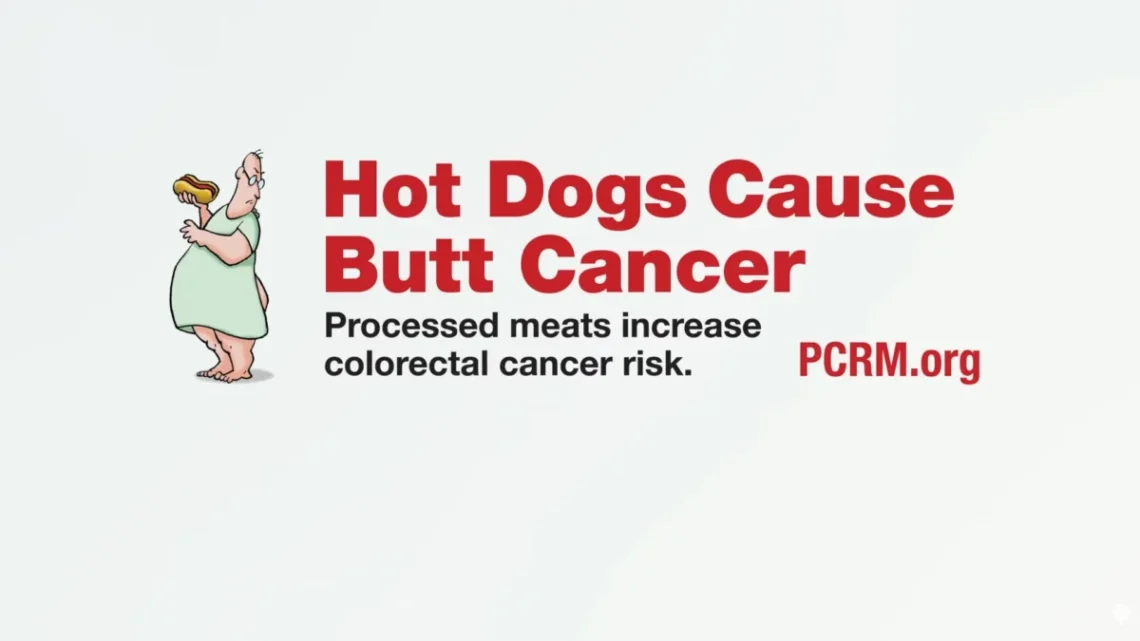
To draw a parallel from another sector, consider automotive safety. Which measure has historically prevented more fatalities: mandating continuous driver education, placing warning labels on car dashboards about crash risks, or removing the human element of error altogether by legally requiring airbags? While public education campaigns—ranging from transit ads detailing the sugar content in soft drinks to billboards linking processed meats to colorectal cancer—aim to enlighten consumers, they often fall short of changing deeply ingrained habits.
The central question remains: Is there a way to make consumer products nutritionally safer at the source, shielding the public from invisible dangers without relying on constant vigilance? The hard-fought, decades-long battle to ban artificial trans fats offers a masterclass in how systemic health regulations can finally succeed when traditional educational models stall.
Main Facts: The Hidden Danger of Artificial Trans Fats
For decades, industrial trans fats—created by hydrogenating liquid vegetable oils to extend shelf life and enhance the texture of processed foods—were ubiquitous. They lurked in everything from margarine and bakery goods to fast-food french fries.
The turning point for public health came in 1993, when the landmark Harvard Nurses’ Study revealed a terrifying statistic: high consumption of trans fats could increase an individual’s risk of coronary heart disease by a staggering 50%. Subsequent scientific data linked the dietary additive to tens of thousands of preventable deaths annually in the United States alone.
Despite the mounting body of evidence, the path from scientific discovery to regulatory action was painstakingly slow. While nations like Denmark took decisive legislative action, the United States lagged behind, allowing thousands of preventable deaths and years of healthy life lost to accumulate while policymakers debated the merits of government intervention.
Chronology: A Timeline of Resistance and Reform
- 1993: The Harvard Nurses’ Study publishes findings linking trans-fat intake to a 50% increase in heart disease risk.
- 2003: Denmark becomes the first country in the world to implement a ban on added industrial trans fats, successfully removing them from the national food supply.
- 2003–2006: Local jurisdictions in the United States begin pushing for change. New York City debates a comprehensive trans-fat ban in restaurants, sparking fierce national controversy.
- 2006: The U.S. Food and Drug Administration (FDA) mandates that manufacturers list trans-fat content on the Nutrition Facts label.
- 2010s: Food manufacturers, scrambling to avoid negative labeling and gain a competitive edge, rapidly reformulate thousands of products to be "trans-fat free." Fast-food giants like KFC completely remove artificial trans fats from their menus.
- 2015: Following years of successful local implementations and voluntary industry shifts, the FDA officially determines that artificial trans fats are no longer "generally recognized as safe" (GRAS), setting a multi-year timeline for a near-total nationwide ban.
Official Responses and Industry Pushback
When New York City attempted to spearhead the nation’s first major trans-fat ban in restaurants, the opposition from commercial entities was swift and fierce. Industry lobbyists condemned the measure as an unacceptable "government intrusion," deriding the municipal government as a "nanny state" and characterizing public health advocates as "food zealots" engaged in "food fascism."
Because trans fats naturally occur in trace amounts in certain meats and dairy products, the livestock industry aligned with trade groups like the Institute of Shortening and Edible Oils. Their defense relied on the classic moderation argument: that no food is inherently bad if consumed in appropriate quantities.
Corporate interests also deployed "slippery slope" arguments to stoke public anxiety, warning that if the government could dictate the removal of trans fats, it would inevitably lead to authoritarian lifestyle mandates—such as forcing citizens to eat vegetables.
This exact hypothetical even found its way into the highest court in the land. During oral arguments over the Affordable Care Act, Chief Justice John Roberts posed a theatrical hypothetical: could Congress theoretically order everyone to buy vegetables? Justice Ruth Bader Ginsburg famously dismissed the remark as "the broccoli horror," writing in legal notes that while legislative bodies possess broad powers, one cannot offer the "hypothetical and unreal possibility" of an authoritarian vegetarian state as a credible legal defense against public safety measures. As legal scholars frequently observe: judges and lawyers may live on the slippery slope of analogies, but they are not expected to ski it to the bottom.

Furthermore, critics of the food industry pointed out a glaring hypocrisy in the corporate defense of consumer choice. As public health ethicists argued, it was the restaurant and food processing industries that severely limited consumer choice in the first place by silently flooding the American food supply with dangerous, heart-clogging industrial fats that buyers could neither easily detect nor avoid.
Supporting Data: The Impact of Policy Intervention
The skepticism surrounding a national trans-fat ban was captured well by industry watchers who gave the prospects of federal regulation a "fat chance" of success. Yet, local governments pressed forward. New York City, maintaining a long history as a public health pioneer—having banned lead paint 18 years before federal regulators followed suit—pushed the trans-fat ban through.
The results were immediate and measurable. Researchers examining cardiovascular outcomes before and after the rollout of the New York trans-fat ban estimated that the policy successfully reduced cardiovascular death rates in affected counties by approximately 5%.
The Danish model provided an even starker contrast. As a leading Danish cardiologist famously summarized:
"Instead of warning consumers about trans fats and telling them what they are, we [the Danes] simply removed them."
In North America, by contrast, the prevailing regulatory philosophy had long been captured by the sentiment: "You can put poison in food if you label it properly." This libertarian framework assumes that fully informed consumers can freely choose what to eat. However, this model completely breaks down in the face of what health ethicists term a "model of systemic dishonesty"—where the food industry actively obfuscates risks, uses predatory marketing, and obscures ingredients.
Implications: The Clever Strategy That Finally Won the War
How did the public health community finally achieve a breakthrough when decades of direct regulation had failed? The answer lies in a clever, two-step regulatory trap.
First, the FDA mandated labeling requirements, forcing manufacturers to explicitly state trans-fat content on Nutrition Facts panels. While ostensibly designed to inform consumers, the labeling law had a far more profound psychological and economic impact on producers.
Once forced to openly divulge the toxic reality of their formulations, food companies panicked. Fearing the immediate loss of market share to competitors, corporations scrambled to reformulate their products to claim a coveted "zero trans fat" label. Within just a few years of the mandatory disclosure rule, more than 5,000 newly reformulated products hit grocery store shelves.
The cultural shift was surreal. Fast-food giant Kentucky Fried Chicken—previously targeted in lawsuits for serving some of the highest trans-fat levels in the country—pivoted entirely. Soon, KFC was running nationwide commercials where family members celebrated the restaurant’s new zero-gram trans-fat profile by eating fried chicken by the bucketful.
This marked the secret to the ultimate legislative triumph. Once major food industry players had already voluntarily reformulated their products, bragged about them in marketing campaigns, and moved on, the financial incentive to fight the government evaporated. With corporate opposition severely blunted and millions of dollars no longer at stake to block the policy, the political will to enact a formal ban finally materialized. Added artificial trans fats were successfully, permanently taken off the playing field.
Doctor’s Note & Broader Context
- The Nuance of Animal Fats: It is crucial to note that regulatory bans on artificial trans fats did not target the naturally occurring trans fats found in select meat and dairy products, a distinction explored further in public health literature.
- The Limits of Menu Labeling: While calorie-counting mandates and menu-labeling laws offer useful transparency, historical data shows they rarely compel consumers to make fundamentally healthier choices on their own—underscoring why structural removal, rather than consumer education alone, remains the gold standard of public health policy.