By Clara Dalzell
Updated: October 24, 2026
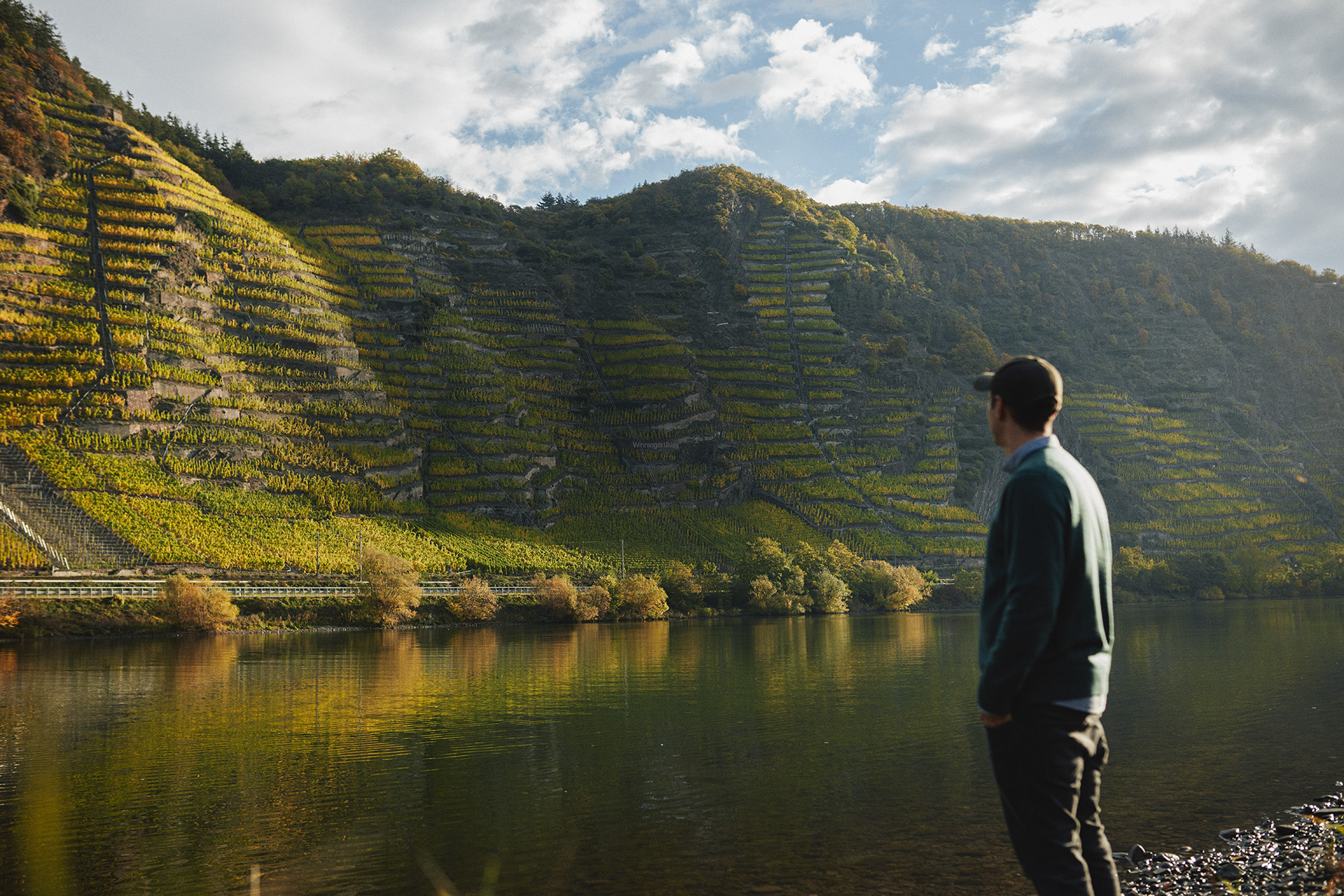
Despite the enduring prestige of Riesling in the global wine market, the legendary Mosel Valley—a region synonymous with vertiginous, slate-driven viticulture—is currently teetering on the brink of a systemic collapse. A perfect storm of surging operational costs, a glut of mass-market surplus, and shifting consumer preferences has created a precarious environment for thousands of grower estates. As the river continues its winding path through the German landscape, the vineyards that have defined its identity for millennia are falling silent, one terrace at a time.
The Financial Precipice
The economic reality of Mosel viticulture has become a paradox: the more iconic the vineyard, the less sustainable its operation. Matthias Knebel of the esteemed Weingut Knebel recently laid bare the harrowing arithmetic of the region. He estimates the average cost to farm his terraced, steep-slope vineyards at $14.32 per liter. Conversely, the market reality for German wine remains punishingly low; U.S. importers recently paid an average of just $3.81 per bottle for German exports.
When pressed on whether his own overhead mirrored these figures, Philip Lardot, a visionary winemaker at Lardot, offered a sobering assessment. "He’s a brave man for doing that calculation," Lardot remarked. "No one wants to do it, because the truth is too difficult to face."
The financial strain is forcing a heart-wrenching choice for many multigenerational families. Many vineyards have effectively become worthless on the open market. Owners are trapped in a legal and financial vice: abandoning the land results in hefty regulatory fines, yet the cost of maintaining the slopes far outstrips the revenue generated by the fruit. Consequently, the only remaining option for many is the permanent removal of vines—an act of destruction that erases centuries of human labor.
Chronology of a Crisis: From Expansion to Nosedive
To understand the current decline, one must look back at the legislative shifts of the 20th century.
- 1971: The German Wine Law was overhauled, allowing for the inclusion of flatter, more fertile areas into the appellation. While these sites were not inherently incapable of producing quality, the change shifted the focus of the Mosel.
- 1970s–1980s: Encouraged by the law, producers began planting non-Riesling varietals and utilizing fertilizers to increase yields. These sites were cropped up to five times as heavily as the traditional steep slopes, diluting the "Mosel signature." By 1989, vineyard acreage swelled to 12,509 acres.
- 1990s: The market bubble burst. The focus on high-yield, flat-land production proved unsustainable, leading to a decade-long nosedive in acreage.
- 2024–2025: The current crisis has accelerated. Vineyard land declined by 1% in 2024 and another 2% in 2025.
While these percentages may seem modest, they represent an existential threat. The lost land is not the flat, mechanized farmland, but the ancient, steep, own-rooted vineyards—many containing vines between 50 and 100 years old. These sites are the genetic bedrock of the region, representing a biodiversity that, once ripped out, can never be replaced. Today, total vineyard acreage in the Mosel sits at approximately 65% of its historic peak.
Supporting Data: The Cost of Tradition
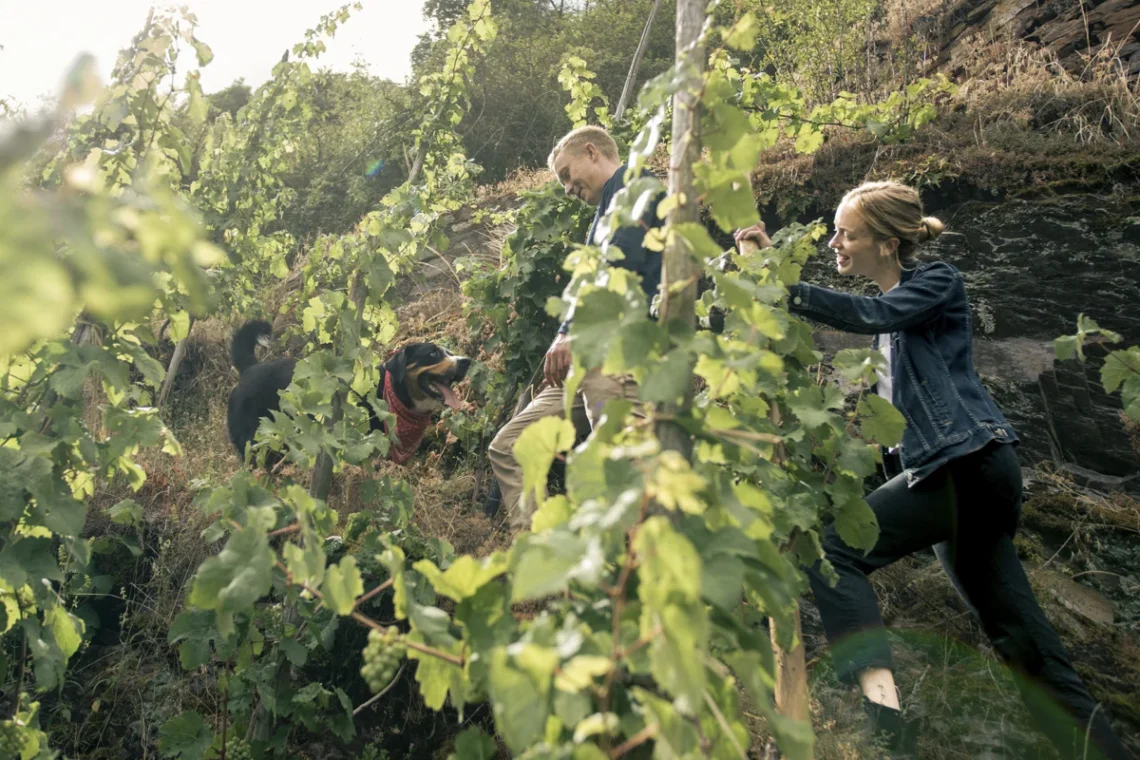
The Mosel’s reputation was built on its steepness, yet the region is now approximately 60% flat or gently sloping. This "flattening" of the Mosel has created a two-tiered economy.
The traditional, manual-labor sites require hundreds of hours of work per hectare annually. Because these vineyards are often fragmented, single-staked, and inaccessible to machinery, the labor-to-yield ratio is disastrous. In the 1990s, the average price to lease one hectare of land was roughly $1,480. Today, high-quality parcels are often offered for free or near-zero cost, yet there are few takers—the "cost" is the labor, not the land.
"We put an ad in the local newspaper," says Rosalie Lardot. "Within 36 hours, we got calls offering more than 10 hectares. Most of them for next to nothing or free." This surplus of land signals a total breakdown in the traditional generational hand-off that once sustained the valley.

The New Guard: Taking Big Swings
Amidst the gloom, a cohort of "brave winemakers" is attempting to rewrite the narrative.
Andreas Adam of Weingut AJ Adam represents this revivalist spirit. Having stepped into the winemaking mantle at age 18, after a generational gap in his family, he began reclaiming parcels in the village of Dhron—a place that had seen every other vintner pack up and leave. Alongside his sister, Barbara, he now farms 6.7 hectares, including the prestigious Dhroner Hofberg. Despite their success, Adam faces the ultimate barrier: he is offered vineyards weekly, but the capital required to farm them—even if the land is free—is beyond reach.
Similarly, Julian and Nadine Haart of Weingut Julian Haart have pursued a path of obsessive quality. Rather than sticking to the easy-to-farm parcels of the famed Piesporter Goldtröpfchen, Julian sought out forgotten, high-altitude sites like Schubertslay and Wintricher Ohligsberg. His work brought these sites back to global prominence, yet even he eventually hit a wall.
The labor required for Schubertslay proved insurmountable. In a move that highlights the desperation of the current climate, the Haarts initiated an unconventional trade with legendary winemaker Klaus Peter Keller. They swapped the difficult Schubertslay parcels for land in the Rheinhessen, viewing it as a climate-change "insurance policy." Even for a titan like Keller, the math of Schubertslay eventually proved unsustainable, and he has announced plans to relinquish the lease.
Implications: A Hushed Beauty at Risk
The story of the Lardots—Philip, a Dutchman, and Rosalie, a Minnesotan—is emblematic of the new, transnational effort to preserve the Mosel. Their philosophy of "diversity over tradition" has ruffled feathers among the local old guard, particularly regarding their departure from the traditional Prädikat (off-dry) designations. Yet, their ability to survive depends entirely on their refusal to be limited by the traditional, village-bound viticulture of the past.

However, the 2024 season dealt a crushing blow: a combination of plummeting sales and extreme weather events wiped out the majority of their fruit, forcing them to lay off their entire staff. When asked why they continue in the face of such adversity, Rosalie’s answer captures the spirit of the entire movement: "Have you seen the vineyards? They’re ungrafted vines and beautiful, historic vineyards."
The Call for Structural Change
Without government intervention, the preservation of the Mosel remains an entirely private burden. The labor shortage is acute; there simply aren’t enough workers willing to perform the grueling, hand-hewn labor that these slopes demand.
Andreas Adam suggests that the solution may lie in returning to the roots of the region’s past—not just in wine, but in lifestyle. "When I look back at my grandparents, it was mixed farming," Adam reflects. "Maybe we can go back to this again. It’s not so easy, I know, but we need to invite younger people who want to continue here, perhaps with a more holistic approach to the land."
The slow death of the Mosel is not merely a financial statistic. It is the loss of a cultural heritage that has been nurtured for two millennia. The valley, a place of "radiant magnificence" and "hushed beauty," is currently waiting to see if the next generation will be able to bridge the gap between historic prestige and modern economic survival. For now, the vines continue to grow, but the silence on the slopes is growing louder.