Main Facts: The Controversial Guidelines and Their Core Claims
In a series of high-profile papers published in the Annals of Internal Medicine, an international research panel known as NutriRECS put forward a startling recommendation: that adults continue eating red and processed meat at their current consumption levels. This advice directly contradicted nearly every major contemporary public health and dietary guideline, which routinely advise limiting the intake of red and processed meats to reduce the risk of chronic illnesses.
The panel reached this unexpected conclusion despite acknowledging a statistically significant association between lower meat consumption and reduced total mortality, cardiovascular disease, and cancer. To justify their departure from global public health consensus, the researchers relied on three primary arguments:
- Taste Preferences: The panel asserted that people simply enjoy eating meat, arguing that subjective taste satisfaction should play a major role in shaping dietary guidelines.
- Methodological Framing: They utilized the GRADE (Grading of Recommendations, Assessment, Development, and Evaluation) system—a framework originally engineered to evaluate pharmaceutical drug trials—to rank observational nutritional studies as "low" or "very low" quality.
- Magnitude of Effect: They characterized the health risks associated with meat consumption as being of a "very small magnitude," arguing that the incremental hazards to population health were not large enough to outweigh the personal enjoyment of eating meat.
Public health experts, epidemiologists, and independent researchers immediately pushed back against these assertions. Critics noted that the findings within the panel’s own meta-analyses actually demonstrated clear, clinically meaningful, and statistically significant adverse health effects linked to meat intake. Moderate reductions in red and processed meat were shown to correlate with a 13% drop in total mortality, a 14% reduction in cardiovascular mortality, an 11% decrease in cancer mortality, and a 24% reduced risk of developing type 2 diabetes.
Furthermore, prominent nutritional scientists pointed out that dismissing these benefits as "small" ignores the profound cumulative impact on public health. Harvard nutrition experts estimated that a modest reduction in red meat consumption could prevent roughly 200,000 deaths annually in the United States alone—a mortality burden comparable to the dangers posed by secondhand smoke.
Chronology: A Timeline of the NutriRECS Controversy
To understand how a major scientific journal came to publish guidelines advising the public to ignore established health warnings, it is essential to trace the timeline of events surrounding the studies’ release and the subsequent fallout.
- September 2019: The Annals of Internal Medicine publishes the NutriRECS consortium’s series of systematic reviews and guidelines, asserting that adults do not need to reduce red or processed meat consumption for health reasons.
- Immediate Post-Publication (Late 2019): Public health institutions, including the Harvard T.H. Chan School of Public Health and the American Heart Association, issue urgent rebuttals, criticizing the studies’ methodologies, the misapplication of the GRADE framework, and the dismissal of robust cohort data.
- October 2019: Investigative reports and academic scrutiny reveal institutional ties between members of the NutriRECS panel and Texas A&M AgriLife, an entity that receives substantial financial backing from the livestock and meat industries. Petitions are filed with regulatory bodies calling for investigations into potential conflicts of interest.
- 2020 and Beyond: Epidemiologists and preventive medicine specialists publish peer-reviewed critiques detailing how the panel cherry-picked data, excluded vital randomized controlled trials (such as the PREDIMED trial and the Lyon Diet Heart Study), and relied on baseline comparisons involving negligible dietary differences.
- Ongoing Legacy: The controversy becomes a landmark case study in the intersection of food industry funding, nutritional epidemiology, and the public communication of science, frequently compared to historical tobacco industry tactics.
Supporting Data: Examining the Evidence and Methodological Flaws
The core debate surrounding the NutriRECS guidelines centers not on a lack of data, but on how data was selected, evaluated, and interpreted. Critics argue that the panel engineered its conclusions by systematically filtering out research that showed strong positive correlations between plant-based diets and longevity.
The Exclusion of High-Impact Studies
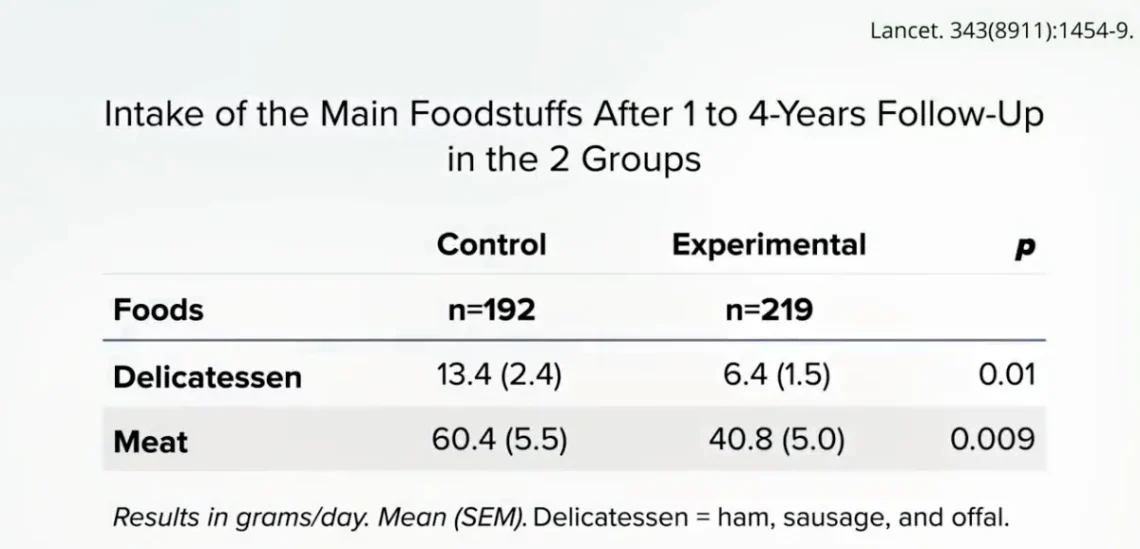
To arrive at the conclusion that meat reduction yields minimal benefits, the panel reportedly excluded major bodies of evidence. For instance, the renowned Lyon Diet Heart Study—which randomized participants to a Mediterranean-style diet that featured a significant drop in meat consumption—observed a remarkable 70% reduction in all-cause mortality compared to the control group. The meat panel excluded this study on the grounds that it reported "an implausibly large treatment effect," effectively discarding results simply because they showed too strong a benefit.
Similarly, the panel chose to omit research comparing lifelong vegetarians to habitual meat-eaters. Instead, they focused narrowly on what they termed "realistic decreases," such as cutting back by three servings a week. However, the primary study upon which they relied heavily, the Women’s Health Initiative, achieved an actual difference of only 1.4 servings per week—amounting to roughly half an ounce of meat per day, or about one-fifth of a hamburger.
Public health advocates noted the logical fallacy in this approach: observing that a tiny reduction in exposure yields a tiny benefit does not mean the underlying hazard does not exist. Drawing an analogy to smoking, critics pointed out that if researchers studied a group of heavy smokers who cut down from 24 cigarettes a day to 20, observed only a minor health improvement, and completely avoided comparing smokers to non-smokers, they would commit a severe scientific error by concluding that smoking is not harmful.
The Replacement Dilemma
Nutritional science emphasizes that when a food item is removed from a diet, something else must take its place. The data shows that the health impacts of reducing meat depend heavily on what substitutes it. Replacing even 3% of daily calories from animal protein with plant protein is linked to increased longevity.
However, the specific substitution matters immensely:

- Replacing red meat protein with plant-based alternatives can lower overall mortality by more than 10%.
- Replacing animal protein sources with processed egg products or certain dairy variants can alter these risk profiles. For example, epidemiological data suggests that eliminating certain high-cholesterol animal proteins like eggs can correlate with an even greater reduction in premature mortality risk.
If an individual reduces their red meat intake by swapping a burger for an egg salad sandwich, the net health benefit may be blunted or negated. The NutriRECS panel failed to adequately account for these nuanced dietary substitutions, painting a broad and misleading brush over the complex ecosystem of human nutrition.
Official Responses: Academic Backlash and Industry Ties
The scientific community’s reaction to the NutriRECS publications was swift, unified, and uncompromising. Leading academic institutions and prominent physicians stepped forward to dismantle the panel’s methodology.
Dr. Dean Ornish, a pioneer in preventive medicine, addressed the panel’s logic directly, stating:
"To say that small increases in meat consumption only cause small increases in the risk of disease doesn’t mean that eating meat is good for you. That’s like saying that smoking 24 cigarettes a day increases your risk of lung cancer only a little more than smoking 20 cigarettes a day—and being careful not to include any studies that compared smoking 24 cigs to smoking none—and then erroneously concluding that smoking isn’t that bad for your health."
Concurrently, institutional watchdogs raised serious ethical concerns regarding conflicts of interest. Investigations revealed that multiple members of the NutriRECS panel maintained professional affiliations with Texas A&M AgriLife, an agricultural research organization receiving millions of dollars in funding from the meat industry. This financial nexus cast a long shadow over the panel’s professed objectivity, echoing historical concerns about corporate influence dictating public health narratives.
Despite these obstacles—including the panel’s restrictive criteria and exclusion of robust cohorts—their own meta-analyses still managed to reveal statistically significant risks associated with meat intake. Critics highlighted the profound irony that even under conditions designed to minimize apparent harm, the data could not entirely hide the toxic toll of processed and red meats on human physiology.
Implications: Parallels to Big Tobacco and the Future of Public Health
The controversy surrounding the NutriRECS red meat guidelines transcends a mere academic disagreement; it exposes systemic vulnerabilities in how nutritional science is communicated to the general public.
Public health analysts have drawn direct parallels between the strategies employed by proponents of the meat industry and those famously used by tobacco manufacturers in the mid-20th century. In 1959, public health researchers compiling evidence linking smoking to lung cancer faced identical charges of "inadequate proof" and methodology disputes from an entrenched industry skilled in mass persuasion.
A famous observation from that era noted that if the mountain of evidence against smoking had been evaluated without the presence of an immense, deeply entrenched commercial industry, the hazards would have been universally regarded as beyond dispute. The same standard applies to modern nutritional epidemiology regarding processed meats.
The implications for everyday consumers are profound. When authoritative-sounding guidelines tell the public to disregard health warnings based on subjective enjoyment or flawed statistical grading systems, public trust in science erodes. The human cost of this confusion is measured not in abstract statistical percentages, but in hundreds of thousands of preventable deaths from cardiovascular disease, diabetes, and cancer each year.
Ultimately, the red meat controversy serves as a cautionary tale for modern medicine. It underscores the critical need for rigorous, conflict-free nutritional research and reminds policymakers that public health recommendations must be anchored in comprehensive scientific reality rather than industry-adjacent appeasement.