By The Culinary Desk
Published: Late Summer Culinary Report
Main Facts: The Anatomy of a Six-Year Culinary Obsession
In the high-stakes world of recipe development, patience is rarely a virtue chosen by the chef—more often, it is an involuntary sentence. When asked how long it takes to perfect a recipe, most professional developers will offer a standard range of weeks or months. For one dedicated home baker and recipe writer, however, the answer was uncompromisingly blunt: as long as it takes.
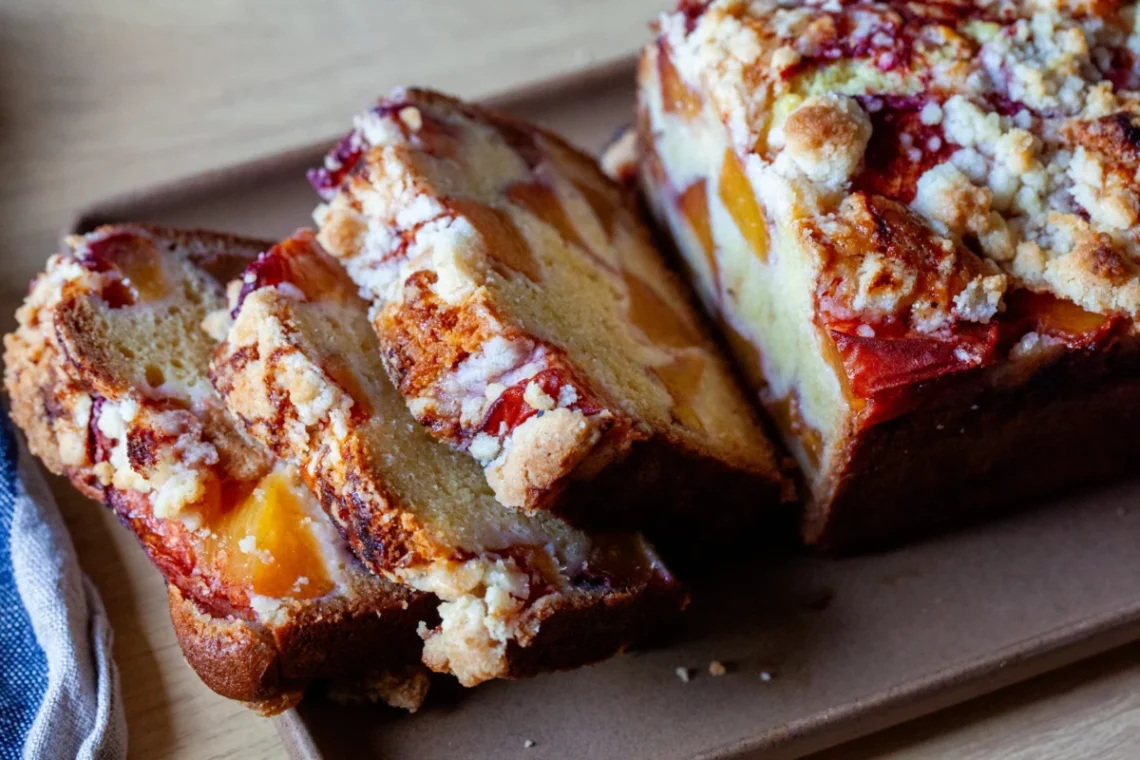
That timeline translated to six consecutive summers of trial, error, and institutional disappointment. The object of this half-decade fixation? A hybrid creation known simply as the Peach Cobbler Loaf—a dessert designed to bridge the gap between the rustic, bubbling comfort of a deep-dish southern cobbler and the structured, sliceable elegance of a classic bakery loaf cake.

Stone fruits, particularly peaches, are notoriously uncooperative baking partners. Their moisture content fluctuates wildly depending on the weather, variety, and ripeness, turning countless test batches into either waterlogged sponges or dry, flavorless bricks. After sacrificing hundreds of pounds of summer fruit to the pursuit of perfection, the definitive formula has finally emerged just as the tail end of peach season draws to a close.
Featuring a tender, yogurt-enriched crumb, heavily spiced and lemon-kissed fruit layers, and a buttery, crisp streusel topping, this loaf represents the culmination of thousands of hours of obsessive note-taking and structural engineering in the kitchen.
Chronology: Six Summers of Trial and Error
The journey toward the Peach Cobbler Loaf was not a straight line, but rather a cyclical loop repeated every July and August for six years.

Years 1 and 2: The Bland and the Buried
In the initial phases of development, the primary hurdle was fruit distribution. Early iterations featured finely diced peaches folded directly into the batter. The result? The fruit’s natural sugars caramelized unevenly, leaving pockets of dense, gummy dough surrounding flavorless, mealy bits of peach. Subsequent attempts swung the pendulum in the opposite direction, utilizing paper-thin slices. These vanished entirely into the batter during baking, rendering the cake indistinguishable from a standard vanilla pound cake.
Years 3 and 4: The Spice Trap and the Beige Crisis
By the third and fourth summers, the focus shifted to flavoring the crumb. Convinced that a spiced cake would elevate the fruit, the baker introduced heavy-handed amounts of cinnamon and nutmeg directly into the wet ingredients. This adjustment created a severe aesthetic and flavor issue: the batter turned a murky, unappealing beige, and the heavy spices completely overwhelmed the delicate, floral notes of fresh yellow peaches.
Years 5: The Structural Impasse
Entering the fifth year, the concept of a "cobbler-style" topping was introduced. However, standard streusel weights consistently sank through the batter, drowning in the heavy fruit juices rather than floating on top to create a contrasting crunch. Frustrated by persistent structural collapses, the baker folded their cards and abandoned the project for the remainder of that season, consigning yet another batch of notes to the "this wasn’t it" pile.

Year 6: The Breakthrough
The final breakthrough came down to three crucial adjustments:
- Pans and Partitioning: Establishing a strict spatial hierarchy by layering the batter and fruit in two distinct tiers rather than mixing them haphazardly.
- Acid Balance: Introducing a precise measure of lemon zest and juice to brighten the peach flavor without thinning the batter.
- Moisture Control: Utilizing dairy (yogurt or sour cream) to guarantee a resilient crumb capable of supporting heavy, juice-releasing fruit without becoming soggy.
Supporting Data: The Blueprint of the Peach Cobbler Loaf
Precision is the bedrock of successful baking. To achieve the exact texture required for this loaf, specific measurements and hardware are non-negotiable.
Equipment Specifications
- The Pan: A loaf pan with a total liquid capacity of 6 cups (1420 ml). Bottom dimensions should measure approximately 8×4 inches, expanding to 9×5 inches at the top.
- The Insurance Policy: A larger baking sheet placed underneath the loaf pan to catch bubbling fruit juices that inevitably overflow during the peak of the baking cycle.
Master Recipe Ingredients
For the Fruit Layer:
- Fresh peach wedges (peeled or unpeeled, depending on preference)
- Juice of half a lemon
- Ground cinnamon (to taste)
- 1 tablespoon brown sugar
For the Cake Batter:
- Lemon zest (finely grated from the zested lemon half)
- 6 tablespoons unsalted butter, melted
- ⅓ cup granulated sugar
- ⅓ cup brown sugar (packed)
- ½ cup yogurt or sour cream (for structural moisture and tenderness)
- 2 large eggs
- Baking powder and baking soda (precise leavening agents)
- Salt
- 1⅓ cups all-purpose flour
For the Streusel Topping:
- 2 tablespoons unsalted butter, melted
- 2 tablespoons granulated sugar
- A pinch of salt
- ¼ cup all-purpose flour
Step-by-Step Assembly and Baking Protocol
1. Preparation
Preheat the oven to 375°F (190°C). Line your specialized 6-cup loaf pan with parchment paper, extending it up two opposing sides to act as convenient handles later. Spray any exposed metal surfaces with a nonstick cooking spray. Place the loaf pan squarely onto a larger rimmed baking sheet.

2. The Fruit and Cake Base
- The Fruit: Toss the peach wedges in a medium bowl with the lemon juice, cinnamon, and 1 tablespoon of brown sugar. Set aside to macerate.
- The Zest and Fats: In a large mixing bowl, combine the finely grated lemon zest, melted butter, granulated sugar, and the remaining ⅓ cup of brown sugar. Whisk vigorously until smooth.
- The Dairy and Eggs: Whisk in the yogurt (or sour cream), followed by the eggs, beating until fully incorporated.
- The Dry Integration: Sprinkle the baking powder, baking soda, and salt directly over the liquid surface, whisking thoroughly to prevent clumping. Finally, fold in the flour using a spatula or whisk just until the white streaks disappear.
3. Layering Architecture
- Pour half of the cake batter into the prepared loaf pan, smoothing it into an even layer.
- Arrange half of the seasoned peach wedges in a single, orderly layer across the batter.
- Spoon the remaining batter carefully over the peaches, spreading it out to seal the layer.
- Arrange the remaining peaches across the top, and pour any accumulated fruit juices from the macerating bowl directly over the top of the fruit.
- Scatter the freshly mixed streusel crumbs (combined in a small bowl via melted butter, sugar, salt, and flour) evenly across the top.
4. Baking and Resting
Bake for 60 to 70 minutes. Because of the dense fruit layers, testing for doneness requires vigilance: insert a tester into the direct center of the cake and several times just beneath the top peach layer, where unbaked batter notoriously hides. If wet batter clings to the tester, extend the bake time by up to 5 minutes.
Cool the loaf on a wire rack before running a knife along the unlined edges and lifting the cake out via the parchment paper handles.
Implications: The Philosophy of Slow Baking in a Fast Food Culture
In an era dominated by 30-minute meal kits, viral TikTok trends that demand instant gratification, and the relentless pursuit of shortcuts, the six-year evolution of the Peach Cobbler Loaf stands as an act of quiet culinary rebellion.

Food historians and cultural commentators often note that modern baking has become increasingly homogenized, driven by algorithms that favor visual gimmickry over enduring flavor. By spending over half a decade fine-tuning a single loaf of cake, the developer underscores a fundamental truth of artisanal craftsmanship: some things simply cannot be rushed.
Furthermore, the recipe challenges the seasonal anxiety that plagues modern cooks. Released precisely as peach season breathes its final gasp, the loaf proves that preservation—whether through freezing, canning, or clever structural baking—allows us to extend the fleeting bounty of summer well into the cooler months.
As for storage, the baker offers a final piece of counterintuitive wisdom: while the cake is commendable on day one, it reaches its absolute zenith on days two and three. Stored unwrapped at room temperature inside a makeshift bread box (such as a microwave or cold oven) to protect its crisp streusel cap, the Peach Cobbler Loaf transitions from a frustrating experiment into a timeless, enduring triumph.