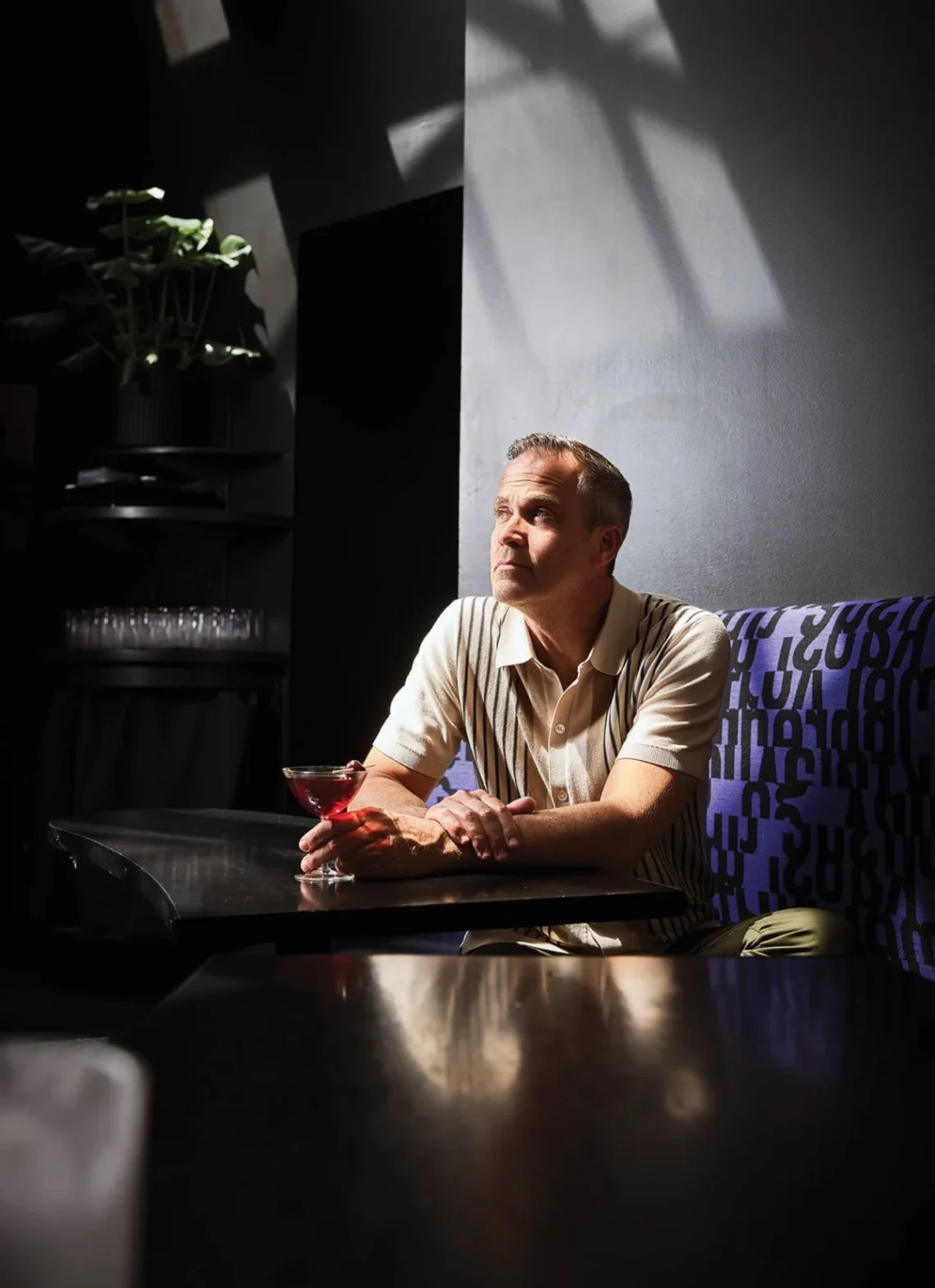
For a modern hospitality establishment to survive two decades is an extraordinary feat. It requires weathering volatile economic trends, a global public health crisis, soaring overhead costs, and the fickle nature of consumer palates. In the September/October 2026 issue of Imbibe Magazine, celebrating its own 20th anniversary, the publication shifts its lens to the legacy bars that have shaped the modern drinking landscape. Among the stalwarts featured is Portland, Oregon’s iconic Teardrop Lounge.
Opened in 2007 in the city’s industrial Pearl District by co-founders Daniel Shoemaker and Ted Charak, Teardrop is widely credited as a foundational catalyst in transforming Portland into a premier, globally recognized cocktail destination. Yet, as editor-in-chief Paul Clarke notes in the feature, the bar’s longevity isn’t merely a product of innovative mixology. What began as a boundary-pushing temple of creative libations eventually pivoted to prioritize the profound warmth of genuine hospitality—a winning combination that has allowed the institution to endure for nearly 20 years.
Chronology of a Cocktails Pioneer: From Saki Bars to the Pearl District
2004–2006: The Genesis and the Industrial Aesthetic
The conceptualization of Teardrop Lounge began long before its doors ever opened. Daniel Shoemaker was living in San Francisco in 2004 when he and his business partner, Ted Charak, decided to open a drinking establishment. Finding the San Francisco market prohibitively difficult to break into, Charak relocated to Portland to scout locations.
In 2006, they secured a space in the Pearl District, a neighborhood defined in those days by converted automotive garages. They fell in love with a multi-unit property, keeping the original exposed brick, concrete floors, which they polished and stained, and leaning heavily into an industrial-chic aesthetic.
Interestingly, Teardrop’s original concept was worlds away from the classic American cocktail revival taking shape elsewhere. Inspired by the prevailing San Francisco trends of the mid-2000s, Shoemaker initially built the menu around a robust sake program. Guided by a regional sake expert, the bar featured bespoke teardrop-shaped tokkuri vessels, Japanese lithographs, and an opening menu highlighted by a popular sake sangria.
2007: The Grand Opening and the "Pretentious" Frontier
Teardrop Lounge officially opened its doors in July 2007. At the time, the culinary and beverage worlds were experiencing a seismic shift, largely driven by pioneering early cocktail bloggers and historians like Paul Clarke, Robert Hess, Darcy O’Neil, and Ted Haigh, who dug through historical texts to revive classic recipes.
Shoemaker, having immersed himself in San Francisco’s nascent craft cocktail scene under the tutelage of figures like Eric Adkins and Thad Vogler, was already deep down the rabbit hole of artisanal mixology—even quietly batching his own tonic water before the trend hit the mainstream.
However, bringing this level of cocktail purism to Portland in 2007 came with friction.
"We had a reputation of being very pretentious," Shoemaker recalls. "And not for nothing, because if people came in and said, ‘I want vodka and fruity,’ the bartenders would be like, ‘What you really want is a gin, raspberry gum, egg white cocktail.’"
Patrons were occasionally bewildered—and sometimes outright hostile—pushing back against craft conventions like egg whites in a whiskey sour. Portland, it seemed, was a couple of years ahead of its time, or vice versa.
2009–2011: The Inflection Point
The post-opening years were fraught with financial peril. Ted Charak departed the business amicably in July 2009, having envisioned a classic neighborhood tavern where he could lean against the bar and chat with regulars à la Sam Malone from Cheers, rather than operating an avant-garde cocktail laboratory. Left at the helm during the depths of the Great Recession, Shoemaker faced immense stress, relying on loans from his parents to make payroll.
The turning point arrived in May 2009, when Portland Monthly published a feature that accurately captured Teardrop’s ethos and ambitions. Like the flipping of a switch, public perception transformed. By March 2010, the cultural tide had turned entirely. When bartenders asked incoming guests what they wanted to drink, the most common response was no longer "anything sweet," but rather, "nothing sweet." The city had finally caught up to Teardrop’s vision, resulting in an explosion of educated clientele and national acclaim.
2020–Present: Pandemic Resilience and Expansion
When COVID-19 struck, Teardrop navigated the crisis through a combination of scientific guidance and bold structural adaptations. Leveraging a connection with an Oregon Health & Science University director who was consulting bars on safe reopening protocols, Teardrop installed custom eight-foot Plexiglass barriers featuring sliding pass-through ports every four feet. Eschewing the trend of to-go cocktails—believing that the core of their existence relied strictly on in-person service and guest engagement—they waited for the right moment to welcome patrons back.
Despite losing the vast majority of their pre-pandemic staff to relocations and career shifts, Shoemaker doubled down when the landlord offered the adjacent space. Teardrop expanded during the pandemic, reopening its refreshed, expanded footprint in 2023.
Supporting Data & Operational Evolution: The Science of Hospitality
Teardrop Lounge’s survival offers vital data points for the modern hospitality industry, illustrating how structural design, hiring philosophies, and deliberate community-building dictate longevity.
Architectural Psychology
The physical layout of Teardrop was dictated by necessity and spatial constraints. Struggling with the width of the narrow footprint, Shoemaker and his design team mapped out an island bar. As the blueprint took shape, the island naturally morphed into a distinct teardrop shape.
This design choice fundamentally altered guest interaction. Traditional orthogonal (straight-line) bars force patrons to turn their chairs to face companions. Teardrop’s teardrop island naturally fosters cross-bar conversation mediated by the bartenders. Strangers seated at opposite ends frequently find themselves in conversation by the end of the evening.
The Shift in Hiring Standards
Perhaps Shoemaker’s most radical operational evolution occurred in his hiring methodology. Initially seeking out high-level bartending talent to let the service run on autopilot, Shoemaker eventually pivoted to a strict internal philosophy: he could train anyone to make a drink, but he could not train empathy.
This led to eras of hiring former baristas and establishing a hard-and-fast rule of recruiting individuals who had previously spent time sitting on the other side of the Teardrop bar—patrons who showed genuine awe and asked astute technical questions. Today, empathy is the sole hiring criterion.
The Birth of "Teardropping" a Cocktail
The bar’s creative process became so rigorous that it entered the local lexicon. Former bar manager Sean Hoard (now co-owner of The Commissary) once set out to create a simple rhubarb daiquiri. Through iterative workshops, the recipe expanded from three ingredients to eight or nine, each additions meticulously justified by balance and flavor profiles. Hoard famously turned to Shoemaker and remarked, "Man, I just Teardropped a cocktail."
Official Responses and Industry Perspectives
Reflecting on nearly twenty years of operation, Daniel Shoemaker remains deeply grounded in his obligations to the community that sustained him.
"I never imagined working for somebody else. But I am beholden to all the guests who walk in the front door," Shoemaker reflects. "I feel like we’re protected at this stage of the game from anything significant… We built a community. We’ve got the greatest regulars on the planet, I believe in my heart. People don’t think of us as a neighborhood bar, but we definitely are. It’s special to watch every night."
Industry peers and visiting guest bartenders frequently remark on the exceptional literacy of Teardrop’s clientele—a testament to years of intentional guest education. Furthermore, the bar’s invisible yet crucial architectural element is its carefully curated soundtrack. Eschewing automated algorithms for a hand-assembled, smooth-groove playlist, Shoemaker uses music as theatrical staging, setting the sonic tone and shaping the communal energy of the room.
Implications for the Future of Craft Hospitality
As Teardrop Lounge approaches its milestone 20th anniversary in 2007–2027, its trajectory offers a blueprint for the future of independent American bars.
- Beyond Trends: The bar’s evolution from sake-centric menus to complex craft iterations proves that survival requires adaptation without sacrificing core identity. Teardrop survived because it transitioned from showing off technical prowess to delivering empathetic, warm hospitality.
- The Succession Challenge: Looking ahead to the next two decades, Shoemaker’s primary dream is structural continuity. His ultimate goal is to transition ownership of Teardrop Lounge to a trusted former employee or long-standing staff member—ensuring that the bar remains uniquely "Teardrop" long after its founders step away.
- Resilience Through Community: By treating the bar not just as a watering hole, but as an interactive theater governed by empathy and shared experience, Teardrop has insulated itself against future economic shocks.
In an industry where establishments often burn bright and fade fast, Teardrop Lounge stands as a testament to the fact that true longevity is forged at the intersection of rigorous craftsmanship, architectural intentionality, and a genuine love for the people sitting across the bar.