By Lydia Price
September 25, 2026
The convergence of two distinct leisure passions—serious cycling and fine wine appreciation—has evolved from a niche hobby into a global travel phenomenon. As travelers increasingly seek out "active immersion," the world’s most acclaimed wine regions are finding themselves at the center of a new travel trend. The geographic commonalities between premier viticulture and world-class cycling are undeniable: the steep hills, dramatic topography, and diverse landscapes that produce the world’s finest grapes are the exact same features that make for the most exhilarating rides.
The Rise of Active Oenotourism: Data and Trends
This shift in travel preference is not merely anecdotal; it is backed by significant industry growth. Tour operators specializing in active travel are reporting a surge in demand for itineraries that prioritize two-wheeled exploration.

Katy Rockett, regional director of North America at Explore Worldwide, notes a substantial uptick in interest for European cycling tours. "Our Porto to Lisbon cycling trip has seen bookings increase 31% year over year, while our Lisbon to Algarve trip is also seeing growth, with bookings up 40%," says Rockett. She emphasizes that the allure lies in the intimacy of the experience. "Traveling by bike puts you directly into the landscape, riding through vineyards, agricultural areas, villages, and smaller communities, so there’s a much stronger connection between the wine you’re tasting and the place it comes from."
This sentiment is echoed by luxury hoteliers who are adapting their properties to meet the needs of the modern cyclist. Dagmar Lombard, general manager of Hôtel Crillon le Brave in southeastern France, believes the trend is here to stay. "Pairing cycling with wine tourism answers a growing demand for immersive, active experiences," Lombard explains. "The rise of the electric bike has made it far more accessible—both for exploring the vineyards around us and for taking on a challenge like the ascent of Mont Ventoux."
Regional Spotlights: Nine Destinations for the Two-Wheeled Epicurean
From the sun-drenched hills of Provence to the rugged coastal trails of South Africa, the following regions represent the pinnacle of wine-and-cycle travel.

1. Provence, France: Where History Meets the Ascent
Provence is the quintessential marriage of landscape and luxury. Cyclists can navigate through fragrant lavender fields and ancient Roman roads, but the true test of mettle is the ascent of Mount Ventoux. Known for its moon-like limestone summit and its frequent appearances in the Tour de France, the climb offers a visceral challenge followed by panoramic views of the Rhône Valley.
To support this athletic demand, properties like Hôtel Crillon le Brave have pivoted to become full-service hubs for cyclists. Certified under France’s Accueil Vélo designation, the hotel provides secure storage, rental deliveries, and professional-grade maintenance tools. After a grueling climb, guests can retreat to a full-service spa to recover, before indulging in the region’s world-renowned, mineral-tinged rosés.
2. Douro Valley, Portugal: The Schist-Cut Challenge
For the cyclist who thrives on vertical gain, the Douro Valley is an unparalleled destination. As a UNESCO World Heritage site, the region is defined by steep, terraced vineyards carved into schist-rich slopes. This is not for the faint of heart; riders must contend with constant, punishing gradients. However, the reward is immediate. Every climb offers vistas of the Douro River, and every descent leads to historic quintas. Estates such as the Symington Family Estates’ Quinta do Vesúvio offer a glimpse into centuries of winemaking tradition, providing a "proverbial carrot" of vintage Ports and high-end table wines for those who conquer the valley’s roads.

3. Stellenbosch and Franschhoek, South Africa: The Adventure Capital
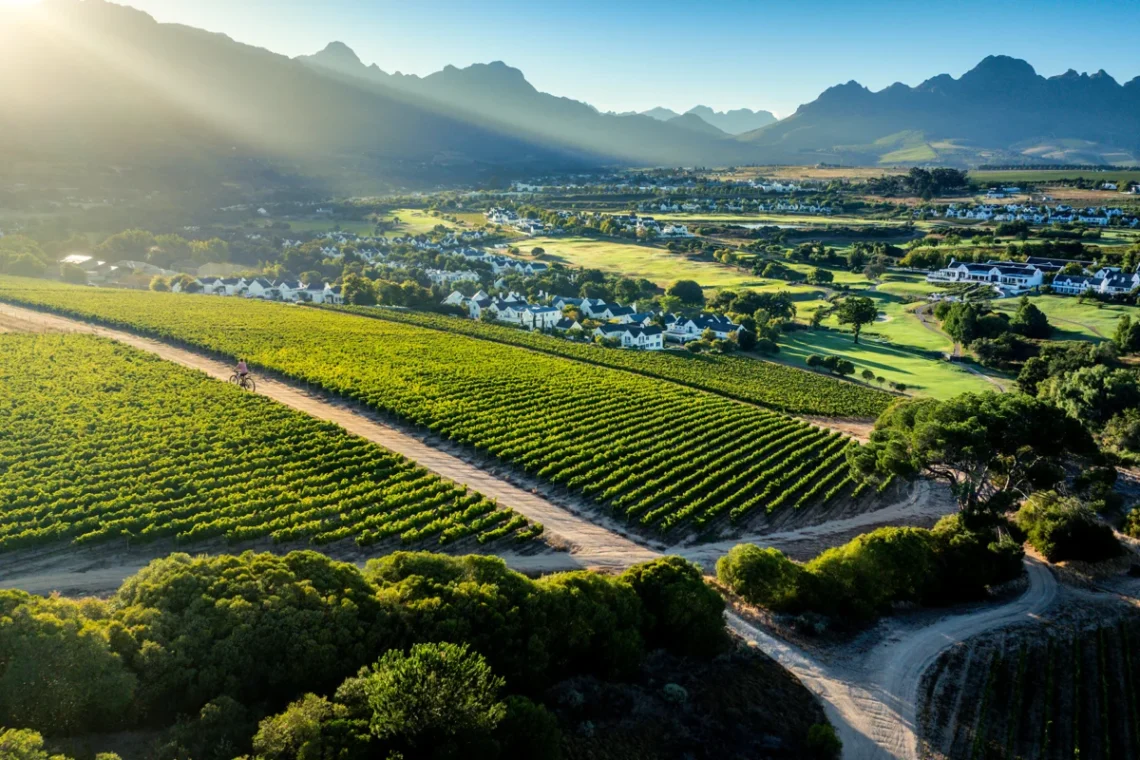
The Cape Winelands have transformed their mountainous coastal terrain into a paradise for outdoor enthusiasts. Whether you prefer the precision of road cycling, the technical demands of gravel riding, or the adrenaline of mountain biking, the Stellenbosch area caters to every discipline.
The route over the Helshoogte Pass toward Franschhoek is a highlight, offering a transition from challenging mountain climbs to serene, vineyard-lined lanes. Stops like Delaire Graff Estate allow cyclists to elevate their recovery with luxury villa accommodations and private pools. Upon arriving in Franschhoek, the historic Boekenhoutskool winery serves as a mandatory stop for connoisseurs of Cabernet Sauvignon and Syrah.
4. Sonoma Valley, United States: A Diverse Playground
While its neighbor Napa often commands the spotlight, Sonoma is arguably the superior choice for cyclists. Boasting 19 distinct AVAs, the region offers a wider variety of terrain—ranging from redwood forests to rugged coastal paths—and a greater density of bike-friendly roads.

The Healdsburg and Dry Creek Valley corridor is particularly well-suited for a multi-day tour. A 10-mile stretch along West Dry Creek Road offers a low-stress, high-reward ride, punctuated by stops at boutique producers like Lambert Bridge, which specializes in curated picnics, and Reeve Wines, a must-visit for Riesling enthusiasts.
5. Loire Valley, France: The Epicurean Spine
The La Loire à Vélo route is a masterclass in cycling infrastructure, spanning 560 miles of French countryside. While the main trail is famous for its châteaux and riverside vistas, the adventurous cyclist should head south toward the Cotes d’Auvergne AOC. Here, the landscape turns volcanic, providing a unique geological backdrop for tastings of Gamay and Pinot Noir. Producers like Desprat Saint Verny embody the region’s long history, offering a chance to taste wines that are as storied as the Roman-era paths cyclists traverse.
6. Barossa Valley, Australia: Convenience and Complexity
For those seeking a more relaxed pace, the Barossa Trail offers 25 miles of sealed paths that wind through the heart of Australia’s premier wine country. Designed for both walking and cycling, the trail features ample water stations and public amenities, allowing riders to focus entirely on the wine. The Gomersal Trail provides a scenic detour to Seppeltsfield Wines, a historic estate that produces world-class, 100-point red blends. It is a quintessential Australian experience: wide, open skies and palm-lined avenues leading to historic cellars.

7. Girona and the Empordà, Spain: The Professional’s Choice
Girona has long been a training ground for professional cyclists, but its true charm lies in the surrounding Empordà region. The landscape is a collage of cork forests, medieval villages, and Mediterranean vistas. Riders can choose between the smooth secondary roads of the interior or the rugged, unpaved terrain of the Pirinexus loop. The official DO Empordà Wine Route connects over 30 wineries, making it easy to plan a trip that pivots between the intensity of a gravel ride and the indulgence of a Garnatxa Negra tasting.
8. Willamette Valley, United States: The Scenic Standard
Oregon’s Willamette Valley Scenic Bikeway holds the distinction of being the first official scenic bikeway in the United States. Spanning 134 miles, the route is designed for multi-day immersion, winding through fertile agricultural land between the Coast and Cascade ranges. The ride is gentle, perfect for those who want to stop frequently at farm stands and wineries like Ankeny Vineyard, where the pairing of wood-fired pizza and cool-climate Pinot Noir is the local gold standard.
9. Tuscany, Italy: The Spiritual Home of Cycling
In Tuscany, cycling is as much a part of the cultural fabric as Sangiovese. With over 9,000 miles of routes, the region offers everything from the white gravel roads (strade bianche) that define the local aesthetic to the brutal climbs of the Garfagnana mountains. Whether you are navigating the historic paths of the Via Francigena or touring the famous vineyards of Chianti Classico, Tuscany remains the ultimate destination for those who believe that the best way to experience a bottle of wine is to earn it with a morning in the saddle.

Implications for the Future of Tourism
The rise of the "Cycling-Wine" circuit represents a broader shift toward "slow travel." As consumers become more conscious of their environmental impact and physical well-being, the carbon-neutral nature of cycling, combined with the agricultural connection of wine, provides a sustainable and authentic travel model.
For regions looking to boost their tourism revenue, the strategy is clear: invest in infrastructure. The success of the Accueil Vélo program in France and the development of the Barossa Trail demonstrate that when local governments and businesses make it easier for cyclists to navigate their terrain, they are rewarded with high-value visitors who stay longer, explore deeper, and spend more.
As we look toward the remainder of the decade, the marriage of the bicycle and the vineyard will likely continue to flourish. For the modern traveler, the destination is no longer just the glass in their hand—it is the miles they covered to reach it.