Decades after being banned in the United States, the notorious pesticide DDT and its primary breakdown product, DDE, continue to cast a long and insidious shadow over public health. While environmental regulations successfully halted their widespread agricultural application by the early 1970s, these persistent organic pollutants remain deeply embedded in our environment and, remarkably, inside our bodies.
Mounting scientific evidence reveals an alarming link between exposure to these chemical residues and a significantly elevated risk of neurodegenerative decline, specifically Alzheimer’s disease. In some cases, the presence of these toxic metabolites may increase a person’s vulnerability to dementia to the same degree as carrying the infamous APOE e4 "Alzheimer’s gene." As researchers peel back the layers of environmental neurology, a clearer picture emerges of how modern dietary choices, bioaccumulation, and historical chemical usage intersect to threaten human cognitive longevity.
Main Facts: The DDT-Alzheimer’s Connection
At the core of this ongoing public health concern is DDE (dichlorodiphenyldichloroethylene), a chemical compound formed when the body or the environment breaks down DDT (dichlorodiphenyltrichloroethane). While genetics undoubtedly play a role in neurodegeneration, genetic susceptibility markers—such as the APOE e4 allele—account for less than half of all Alzheimer’s disease cases. This realization has forced researchers to look beyond hereditary factors toward environmental and lifestyle triggers.

Key findings shaping the current scientific consensus include:
- Quadrupled Risk: Clinical studies indicate that individuals with the highest blood levels of DDE face up to four times the odds of developing Alzheimer’s disease compared to those with the lowest levels.
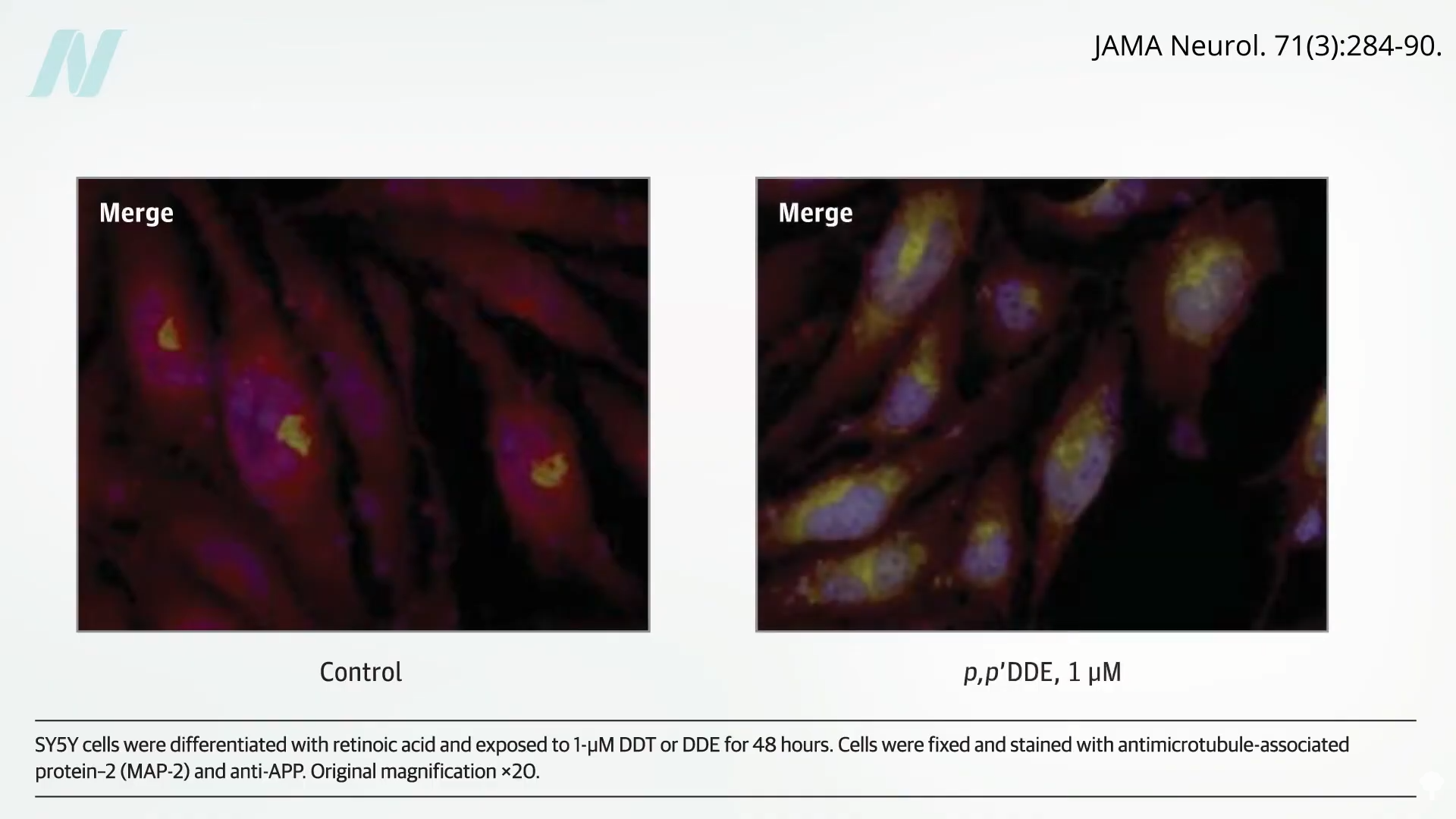
- Cellular Mechanisms: In laboratory settings, exposure to DDE has been shown to increase levels of amyloid precursor protein in human brain cells. This process accelerates the production of the sticky amyloid beta proteins that are a hallmark of Alzheimer’s pathology.
- Widespread Exposure: Despite being banned for more than 50 years, DDE and related chlorinated compounds are still detectable in the bloodstreams of more than 90% of the U.S. general population.
- Dietary Bioaccumulation: Because these fat-soluble toxins magnify as they move up the food chain, animal-derived products—including meat, fish, poultry, eggs, and dairy—harbor concentrations of these pollutants that are 5 to 10 times higher than those found in plant-based foods.
Chronology: From Industrial Boom to Environmental Legacy
To understand how a chemical banned a half-century ago remains a ubiquitous presence in human biology, it is essential to trace the historical timeline of its production and regulation.
- 1940s—The Rise of DDT: Developed initially as a synthetic insecticide to combat vector-borne diseases like malaria and typhus during World War II, DDT quickly transitioned into commercial agriculture. Its remarkable stability and potency made it an overnight sensation for crop protection.
- 1950s to 1960s—Peak Production: American industry churned out staggering quantities of the pesticide, peaking at approximately 180 million pounds per year. It was sprayed indiscriminately across fields, forests, and suburban neighborhoods.
- 1962—The Environmental Awakening: The publication of Rachel Carson’s landmark book, Silent Spring, brought public attention to the devastating ecological impacts of synthetic pesticides, particularly their accumulation in wildlife and disruption of bird reproductive cycles.
- 1972—The U.S. Ban: Prompted by mounting environmental and toxicological evidence, the newly formed U.S. Environmental Protection Agency (EPA) issued a cancellation order for most uses of DDT, classifying it and its metabolites as probable human carcinogens.
- 1980s to Present—Persistent Residues: Despite the ban, DDT’s chemical stability meant it persisted in soil, water systems, and the food chain. Decades of biomonitoring studies have confirmed that generational exposure continues, with legacy chemicals lingering in human adipose tissue, blood, and even breast milk.
Supporting Data: What the Science Reveals
The correlation between environmental toxins and cognitive decline is supported by a robust body of epidemiological and laboratory data. Researchers at institutions such as Rutgers University have analyzed blood samples from Alzheimer’s patients and healthy control groups, consistently finding significantly elevated concentrations of DDE in those suffering from dementia.
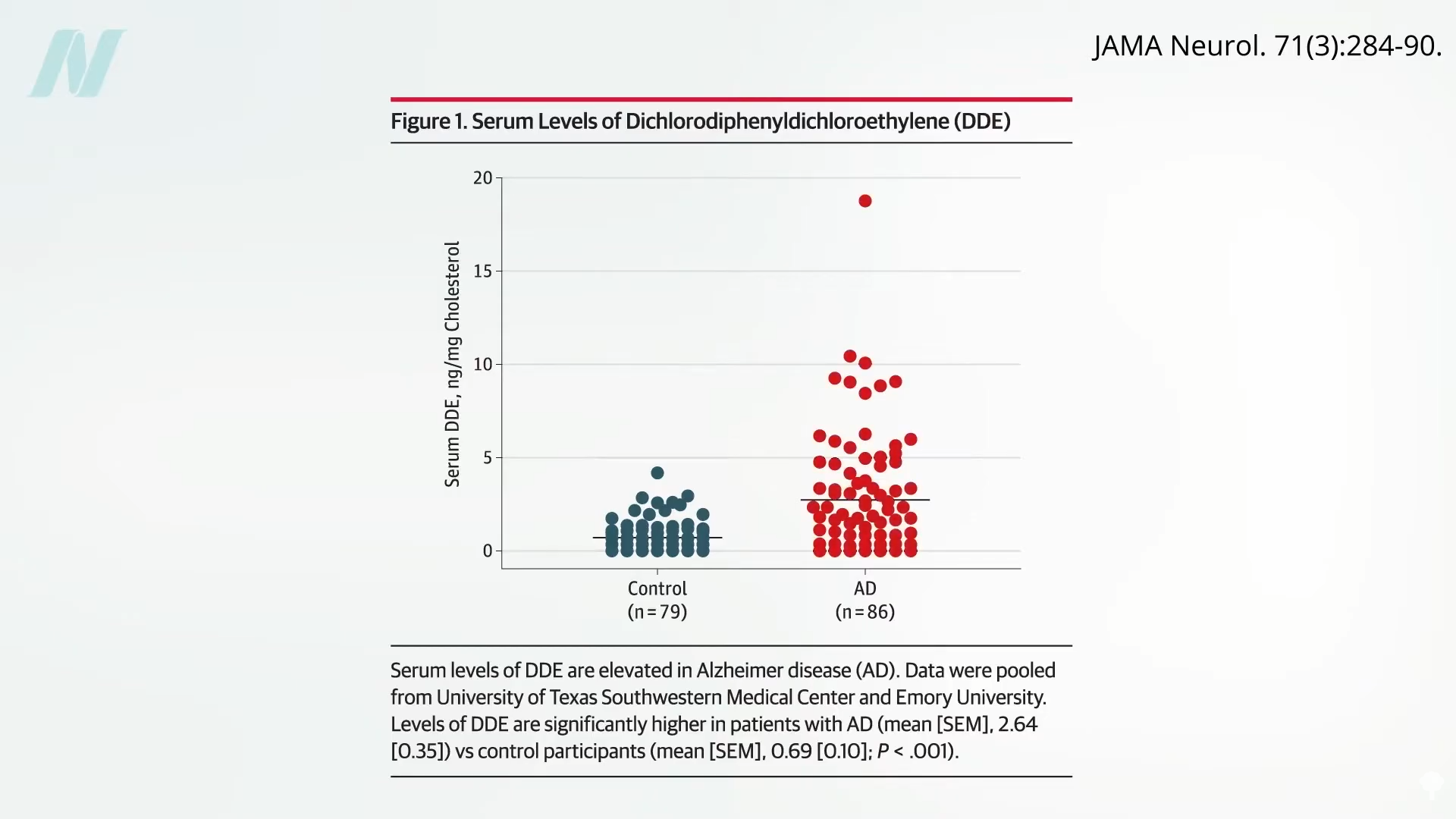
Furthermore, autopsy studies have verified that circulating blood levels of DDE serve as an accurate proxy for concentrations within the central nervous system. When researchers evaluated general cognitive function among elderly populations in the United States, higher body burdens of DDT and DDE tracked closely with accelerated cognitive decline.
Additional supporting metrics highlight the compounding danger of acute exposures:
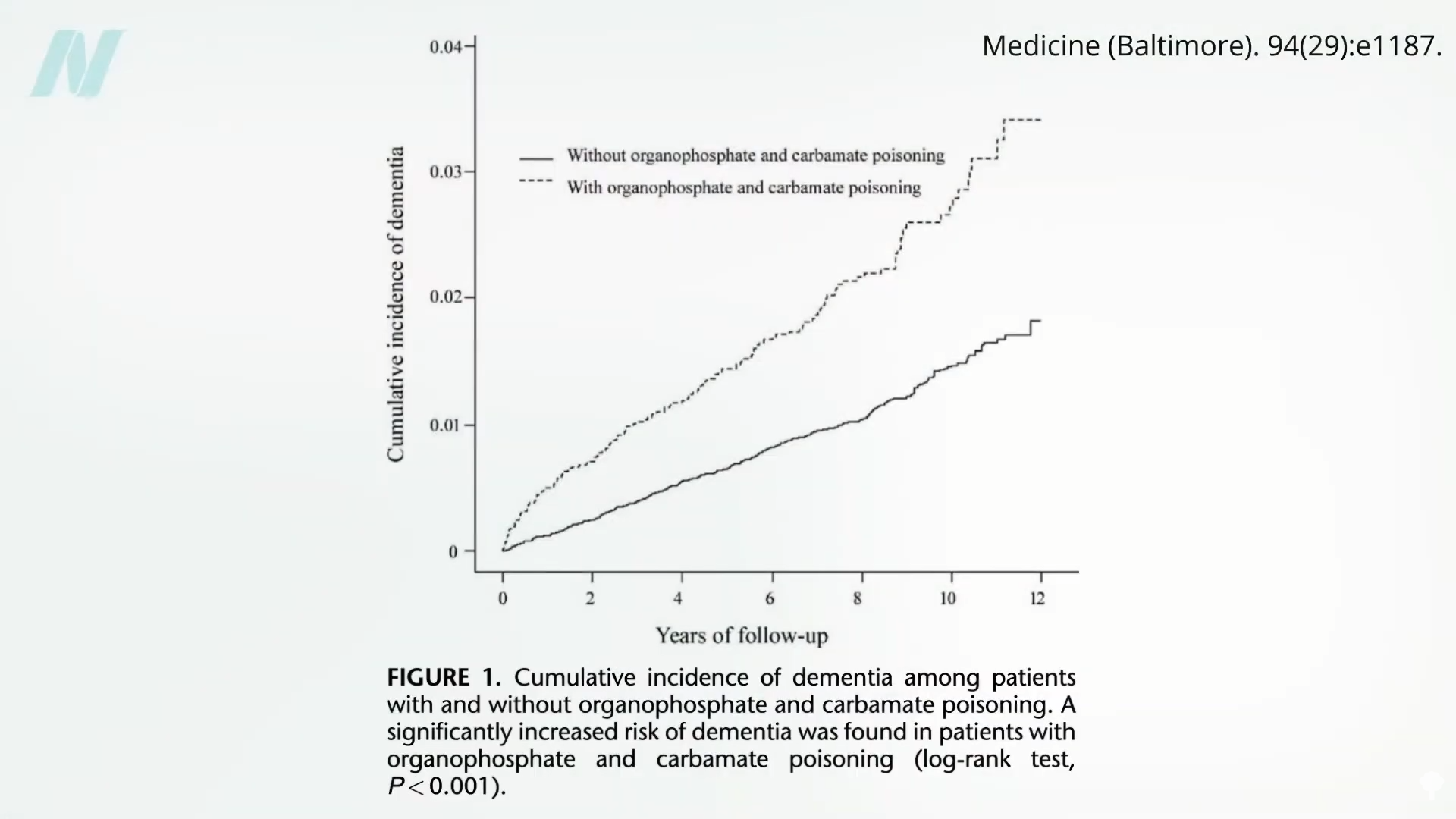
- Individuals who have suffered acute pesticide poisoning events face roughly double the lifetime risk of developing dementia compared to the unexposed general public.
- Comparative studies examining human breast milk have found that non-vegetarian mothers harbor significantly higher levels of legacy pollutants than their vegetarian relatives. Specifically, DDE concentrations were measured to be up to four times lower in vegetarian women, illustrating the direct impact of dietary intake on internal chemical loads.
- National supermarket surveys evaluating pollutant levels across various food categories demonstrate that animal-based foods consistently register the highest levels of persistent organic pollutants, as these fat-soluble toxins accumulate in the tissues of livestock over their lifespans. Cooking processes do not destroy these stable compounds; rather, preparation methods can sometimes concentrate them further.
Official Responses and Regulatory Perspectives
Public health and environmental protection agencies have long recognized the carcinogenic potential of chlorinated pesticides, officially classifying DDE as a probable human carcinogen. However, the intersection between environmental toxicology and neurodegenerative diseases like Alzheimer’s is an evolving field that has historically received less regulatory focus than cancer surveillance.
While regulatory bodies such as the EPA and the Food and Drug Administration (FDA) monitor agricultural chemical residues in contemporary food supplies, the challenge posed by legacy pollutants is unique. These chemicals are not actively applied to crops today; instead, they cycle endlessly through soil, groundwater, and animal feed, rendering them difficult to purge from the global ecosystem.
Health agencies increasingly emphasize that standard environmental safety thresholds for agricultural chemicals are often calculated based on cancer risks or acute toxicity, potentially overlooking chronic, low-dose neurotoxic effects over decades of human life. As a result, independent researchers and public health advocates continue to urge for broader cross-disciplinary investigations into how environmental chemical burdens contribute to the rising prevalence of neurodegenerative disorders.
Implications: Mitigating Risk and Looking Forward
The revelation that chemical residues from mid-century farming practices can dramatically elevate the risk of Alzheimer’s disease carries profound implications for both individual lifestyle choices and global public health policy.
Because cooking fails to break down or eliminate stable compounds like DDE, and because these toxins bioaccumulate primarily within animal fats, dietary modification emerges as one of the most practical tools for reducing internal chemical burdens. Shifting toward a plant-forward diet significantly lowers the ingestion of concentrated environmental toxins, as plant foods consistently demonstrate a fraction of the pollutant load found in meat, dairy, and high-fat seafood products.
On a broader scale, these findings underscore the urgent need for stricter oversight of industrial chemicals and a greater appreciation for the long-term, multi-generational consequences of environmental contamination. As medical science continues to untangle the complex web of factors driving Alzheimer’s disease, addressing modifiable environmental risks—ranging from air and water quality to dietary chemical exposure—offers a hopeful pathway toward preserving cognitive health well into old age.