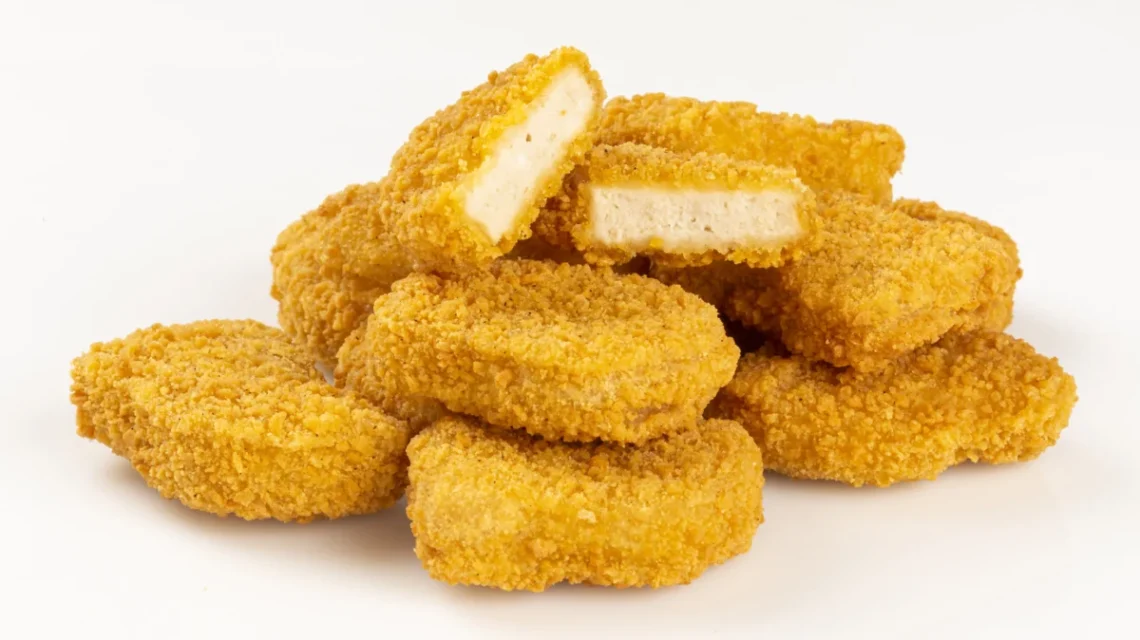
When it comes to the pantheon of comfort food, few culinary inventions rival the sheer ubiquity and universal appeal of the chicken nugget. Ranking as the 16th most popular American dish according to public-opinion metrics from YouGov, these golden, bite-sized portions of fried poultry represent the pinnacle of finger food. They are fast, reliable, portable, and custom-built for pairing with everything from classic French fries to an array of complex dipping sauces.
Yet, beneath their seemingly uniform exterior lies a fierce corporate rivalry. Two fast-food titans—McDonald’s and Wendy’s—command the lion’s share of this multi-billion-dollar market. While casual diners might view them as interchangeable lunch-hour lifesavers, a closer inspection reveals profound differences in their culinary chemistry, historical development, structural engineering, and cultural footprint.
This comprehensive deep-dive explores how these two fast-food giants approach their signature chicken nuggets, evaluating everything from their industrial manufacturing processes to their distinct sensory profiles.
1. Main Facts: The Structural and Culinary Divide
At first glance, the baseline specifications of a McDonald’s McNugget and a Wendy’s chicken nugget appear remarkably similar. Both products utilize boneless white-meat chicken, mechanically or structurally formed into bite-sized morsels, deep-fried to a golden crisp, and lightly salted before service. Both chains offer standardized ordering tiers—typically four, six, and ten-piece increments—available either à la carte or bundled into value meals featuring a side, a dipping sauce, and a beverage. Furthermore, both national chains maintain permanent or limited-time spicy variants, catering to consumer demand for heat.
Nutritional profiles between the two are also closely matched. A ten-piece order from either establishment yields well over 20 grams of high-quality protein, accompanied by comparable thresholds of dietary fats and sodium, making them nutritional equivalents within the broader fast-food landscape.
However, this is where the similarities abruptly end. The philosophical approach to the product diverges sharply at the batter line:
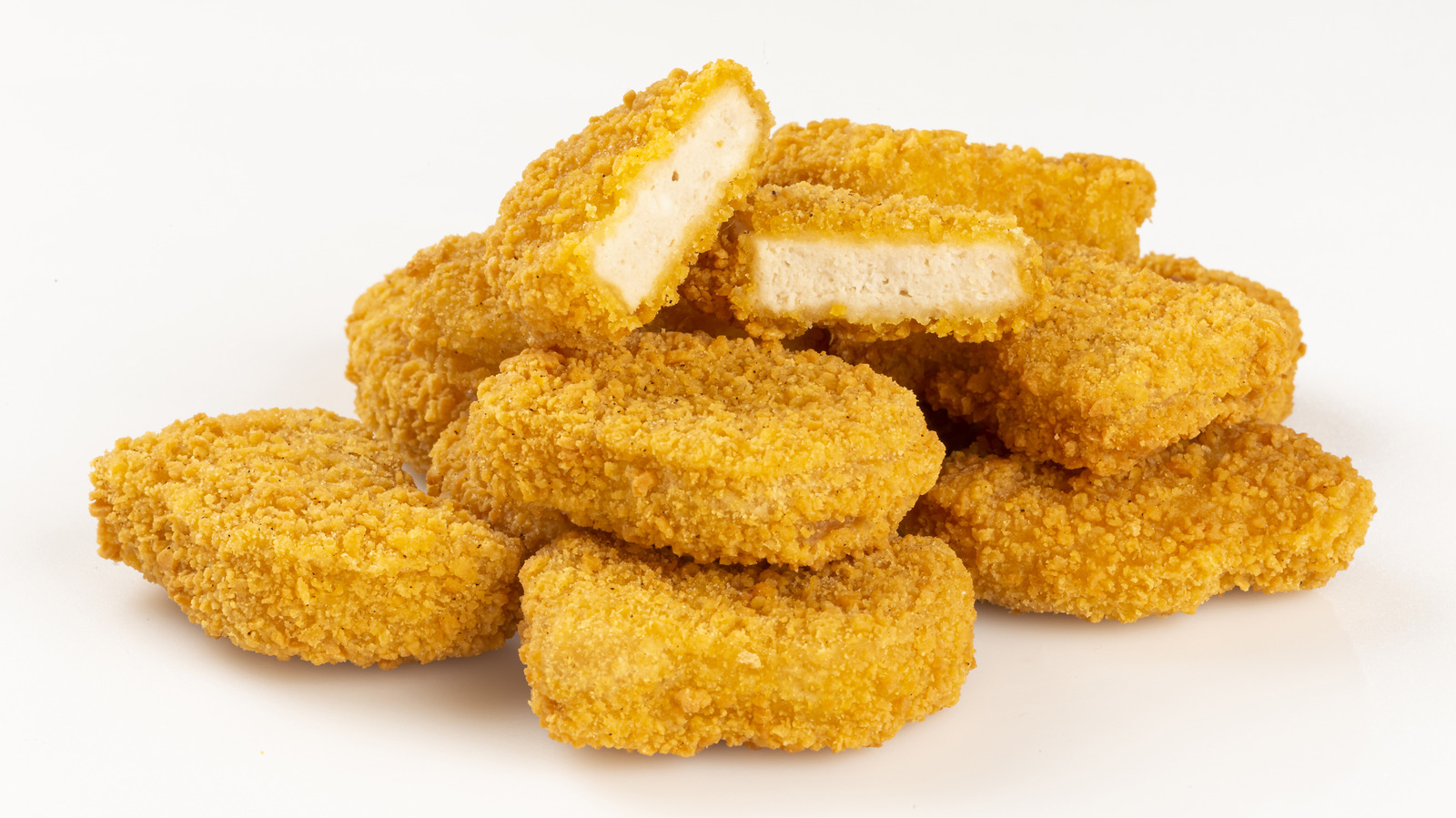
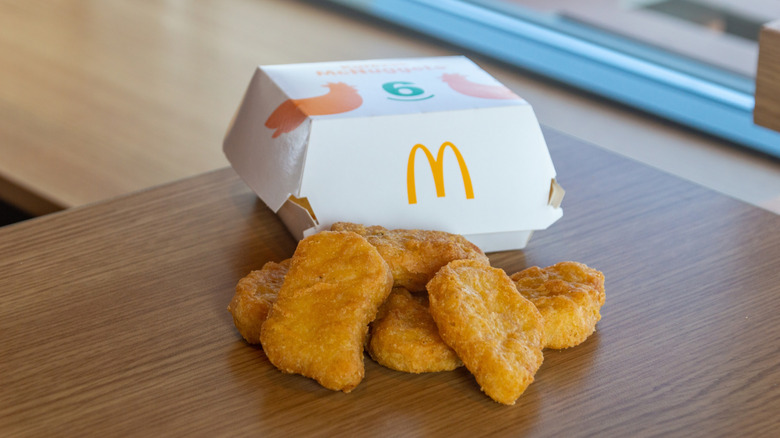
- McDonald’s McNuggets rely on a delicate, soft coating that closely mirrors a Japanese tempura batter. They are designed for industrial scale, ensuring uniform texture and rapid thermal transfer during high-volume kitchen operations.
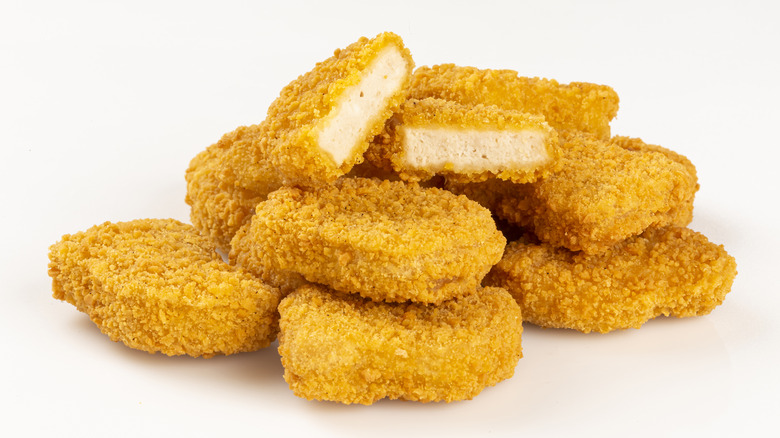
- Wendy’s Chicken Nuggets employ a traditional, rugged breading system. This yields a visibly rougher exterior texture, a more pronounced crunch, and a flavor profile heavily accented by visible specks of savory seasoning.
2. Chronology: A History of Innovation and Evolution
To understand how these two giants arrived at their current iterations, one must look back at the historical timelines that shaped the American fast-food industry.
The Genesis of the McNugget (1970s–1983)
The story of the Chicken McNugget is a foundational chapter in fast-food lore. In the late 1970s, McDonald’s executives were searching for a new product to capture the emerging market for convenient poultry products. Enter René Arend, McDonald’s corporate executive chef, who originally set out to create an "onion nugget."
When Fred Turner, then-Chairman of McDonald’s, tasted the prototype, he suggested substituting the onions with chicken. Arend successfully developed the recipe, but operational hurdles delayed its nationwide rollout. It wasn’t until 1983—following the perfection of a stable batter and a reliable supply chain of all-white meat—that the Chicken McNugget debuted nationwide, instantly transforming the fast-food landscape.
Over the decades, the McNugget formula has undergone significant modernizations. In 2003, responding to consumer health trends, McDonald’s transitioned the product to an exclusive all-white-meat formulation. Later, in 2016, the company removed all artificial preservatives, colors, and flavors, streamlining the ingredient deck to appeal to cleaner eating habits.
Wendy’s Enters the Arena (1969–1985)
Founded by Dave Thomas in Columbus, Ohio, in 1969, Wendy’s built its early reputation on fresh, never-frozen square beef hamburgers and thick Frosty dairy desserts. For the first decade and a half of its existence, Wendy’s largely ceded the poultry category to its competitors.
However, following the astronomical success of McDonald’s McNuggets, Wendy’s recognized a glaring gap in its own menu. In 1985, the company launched its own version of the chicken nugget, designed to align with its brand identity of offering heartier, more traditional diner-style foods. Decades later, in 2010, Wendy’s expanded this line by introducing its Spicy Chicken Nuggets, a product that has cultivated a fiercely loyal cult following, complete with viral social media campaigns demanding its permanent return during temporary absences.
3. Supporting Data: Engineering and Geometry
One of the most fascinating trivia points of the fast-food industry surrounds the physical shape of McDonald’s McNuggets. Far from being a random byproduct of industrial processing, every McNugget is deliberately stamped into one of four distinct, standardized geometric shapes.
McDonald’s officially acknowledges these designs by name:
- The Bone (or Bow Tie)
- The Bell
- The Ball
- The Boot
Why Four Shapes?
The rationale behind this geometric uniformity is entirely practical: cooking consistency. According to McDonald’s operational guidelines, having uniform shapes ensures that every piece of chicken cooks at the exact same rate when submerged in hot oil. If the sizes and shapes varied wildly, smaller pieces would burn while larger pieces remained undercooked, compromising food safety and quality control.
The Industrial Constraints of Scale
The manufacturing process also explains why McDonald’s is structurally unlikely to ever offer hand-breaded chicken nuggets. Producing millions of pounds of poultry daily requires massive automation. Hand-breading introduces significant risks of cross-contamination, requires specialized staff training, and demands cumbersome kitchen equipment that would dramatically slow down drive-thru times and disrupt the high-efficiency operating model that defines the McDonald’s brand.
Conversely, Wendy’s nuggets intentionally avoid geometric standardization. Their irregular shapes and rugged breading mimic the appearance of hand-cut, homestyle chicken tenders, reinforcing the brand’s marketing narrative of higher quality and traditional preparation methods.
4. Official Responses and Industry Insights
Both corporations maintain rigorous standards for sourcing and preparation, though their corporate messaging reflects their distinct brand identities.
McDonald’s emphasizes consistency, speed, and transparency regarding its supply chain. In response to historical consumer skepticism regarding the composition of processed chicken, the company launched robust educational campaigns detailing how its McNuggets are sourced exclusively from federally inspected plants using boneless chicken cut from the breast, tenderloin, and rib meat.
Wendy’s, meanwhile, leans heavily into the sensory experience of its products. Corporate messaging regularly highlights the use of 100% white meat chicken and emphasizes the bolder, pepper-forward seasoning blend embedded within its breading. By positioning its nuggets as having a "meatier bite," Wendy’s actively differentiates its poultry portfolio from the lighter, more delicate mouthfeel of its primary competitor.
Consumer sentiment, as captured across digital platforms like Reddit and culinary review sites, mirrors this corporate positioning. Die-hard fans of McDonald’s praise the nostalgic, comforting nature of the tempura-style batter, with some online commentators fondly recalling the golden era of 1990s formulations. On the flip side, champions of Wendy’s routinely cite superior crunch, moisture retention, and a more robust, freshly prepared flavor profile as the primary drivers of their loyalty.
5. Implications: The Future of the Fast-Food Poultry War
The ongoing rivalry between McDonald’s and Wendy’s chicken nuggets is far more than a battle of condiments; it is a microcosm of modern fast-food economics. As consumer preferences shift toward transparency, cleaner ingredient lists, and bolder flavor profiles, both chains are forced to continually adapt without alienating their core customer bases.
Operational Efficiency vs. Culinary Craft
For McDonald’s, the challenge lies in maintaining the iconic nostalgia of the McNugget while adapting to health-conscious trends—such as the 2016 removal of artificial preservatives—without altering the beloved texture that generations of consumers grew up with. Their focus remains locked on industrial perfection, speed of service, and technological integration within their kitchens.
For Wendy’s, the strategy centers on out-crunching and out-flavoring the competition. By maintaining a rougher, more heavily seasoned crust, Wendy’s captures consumers who prioritize texture and a perceived step up in culinary craftsmanship.
The Bottom Line
Ultimately, declaring a definitive winner in the McDonald’s versus Wendy’s nugget debate comes down to personal culinary philosophy. Those seeking a light, uniform, scientifically engineered snack with a delicate tempura crunch will invariably reach for the iconic McDonald’s shapes. Those desiring a heavier, crunchier, and more robustly seasoned bite will find their champion beneath the golden arches of Wendy’s.
As the fast-food landscape continues to evolve through shifting economic climates and changing dietary preferences, one immutable truth remains: the humble chicken nugget will continue to reign supreme as the undisputed king of fast-food finger foods.