The La Marzocco Linea has long held the title of the espresso world’s ultimate blank canvas. Its form—a rigid, utilitarian box—is the industrial design equivalent of a baseline: clean, reliable, and iconic. For decades, it has served as the backbone of specialty coffee shops globally, largely because its architectural simplicity invites modification. From the popular practice of "chopping" the machine’s legs to lower its profile on the bar, to custom powder coating and panel swaps, the Linea is rarely left in its stock state by those who view espresso preparation as a form of high art.
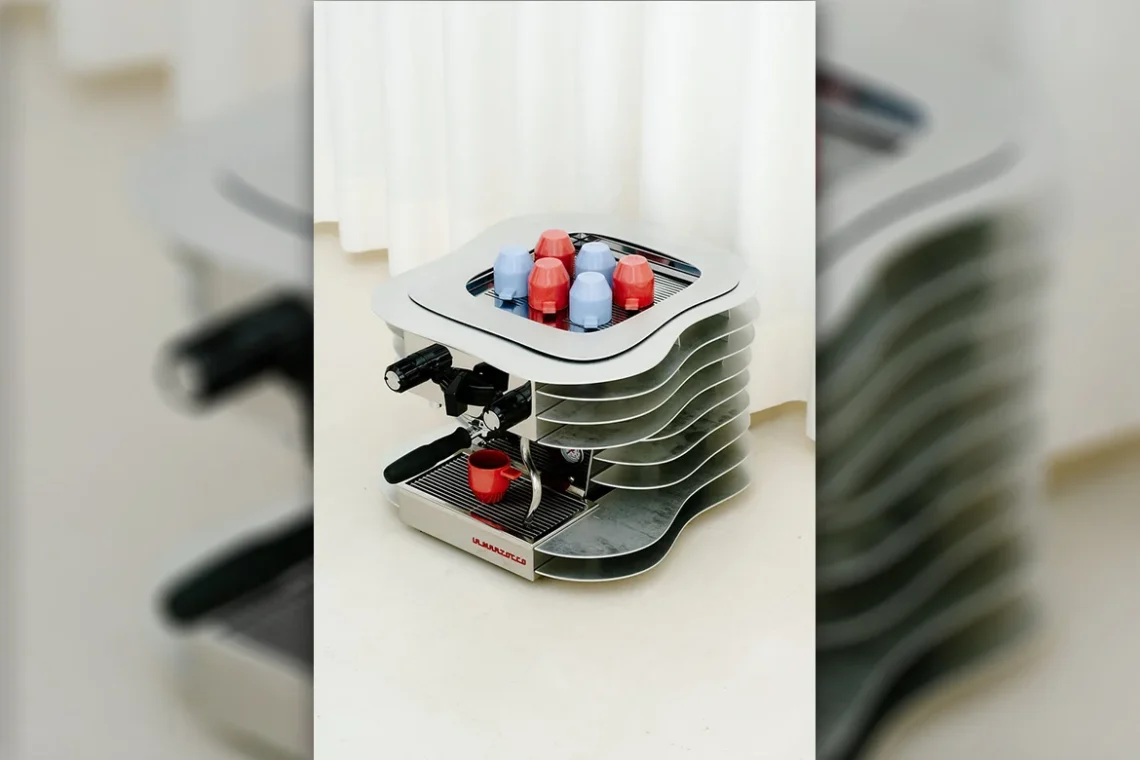
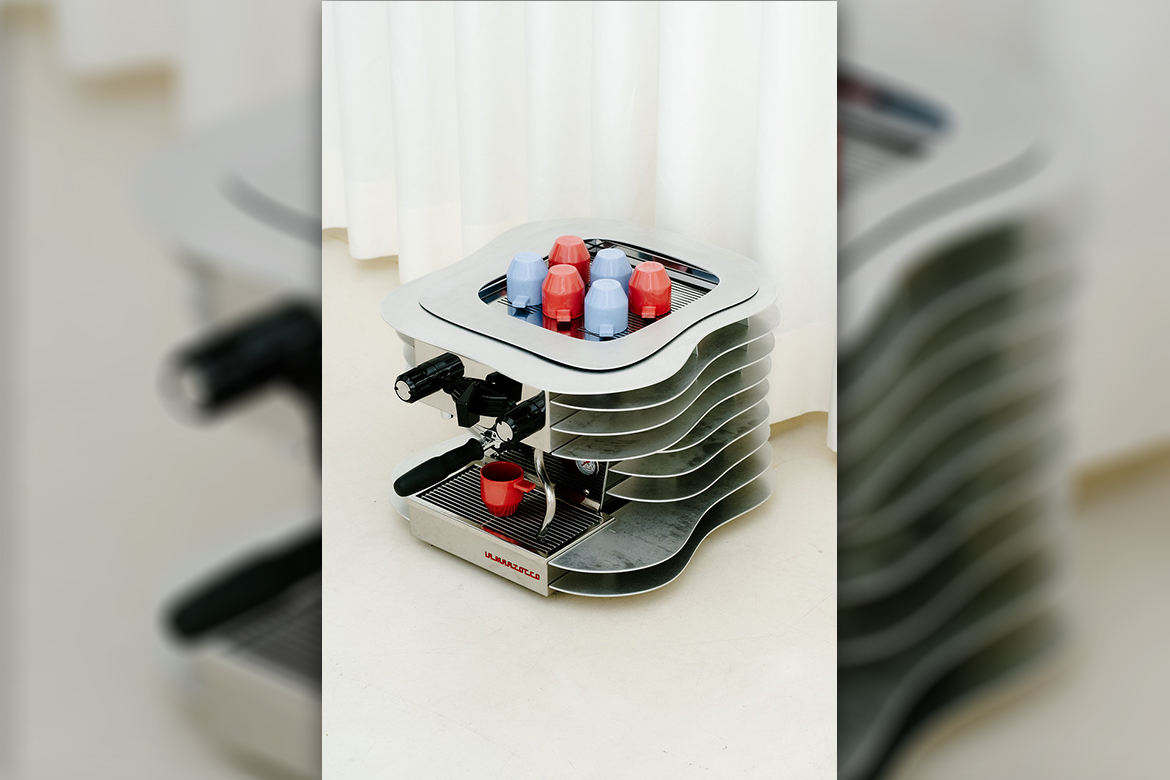
However, a new project from Dresden-based designer Tina Bobbe takes this customization to a sophisticated extreme. The "Topo Frame," designed specifically for the La Marzocco Linea Micra, transforms the machine from a static appliance into a kinetic sculpture. By introducing undulating, wave-like layers of raw aluminum, the Topo Frame challenges the very geometry of the home espresso experience.
The Intersection of Industrial Design and Coffee Culture
The Topo Frame is currently being showcased through I Can’t Afford This But Maybe She Can, a curated online marketplace that focuses on high-end, design-forward objects. The collaboration signals a growing trend in the specialty coffee industry: the move away from mass-produced consumer electronics toward bespoke, artisanal hardware.
The frame itself consists of interlocking sheets of raw aluminum. Unlike standard aftermarket panels that merely change the color or texture of a machine, the Topo Frame physically alters the silhouette of the Micra. The curved edges of the aluminum sheets create a sense of movement, as if the metal were draped over the machine like liquid.
"The goal," says designer Tina Bobbe, "was to support every step of the espresso-making process while bringing a sense of architectural fluidity to a machine that is traditionally defined by its rigidity." The frame does not merely sit on the machine; it wraps around it, creating a new structural interface that feels simultaneously industrial and organic.
A Legacy of Avant-Garde Coffee Hardware
Tina Bobbe is no newcomer to the intersection of coffee and craft. Her portfolio suggests a deep-seated obsession with the tactile nature of brewing. Before the Topo Frame, Bobbe made waves with a series of "pipe frames" for the La Marzocco Linea Mini, which stripped the machine down to its mechanical essentials, framed by industrial piping.
Her work extends beyond the espresso machine itself. She has developed stone-based pour-over drippers that prioritize thermal mass and aesthetic minimalism. Her collaborations reach into the lifestyle sphere as well, including design partnerships with Yard Shed Office on bespoke coffee mugs and an innovative bike-mounted cup holder for Oatly. Perhaps most notably, her experimental concept machines for La Marzocco have pushed the boundaries of what an espresso maker can look like, often blending futuristic aesthetics with traditional brass and steel components.
The Topo Frame, therefore, is not a sudden pivot but a logical evolution of her career. It reflects a designer who is deeply embedded in the coffee community, understanding not just the mechanics of the pump and boiler, but the human-centric ergonomics of the morning ritual.
Chronology of Development: From Concept to Countertop
The journey of the Topo Frame mirrors the methodical pace of high-end manufacturing.
- Initial Conception: Bobbe began exploring the potential for re-housing the Linea Micra in early 2024. The challenge was to maintain the machine’s thermal stability while creating a chassis that could accommodate the Micra’s specific heat dissipation needs.
- Prototyping: Utilizing CAD software and precision laser-cutting, Bobbe spent several months refining the interlocking aluminum sheets. The "Topo" name was chosen to reflect the topographical nature of the stacked metal layers.
- Integration Testing: By mid-2024, the first prototypes were fitted to local machines in Dresden, ensuring that the frame did not interfere with the portafilter handle’s movement or the drip tray’s accessibility.
- Public Reveal: In the final quarter of 2024, the project was finalized and accepted by the curators at I Can’t Afford This But Maybe She Can, positioning it as a centerpiece item for design enthusiasts.
Economic Implications: The Price of Artistry
The market for high-end home espresso equipment is currently experiencing a "luxury pivot." As machines like the La Marzocco Linea Micra and the Slayer Single Group gain popularity among home enthusiasts, a secondary market for "super-premium" accessories has emerged.
The Topo Frame is priced at €1,900 (approximately $2,163 USD). When one considers that a stock La Marzocco Linea Micra retails for roughly $4,000 to $4,500, the addition of the frame represents a nearly 50% increase in the total investment for the setup.
Critics might argue that such a price point is exclusionary, yet it aligns with the "made-to-order" manufacturing model. Each frame is crafted with a five-to-eight-week lead time, involving manual finishing and quality control that mass-market accessory manufacturers cannot replicate. This is not a commodity; it is a limited-edition piece of furniture that happens to pull shots of espresso.
Supporting Data: Technical Specifications and User Experience
For those considering the investment, the Topo Frame is not purely decorative. Its construction offers several functional benefits:
- Thermal Management: The aluminum alloy used for the frame acts as a secondary heat sink, which, while minor in its impact on the boiler, helps in managing the ambient temperature around the group head.
- Structural Integrity: The interlocking design adds a layer of weight and stability to the machine, reducing the vibration often felt during the initial stages of a high-pressure extraction.
- Ergonomic Geometry: The "waves" of the frame are angled to provide natural hand-rests during the portafilter locking process, a subtle design feature that improves the haptic feedback of the brewing ritual.
Official Perspective and Industry Reception
While La Marzocco has not officially endorsed the Topo Frame as a factory-authorized modification, the company has historically been supportive of the "modding" community. The brand’s philosophy—that the Linea is a "blank canvas"—is precisely what allows designers like Bobbe to flourish.

Industry analysts note that the success of the Topo Frame indicates a shift in home coffee culture. "Consumers are no longer just buying an appliance," says one industry observer. "They are curating a space. The coffee machine is the center of the kitchen, and it is finally being treated with the same architectural importance as a high-end range or a designer refrigerator."
Future Outlook: The Trend Toward Bespoke Coffee Hardware
The arrival of the Topo Frame raises a significant question for the industry: Will we see more "architectural housing" for coffee machines?
As home kitchens become more integrated with living spaces, the "appliance" look is increasingly falling out of favor. The demand for products that can disappear into the design language of a modern apartment—or, conversely, serve as a bold statement piece—is growing. Tina Bobbe’s work represents the vanguard of this movement.
For the average consumer, the cost remains a significant barrier. Yet, the existence of the Topo Frame serves as an aspirational goal. It provides a visual language for what is possible when we stop viewing coffee machines as mere tools for caffeine extraction and start viewing them as vessels for design.
Whether or not the Topo Frame becomes a standard for high-end home baristas, its presence is a reminder that the most compelling innovations in coffee often happen on the periphery of the industry, driven by independent designers who refuse to accept the status quo of the "box" machine.
Conclusion
The La Marzocco Linea Micra is, by any standard, a masterpiece of engineering. The Topo Frame is, by any standard, a masterpiece of form. By marrying the two, Tina Bobbe has created something that transcends the sum of its parts. It is a testament to the fact that, in the world of specialty coffee, the pursuit of the perfect cup is inextricably linked to the pursuit of the perfect environment. For those with the budget and the vision, the Topo Frame offers a chance to turn a morning routine into a daily encounter with art. For the rest of us, it remains a beautiful dream—a piece of architectural inspiration that proves, once and for all, that espresso is as much about the eyes as it is about the palate.