Main Facts: The Clash Between Public Health and the Meat Panel
In late 2019, the nutrition and public health communities were rocked by a series of papers published in the Annals of Internal Medicine. Headed by an international consortium known as NutriRECS, the studies appeared to upend decades of established dietary wisdom. Despite finding statistically significant associations between the consumption of red and processed meats and higher rates of total mortality, cardiovascular disease, and cancer, the authors delivered a startling conclusion: individuals should ignore prevailing dietary guidelines and continue eating red and processed meat to their hearts’ content.
This stark contradiction between data and recommendation immediately triggered widespread alarm among epidemiologists, cardiologists, and public health officials. Critics argue that the NutriRECS panel relied on methodological sleight-of-hand, cherry-picked data, and inappropriately applied grading systems traditionally reserved for pharmaceutical drug trials. Furthermore, connections between panel members and institutions receiving funding from the meat industry cast a long shadow over the objectivity of the findings.
The core debate centers on whether the risks associated with meat consumption are genuinely negligible—as the panel claimed—or whether the guidelines represent a masterclass in industry-influenced science designed to protect commercial interests at the expense of public health.
Chronology: How the Controversy Unfolded
The 2019 Publications
The controversy erupted in September 2019 when the Annals of Internal Medicine released a suite of systematic reviews and a new set of dietary recommendations regarding red and processed meat consumption. The panel asserted that the adverse health outcomes linked to meat were of a "very small magnitude," arguing that the pleasure derived from eating meat outweighed the potential health risks.
Immediate Backlash and Petitions
Almost overnight, leading health organizations—including the Harvard T.H. Chan School of Public Health, the American Heart Association, and the American Institute for Cancer Research—mobilized to push back against the guidelines. Critics pointed out that the panel had discarded robust data, ignored vegetarian-versus-meat-eater comparisons, and excluded major randomized trials like the landmark Lyon Diet Heart Study. By October 2019, public health advocates filed formal petitions with federal trade regulators, questioning the integrity and transparency of the research and its dissemination.
The Broader Scientific Reckoning
As medical experts dissected the papers, comparisons to historical tobacco defense strategies quickly surfaced. Analysts noted striking parallels between the meat panel’s tactics and the decades-long playbook used by the tobacco industry in the mid-20th century: focusing on minute differences in exposure levels, avoiding zero-exposure baseline comparisons, and weaponizing methodological hurdles to manufacture doubt where clear consensus existed.
Supporting Data: What the Numbers Actually Show
To understand why the NutriRECS recommendations caused such uproar, it is necessary to examine the underlying data regarding meat consumption and mortality.
The Real-World Impact of Reduction
Comprehensive meta-analyses of large cohort studies indicate that even moderate reductions in red and processed meat consumption yield profound clinical benefits:
- Total Mortality: Lowered by approximately 13%.
- Cardiovascular Disease Mortality: Lowered by roughly 14%.
- Cancer Mortality: Reduced by about 11%.
- Type 2 Diabetes Risk: Decreased by up to 24%.
According to estimates by prominent nutrition scientists, a moderate reduction in red and processed meat consumption across the population could prevent roughly 200,000 deaths annually in the United States alone. To put this in perspective, billions of dollars are spent annually on pharmaceutical interventions, such as statin drugs, that achieve similar or lesser risk reductions—often while carrying side effects like an increased risk of type 2 diabetes. A dietary shift accomplishes all of these protective effects simultaneously without pharmacological complications.
The Substitution Effect
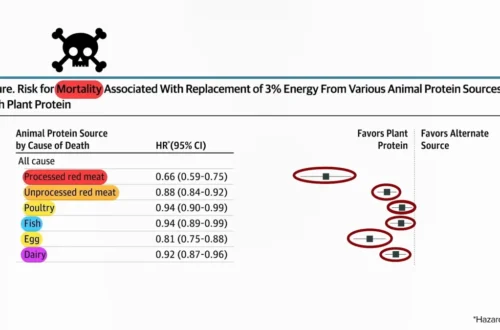
The health impacts of reducing red meat also depend heavily on what replaces it on the plate. Research demonstrates that swapping out just 3% of calories from animal protein with plant-based protein significantly extends lifespan.

Conversely, the choice of replacement matters immensely. While substituting red meat with plant protein can lower overall mortality by over 10%, replacing it with certain animal-based alternatives—such as eggs—can actually increase the risk of premature death by more than 20%. Therefore, a reduction strategy that swaps a beef burger for an egg salad sandwich fails to capture the necessary health dividends.
The "Small Effect" Fallacy
The NutriRECS panel defended its position by arguing that the absolute risk reduction for individuals was "very small." Critics, however, dismantled this argument using logical analogies.
Dr. Dean Ornish famously compared this rationale to arguing that smoking 24 cigarettes a day increases lung cancer risk only marginally more than smoking 20 cigarettes a day—while carefully omitting any comparison to smoking zero cigarettes. By defining "realistic decreases" as minuscule shifts—such as the 1.4-serving-per-week reduction seen in the Women’s Health Initiative (amounting to roughly a fifth of a hamburger daily)—the panel guaranteed that only modest health benefits would be observed. Concluding from this that meat reduction is unnecessary is scientifically indefensible.
Official Responses and Industry Influence
The credibility of the NutriRECS panel was heavily compromised by institutional and financial ties. Reports revealed that multiple panel members had affiliations with or received funding streams connected to Texas A&M AgriLife, an institution that rakes in millions of dollars in meat industry financing annually.
Dismissal of Pivotal Trials
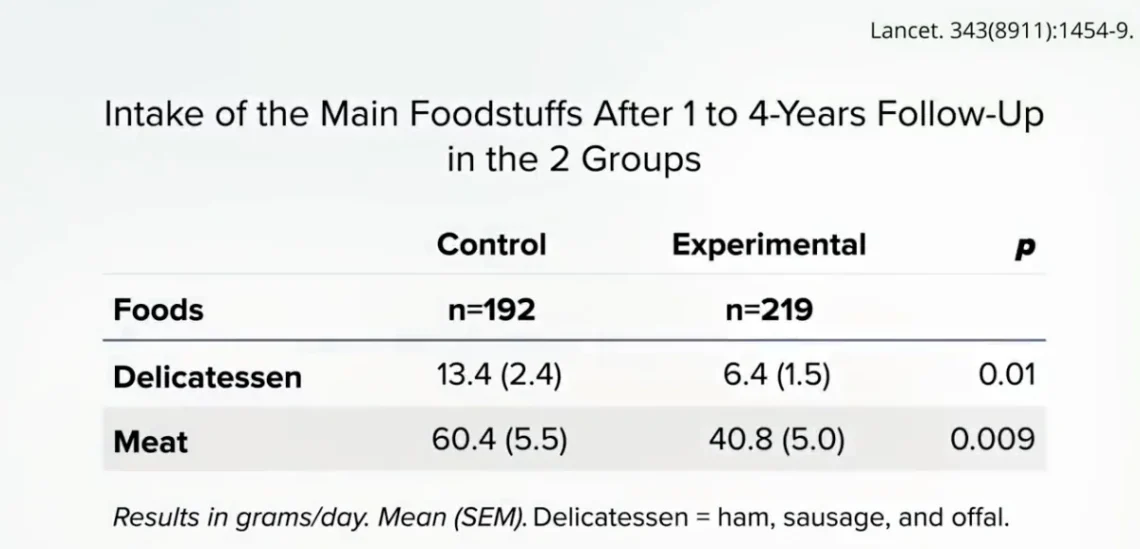
The panel’s methodology featured glaring omissions designed to neutralize unfavorable findings. For instance, they entirely excluded the Lyon Diet Heart Study—a landmark randomized trial of a Mediterranean diet that featured a significant drop in meat consumption. Participants on the lower-meat diet experienced a staggering 70% reduction in all-cause mortality. The panel dismissed this pivotal trial under the subjective rationale that it reported "an implausibly large treatment effect"—essentially discarding the study because it worked too well.
Furthermore, the panel opted to use the GRADE (Grading of Recommendations, Assessment, Development, and Evaluation) system. GRADE was explicitly engineered to evaluate high-control pharmaceutical drug trials, not complex, long-term lifestyle and nutritional behaviors. Applying GRADE to dietary habits creates an insurmountable evidentiary barrier, one that critics note could easily be weaponized to undermine established public health consensus on secondhand smoke, air pollution, trans fats, and physical inactivity.
Implications: Parallels to Big Tobacco and Public Health Futures
The 2019 red meat controversy serves as a cautionary tale about the vulnerability of nutritional science to commercial interests. When powerful industries finance research or shape investigative frameworks to protect product demand, public health pays the price.
The parallels to the historical defense of the tobacco industry are striking. In 1959, public health researchers compiling evidence linking smoking to lung cancer faced identical charges of "inadequate proof" from an entrenched industry skilled in mass persuasion. As experts have observed, if the mountain of data implicating red and processed meat in chronic disease had been discovered regarding a novel chemical agent to which hundreds of millions of adults were not already culturally attached—and which did not support a multibillion-dollar industrial complex—the hazardous nature of the product would be deemed beyond dispute.
Ultimately, the NutriRECS guidelines demonstrate that science communication must remain vigilant against structured attempts to downplay cumulative risks. When public health advisories bend to accommodate taste preferences and corporate bottom lines, hundreds of thousands of preventable deaths are quietly written off as a "small effect."