By Michael Greger, M.D., FACLM
Published: August 13, 2026
When humans evaluate risk, we are notoriously irrational. We panic over rare, highly publicized tragedies—like commercial plane crashes or shark attacks—while casually engaging in statistically far more dangerous activities, such as driving to the grocery store or riding a bicycle. When doctors inform patients that a routine surgical procedure carries a “half-percent chance of mortality,” it is common for patients to brush off the statistic with a casual retort: "Well, I could die just as easily crossing the road."
Such statements underscore a fundamental cognitive blind spot: humans are poorly equipped to intuitively grasp the magnitude of small percentages or abstract probabilities. Trying to mentally picture a microscopic fraction—such as a rug measuring 0.0017 by 0.00227 miles—yields cognitive paralysis. We need digestible, standardized units to make sense of the dangers that surround us.
Enter the micromort (mM)—a brilliant unit of measurement designed to compare and communicate risk to patients, policymakers, and the public by quantifying the exact odds of mortality.
Main Facts: What is a Micromort?
Invented by decision analysts to help make sense of hazardous choices, a micromort is defined as a one-in-a-million chance of death.

To put that into perspective, a single micromort is roughly equivalent to:
- Flipping a coin and landing on tails 20 consecutive times.
- Drawing a slightly lower probability than hitting a royal flush in a game of poker.
The true utility of the micromort, however, is not just in its standalone definition, but in its capacity to create an apples-to-apples comparison across entirely unrelated activities. By translating diverse human experiences into a unified metric, we can directly evaluate whether skydiving is truly more dangerous than general anesthesia, or how a medical treatment stacks up against a cross-country road trip.
For instance, driving 100 miles in a standard automobile entails roughly a one-in-a-million chance of a fatal accident, making that journey equal to one micromort. Scuba diving, by comparison, carries an average risk of about five micromorts per dive—meaning a single underwater excursion carries the same statistical risk of mortality as driving 500 miles.
Chronology and Evolution of Risk Communication
The concept of quantifying risk gained traction in the latter half of the 20th century as modern medicine, industrial engineering, and public health initiatives forced society to reckon with acceptable levels of hazard.
- The 1970s–1980s: Decision scientists and risk analysts, notably Ronald Howard at Stanford University, began developing formal units to quantify societal safety, leading to the coining of terms like the micromort (one-in-a-million risk of death) and the microlife (the loss of 30 minutes of life expectancy).
- The Clinical Awakening: Over the subsequent decades, researchers realized that informed consent in medicine was severely flawed. Patients routinely signed off on surgeries without understanding the true numerical context of anesthesia or post-operative complications.
- Modern Integration (2000s–Present): Public health educators, science communicators, and physicians began championing micromorts as an educational tool to bridge the gap between complex epidemiological data and intuitive patient understanding.
Supporting Data: Ranking Everyday Hazards, Hobbies, and Surgeries
When researchers map medical procedures and recreational activities onto the micromort scale, the results can be both illuminating and startling.
Medical Interventions and Surgeries
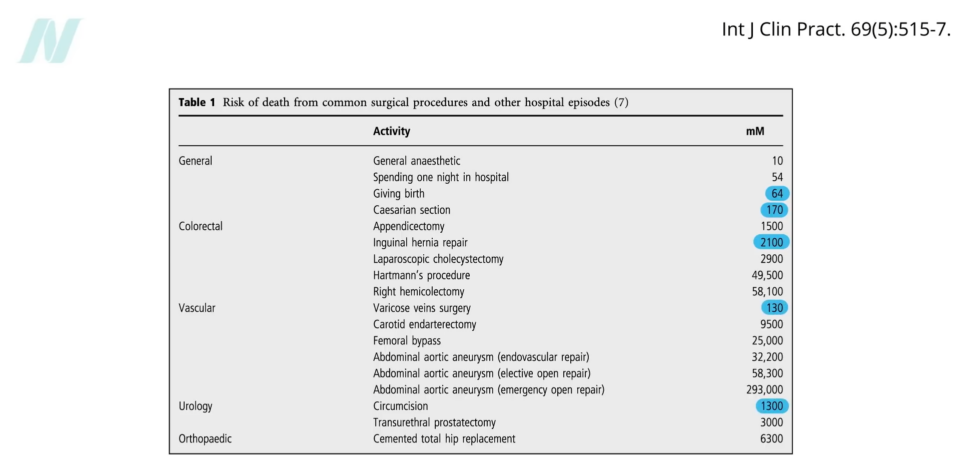
Going under general anesthesia carries approximately a 1-in-100,000 chance of death—equal to 10 micromorts, or roughly the same risk profile as an expert skydive.
However, surgical interventions vary wildly in their baseline safety:
- Childbirth: Bringing a child into the world naturally carries a baseline risk comparable to driving a car from New York to Los Angeles and back again.
- Cesarean Sections (C-sections): Opting for or requiring a C-section more than doubles that baseline surgical risk.
- Elective/Minor Surgeries: Simple hernia repairs carry a risk of mortality equivalent to skydiving roughly 200 times. While some procedures are unavoidable, elective or preventative surgeries—such as varicose vein removal or routine circumcisions—introduce non-trivial mortality risks that patients might choose to bypass if fully informed.
- Cancer Therapies: Aggressive treatments like chemotherapy and radiation for head and neck cancer carry heavy physiological tolls. Statistically, the cumulative risk associated with certain intensive protocols can surpass the risk of rock climbing continuously for 500 years, driving 5 million miles, or skydiving 5,000 times. (Of course, these risks are weighed against the near-certainty of death from untreated cancer).
Recreational Thrills and Transportation
When comparing outdoor adventures and daily commuting, the statistics challenge conventional wisdom:
- Equestrian Sports: Surprisingly, horseback riding is roughly four times deadlier than rock climbing.
- Mountaineering: Climbing Mount Everest dwarfs almost all standard earthly hobbies, proving roughly 30 times riskier than industrial coal mining or base jumping.
- Commuting: Trains and commercial airplanes boast remarkably low per-mile fatality rates, making them statistically equivalent over identical distances. Conversely, riding a motorcycle is roughly 50 times deadlier than traveling the same distance in a passenger car. Cycling to a destination also carries an elevated near-term risk—roughly 10 times deadlier than driving.
Official Responses and Perspectives: Putting Rare Fears Into Context
One of the most powerful applications of micromort analysis is diffusing public panic over rare health scares by anchoring them to mundane, accepted daily risks.
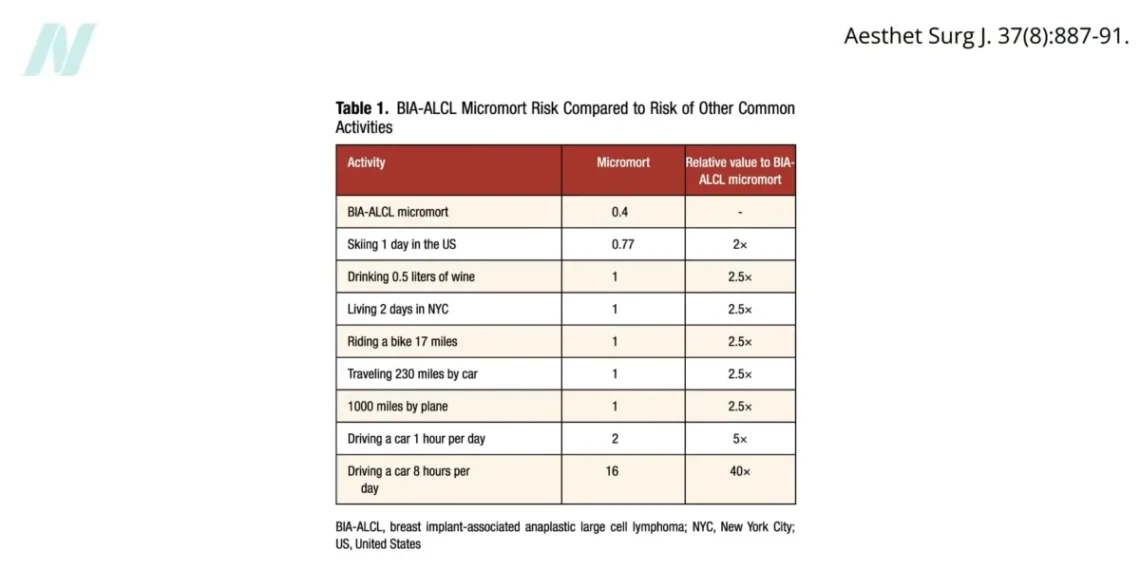
Consider the anxiety surrounding modern medical implants. Certain textured breast implants have been linked to a rare form of cancer known as breast implant-associated anaplastic large cell lymphoma (BIA-ALCL). For the millions of women worldwide with implants, hearing the word "cancer" triggers intense fear.
However, when epidemiologists evaluate the absolute risk of dying from BIA-ALCL, the numbers reveal a startling perspective: the statistical risk of mortality from this specific cancer is less than the risk accumulated during a single day of downhill skiing.
While some might argue that a quick accident on the ski slopes is preferable to a prolonged battle with illness—and avoids the financial ruin of medical debt—using micromorts successfully strips away emotional hyperbole. It allows patients to evaluate whether the statistical threat justifies removing or avoiding a medical device.
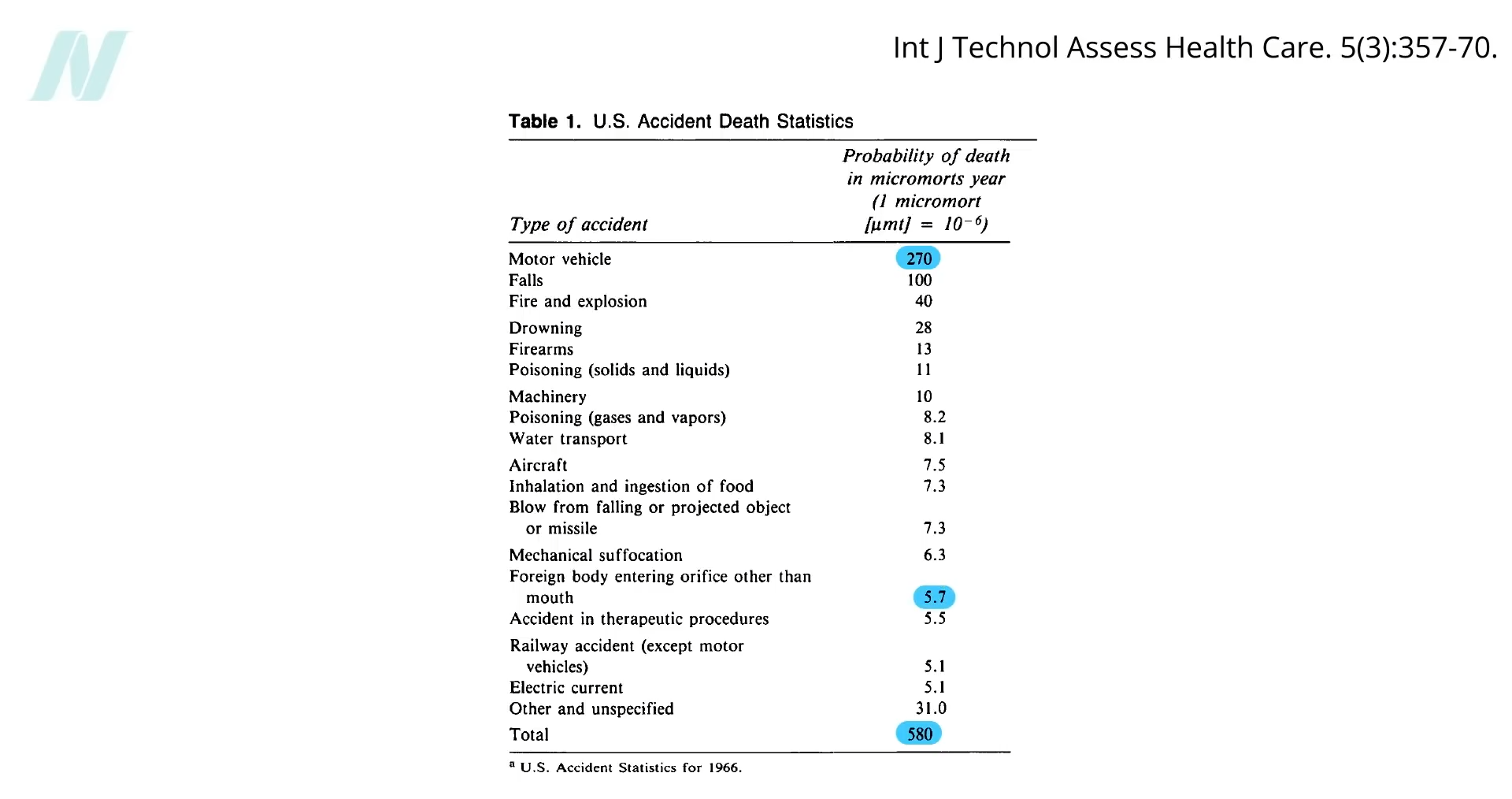
Similarly, everyday life carries a baseline statistical hazard. On average, humans face roughly a one-in-a-million chance of dying by pure accident every single day, with traffic collisions accounting for about half of that baseline. Other bizarre hazards also register on the epidemiological radar; for instance, data indicates that Americans face roughly a 1-in-200,000 chance every year of dying from a foreign body entering an orifice other than the mouth.
Implications for Healthcare and Public Policy
The widespread adoption of micromorts carries profound implications for how medicine is practiced, how public safety campaigns are funded, and how individuals make life choices.
- Reforming Informed Consent: Medical boards and hospitals must move beyond dense, legalistic liability waivers. By presenting surgical risks in standardized micromorts, physicians can empower patients to genuinely weigh the necessity of elective procedures against alternative lifestyle interventions.
- The Paradox of Medical Error: Medical literature frequently highlights a sobering reality: despite their healing intentions, physicians and modern healthcare systems inadvertently rank among the leading causes of preventable death in developed nations. Emphasizing preventative medicine ("Prevention is worth a ton of cure") over reactive surgical intervention can drastically lower a patient’s cumulative lifetime micromort exposure.
- Calibrating Public Outrage: Media cycles often sensationalize rare, catastrophic events while ignoring chronic, systemic killers. By training the public to think in micromorts, society can better allocate resources toward genuinely high-risk behaviors—such as distracted driving or sedentary lifestyle diseases—rather than paralyzing ourselves over statistically negligible anomalies.
Ultimately, micromorts do not tell us how to live our lives; skydiving, scuba diving, and surgery are all valid choices that millions make every day. Instead, they strip away the fog of emotional bias, granting us clear, mathematical vision in a world full of unseen hazards.