
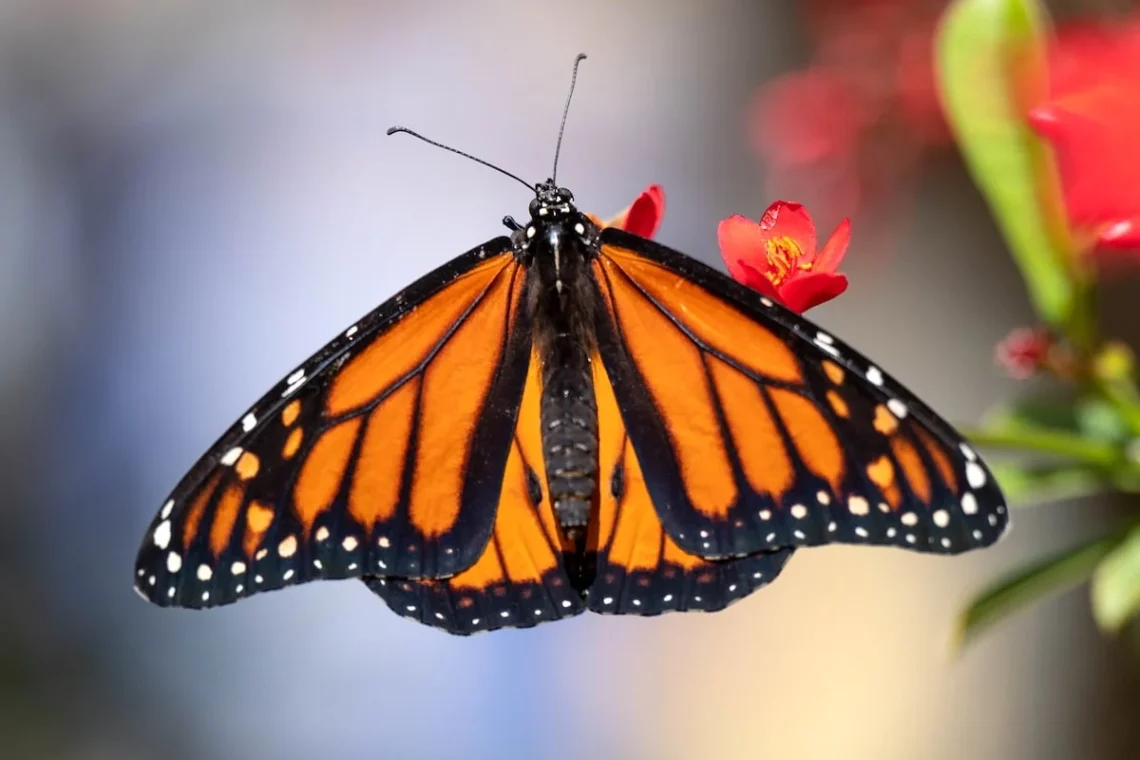
In the quiet groves of Pacific Grove, California—a site famed for hosting the annual, awe-inspiring congregation of Western monarch butterflies—a grim discovery in January 2024 sent shockwaves through the conservation community. Hundreds of the iconic orange-and-black insects were found dead or dying on the forest floor. What initially appeared to be a localized ecological tragedy has now been confirmed by peer-reviewed science as a textbook case of chemical poisoning, highlighting a systemic threat that continues to push one of North America’s most beloved species toward the brink of extinction.
A groundbreaking study, published in the journal Environmental Toxicology and Chemistry, has definitively linked this mass mortality event to a toxic cocktail of pesticides. As researchers peel back the layers of this disaster, the findings serve as a clarion call for urgent policy shifts regarding how we manage chemicals in our landscapes, from industrial farms to suburban backyards.
The Evidence: A Toxic Cocktail
The scientific investigation into the Pacific Grove die-off was comprehensive, utilizing advanced diagnostic tools including liquid and gas chromatography and mass spectrometry. The results were harrowing. Researchers discovered a complex mixture of 15 different chemicals—a blend of insecticides, herbicides, and fungicides—laced within the bodies of the deceased butterflies.
"We found an average of seven different pesticides per butterfly, including multiple insecticides that are highly toxic to insects," explained Staci Cibotti, lead author of the study and a pesticide risk prevention specialist at the Xerces Society for Invertebrate Conservation.
The presence of three specific human-made pyrethroid insecticides—bifenthrin, cypermethrin, and permethrin—was particularly alarming. These substances were detected at or near their established lethal doses. The ubiquity of these toxins was startling: every single butterfly sample tested positive for bifenthrin and cypermethrin, while all but two contained traces of permethrin. These findings provide irrefutable evidence that the monarchs were not victims of a natural phenomenon, but of a lethal chemical exposure that occurred during their most vulnerable life stage.
Chronology of a Disappearing Icon
The road to this discovery began in the winter of 2024, when observers in Pacific Grove noticed an abnormal accumulation of dead monarchs beneath the trees where they traditionally cluster to survive the winter.
This event did not occur in a vacuum; it was the latest blow in a long-term decline. Since the 1980s, the Western monarch population has plummeted by nearly 95%. The trends have been consistently downward, culminating in the second-lowest population count ever recorded in 2024. By early 2025, the grim reality of this decline was underscored by a total count of just 9,119 overwintering individuals.
The chronology of these events mirrors a wider, tragic pattern. In September 2020, a similar "monarch massacre" occurred in North Dakota, where hundreds of butterflies perished following an aerial mosquito control spray. The Pacific Grove incident confirms that these are not isolated anomalies, but rather systemic failures in how we regulate the intersection of agricultural and urban chemical use with the migratory routes of essential pollinators.
Supporting Data: The Fragility of Migration
To understand the gravity of these deaths, one must understand the biology of the monarch. During their migration and overwintering phases, monarchs gather in massive, dense colonies. This behavior, while essential for heat retention and survival, creates a "bottleneck" effect. When a toxic spray or pesticide drift settles over an overwintering site, it does not just kill a few individuals; it can wipe out a significant percentage of a local population in a single hour.

Data from the Xerces Society emphasizes that the threats are ubiquitous. Pesticide residue does not stay neatly within the borders of a farm or a home garden. Drift, runoff, and systemic accumulation mean that monarchs are exposed to chemicals across their entire migratory range. Whether it is structural pest control, landscaping, turf management, or mosquito abatement, the chemicals meant for "pests" are inadvertently eliminating the very species that provide essential ecosystem services.
Official Responses and Expert Analysis
The scientific community has reacted with both alarm and a renewed sense of purpose. The study’s authors and leading conservationists argue that the Pacific Grove event is a microcosm of a much larger, pervasive problem.
"Although this incident occurred in California, pesticide exposure is a widespread threat to monarchs across their range," Cibotti stated in an update following the study’s publication. She noted that these chemicals are common in daily human life. "These chemicals are commonly used not only in agriculture, but also across developed landscapes for structural pest control, home gardening, landscaping, turf management, mosquito abatement and more."
Emily May, co-author of the study and agricultural conservation lead at the Xerces Society, stressed that the solution must be twofold: education and policy. "Protecting monarchs from pesticides will require both public education and policy change," May said. "We are committed to working with communities and decision-makers to ensure that overwintering sites are healthy refuges for these butterflies."
Implications for the Future
The implications of this study are profound. With the International Union for Conservation of Nature (IUCN) listing migratory monarchs as endangered, the window for intervention is closing. The U.S. Fish and Wildlife Service has issued dire projections, suggesting a 99% probability that the Western monarch population will face extinction by 2080 if current trends persist.
The path forward requires a radical rethinking of how we manage chemical applications near natural habitats. The Xerces Society has outlined several critical recommendations to prevent future mass mortality events:
- Establishment of Pesticide-Free Zones: Buffer zones around known overwintering and migratory "stopover" sites must be established and strictly enforced to prevent chemical drift.
- Increased Public Education: Programs to inform homeowners, land managers, and local governments about the dangers of pyrethroids and other systemic insecticides are essential.
- Stronger Policy Coordination: Public officials must coordinate more effectively to track pesticide risks, particularly during peak migration seasons.
- Integrated Pest Management (IPM): Shifting away from broad-spectrum insecticides toward biological and cultural pest control methods can significantly reduce the risk to non-target species.
Conclusion: A Turning Point?
The death of hundreds of butterflies in Pacific Grove is a tragic, tangible reminder that the environmental crisis is not just a distant, abstract concept—it is happening in our backyards, our parks, and our sanctuaries. The science is now clear: our chemical dependency is a major driver of the monarch’s decline.
However, there is a glimmer of hope. By identifying the specific culprits—the pyrethroid insecticides—and acknowledging the vulnerability of the monarchs during their migratory cycle, we have the information necessary to change course. Protecting the Western monarch is not merely about saving a single insect species; it is about preserving the health of our ecosystems and acknowledging that the chemicals we use today have long-term, irreversible consequences for the future of our natural world.
As we look toward the next migration cycle, the question remains whether society will heed the warning of the Pacific Grove butterflies or continue on a path that leads to the silence of our skies. The tools for recovery exist—now, we require the political and social will to implement them before the orange wings that once darkened the California sun disappear forever.