Boise, Idaho, has spent the last decade quietly transforming into one of the most vibrant cultural hubs in the Intermountain West. Long celebrated for its historic downtown architecture, burgeoning arts scene, and world-class annual gatherings like the Treefort Music Fest, the city has simultaneously evolved into a formidable epicenter for specialty coffee. As urban centers across the United States grapple with shifting demographics and rapid real estate markets, Boise’s culinary and beverage landscape has matured, balancing a deep appreciation for local heritage with forward-thinking design.
At the vanguard of this movement is Slow by Slow, a multi-roaster specialty coffee bar that has served as a fixture of the city’s downtown community for ten years. Rather than resting on its laurels after a decade of success, the team behind Slow by Slow recently completed a total, ground-up reinvention of its historic space. Wrapped up in June 2026, the comprehensive overhaul has resulted in an award-winning layout that merges historical preservation with avant-garde spatial design. Remarkably, even before the physical hammers stopped swinging, the project earned top honors in the “Spaces” category at the Specialty Coffee Association (SCA) Design Awards.
Building upon this momentum, the ownership team introduced a companion concept, Fast by Slow, in July 2026. Designed to address the dual demands of modern consumers—those who want to savor a slow ritual and those who need exceptional coffee on a tight schedule—the new expansion cements Slow by Slow’s status as a visionary force in specialty coffee culture.
Chronology of a Transformation: A Decade in the Making
The journey of Slow by Slow’s radical redesign is rooted in a milestone anniversary. Founded a decade ago on the philosophy that coffee deserves deliberate time, consideration, and scientific precision, the shop reached its ten-year mark facing a distinct operational challenge. Over the years, the founders recognized a growing dichotomy in their clientele: while many patrons sought a sanctuary to settle in, work, and meditate over single-origin pours, an equally large segment of the community required the same uncompromising quality served with maximum efficiency.
Solving this paradox required both a physical and conceptual evolution. The timeline of the project reflects a meticulous commitment to design integrity:
- Early Planning & Design Phase: Led by owner Ian Fadness alongside architectural and brand designers Eric Corbett and Gabe Watkins, the team envisioned a space that would reward human curiosity. Every corner was mapped out to offer visual hints of what lay beyond, drawing visitors deeper into the environment.
- Early 2026: The original downtown location was gutted entirely, stripped down to its historic brick shell to be rebuilt from the ground up. During this period, the project captured critical acclaim, winning the prestigious SCA Design Awards “Spaces” category for San Diego 2026 before construction was even finalized.
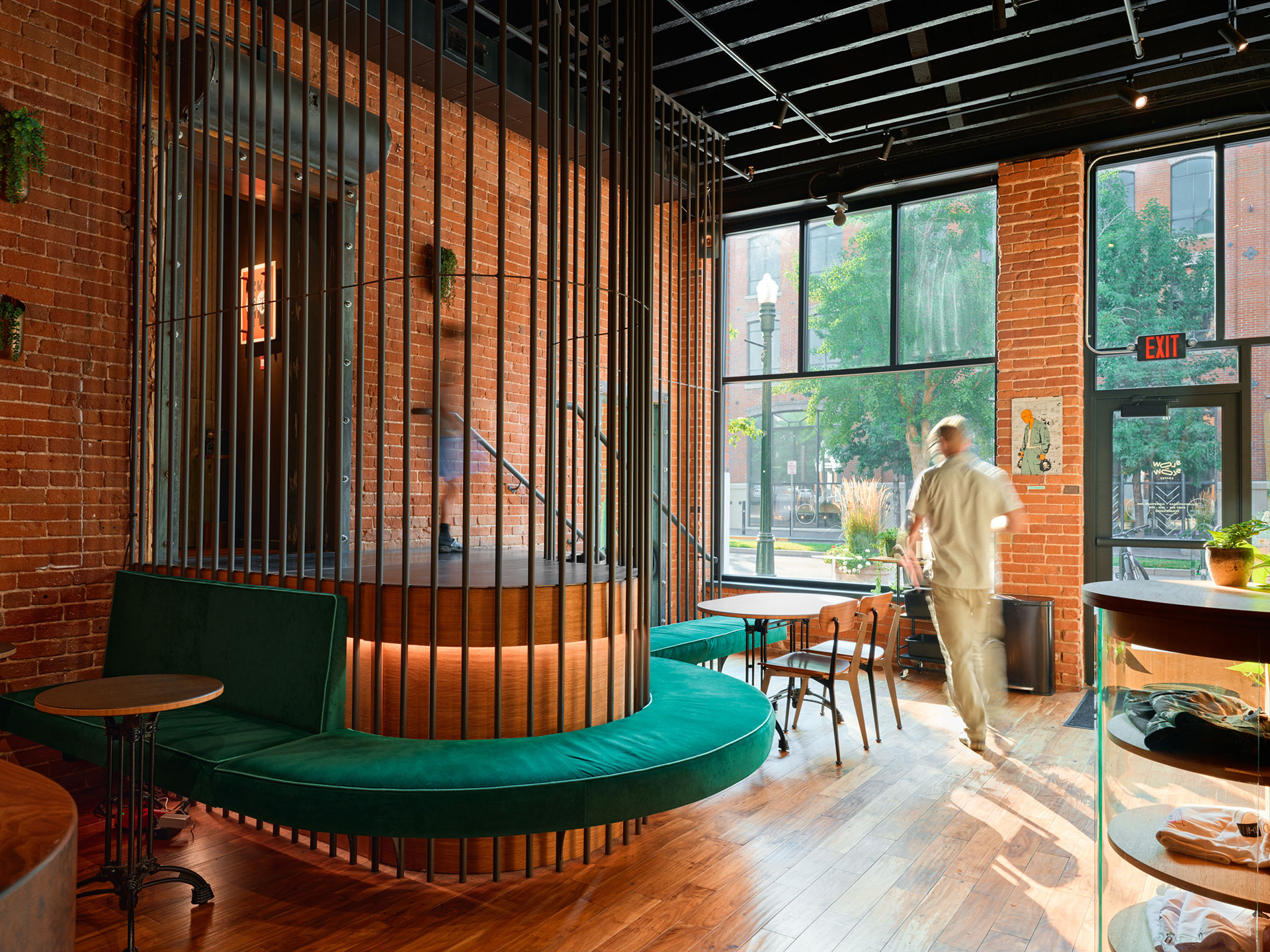
- June 2026: The heavy construction and interior build-out of the flagship Slow by Slow space officially wrapped, unveiling a multi-level wonderland of custom woodwork, hidden mechanics, and tactile materials.
- July 17, 2026:** Fast by Slow officially opened its doors next door. Functioning as a quick-serve counterpart to the primary cafe, the new space delivered high-speed access to the same multi-roaster coffee program without sacrificing any ethical or operational standards.
Supporting Data, Spatial Mechanics, and Engineering
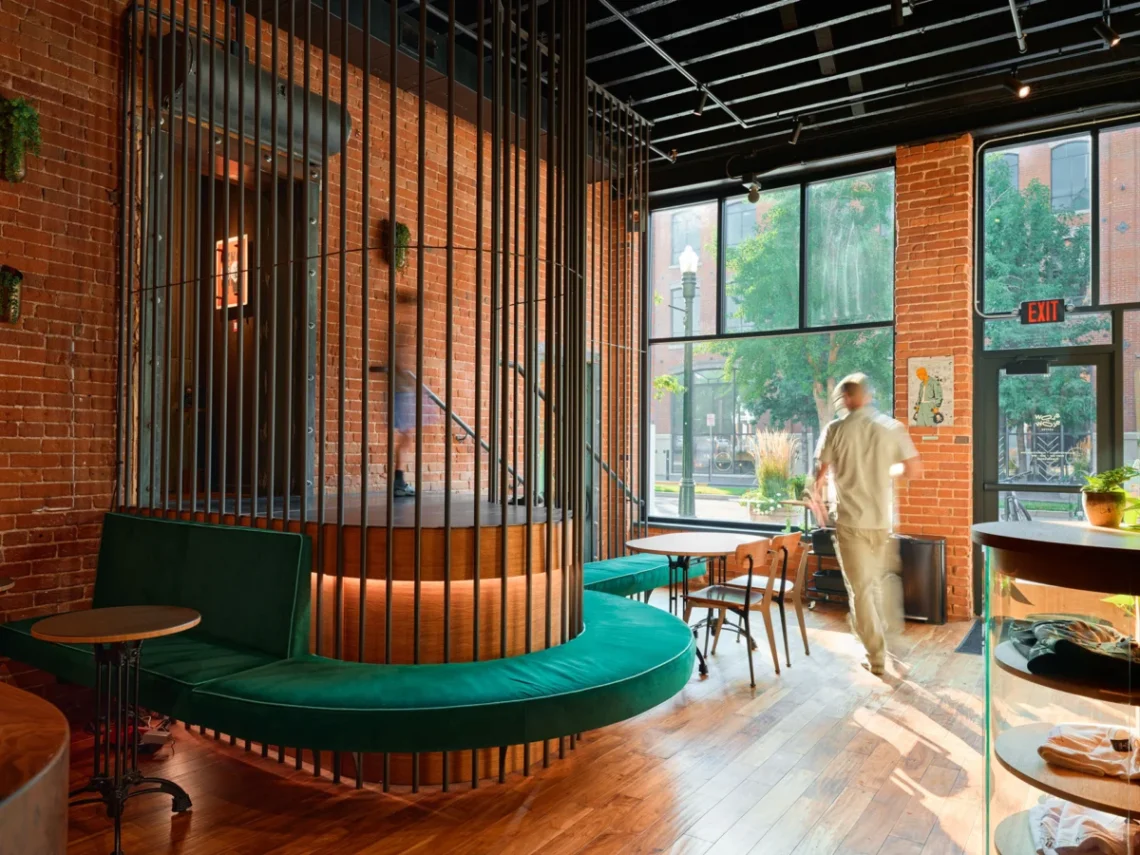
To execute a renovation of this magnitude, Slow by Slow relied heavily on local craftsmanship, sustainable material sourcing, and cutting-edge coffee hardware. The physical environment is a masterclass in textures designed to improve with age: exposed historic brick, hand-poured concrete tiles, raw structural steel, brass accents, and rich walnut burl.

The Under-Counter Revolution
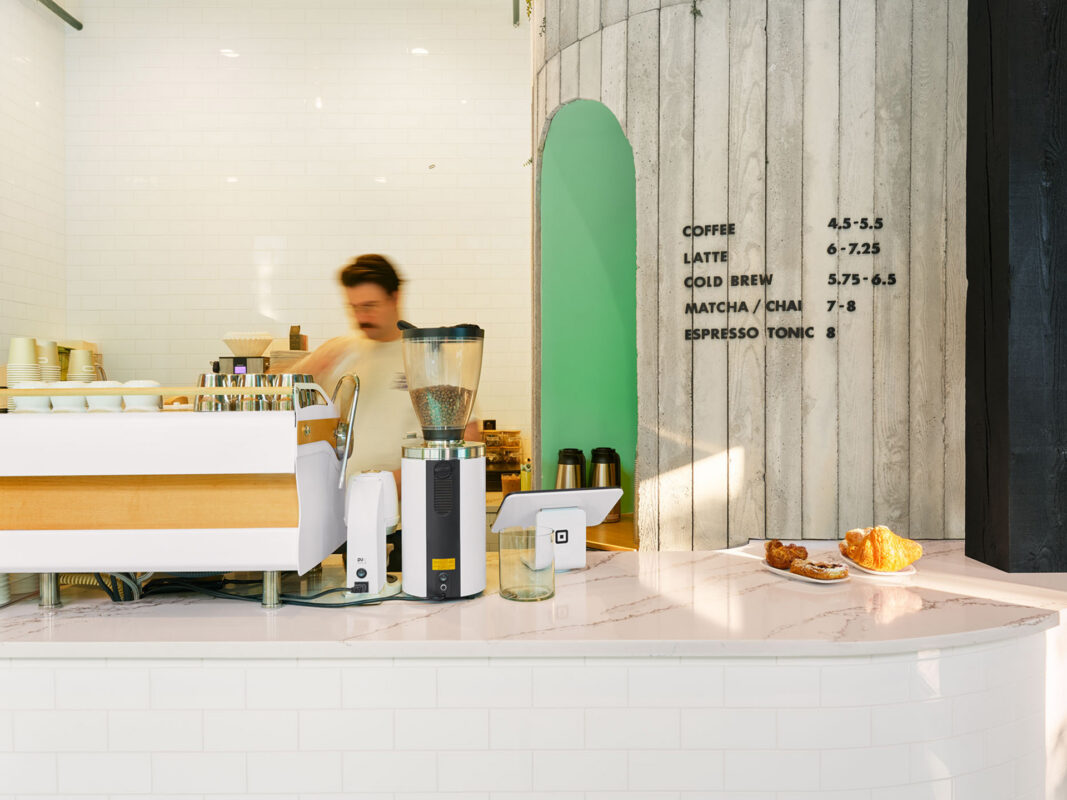
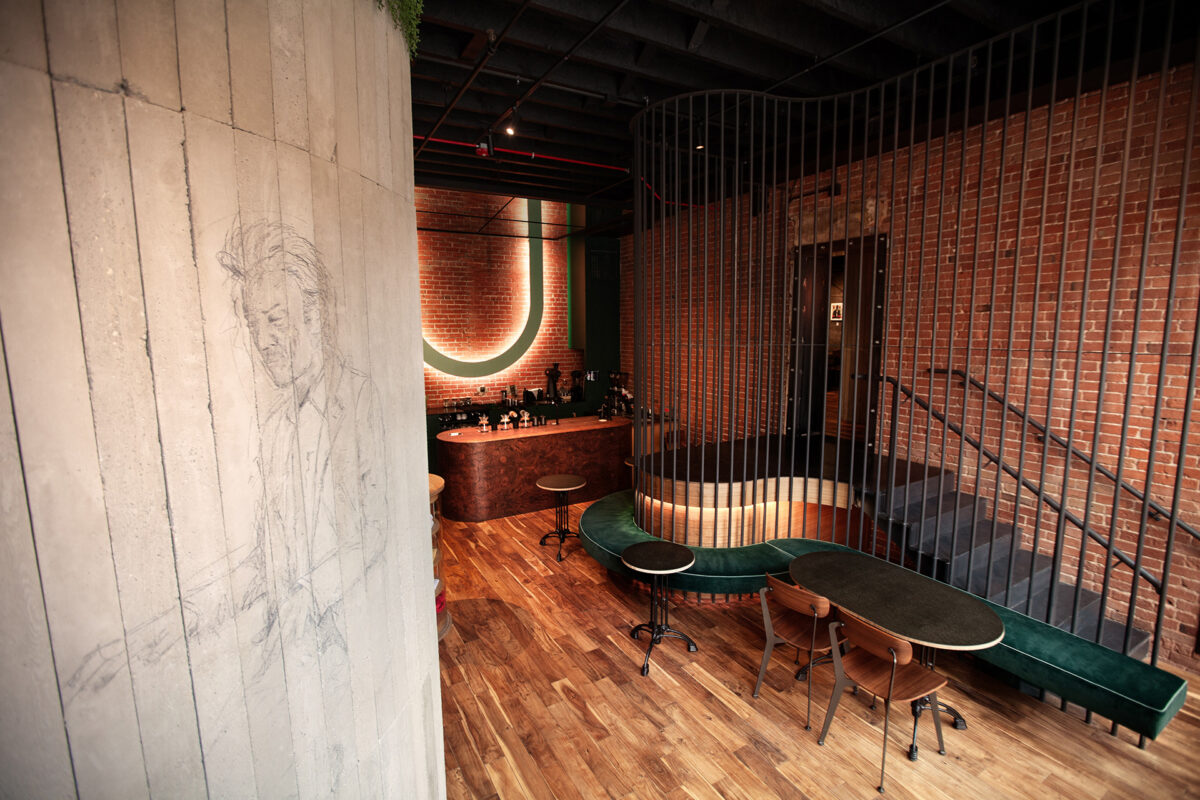
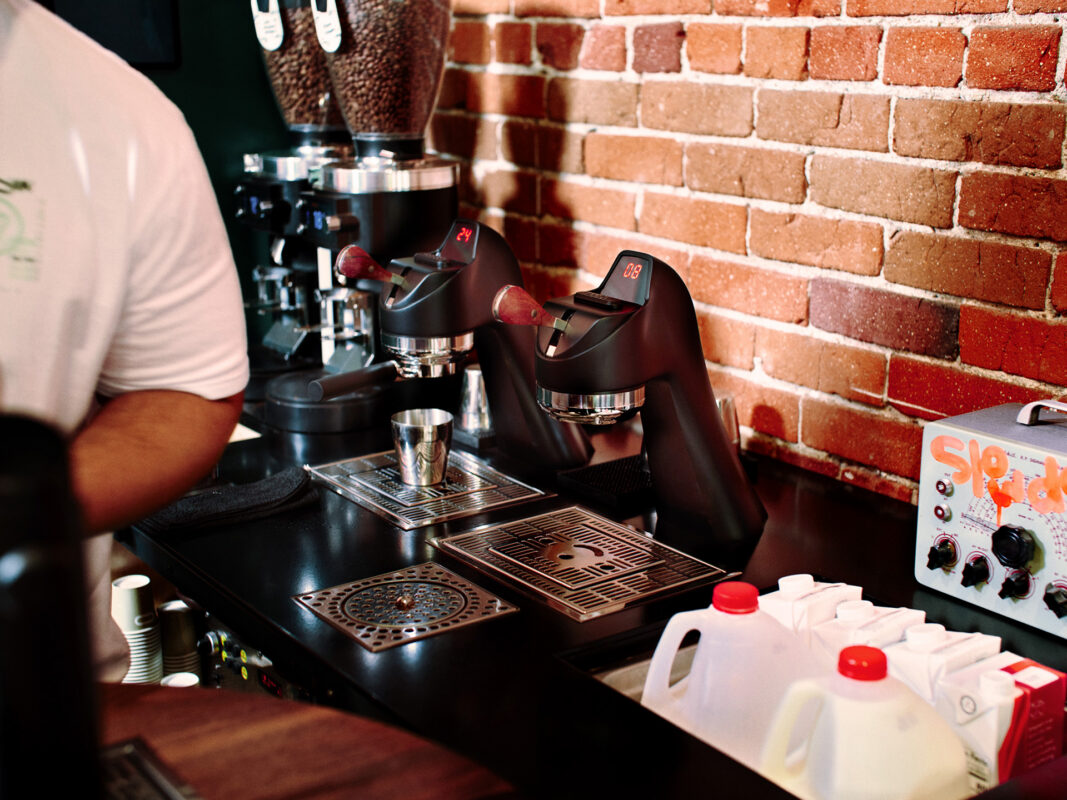
At the heart of the main cafe is a bespoke walnut burl brew bar shaped like an elongated “O”—a direct nod to the company’s logo mark, which symbolizes patience and time. To maintain an impeccably clean aesthetic that prioritizes human connection over a wall of industrial machinery, the cafe integrated an extensive Modbar system. Water taps and espresso modules are housed entirely beneath the counter, keeping the workspace uncluttered and shifting the visual focus strictly to the barista and their craft.
Perhaps the most theatrical element of the build is the bean-dosing apparatus. Rejecting the traditional countertop placement for high-end grinders, the team concealed a Weber Workshops EG-1 grinder entirely beneath the bar top. Guests drop their measured beans into a hand-carved vortex, watching them disappear into a mysterious hold in the counter. While unconventional, the design choice intentionally transforms a routine transaction into a memorable, confounding sensory experience.
Collaborative Local Fabrication
The project was executed through an intensive collaboration with regional makers and artisans:
- Ian Fadness: Owner, providing overarching philosophical guidance and project direction.
- Eric Corbett & Gabe Watkins: Lead architects, brand directors, and interior designers. Watkins also contributed all physical ceramic plates and hanging artwork.
- Mahlory Reisch (Klei Ceramics): Hand-crafted every custom mug, cup, and plate utilized in the space.
- Elijah Boysen (E.B. Woodworks): Executed the complex, intricate woodworking throughout the cafe.
Official Responses and Philosophy
The guiding ethos of Slow by Slow remains rooted in multi-roaster curation, scientific rigor, and deep respect for agricultural provenance. Speaking on the core mission of the shop, the team emphasizes that no two coffees are treated alike.
"We approach coffee with an open mind and deep regard for what each coffee is and where it came from," the team shares. "In practice, we adjust our brewing for every roast and serve our guests enough variety to surprise them, or to land on something that clicks, no matter your level of familiarity or expertise."
This philosophy extends directly to their signature seasonal beverage program. Rather than relying on simple sweet syrups, the cafe approaches flavor formulation through the lens of human memory and nostalgia.
"We think a lot about the relationships between people, ingredients, space, and nostalgia," representatives note. "The goal is a drink that takes you somewhere, something that surprises you and sticks as a new core memory."
Furthermore, the architectural choices were explicitly designed to challenge modern coffee shop tropes. While contemporary cafes frequently emphasize blinding natural light and wide-open floor plans, Slow by Slow introduced moody designer lighting, dim upstairs nooks, and cozy lounge spaces. This deliberate counter-programming offers patrons a sophisticated, cocoon-like atmosphere designed for deep focus and relaxation.
Implications for Specialty Coffee and Urban Design
The successful completion of the Slow by Slow remodel and the concurrent launch of Fast by Slow carry significant implications for the broader specialty coffee industry.
1. Solving the Speed-versus-Quality Dilemma
For years, specialty coffee shops have struggled to reconcile the conflicting business models of high-volume efficiency and slow-bar craftsmanship. By creating a physical partition between the contemplative, multi-level flagship and the streamlined quick-serve annex next door, Slow by Slow has pioneered a viable blueprint for mature urban cafes. Operators can now cater to commuters without diluting the meditative, educational experience that defines third-wave coffee culture.
2. A Masterclass in Sustainable Longevity
Sustainability in modern cafe design often stops at compostable cups, but Slow by Slow’s renovation approaches environmental responsibility through structural permanence and adaptability. By retaining the historic brick building, utilizing long-lasting materials like concrete, brass, and bamboo-recycled paper composites, and prioritizing hyper-local manufacturing, the project drastically reduces its carbon footprint. Furthermore, features like magnetic art frames and NFC-enabled ceramic brew plates allow the cafe to pivot its digital content and aesthetic presentation dynamically, entirely eliminating the waste associated with physical remodels or printed collateral.
3. Elevating Regional Design Standards
The international recognition garnered from the SCA Design Awards underscores a broader geographic shift in specialty coffee. Excellence in architectural and spatial design is no longer the exclusive domain of coastal metropolises like New York, San Francisco, or Seattle. Cultural capitals in the Intermountain West like Boise are actively redefining what a world-class coffee bar can look, feel, and function like.
As Slow by Slow embarks on its second decade, the transformed space stands as proof that when technical precision meets bold architectural poetry, a coffee shop becomes much more than a place to grab caffeine—it becomes an enduring civic landmark.