
By Investigative Health Desk
For decades, the public has trusted dietary guidelines to offer a safe, science-backed compass for daily nutrition. We rely on official recommendations to tell us whether we should cut back on sugar, limit saturated fats, or moderate our consumption of red and processed meats. But behind the clinical language of peer-reviewed journals and government health advisories lies a darker, highly orchestrated reality: the systematic subversion of nutritional science by corporate giants.
At the center of this controversy stands the International Life Sciences Institute (ILSI), a seemingly innocuous nonprofit organization accused by public health advocates of operating as a sophisticated front group for Coca-Cola, PepsiCo, and other titans of the junk food, agribusiness, and pharmaceutical industries. Utilizing strategies pioneered and perfected by the tobacco industry, ILSI and its corporate backers have spent years quietly infiltrating government health bodies, funding compromised research, and manufacturing scientific doubt to protect corporate bottom lines at the expense of global public health.
Main Facts: The Anatomy of Corporate Interference
The mechanics of corporate influence in nutritional science are as insidious as they are effective. The primary vehicle for this infiltration is ILSI—a nonprofit entity boasting a $17 million budget funded almost entirely by roughly 400 corporate members, including heavyweights like Coca-Cola, PepsiCo, Hershey, and major agribusiness firms.
While ILSI presents itself as a transparent scientific foundation dedicated to advancing public health and safety, critics and investigative reports paint a vastly different picture. Health advocates in the United States and abroad argue that ILSI functions as a lobbying and public relations arm for ultra-processed food and beverage manufacturers. Its core objective? To muddy the waters of scientific consensus whenever independent research links corporate products—such as sugary beverages, snack foods, and processed meats—to chronic illnesses like heart disease, type 2 diabetes, and cancer.
The connection to Big Tobacco’s historical playbook is direct and well-documented. Decades ago, internal memos revealed that tobacco companies deliberately funded seemingly unbiased scientific organizations to manipulate political and health debates, creating a smokescreen of manufactured controversy. ILSI, which has a documented history of deep collaboration with tobacco companies, seamlessly transferred these exact tactics into the realm of modern food policy.
The financial incentive for doing so is overwhelming. According to nutritional epidemiology data, studies funded by commercial food and beverage interests are roughly seven to eight times more likely to reach conclusions favorable to their sponsors compared to independently funded research. When looking strictly at interventional studies, the proportion of industry-funded research that reaches an unfavorable conclusion about its own product sits at a staggering 0%.
Chronology: A Timeline of Subversion
To fully grasp how corporate-sponsored science reshapes national and international dietary advice, one must trace the timeline of major policy clashes over the last decade.
2015: The Sugar Backlash
The friction intensified dramatically following the release of the 2015–2020 Dietary Guidelines for Americans. For the first time, federal health authorities had the scientific boldness to issue a clear, direct recommendation: people needed to substantially reduce their intake of added sugars.
For the soda and confectionery industries, this posed an existential threat. Following the tobacco industry’s historical blueprint—which relied on casting doubt on established science—the soda-funded ILSI quickly mobilized. They sponsored a major review designed to discredit the government’s sugar guidelines.
To execute this strategy, they tapped researcher Bradley Johnston. The resulting paper, titled "The Scientific Basis of Guideline Recommendations on Sugar Intake," was published in the Annals of Internal Medicine. Its conclusion was sweeping and dismissive: dietary sugar guidelines, the paper claimed, did not meet criteria for trustworthy recommendations and were rooted in low-quality evidence.
2016–2019: The Deception Unravels
The paper immediately drew fierce criticism from independent experts. Nutrition professor Marion Nestle denounced the study as a "classic example of how industry funding biases opinion," labeling it shameful.
Although the authors initially swore in the publication that they "wrote the protocol and conducted the study independently from ILSI," that claim collapsed under scrutiny. Following an investigation, the Associated Press obtained internal emails proving that the industry front group had actively "requested revisions" to the study. Furthermore, it came to light that a co-author had conveniently failed to disclose a direct $25,000 research grant from Coca-Cola. The Annals of Internal Medicine was ultimately forced to publish a corrected version of the paper.

The fallout was so severe that even corporate competitors broke ranks. Mars—the manufacturer of consumer confectionery staples like Snickers, Skittles, and M&M’s and a member of ILSI at the time—publicly denounced the industry-funded paper, recognizing that blatant attempts to undermine basic public health advice ultimately tarnished the reputation of the entire food industry.
2019: The Meat Mandate Replay
Fast forward to 2019, just as the scientific groundwork for the subsequent dietary guidelines was underway. The latest scientific reports from advisory committees were once again encouraging the public to adopt diets lower in sugar and, critically, lower in red and processed meat.
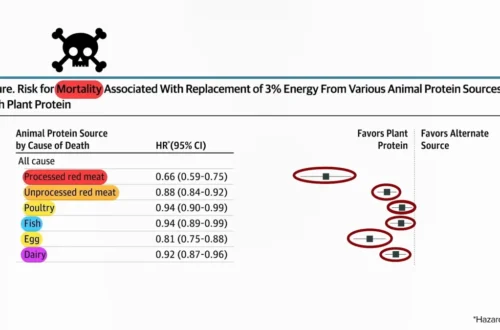
Sensing a familiar threat, Big Meat decided to follow the playbook pioneered by Big Sugar. In a striking parallel to the 2016 sugar controversy, a series of reviews was published in the Annals of Internal Medicine. Despite acknowledging established correlations between processed and unprocessed red meat consumption and heightened risks of premature death, cardiometabolic disease, heart disease, type 2 diabetes, and cancer, the reviews drew a baffling conclusion: consumers should "continue current unprocessed red meat consumption" and "continue current processed meat consumption."
The common denominator in this renewed assault on dietary advice? Scientist-for-hire Bradley Johnston, reprising his role as lead author to deliver recommendations that defied overwhelming epidemiological evidence.
Supporting Data: The Bias of the Purse
The manipulation of dietary guidelines is not driven by isolated anomalies; it is supported by a robust body of methodological research regarding funding bias in nutritional science.
- The Funding Effect: Meta-analyses examining the relationship between corporate sponsorship and research findings reveal that industry-backed studies are overwhelmingly more likely to yield positive or neutral outcomes regarding harmful products. The odds of a favorable outcome skew up to eight times higher when financial backing comes from commercial stakeholders.
- The Interventional Void: In interventional nutritional trials—where researchers actively alter participant diets to measure biomarkers of disease—independent studies frequently uncover the adverse physiological toll of excessive sugar, refined carbohydrates, and processed meats. Conversely, industry-funded interventional literature yields a 0% rate of unfavorable conclusions regarding the sponsor’s specific commodity.
- Global Policy Infiltration: ILSI’s reach extends far beyond Washington, D.C. Investigative reports by major news outlets have tracked how the institute has systematically infiltrated health ministries and advisory boards across developing and developed nations alike, including Brazil, China, and India, shaping global food policies to favor corporate trade expansion over domestic health outcomes.
Official Responses and Journal Integrity
As public scrutiny intensifies, institutions at the vanguard of medical publishing and public health advocacy are being forced to reevaluate their policies regarding corporate transparency and manuscript acceptance.
The response from leading medical journals to corporate interference has historically been mixed, but precedents exist for absolute institutional boundaries. Decades ago, leading medical journal editors took a definitive stand against the tobacco industry, implementing strict policies that outright refused to accept or publish research funded by tobacco companies. Editors argued that they would no longer act as "passive conduits" for corporate propaganda designed to protect lethal products.
Public health advocates and prominent epidemiologists have long argued that this zero-tolerance standard must be expanded to include commercial interests in the food and beverage sectors—particularly manufacturers of added sugars, sugary drinks, and ultra-processed commodities.
However, as evidenced by the publication of the ILSI-sponsored sugar reviews and the subsequent meat-consumption papers in high-profile journals like the Annals of Internal Medicine, mainstream medical publishing has been slow to adopt blanket bans on commercial food funding. While disclosure mandates and conflict-of-interest declarations have become standard practice, critics argue that mandatory disclosures are wholly insufficient when corporate entities can surreptitiously direct study protocols, manage data interpretation, and obscure financial ties through intermediary nonprofits like ILSI.
Implications for Public Health and the Future of Dietary Advice
The ongoing infiltration of nutritional science by corporate front groups carries profound implications for global health. Non-communicable diseases—such as type 2 diabetes, cardiovascular disease, and certain forms of cancer—remain leading causes of preventable morbidity and mortality worldwide. Nutritional guidelines serve as the primary defensive wall for public health policy, informing school lunch programs, hospital menus, and national health campaigns.
When these guidelines are compromised by corporate lobbying and industrially sponsored "mercenary science," the public pays the price with their lives. Conflicting messages ("Eat less sugar" versus "Sugar science is untrustworthy"; "Reduce processed meat" versus "Keep eating burgers and bacon") generate widespread consumer confusion, erode public trust in legitimate scientific institutions, and paralyze effective government intervention against the obesity epidemic.
Protecting the integrity of future dietary guidelines will require a paradigm shift. Public health advocates are calling for:
- Stricter Editorial Policies: Medical and scientific journals must adopt rigorous screening protocols and consider banning studies funded directly or indirectly by commercial entities with a financial stake in the outcome of dietary research.
- Transparent Advisory Boards: Government bodies, such as the Dietary Guidelines Advisory Committee, must enforce airtight conflict-of-interest vetting to ensure that scientists with financial ties to agribusiness, sugar conglomerates, and food giants are barred from shaping national health policy.
- Independent Public Funding: Increasing state-backed funding for independent nutritional research can reduce the scientific community’s reliance on corporate grants, ensuring that dietary advice is dictated strictly by empirical health outcomes rather than profit margins.
Until these structural reforms take root, consumers navigating the supermarket aisles and dietary pyramids must remain vigilant—recognizing that behind every controversial scientific paper telling you that junk food and processed meat are harmless, there may well be a corporate sponsor pulling the strings from the shadows.