By [Author Name]
Published in Health & Oncology Investigations
For decades, the lexicon of modern oncology has been dominated by a vocabulary of triumph. When a new pharmaceutical treatment enters the market, patients, families, and media outlets are frequently met with terms like “breakthrough,” “game-changer,” and “significant clinical improvement.” These words carry immense emotional weight. To a patient diagnosed with advanced cancer, a breakthrough implies a profound shift in prognosis—a bridge across an otherwise insurmountable chasm.
However, a growing body of peer-reviewed medical literature suggests a stark discrepancy between the clinical marketing of new cancer therapies and their actual, tangible impact on human lives. Behind the optimistic press releases and staggering price tags lies a more sobering reality: for many of the most common malignancies, the average survival benefit offered by modern chemotherapy is measured not in years, but in weeks or days. Furthermore, systemic communication failures often leave patients in the dark regarding what these treatments can—and cannot—achieve.
Main Facts: The Statistical Reality of Modern Chemotherapy
To understand the macro-level impact of modern cancer pharmacotherapy, researchers have evaluated the cumulative outcomes of novel chemotherapy drugs approved over extended observation periods. When data across dozens of newly approved regimens spanning a dozen years are synthesized, the findings are startling: the average overall survival benefit provided by these agents is a mere 2.1 months.
While two months can hold immense personal value for an individual and their loved ones, this average stands in sharp contrast to public perception. Editorial boards, including commentators in the Journal of the National Cancer Institute, have raised ethical and scientific concerns that a significant portion of newly introduced cancer drugs fail to deliver clinically meaningful benefits at all.
Compounding the issue of marginal efficacy is the economic burden. Cancer drugs are among the most expensive therapeutic agents in modern medicine. Studies evaluating postmarket outcomes reveal an alarming paradox: even when rigorous follow-up trials demonstrate that a newly approved drug offers no clinically meaningful survival advantage over a sugar pill placebo or observation alone, the vast majority of these drugs retain their U.S. Food and Drug Administration (FDA) approval. They remain on the market, commanding exorbitant prices that rival or exceed those of highly effective therapies. In some documented cases, patients pay upwards of $169,000 annually for a regimen that fails to improve overall survival and, in practice, measurably diminishes their quality of life.
Chronology: From Clinical Trial to Commercial Market
The lifecycle of a modern chemotherapy drug typically follows a specific, highly regulated, yet frequently scrutinized pathway from laboratory development to clinical application and commercial availability.
1. Preclinical and Phase III Trials
Pharmaceutical companies invest billions in developing cytotoxic agents designed to target and destroy rapidly dividing cells. Phase III trials are structured to evaluate these agents against existing standards of care or placebos. In recent years, critics argue that trial designs have shifted toward capturing statistically significant endpoints that may lack clinical relevance.
2. Accelerated Approval and Initial Marketing
Driven by urgent medical need and patient advocacy, many drugs achieve expedited or traditional approval based on surrogate endpoints, such as tumor shrinkage or progression-free survival, rather than direct evidence of extended overall survival. This is the stage where marketing departments deploy terminology that frames drugs as historic milestones.

3. Postmarket Realities and Follow-Up Studies
Years after commercial release, independent researchers and postmarket surveillance studies evaluate the true clinical value of these drugs. Frequently, these follow-up analyses indicate that the initial promise of substantial life extension translates into marginal gains. Despite these findings, regulatory inertia and established market access mean that withdrawal of ineffective, high-cost drugs is the exception rather than the rule.
Supporting Data: Micro-Analyses and Statistical Distortions
The gap between statistical significance and clinical relevance is perhaps best illustrated by specific, landmark clinical trials.
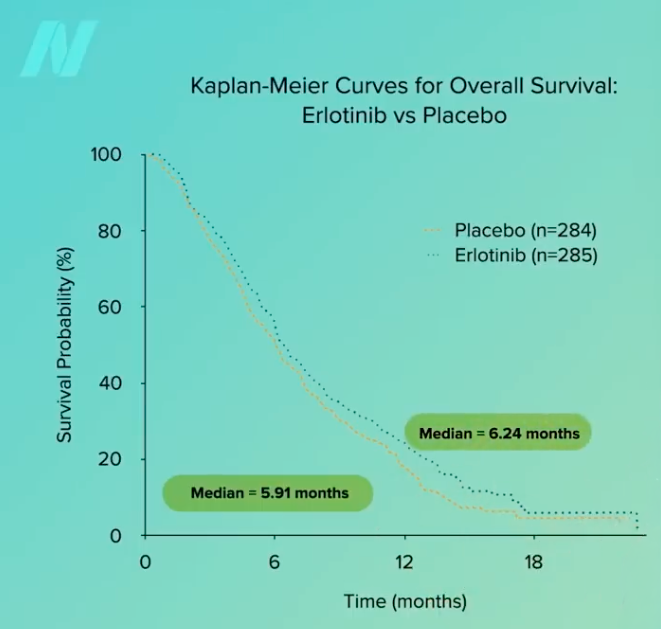
Consider a widely publicized Phase III trial evaluating advanced pancreatic cancer. Researchers investigated the addition of erlotinib to the standard chemotherapy drug gemcitabine. The clinical trial successfully demonstrated a "statistically significant improvement in overall survival." Patients who received the dual-drug combination lived longer than those in the control group—a finding trumpeted as a victory in clinical circles.
However, looking past the statistical jargon reveals the actual numerical outcome: the control group (receiving gemcitabine alone) survived an average of 5.91 months, while the combination therapy group survived an average of 6.24 months. The addition of a second toxic drug, along with its associated financial cost and intensified side effects, yielded an average survival extension of approximately one-third of a month—roughly 10 days.
When physicians use phrases like "significant improvement" without context, patients naturally infer a much more substantial timeframe—weeks, months, or years. The failure to translate statistical terms into plain language forms the bedrock of patient misunderstanding.
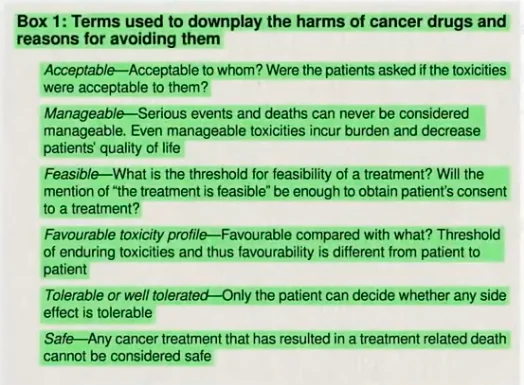
Furthermore, discrepancies persist in how toxicities are reported in top-tier medical journals. Studies evaluating new breast and pancreatic cancer drugs often describe side-effect profiles as "acceptable," "manageable," "feasible," or "mostly reversible." Yet, independent scrutiny of the raw data frequently shows that serious, life-threatening adverse events—including irreversible heart failure, severe nerve damage, systemic immune suppression, and treatment-related mortality—occur at rates double or even fivefold higher in the treatment groups.
Official Responses and Regulatory Perspectives
The persistence of high-priced, low-efficacy drugs on the global market draws intense debate among oncologists, ethicists, and regulatory bodies.
Regulatory agencies, such as the FDA, face a delicate balancing act. On one hand, they must respond to intense pressure from patient advocacy groups demanding rapid access to any experimental therapy that offers even a fraction of a percent chance of hope against terminal diagnoses. On the other hand, critics argue that lenient postmarket enforcement transforms regulatory approval into a rubber stamp, protecting corporate revenue streams at the expense of vulnerable consumers.
Pharmaceutical manufacturers defend their pricing structures and clinical trial outcomes by emphasizing the immense complexity of oncology drug development and the incremental nature of scientific progress. They argue that every incremental gain—whether measured in days or weeks—builds the foundation for future breakthroughs.
However, medical ethicists counter that this defense ignores the core principle of informed consent. When a patient is not explicitly informed that a treatment is non-curative and offers only a marginal statistical advantage, true autonomous decision-making is compromised.
Implications: Patient Autonomy, Informed Consent, and the Search for True Solutions
The overarching implication of these findings is not that chemotherapy is devoid of value, but rather that its application requires radical transparency.
The Expectation Gap
Empirical surveys reveal a profound disconnect between patient expectations and clinical reality. Research indicates that approximately three-quarters of patients with metastatic lung or colorectal cancer do not understand that their chemotherapy is unlikely to cure their disease. Many operate under the mistaken belief that chemotherapy offers a genuine path to remission, rather than a means of palliative extension.
When patients are shielded from these realities, they are deprived of the opportunity to weigh the genuine risks—such as the destruction of healthy cells, gut lining degradation, and permanent organ damage—against modest potential benefits. Studies assessing patient preferences show that while some individuals would willingly endure severe side effects for an extra week of life, others would decline treatment entirely to preserve the quality of their remaining time. This calculus belongs entirely to the patient, but it requires unvarnished truth from the medical community.
A Tale of Two Realities: Exceptional Success vs. Marginal Gains
It is vital to distinguish between different categories of cancer. For specific malignancies, such as testicular cancer and Hodgkin’s lymphoma, intensive chemotherapy regimens have revolutionized outcomes, offering high rates of long-term survival and cure. These represent true medical triumphs.
Conversely, for the vast majority of common solid tumors—including cancers of the colon, lung, breast, and prostate—the likelihood that standard chemotherapy will enable survival to the five-year mark remains very low, often hovering in the 1% to 2% range outside of specific early-stage interventions.
Prevention Over Palliation
Ultimately, the limitations of late-stage therapeutic interventions underscore the urgent necessity of shifting systemic focus toward primary prevention. As oncological researchers increasingly emphasize, the most effective strategy against cancer is preventing its onset through lifestyle modifications, environmental protections, and evidence-based dietary interventions aimed at reducing risk factors before malignancies can take root.
Until the medical and pharmaceutical industries embrace absolute transparency in communicating risks, costs, and marginal benefits, patients will continue to navigate the most vulnerable moments of their lives in the shadow of corporate hype rather than clinical truth.