Main Facts
For the American carnivore, size has long been a metric of satisfaction. While standard steakhouses across the country typically cap their individual meat portions at a respectable 20 ounces, a rarefied tier of high-end, multi-location restaurant chains has pushed the boundaries of portion sizes to jaw-dropping extremes. A recent analysis of more than 20 premier U.S.-based American-style steakhouse chains—excluding teppanyaki concepts and Brazilian rodízios—reveals that the nation’s largest commercially available standard steaks range from 35 to a staggering 46 ounces.
These massive slabs of meat are rarely meant for a single diner; instead, they are designed to anchor a shared dining experience, commanding centerpiece status at the table. Topping the charts of American culinary excess are monumental cuts like the 35-ounce Prime Tomahawk at Fleming’s Prime Steakhouse & Wine Bar, the 36-ounce Tomahawk Ribeye at Morton’s The Steakhouse, the dual-threat 40-ounce offerings from Ruth’s Chris Steak House, the wagyu-infused 44-ounce Swinging Tomahawk at Smith & Wollensky, and the reigning champion—a gargantuan 46-ounce Bone-In Wagyu Tomahawk from Steak 48.
These figures represent a fascinating intersection of agricultural evolution, supply chain logistics, and high-end restaurant marketing, illustrating how modern steakhouses leverage sheer scale to captivate affluent diners seeking a theatrical dining experience.
Chronology: The History of the American Steakhouse
To understand why modern consumers demand—and high-end chains supply—multipound cuts of beef, one must trace the evolution of the American steakhouse through nearly two centuries of social and economic shifts.
The 1800s: From Humble Chophouses to Delmonico’s Luxury
The genesis of the American steakhouse tradition dates back to the early 19th century. Early dining establishments were humble "chophouses" modeled after British taverns, serving basic cuts of meat to working men. However, the paradigm shifted dramatically in New York City with the rise of Delmonico’s. Opened by brothers John and Peter Delmonico, the establishment transformed dining into an upscale, luxurious affair. For the first time, a restaurant was designed not just for sustenance, but as a place to "see and be seen," setting a high standard for culinary presentation and atmosphere.
The Late 19th to Mid-20th Century: Railways and Refrigeration
The explosive growth of the American steakhouse industry was intrinsically tied to the nation’s industrial expansion. The rapid development of U.S. railways allowed cattle raised in the vast western plains to be transported efficiently to major eastern and midwestern urban centers. Coupled with the invention of commercial refrigeration, this logistical revolution ensured a steady, reliable supply of fresh, high-quality beef. Steakhouses multiplied rapidly across major metropolitan areas, solidifying beef as a cornerstone of the American diet.
Post-World War II: The Suburban Migration
Following the conclusion of World War II, a booming U.S. economy catalyzed a massive migration from urban centers to the newly minted suburbs. Steakhouses eagerly followed their clientele. During this era, the steakhouse cemented its status as an emblematic fixture of American culinary culture, frequently associated with celebratory milestones, business deals, and middle-class prosperity. Portions grew larger as the post-war agricultural sector experienced unprecedented productivity, laying the groundwork for the mega-cuts seen in contemporary dining.
The Late 20th Century to Present: The Birth of the Modern Chains
The final phase of this evolution saw the birth of the corporate luxury steakhouse chain. In 1965, Ruth Fertel purchased a struggling New Orleans eatery called Chris Steak House, eventually expanding it into a global empire. In 1978, Arnie Morton and Klaus Fritsch founded Morton’s The Steakhouse in Chicago, while Smith & Wollensky opened its doors in New York City in 1977. These pioneers proved that consistent, high-end quality could be successfully scaled across multiple cities. In the decades that followed, newer entrants like Fleming’s (founded in 1998) and Steak 48 (founded by the Mastro family in the 2010s) refined the model further, introducing theatrical presentations like the bone-in tomahawk to satisfy an increasingly adventurous and affluent consumer base.
Supporting Data: The Top 5 Biggest Steakhouse Chain Cuts
A granular look at the data reveals how these five restaurant chains stack up in the race for the heaviest cut of beef.
| Rank | Restaurant Chain | Cut Name | Weight | Key Characteristics |
|---|---|---|---|---|
| 1 | Steak 48 | Bone-In Wagyu Tomahawk | 46 oz | Sourced from Snake River Farms; American wagyu beef; extreme marbling. |
| 2 | Smith & Wollensky | Swinging Tomahawk Ribeye | 44 oz | Wagyu beef; served with drippings-cooked potatoes; intense buttery flavor. |
| 3 (Tie) | Ruth’s Chris Steak House | Porterhouse for Two / Tomahawk Ribeye | 40 oz | Cooked in a proprietary 1,800°F broiler; USDA Prime graded. |
| 4 | Morton’s The Steakhouse | Tomahawk Ribeye | 36 oz | Custom-cut USDA Prime; aged for a minimum of 23 days. |
| 5 | Fleming’s Prime Steakhouse & Wine Bar | Prime Tomahawk | 35 oz | Sourced from partner farms; coated in signature seasoning blend. |
A Closer Look at the Contenders
1. Steak 48: The 46-Ounce Titan
As the youngest chain on this list, Steak 48 was founded by the Mastro family—industry veterans who previously launched the famed Mastro’s restaurant brand. Operating upscale, affluent locations nationwide, Steak 48 sources its beef globally, but its crown jewel is strictly domestic: a 46-ounce Bone-In Wagyu Tomahawk sourced from Snake River Farms, a pioneer in American wagyu production. Weighing nearly three pounds, the steak is paired with an extensive a la carte menu featuring up to 18 side dishes and decadent truffle-infused accompaniments.
2. Smith & Wollensky: The 44-Ounce Spectacle
Founded in New York City in 1977, Smith & Wollensky offers a 44-ounce Swinging Tomahawk Ribeye crafted from wagyu beef. Known for its intense marbling and melt-in-your-mouth texture, the cut is so visually imposing that its name nods to the weapon-like appearance of a traditional tomahawk bone. The chain also features a formidable 42-ounce USDA Prime Dry-Aged Porterhouse for Two, offering diners multiple avenues for excess.
3. Ruth’s Chris Steak House: The Dual 40-Ounce Heavyweights
Ruth’s Chris anchors its massive portion offerings with two distinct 40-ounce cuts: the classic Porterhouse for Two (featuring both tenderloin and New York strip) and the Tomahawk Ribeye. What sets Ruth’s Chris apart is its proprietary broiler system—developed with founder Ruth Fertel—which reaches blistering temperatures of up to 1,800 degrees Fahrenheit, locking in juices and creating a signature crust before the meat is served sizzling on a 500-degree plate.
4. Morton’s The Steakhouse: The 36-Ounce Table Share
Hailing from Chicago, Morton’s utilizes trusted purveyors to supply custom-cut USDA Prime beef that is aged for a minimum of 23 days. Their 36-ounce Tomahawk Ribeye is a bone-in masterpiece designed to be shared across the table. Backed by one of the largest menus in the high-end steakhouse sector—spanning more than 80 items—Morton’s pairs its massive cuts with an extensive array of rich, traditional sides.
5. Fleming’s Prime Steakhouse & Wine Bar: The 35-Ounce Pioneer
Established in Newport Beach, California, Fleming’s operates over 65 locations nationwide. Its largest offering is the 35-ounce Prime Tomahawk, a USDA Prime-graded cut sourced from dedicated partner farms. Coated in a signature spice blend and grilled by highly trained chefs, the cut represents the baseline entry into the ultra-heavyweight division of chain steakhouse dining.
Official Responses and Industry Perspectives
Culinary experts, nutritionists, and restaurant executives view the proliferation of these massive cuts through vastly different lenses. From the perspective of hospitality executives, mega-steaks are a masterclass in experiential marketing.
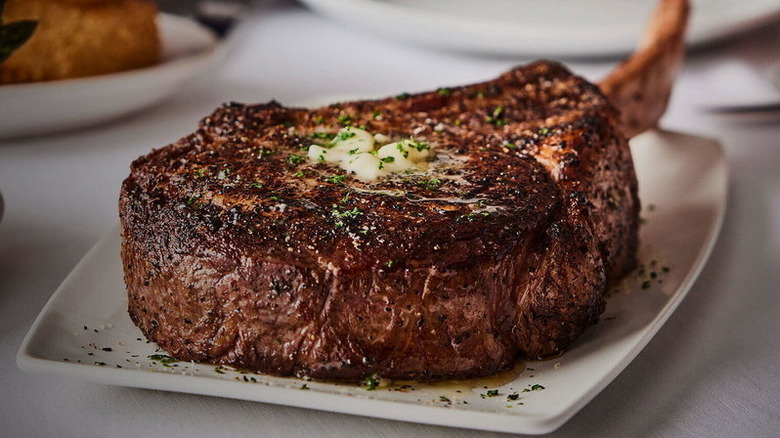
"When a server brings out a 44-ounce wagyu tomahawk suspended or presented on a board, it instantly stops traffic in the dining room," notes a veteran food and beverage hospitality consultant who requested anonymity. "In the age of social media, diners aren’t just paying for food; they are paying for a theatrical moment. These portions are social anchors designed to be shared, photographed, and remembered."
Conversely, nutritionists and public health advocates have raised continuous concerns regarding portion distortion. Standard dietary guidelines recommend a fraction of these quantities for a single meal, prompting some chains to market these cuts explicitly as "for two" or "for the table." However, food culture historians emphasize that American dining has historically associated abundance with hospitality and luxury—a psychological hook that high-end steakhouse chains have successfully monetized for decades.
Implications
The market dominance of these mega-steaks carries significant implications for agriculture, restaurant economics, and consumer behavior.
- Agricultural Supply Chain Pressures: Sourcing 35- to 46-ounce cuts of USDA Prime or American Wagyu beef requires cattle with exceptional marbling and size. This places high demands on specialized ranching partners, such as Snake River Farms and independent Midwest feedlots, driving up the economic value of premium livestock.
- The Shift Toward Experiential Dining: As casual dining chains struggle with shifting consumer habits, high-end steakhouses continue to thrive by leaning into "edutainment" and theatrical presentations. The tomahawk cut—with its exposed bone serving as a natural handle—epitomizes this shift away from quiet luxury toward bold, memorable spectacles.
- Menu Economics: Because mega-steaks are almost universally ordered a la carte, they serve as financial engines for high-end restaurants. A single 46-ounce beef centerpiece frequently commands a triple-digit price tag, which is further amplified by multiple side dishes, wine pairings, and desserts ordered around it.
Ultimately, whether viewed as an extravagant celebration of American culinary heritage or an exercise in excess, the multi-pound steakhouse cut remains an immovable fixture of elite dining culture—a testament to the enduring appeal of going big when dining out.