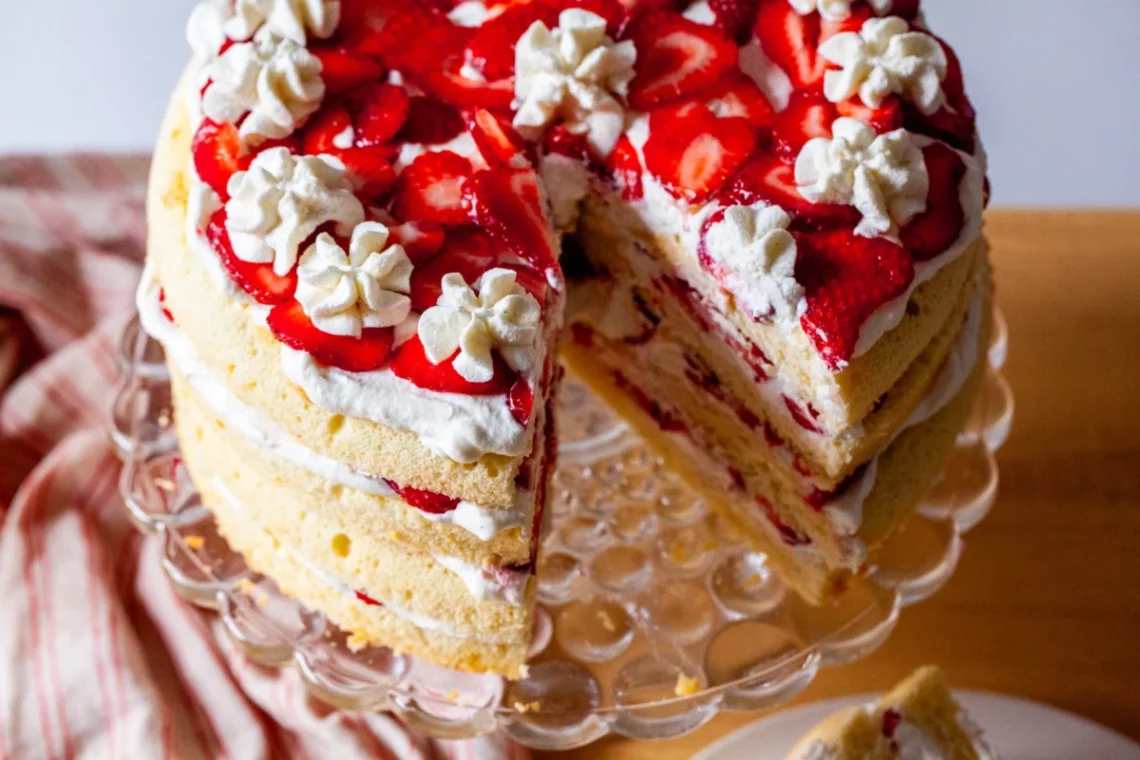
In the sun-drenched landscape of summer baking, few triumphs rival the delicate interplay of fresh fruit, whipped cream, and feather-light sponge. Recently, the culinary community has been captivated by the triumphant return of a classic: the Strawberry Chiffon Shortcake. Originally published during the nascent days of the popular food blog Smitten Kitchen in June 2007, the recipe has undergone a comprehensive, nineteen-year modernization process.
The result is a streamlined, user-friendly iteration designed for contemporary home bakers who desire exceptional results without navigating unnecessary culinary obstacles. Featuring delicate, cloud-like cake layers, a stabilized cream frosting, and generous quantities of fresh strawberries, the perfected recipe has quickly transitioned from a nostalgic throwback to a definitive seasonal staple. The updated formula made its grand public debut at a recent milestone birthday celebration, where a supersized, four-layer iteration was entirely devoured by guests within minutes of service.
Unlike traditional heavy pound cakes or dense butter cakes, the chiffon shortcake relies on whipped egg whites folded into a rich yolk-and-oil base. This technique yields a cake that is simultaneously ethereal and structurally sound. Furthermore, the updated formulation introduces structural adjustments that eliminate common baking pitfalls, ensuring that the finished dessert remains remarkably moist and fresh for up to six days at room temperature or in refrigeration.
Chronology of a Recipe: From 2007 to 2026
The journey of the Strawberry Chiffon Shortcake spans nearly two decades, reflecting shifts in both home-baking culture and individual culinary philosophy.
June 2007: The Genesis
In the summer of 2007, the recipe was first introduced to a modest online audience. At the time, the concept of a chiffon cake represented uncharted territory for the author. Driven by optimism, a hastily prepared, towering version was transported to a rooftop birthday barbecue in New York City. Despite the inexpert execution, the combination of whipped cream, fresh strawberries, and an airy sponge was universally well-received, cementing the dessert’s initial potential.
2007–2025: The Intervening Years
For many years, the chiffon cake remained an occasional project rather than a daily favorite. Professional and home bakers alike often viewed chiffon cakes with a degree of hesitation. The traditional preparation process demanded an array of specialized ingredients and meticulous steps—including exact measurements of cake flour, superfine sugar, cream of tartar, and an uneven distribution of egg yolks and whites. Furthermore, bakers had to contend with the notoriously finicky nature of chiffon cakes, which frequently suffered from structural collapse or sinking centers during the cooling process.
June 2026: The "Could Use a Refresh" Era
Nineteen years after its initial publication, the recipe was slated for a comprehensive review. Recognizing that modern home cooks value efficiency alongside quality, the formulation underwent a rigorous modernization process. Unnecessary rigidity was systematically stripped away, transforming a notoriously fussy baking project into an accessible, real-life recipe. This period marked a profound culinary conversion, as the appreciation for chiffon cakes evolved from a mild acknowledgment into an unabashed obsession, affectionately dubbed the "Chiffon Cake Era."
The Birthday Debut
The newly perfected recipe faced its ultimate trial during a weekend birthday celebration. A supersized, four-layer, 9×13-inch version of the strawberry chiffon shortcake was baked, adorned with candles, and served to guests. Following a brief absence while assisting a departing family member, the baker returned to find that the massive dessert had been entirely consumed directly from the serving platters, bypassing plates and conventional etiquette in a wave of enthusiastic appreciation.
Supporting Data and Technical Specifications
The success of the perfected Strawberry Chiffon Shortcake relies on specific chemical reactions, precise structural engineering, and deliberate preparation techniques designed to combat the historical flaws of chiffon cakes.
Ingredient Innovations
The Flour and Sugar Matrix: While traditional recipes demand specialized cake flour and superfine sugar, the updated formulation optimizes ratios to work seamlessly with pantry staples, reducing the barrier to entry for novice bakers.
The Yolk-to-White Ratio: Chiffon cakes require the separation of eggs. The yolk mixture—whipped with lemon zest and granulated sugar until it achieves a frosting-like consistency—provides rich moisture via neutral oil and water, while the whipped egg whites supply the necessary lift.
The Stabilized Cream: Standard whipped cream can weep or lose volume over time. The updated assembly incorporates a measured addition of sour cream or crème fraîche into the heavy cream, powdered sugar, and vanilla mixture. This stabilizes the frosting, ensuring it holds its shape securely without developing a grainy texture.
Thermal and Mechanical Techniques
Pan Preparation: To achieve the signature rise of a chiffon cake, bakers must lightly grease only the bottom of the round cake pans and line them with parchment paper. The sides of the pans must remain completely ungreased. This allows the batter to "climb" the walls of the pan during the baking process, securing its height.
The Shock Treatment: Immediately upon removing the cake layers from the 325°F (165°C) oven, the pans are dropped a few inches onto the kitchen counter. This counterintuitive mechanical shock releases trapped steam pockets and prevents immediate post-bake shrinkage.
Inverted Cooling: Because chiffon cakes lack the structural density of butter cakes, they tend to deflate under their own weight as they cool. To counteract this, the pans are inverted immediately and rested upside down on pre-greased cooling racks until completely cool.
Longevity and Storage Metrics
Layer Stability: The baked chiffon layers exhibit remarkable moisture retention. When wrapped properly, the individual layers remain as soft and fresh on day six as they were on the day they were baked.
Assembly Shelf Life: The fully assembled cake—interleaved with whipped cream and fresh strawberries—maintains its structural and sensory integrity in refrigeration for up to six days, though anecdotal evidence suggests it rarely survives more than a few minutes in a social setting.
Official Responses and Culinary Reception
The reception to the perfected Strawberry Chiffon Shortcake has been overwhelmingly positive, characterized by high praise from guests, recipe testers, and home-baking enthusiasts alike.
"It was a weightless, melt-in-your-mouth dessert. I didn’t even wait for a plate; the moment it hit the table, we were eating it straight from the platter."
— Anonymous Party Guest
"You need to make twice as much next time. I was completely unable to secure thirds, and that is a statistical failure we cannot repeat."
— Anonymous Birthday Attendee
Culinary observers have noted that the success of this recipe lies in its ability to bridge the gap between high-end pastry craftsmanship and home-kitchen practicality. By demystifying the chiffon cake—long feared for its tendency to deflate or dry out—the updated recipe has successfully introduced a new generation of bakers to the joys of fat-and-foam-based sponges.
Furthermore, the social media response to the "Chiffon Cake Era" announcement has sparked a broader conversation regarding recipe longevity. Food historians and digital publishers point to this update as a model for how legacy food blogs can revisit, revise, and elevate archival content to meet the evolving standards of modern home cooks.
Implications for the Baking Community
The successful overhaul of the Strawberry Chiffon Shortcake carries several broader implications for the culinary world, particularly in the realms of digital food publishing and seasonal baking trends.
1. The Rehabilitation of Fussy Breads and Cakes
For decades, certain baking categories—such as chiffon cakes, soufflés, and laminated pastries—have suffered from an intimidating reputation. By systematically identifying and dismantling unnecessary procedural hurdles (such as excessive bowl usage and overly rigid ingredient mandates), recipes like the perfected chiffon shortcake demonstrate that technical excellence does not require operational misery. This approach encourages home cooks to tackle complex structures with renewed confidence.
2. The Economics of Make-Ahead Entertaining
Modern hosts increasingly prioritize menu items that reduce day-of stress. The revelation that chiffon cake layers can be baked five to six days in advance without losing their textural integrity offers a significant logistical advantage for event planning. The ability to prepare foundational elements well ahead of time aligns perfectly with contemporary lifestyle demands, proving that sophisticated desserts can coexist with busy schedules.
3. Redefining Seasonal Fruit Integration
As global supply chains and agricultural practices evolve, the treatment of seasonal fruit—particularly summer strawberries—requires a delicate balance. The pairing of macerated or fresh sliced berries with a neutral, highly absorbent chiffon sponge ensures that the natural acidity and sweetness of the fruit remain the focal point of the dish. This minimalist philosophy stands in contrast to heavily masked pastry designs, signaling a broader culinary movement toward ingredient transparency and bright, unadulterated flavors.
Ultimately, the transformation of the Strawberry Chiffon Shortcake from a tentative 2007 experiment into a perfected 20th-anniversary masterpiece underscores an essential truth of cooking: great recipes are never truly finished; they merely wait for the right moment to evolve.