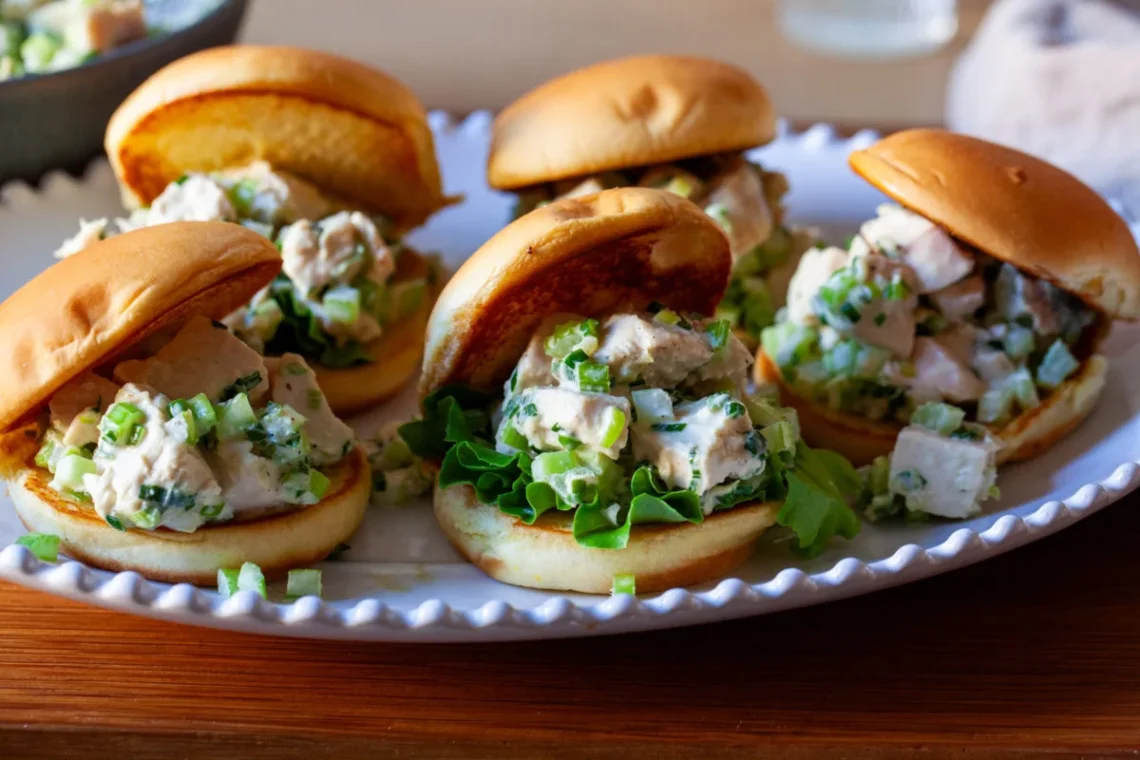
In the modern culinary landscape, few dishes evoke as much quiet contention as chicken salad. While ostensibly a simple emulsion of poultry, binder, and aromatics, it serves as a litmus test for personal taste, regional heritage, and deep-seated textural preferences. A recent cultural and gastronomic examination of this deli counter staple has reignited a fierce debate over what constitutes the definitive version of the dish.
At the center of this culinary discourse is a bold manifesto for the "celery enthusiast"—a faction of home cooks and food purists advocating for a radical 50-to-50 ratio of crunch to protein. Eschewing the conventional, heavily doctored iterations laden with sweet fruits, aggressive herbs, or polarizing spices like curry powder, this movement champions a stripped-down, structurally rigorous approach.
Key pillars of this definitive chicken salad philosophy include:
The Celery Dominance: Rejecting the background-actor status of celery in favor of a heavy-handed, 50% volume presence that prioritizes fresh, crisp geometry over soft homogeneity.
The Bone-In Imperative: Banning boneless, skinless breasts in favor of bone-in, skin-on cuts to secure maximum natural moisture and flavor retention.
The Crispy Skin Utilization: Repurposing the rendered chicken skin as a culinary asset—baking it into a shattering, savory garnish akin to nature’s potato chip.
Foundational Seasoning: Direct seasoning of the diced warm meat before the introduction of binders, ensuring flavor permeates the core rather than resting on the surface.
Minimalist Aromatics: Relying strictly on minced scallions rather than heavy herbs, completely barring intrusive elements like grapes, raisins, or excessive tarragon.
Chronology
To understand how chicken salad reached this current state of ideological polarization, one must trace its evolution from a Victorian-era novelty to a modern battleground of home-kitchen preferences.
The 19th Century: The Genesis of Modern Delicacy
Chicken salad entered the American culinary lexicon in the latter half of the 1800s. Originally served warm or molded in aspic, early recipes often featured chopped cooked chicken bound with mayonnaise, cream, or melted butter, frequently accented with capers, celery, and pickles. It was designed as an upscale party dish, meant to showcase the host’s access to fresh poultry and fine condiments.
The Mid-20th Century: Standardization and Industrialization
As commercial mayonnaise (such as Hellmann’s) became a pantry staple and canned chicken entered the market, chicken salad underwent a democratization—and subsequent degradation. It shifted from a bespoke artisanal dish to a uniform institutional offering found at church luncheons, country clubs, and corner delis. This era also birthed the controversial practice of adding sweet elements—red grapes, chopped apples, pecans, and dried cranberries—to mask the dryness of overcooked, industrially processed poultry.
The Late 20th to Early 21st Century: The Rise of Culinary Skepticism
By the turn of the millennium, home cooks began experiencing a cultural fatigue regarding overly sweet, texturally muddy chicken salads. Culinary publications and food bloggers initiated a counter-movement, emphasizing roasted-in-house meats, precise knife work, and restrained binding agents.
The Present Day: The Extremist Turn
In recent years, the discourse has moved past simple "better-ingredients" advocacy into hyper-specific ideological camps. The rise of independent food essayists and social-media-adjacent culinary commentary has allowed niche preferences—such as the unapologetic embrace of excessive celery and the elevation of chicken skin into a sandwich topping—to find global audiences, transforming a quiet lunch item into a focal point of modern culinary self-expression.
Supporting Data
The debate surrounding chicken salad is not merely subjective; it is heavily dictated by chemistry, thermodynamics, and agricultural science. A breakdown of the core components reveals the data driving the ultimate recipe:
Protein Moisture Retention
Bone-In vs. Boneless: Culinary tests consistently demonstrate that bone-in, skin-on chicken breasts retain significantly more moisture during thermal processing. The bone acts as a thermal buffer, slowing the rate of heat penetration, while the skin protects the delicate white meat from direct, drying oven drafts.
Target Temperature: The USDA recommends poultry reach 165°F (74°C), but for chicken salad, pulling breasts at 150°F to 155°F (65°C to 68°C) and allowing carryover cooking prevents the chalky, stringy texture that ruins countless batches.
The Texture Matrix
The Binder-to-Solid Ratio: A common failure mode of commercial chicken salad is the "swimming pool" effect—where excessive mayonnaise liquefies the dish. Optimal structural integrity requires the binder to merely coat, rather than submerge, the ingredients.
The Crunch Factor: Celery (Apium graveolens) consists of approximately 95% water by weight, housed within rigid collenchyma cell walls. When diced finely and incorporated at high volumes (approaching a 1:1 ratio with the protein), it provides a necessary acoustic and tactile counterpoint to the soft, unctuous nature of mayonnaise and poached or roasted meat.
Official Responses and Culinary Expert Perspectives
As the debate over the "correct" way to construct chicken salad gains traction, professional chefs, food scientists, and culinary historians have weighed in on the anatomy of the dish.
Dr. Aris Thorne, a food science professor specializing in emulsion stability, notes the psychological importance of texture in cold salads:
"When humans consume cold, protein-based mixtures, our brains actively search for textural contrast. Without a high-turgor vegetable like celery or an external crunch element, the palate experiences sensory fatigue almost immediately. The obsession with high-celery ratios is actually a biologically sound quest for textural relief."
Meanwhile, traditionalists from the American South—where chicken salad holds quasi-religious status—defend the inclusion of unexpected ingredients. Martha Higgins, a historic cookbook archivist based in Charleston, offers a historical defense:
"The inclusion of fruit, pecans, and celery has deep regional roots tied to agricultural abundance and preservation. While modern palates lean toward minimalist profiles, historical chicken salad was designed to stretch resources while celebrating seasonal harvests. There is no singular ‘correct’ version; there is only the version your grandmother made, which you will defend to the death."
Conversely, proponents of the minimalist, celery-heavy philosophy remain unbowed by traditionalist critiques. In a recent statement released via independent culinary essays, advocates doubled down on their stance against sweet mix-ins:
"Fruit has no business sharing a bowl with poultry unless an intentional tagine is being constructed. Chicken salad is a savory vehicle, not a fruit cocktail graveyard. If your chicken salad requires grapes to be interesting, your chicken is simply not flavorful enough."
Implications
The seemingly trivial argument over celery ratios and chicken cuts carries broader implications for contemporary home cooking, food culture, and the psychology of comfort food.
The Democratization of Kitchen Dogmatism
The hyper-fixation on chicken salad reflects a larger cultural shift in how home cooks view their craft. Cooking is no longer merely about sustenance or following a rigid family recipe; it has become an exercise in identity construction. Having strong, unyielding opinions on condiments, ratios, and cooking temperatures signals a deeper engagement with food culture. It transforms a mundane Tuesday lunch into an assertion of personal autonomy.
The War on Culinary Blandness
The commercial food industry has long relied on lowest-common-denominator standardization—producing homogenous, overly sweetened, and under-seasoned deli items designed to offend no one while exciting no one. The modern backlash led by culinary individualists—advocating for things like toasted slider buns, pan-dripping integration, and crisped chicken skin—represents a rejection of industrial blandness.
Sustainability and Zero-Waste Practicality
The practice of rendering and baking leftover chicken skin into a savory garnish highlights a crucial modern culinary ethic: the minimization of food waste. By treating every part of the bird as a high-value asset rather than refuse, home cooks are bridging the gap between gourmet technique and everyday thrift.
Ultimately, whether one views chicken salad as a sacred tradition or a blank canvas for aggressive personalization, the debate proves that the most profound culinary passions often lie in the simplest dishes. As long as people gather around kitchen islands to argue over mayonnaise levels and celery density, the soul of the American home kitchen remains alive and well.