By Danielle Callegari | September 21, 2026
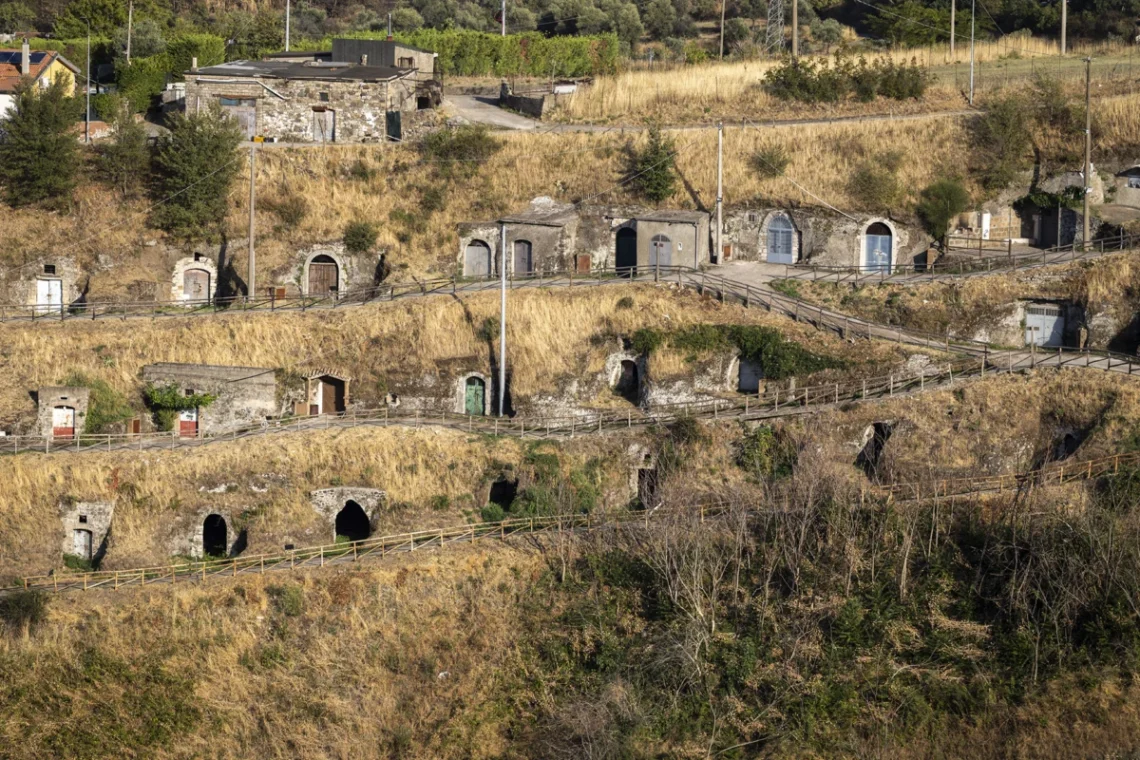
In the quiet, windswept hills of Basilicata, Italy, history is not merely written in books; it is carved into the very earth. In the town of Barile, situated in the arch of Italy’s “boot,” the landscape is honeycombed with an intricate network of volcanic tuff caves. These grottoes, known locally as sheshë, serve as a silent, subterranean bridge between 16th-century refugee struggles and the cutting-edge viticulture of the modern era.
To understand Barile is to understand a dual legacy: the cinematic immortality bestowed upon it by Pier Paolo Pasolini and the enduring, ancestral winemaking traditions of the Arbëreshë people—an Albanian community that sought sanctuary here centuries ago.
Main Facts: A Convergence of Culture and Terroir
The town of Barile occupies two distinct hilltops, sculpted by the debris of the extinct Monte Vulture volcano. The resulting tuffaceous soil provided a unique opportunity for the Arbëreshë, who arrived in the region during the 16th century, fleeing the encroaching Ottoman Turks. They brought with them not only their language and customs but their distinct approach to verë (wine).
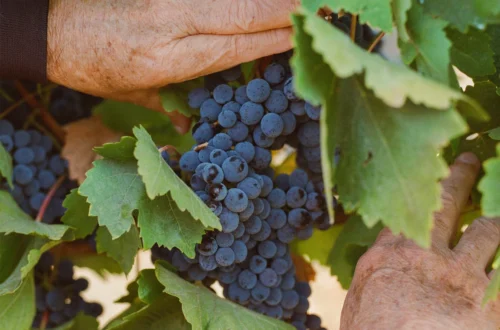
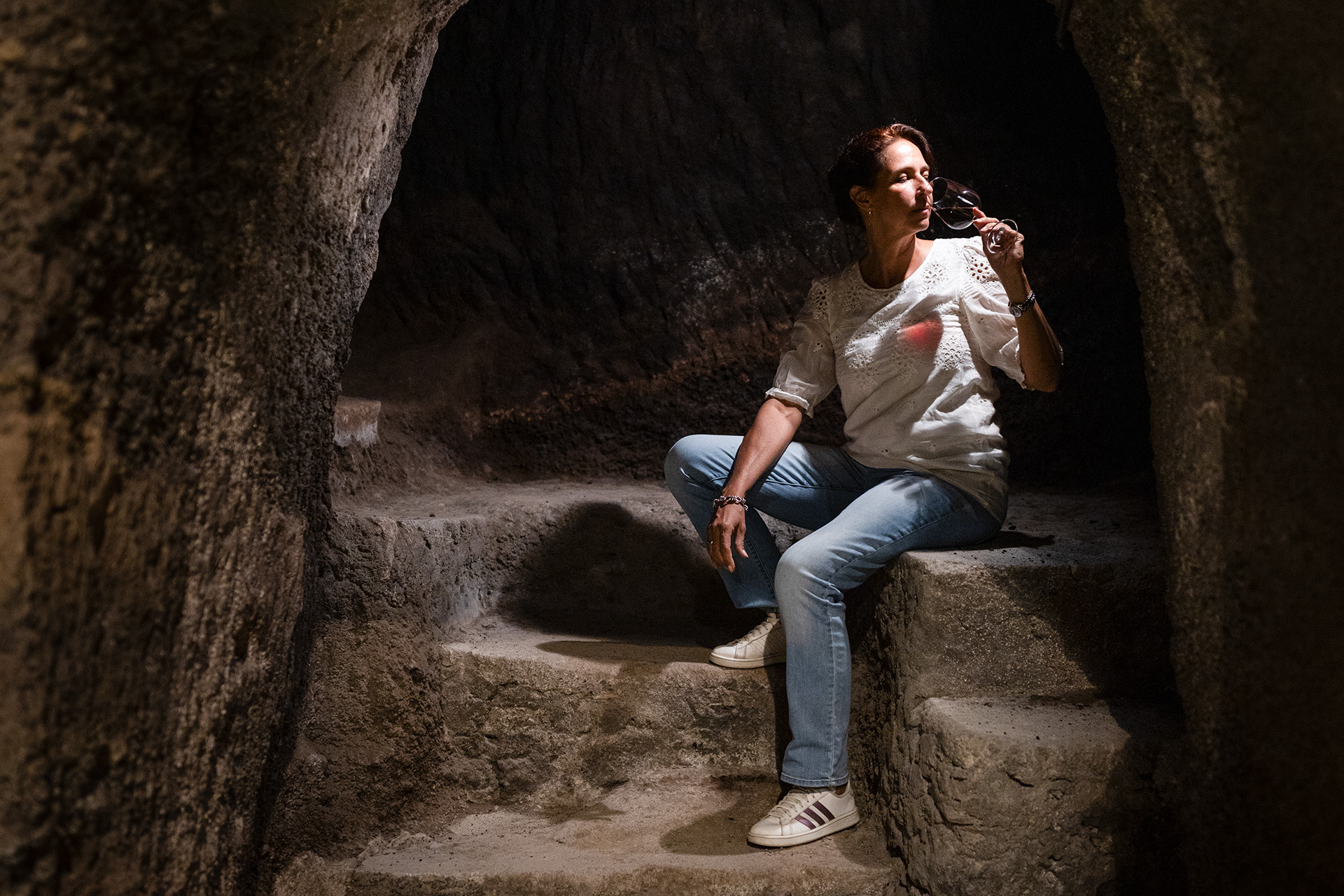
The most striking feature of Barile is the collection of over 100 sheshë—man-made caves carved directly into the volcanic rock. For centuries, these served a triple purpose: they were homes for families, storehouses for cured meats and cheeses, and, most importantly, the cradles of the region’s winemaking. Today, the volcanic soil of the Vulture region provides the mineral-rich foundation for Aglianico del Vulture, a red grape capable of producing wines of profound structure, intensity, and longevity.
Chronology: From Ottoman Flight to Cinematic Legend
The 16th Century: The Arbëreshë Arrival
The history of the sheshë begins with the migration of the Arbëreshë. Fleeing the Ottoman conquest of the Balkans, these communities settled in the rugged terrain of Southern Italy, from Calabria through Basilicata. Their architectural intervention—the excavation of deep, climate-controlled caves—was a survival strategy that became a cultural hallmark. By utilizing the natural thermal regulation of the tuff, they created the ideal environment for fermentation and aging.

1964: The Pasolini Lens
In 1964, the Italian poet and filmmaker Pier Paolo Pasolini sought to capture the Gospel of Matthew through the lens of Neorealism. He required a setting that felt "ancient" and "mystical" to portray the birth and childhood of Jesus. When he arrived in Barile, he found the perfect aesthetic match. The stark, otherworldly quality of the caves, combined with the raw, untrained performances of the local inhabitants, allowed Pasolini to craft a cinematic masterpiece that blurred the lines between the biblical past and the Italian present.
2026: The Modern Renaissance
Six decades later, the caves are experiencing a tentative, albeit difficult, revival. While economic shifts and modernization threatened to render these ancient spaces obsolete, a new generation of winemakers—including Viviana Malafarina and Elena Fucci—is working to preserve the sheshë as both a practical winemaking tool and a repository of cultural memory.
Supporting Data: The Science of the Cave
The utility of the sheshë is not merely romantic; it is grounded in sophisticated thermodynamics. The volcanic tuff is porous and thermally stable, acting as a natural insulator.

- Thermal Stability: The caves maintain a constant, year-round temperature and optimal humidity levels, minimizing the need for artificial climate control.
- Volcanic Terroir: The soil of the Vulture region is rich in potassium and phosphorus, contributing to the "sanguine" and earthy profile of Aglianico del Vulture.
- Production Capacity: At sites like those managed by Basilisco, the caves provide hundreds of square meters of aging space. For instance, Elena Fucci’s operation utilizes 360 square meters of cave space to house Aglianico Riserva, allowing for long-term bottle maturation in a dark, vibration-free environment.
Official Perspectives: Voices from the Vulture
The struggle to maintain these spaces is articulated clearly by those who work within them. Lorenzo Piccin, co-owner and winemaker at Grifalco, reflects on the symbiotic relationship between the geography and the product: "The caves maintain the perfect temperature and an ideal level of humidity all year, so there couldn’t have been a better place for storing wine."
Viviana Malafarina, who currently operates the only winery (Basilisco) that functions entirely within the grottoes, views the caves as a "treasure of enormous value." She manages the logistical hurdles of cave-winemaking—hygiene, limited space, and access—with a focus on sustainability. Her work with ungrafted, 80-year-old vines and the traditional capanno training method highlights a commitment to viticultural preservation that mirrors her dedication to the physical space of the caves.
Elena Fucci, a pivotal figure in elevating the international reputation of the region, underscores the symbolic weight of these structures. Her line of wines, Sceg (the Arbëreshë word for "pomegranate"), serves as a tribute to her heritage. "The sheshë represent the historical memory of this place," Fucci says. "It’s a point of reference that allows us to recount our story to new generations—the caves literally hold our history."

Implications: The Future of Heritage Winemaking
The preservation of the Arbëreshë caves presents a complex challenge for the Italian wine industry. On one hand, the "cave-to-bottle" narrative offers a powerful marketing hook that distinguishes Basilicata’s Aglianico from other Italian reds. On the other hand, the logistical costs of maintaining 16th-century infrastructure in a 21st-century economy are prohibitive.
The Economic Tension
The emigration of youth from Southern Italy has left many sheshë abandoned. Without intervention, these structures risk collapse or degradation. However, the success of producers like Fucci and Malafarina suggests a path forward: integrating boutique, high-end winemaking with wine tourism. By transforming the caves into tasting rooms or aging cellars for luxury riserva labels, wineries can justify the high maintenance costs.
The Cultural Imperative
Beyond economics, there is the matter of cultural heritage. The sheshë are a living testament to the resilience of the Arbëreshë people. They are not merely storage units; they are "vinous equivalents to Plato’s myth of the cave," as noted by the producers. They offer a tangible connection to the history of migration in Italy, challenging the narrative of a homogeneous nation and highlighting the peninsula’s long history as a crossroads of civilizations.

Conclusion
As the sun sets over the volcanic slopes of Monte Vulture, the caves of Barile remain quiet, enduring witnesses to the passage of time. They have sheltered refugees, provided the backdrop for cinematic history, and fostered the creation of some of Italy’s most compelling wines.
Whether these grottoes will continue to serve as active production sites or transition into historical monuments remains to be seen. However, as Fucci aptly poses, "Why not tell the history of the place in the place that tells its history?" The sheshë are more than just architecture; they are the heart of a culture that refuses to be forgotten, one bottle of Aglianico at a time.