By Andreas Walstad
September 28, 2026
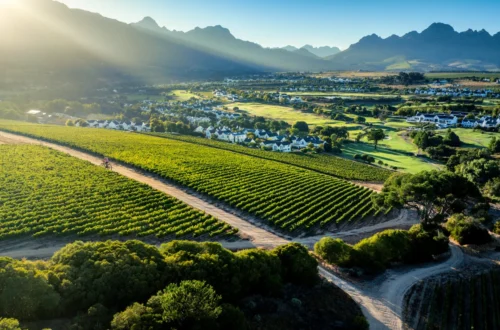
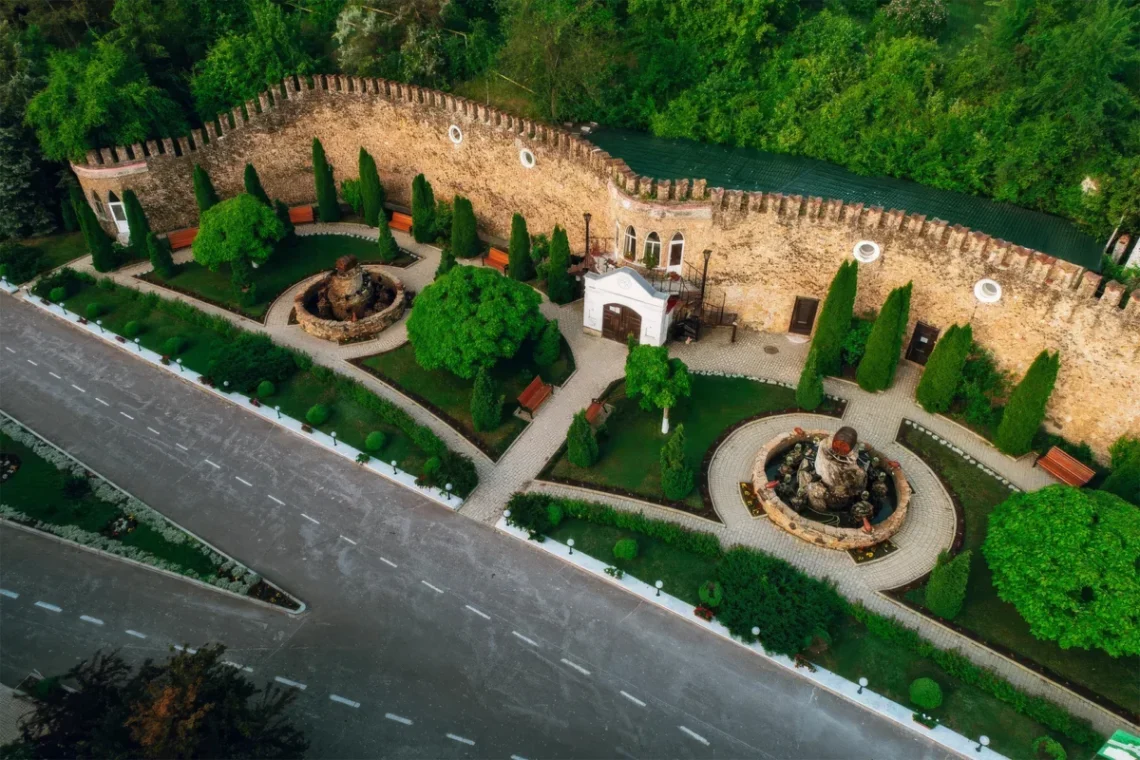
It is a crisp, warm June day in Moldova when I arrive at Mileștii Mici, the world’s largest subterranean wine complex. Situated among the rolling, lush green landscapes of the Ialoveni District, the winery lies just 45 minutes from the capital, Chisinau, and roughly 90 minutes from the border with Ukraine. As I stand at the entrance—an imposing structure that seems to lead into the very marrow of the earth—I am struck by the sheer scale of what lies ahead. This is not merely a cellar; it is an underground metropolis of viticulture, a labyrinthine testament to human perseverance, and a repository of history that has outlasted the very empire that once threatened to destroy it.
The Record-Breaking Reservoir: A Statistical Marvel
The prestige of Mileștii Mici was cemented in the annals of history in 2007, when it was officially inducted into the Guinness Book of World Records as the largest wine cellar complex on the planet. At the time of the audit, the facility housed approximately 1.5 million bottles. Today, nearly two decades later, the exact inventory remains a mystery. Estimates suggest the collection has swelled to upwards of 2 million bottles, a figure so vast that a comprehensive stock count would likely take an entire year to complete.
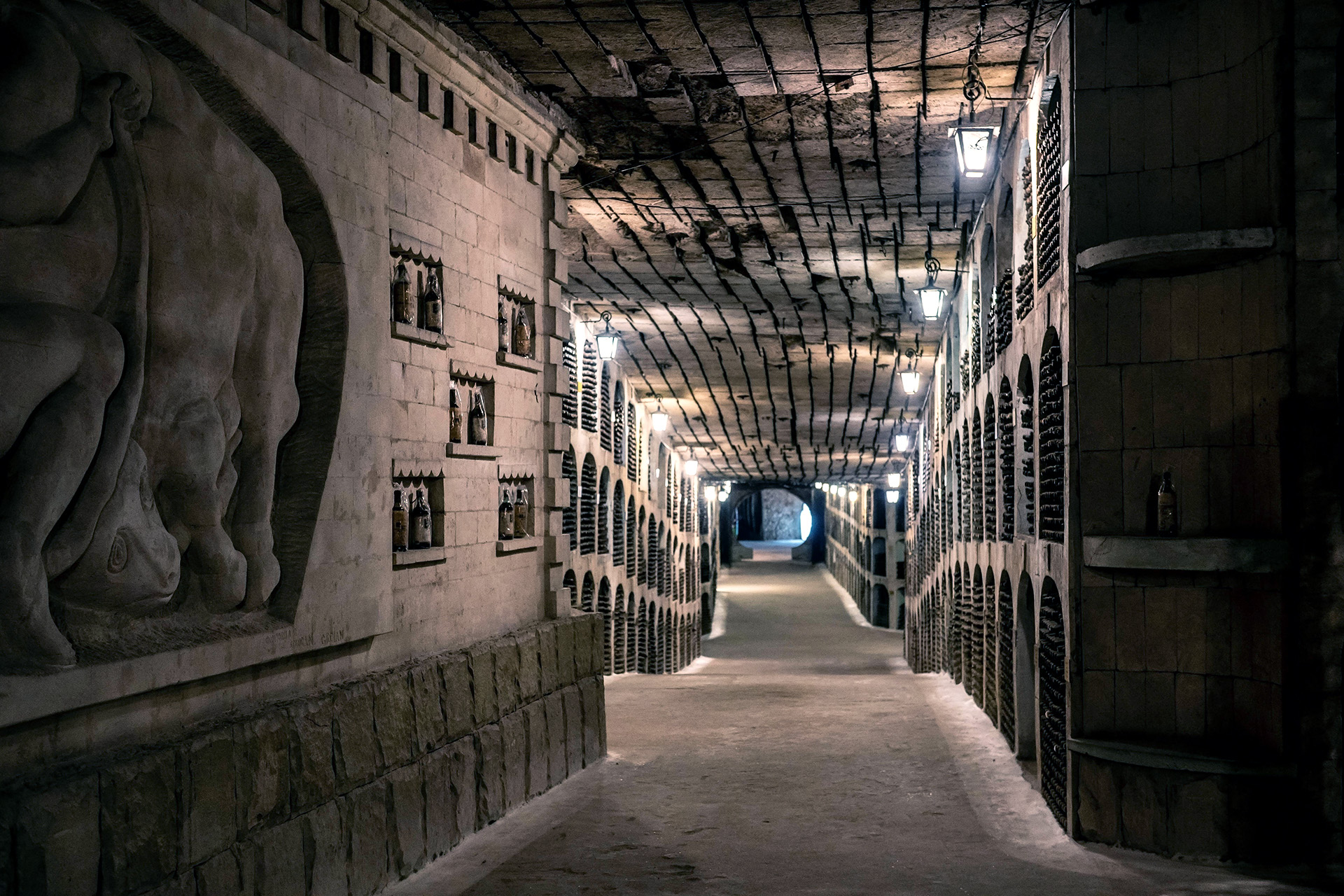
To navigate this subterranean expanse, one does not simply walk; a small electric train transports visitors through dark, limestone corridors until reaching a depth of 260 feet—roughly 20 stories below the surface. The temperature is a constant, cool 54–57°F (12–14°C) with a humidity level of 85–95%, providing a near-perfect climate for aging. As I step off the train, pulling a jacket tight against the subterranean chill, I am surrounded by walls of glass—dusty, silent, and imposing.
Chronology of a Forbidden Era: The Gorbachev Effect
While the cellar holds vintages dating back to its founding in 1969, the vast majority of the collection is anchored in a singular, tumultuous year: 1986.
My guide, Pedro, navigates the limestone galleries with the ease of a man who knows every nook of this 124-mile network. He explains that the 1986 saturation is the direct, paradoxical result of Mikhail Gorbachev’s anti-alcohol campaign. When the final leader of the Soviet Union assumed power, he was convinced that alcoholism was a systemic plague destroying the Soviet workforce. In 1986, he introduced draconian legislation—the so-called "dry law"—which slashed the production of alcohol, placed strict quotas on sales, and mandated severe rationing for citizens.
In a climate of state-sponsored prohibition, authorities across the Soviet Union were ordered to destroy wine supplies to curb consumption. In Moldova, which was then a crucial agricultural cog in the Soviet machine, the winemakers of Mileștii Mici were faced with a moral and professional crisis. Fearful that their most precious vintages would be poured into the gutters by state inspectors, the staff took clandestine action.
They constructed secret, hidden chambers deep within the limestone mines, moving their finest wines into the shadows. The irony is profound: in attempting to eliminate the "scourge" of alcohol, Gorbachev’s policies inadvertently forced a massive surplus to be preserved. Today, that defiance has resulted in a treasure trove of historical liquid assets that have survived the collapse of the Soviet Union itself.

Architectural Grandeur: From Limestone Mine to Wine City
The physical infrastructure of Mileștii Mici is as fascinating as the bottles it protects. Originally a limestone quarry in operation since 1886, the vast, hollowed-out tunnels were repurposed in the late 1960s to serve as an industrial-scale winery. The result is an architectural "hodgepodge" that defies conventional design. Some tunnels mimic the stone-cut grandeur of feudal castles, while others feature intricate carvings reminiscent of ancient Greek temples.
The scale is difficult to comprehend until you realize that you can drive a passenger car through the main galleries. This is, in every sense, an underground city. The facility utilizes massive oak barrels, some dating back to the 1970s and 80s, crafted from wood sourced from the forests of modern-day Ukraine and Russia. These barrels are gargantuan, with capacities ranging from 600 to 2,000 wine decaliters, standing like sentinels in the dark, silent halls.
Supporting Data: Economic and Cultural Impact
Moldova’s wine culture is the country’s primary identity, yet it remains under-represented in the global consciousness. The economic implications of Mileștii Mici are significant, serving as both a national monument and a vital export hub.
According to recent industry data, wine accounts for a substantial percentage of Moldova’s total exports. Mileștii Mici functions as the flagship for this industry, attracting thousands of international tourists annually. During my visit, the experience concluded in an elegant tasting hall, a sharp contrast to the raw, dusty tunnels. Here, guests are treated to a pairing of young 2024 Chardonnay and robust 2021 Cabernet Sauvignon, served alongside prosciutto, carpaccio, and local figs. These tastings are not merely hospitality; they are a strategic effort to rebrand Moldovan wine as a sophisticated, premium product rather than a relic of the Eastern Bloc.

Official Perspectives and Modern Innovation
Despite its deep connection to the past, Mileștii Mici is not a static museum. The administration has embraced modern experiential tourism to keep the site relevant in the 21st century. One of the most unique initiatives is the "Mileștii Mici Winerun," an annual event that challenges athletes to run 10 kilometers, with a significant portion of the course winding through the subterranean galleries.
The event, which began in 2019, offers a jarring juxtaposition between high-intensity endurance sports and the quiet, stoic aging of wine. Anton Zaharov, a participant in the most recent race, describes the experience as "novel but intense."
"Running through a dimly lit, dusty tunnel 200 feet underground is unlike any marathon experience in the world," Zaharov notes. "It’s a mix of claustrophobia and awe. The darkness can be disorienting, but when you finally emerge into the beautiful, sunlit grounds of the winery for the final two kilometers, the contrast is exhilarating."
Official management at the winery confirms that such events are essential for drawing a younger, more diverse demographic. While the purists might balk at a marathon occurring within a historical site, the winery maintains that it is necessary to fund the preservation of the collection.

Implications: The Future of the Deep Cellar
As I reflect on my time in the tunnels, it becomes clear that Mileștii Mici is a symbol of Moldova’s resilience. It is a place where history was literally buried to save it from the hands of an ideological purge. The "dry law" of 1986, intended to erase the culture of the vine, instead ensured that a specific moment in time—the flavors and techniques of that era—would be preserved indefinitely.
The challenge for the future will be balancing the preservation of these aging, delicate bottles with the demands of modern tourism. With the collection estimated at 2 million bottles and growing, the logistical burden of climate control and structural maintenance in a 124-mile limestone network is immense. Yet, the winery continues to operate, not just as a business, but as a curator of national memory.
For the visitor, Mileștii Mici offers more than just a glass of wine; it offers a journey into a hidden world. Whether you are an oenophile looking for a 1980s vintage or a marathoner testing your mettle in the dark, the "underground city" of Moldova provides a perspective on history that is rare in our increasingly digitized world. It is a reminder that some of the greatest treasures are found not by looking up at the sky, but by descending into the quiet, cool, and enduring earth.