By: Investigative Health Desk
Note: This report discusses weight bias and discrimination, which may be sensitive or distressing for some readers.
Weight stigma—frequently described by sociologists and public health advocates as the last "acceptable" form of social bias—permeates every tier of modern life. Unlike other marginalized groups that have seen hard-fought gains in public acceptance and protection, individuals navigating life in larger bodies face an unrelenting barrage of discrimination. This pervasive prejudice affects housing, employment, education, interpersonal relationships, and, most alarmingly, the very institutions charged with healing them: the healthcare system.
The consequences of this pervasive bias are not merely social slights; they represent a public health crisis that compromises medical care, deepens health disparities, and fosters a profound psychological burden for millions of individuals.
Main Facts: The Scope of Everyday Bias
To understand the reality of weight stigma, one must look at how frequently it occurs in daily life. Research reveals a relentless cycle of microaggressions, structural barriers, and overt hostility.
In a landmark study tracking daily discrimination, 50 overweight women were asked to log every instance they felt stigmatized because of their weight. Over the course of a single week, the participants recorded more than 1,000 distinct incidents. On average, an overweight woman could expect to encounter discrimination, harassment—such as direct verbal insults—or physical barriers roughly three times a day. While obese men report experiencing discrimination about three times less frequently than women of the same size, it remains a daily reality for them as well.
This prejudice is not merely a matter of sensitive interpretation; it has been documented via controlled psychological and sociological experiments. When professional actors wearing theatrical prostheses to appear overweight applied for jobs, they faced significantly more discrimination than when they applied at their normal body weight. Employment bias studies consistently demonstrate that this hiring penalty disproportionately targets women.
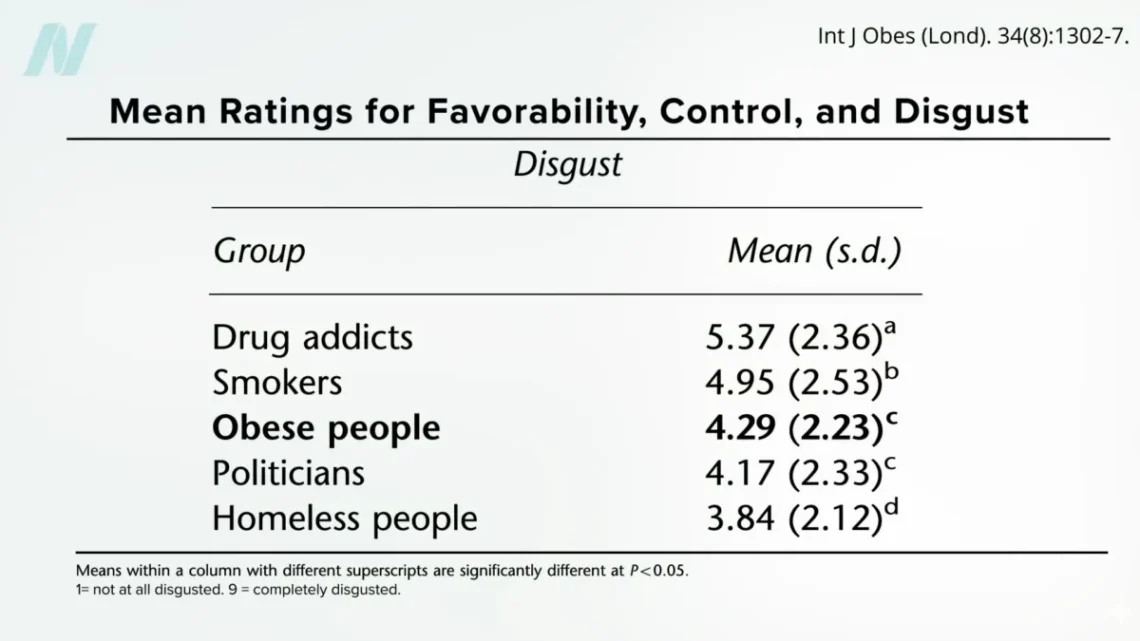
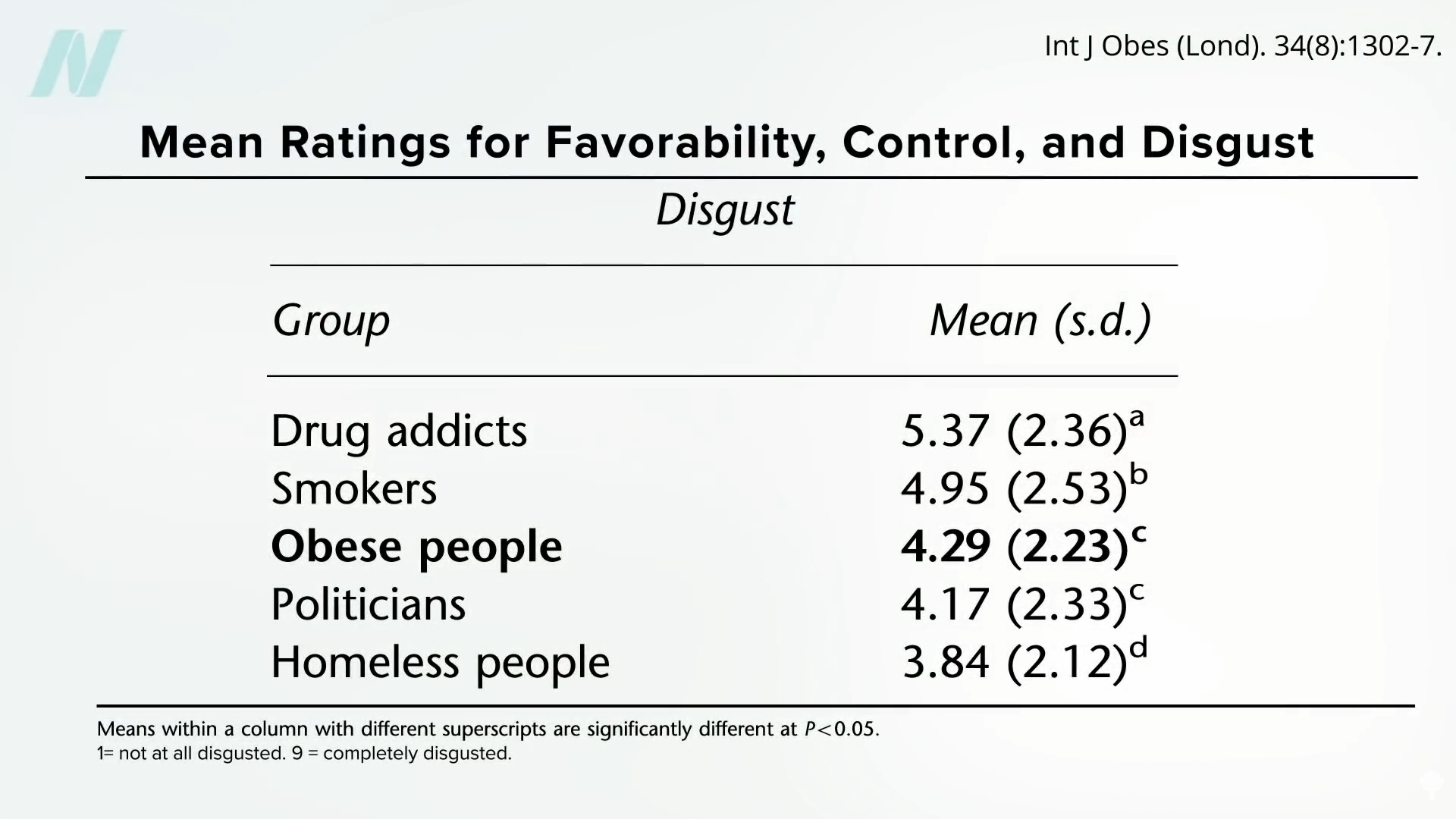
Social attitudes surveys further contextualize this animosity. When researchers compared public attitudes toward 16 different stigmatized social groups—including people experiencing homelessness—only individuals struggling with drug addiction and smoking were viewed as more "disgusting" than obese people. Notably, statistical analysis revealed that obese individuals were rated as just as unappealing as politicians.
Chronology: A Deeply Rooted and Worsening History
Weight stigma is not a recent cultural artifact born of the internet era; its roots run deep, beginning in early childhood and worsening over generations.
Early Childhood Conditioning
The bias manifests at a remarkably young age. Studies show that children as young as three years old describe overweight peers using pejorative terms such as "mean," "stupid," "lazy," and "ugly." As children grow older, the severity and frequency of this negative language escalate.
The 1961 Baseline Study
A classic 1961 study established a baseline for how children view physical differences. Researchers showed children in summer camps and schools across California, Montana, and New York—representing a wide array of social, cultural, and ethnic backgrounds—pictures of various children and asked them to rank their preferences.
The image lineup included:
- A child with crutches and a leg brace
- A child in a wheelchair
- A child missing a hand
- A facially disfigured child
- An obese child
Across every demographic tested, the results displayed "remarkable uniformity": the obese child came in dead last.
The 2003 Four-Decade Follow-Up
Society has not grown more inclusive over time. When researchers published a 40-year follow-up study in 2003, the title spoke volumes: "Getting Worse: The Stigmatization of Obese Children."
When the original experiment was repeated, the obese child was liked even less than in 1961. This downward trend in social acceptance parallels broader national survey data, which have recorded a nearly 70% jump in perceived weight discrimination since the mid-1990s.
Supporting Data: Institutional and Professional Prejudice
While societal prejudice is troubling, the presence of weight bias within professional institutions—particularly education and medicine—poses severe threats to well-being.
Educational and Familial Bias
Teachers and school administrators wield immense influence over developing minds, yet they are not immune to cultural conditioning. Surveys indicate that more than a quarter of teachers and school staff view becoming obese as "one of the worst things that could happen to a person."
This bias extends uncomfortably close to home. Parents have been documented providing significantly less financial and emotional support for college to their overweight daughters compared to their thinner siblings. As prominent obesity researchers have noted, "It is strong prejudice indeed when parents discriminate against their own children."
Medical Professionals and Specialists
Perhaps most concerning is the infiltration of weight bias into medicine. A representative national survey found that more than half of physicians viewed obese patients as "awkward, unattractive, ugly, and noncompliant." Furthermore, approximately a quarter of surveyed nurses agreed or strongly agreed with the statement: "Caring for an obese patient usually repulses me."
Even within the specialized medical literature, explicit anti-fat bias has historically surfaced without apology. A notable example from the Annals of Internal Medicine bluntly stated: "Obesity is an aesthetic crime: it is ugly."
More recent tracking shows that even obesity specialists—those dedicating their careers to treating the condition—professed increasingly explicit anti-fat attitudes in surveys conducted between 2001 and 2013, describing larger individuals as significantly more lazy, stupid, and worthless compared to thinner peers.
Official Responses and Clinical Realities
The medical establishment’s internal bias translates directly into substandard care, creating physical barriers and time constraints for patients who need medical attention the most.
Reduced Access to Preventative Care
Obese women face a heightened risk of developing cervical, endometrial, and ovarian cancers, yet they are systematically less likely to receive routine screenings. Morbidly obese patients have roughly half the odds of obtaining recommended pelvic exams compared to their thinner counterparts.
While patient avoidance plays a role due to fear of judgment, structural and institutional barriers are equally responsible. For instance, a poll of OB/GYN practices in South Florida revealed that one in seven practices flatly refused to see heavier women, enforcing arbitrary weight cutoffs for new patients starting at 200 pounds.
Shorter and Lower-Quality Appointments
Even when physicians accept heavier patients, the quality of care often suffers. In experimental trials where doctors were given identical medical charts for a migraine patient—varied only by whether the patient was listed as average weight, overweight, or obese—physicians stated they would allocate roughly 28% less time to the obese patient.
Audio-recorded doctor-patient visits confirm that physicians build significantly less emotional rapport with overweight and obese patients.
Interestingly, a phenomenon known as the "respect paradox" occurs in clinical settings. In a study entitled "Obese Patients Overestimate Physicians’ Attitudes of Respect," researchers found that despite harboring negative and dismissive attitudes, obese patients frequently expressed high satisfaction with their providers. The study concluded that while physicians successfully mask their disdain to play the part, the lack of true underlying respect calls the authenticity of the patient-physician relationship into question.
Implications: The Path Forward
The persistence of weight stigma across schools, families, and healthcare facilities carries profound physical and psychological implications. When patients face hostility, mockery, or dismissal from medical providers, they are more likely to delay or avoid seeking medical care altogether, compounding existing health risks.
Addressing this crisis requires a fundamental cultural and institutional shift. Medical schools must actively train future practitioners to recognize and mitigate implicit weight bias. Public health campaigns must reframe obesity through a lens of compassion, systemic understanding, and health-at-every-size principles, rather than moral failure.
Until society—and the medical community in particular—confronts the reality of weight bias, millions of individuals will continue to navigate a world that treats their dignity as optional.