By Food & Culture Desk
Published: October 2023
1. Main Facts: The Anatomy of Trader Joe’s Least-Favorite Chip
When grocery shoppers walk through the bright, welcoming sliding doors of a Trader Joe’s, they enter a retail wonderland. Known for its curated private-label selection, quirky packaging, and fiercely loyal customer base, the grocery chain has mastered the art of making affordable gourmet eating accessible. From frozen meals priced under five dollars to globally inspired sauces and snacks, Trader Joe’s rarely misses the mark.
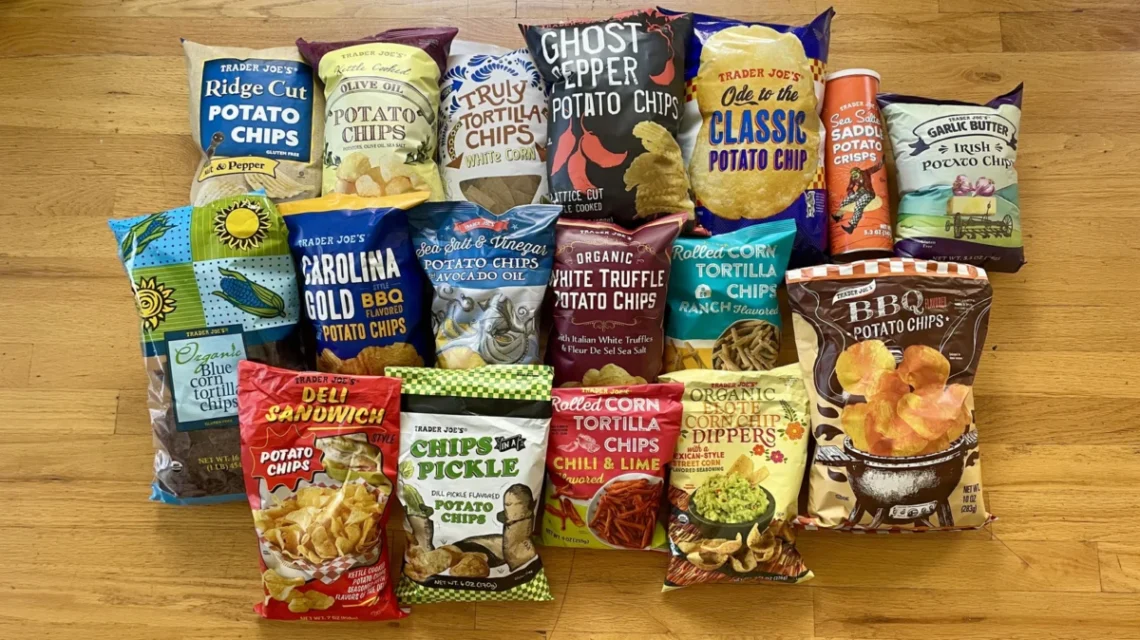
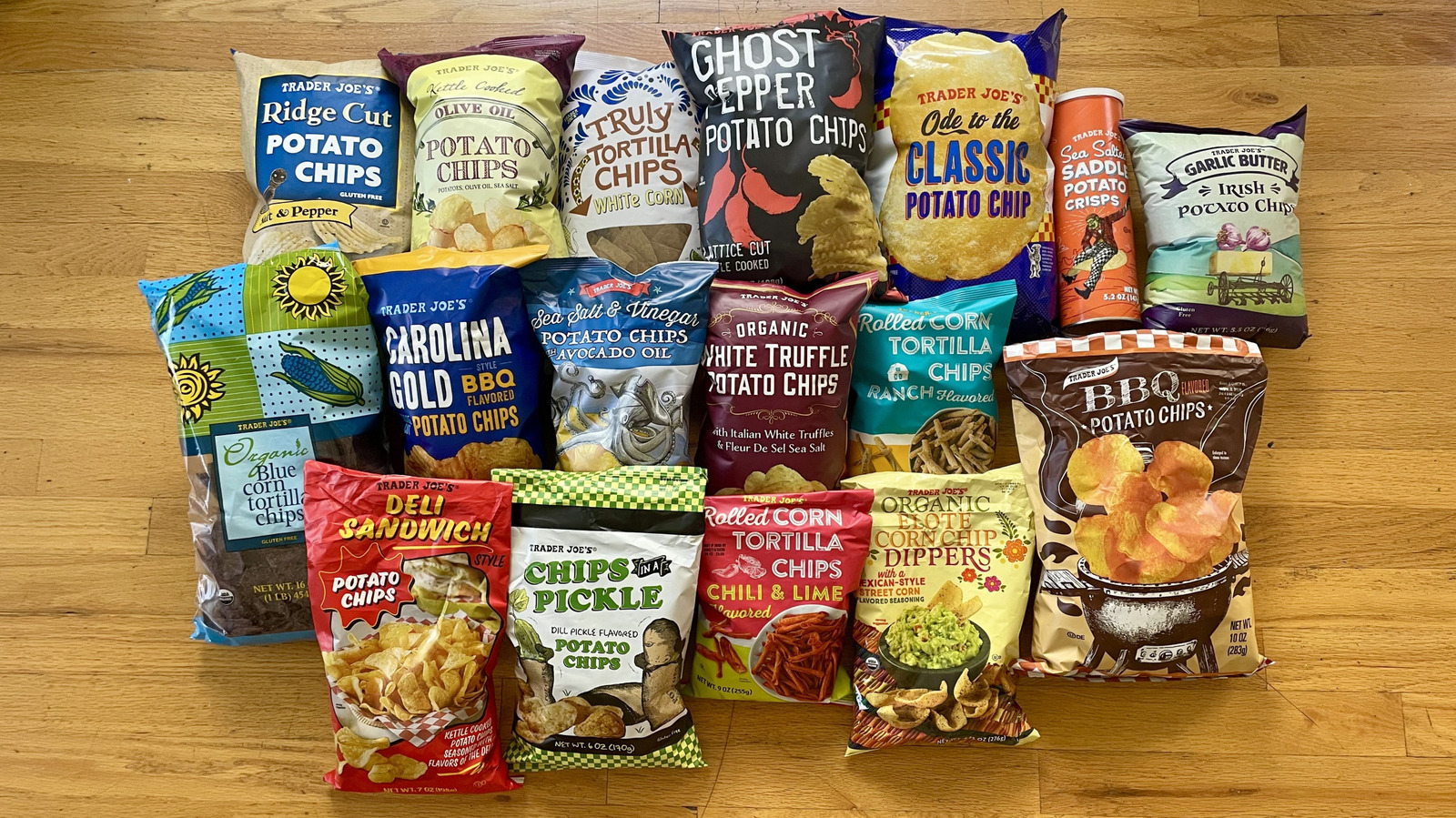
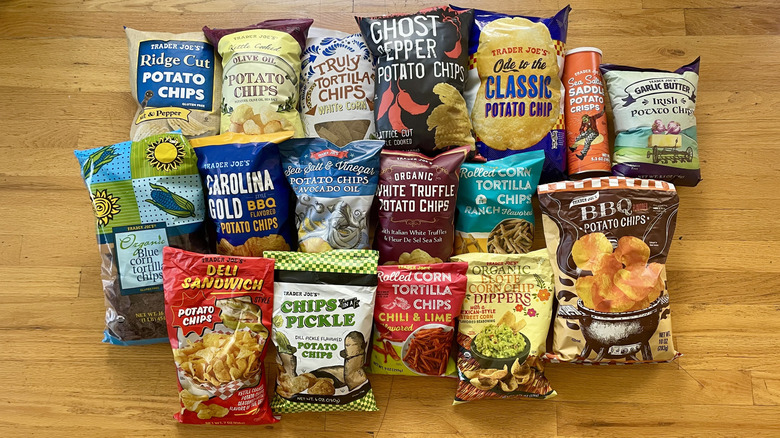
However, even the most beloved culinary institutions have their detractors. In a recent comprehensive ranking of Trader Joe’s proprietary chip lineup by Food Republic, one particular item found itself languishing comfortably at the very bottom of the list: the Sea Salted Saddle Potato Crisps.
Named for their distinct, curved geometry—which resembles a miniature equestrian saddle designed for a tiny horse—these stackable potato crisps are an unmistakable, unabashed homage to the ubiquitous, cylindrical-can snack titan: Pringles.
Despite capturing the dreaded last-place ranking among all Trader Joe’s chips, the Saddle Crisps come with a major caveat from reviewers and snack enthusiasts alike: they are far from inedible. In fact, they are surprisingly enjoyable. While they may lack the complex flavor profiles of top-tier contenders like the Organic Elote Corn Chip Dippers, the Saddle Crisps offer a reliable, budget-friendly crunch that satisfies the specific craving for a processed, stackable potato crisp.
Priced at a modest $2.29 per canister, these snacks present virtually zero financial risk for curious shoppers. Yet, they sit at the center of an unexpected debate regarding private-label copycats, ingredient transparency, and what consumers actually expect when buying store-brand knockoffs of iconic national products.
2. Chronology: The Rise of the Stackable Crisp and Its Journey to Store Shelves
To understand how Trader Joe’s Saddle Crisps arrived on grocery shelves, it is helpful to look back at the history of the stackable chip category and the broader timeline of Trader Joe’s private-label strategy.
- 1968: Procter & Gamble introduces Pringles to the American market, revolutionizing the snack industry with uniform, stackable chips packed inside a rigid paperboard tube designed to prevent breakage.
- Late 20th Century: The patent for stackable crisps expires, opening the floodgates for generic brands, supermarkets, and private labels to develop their own iterations of the iconic saddle-shaped snack.
- The Trader Joe’s Expansion Era: As Trader Joe’s rapidly expands across the United States, its private-label strategy evolves. The chain relies heavily on contract manufacturers—often producing name-brand items—to supply its shelves with unique equivalents.
- Recent Years: Trader Joe’s officially launches the Sea Salted Saddle Potato Crisps, filling a noticeable gap in their snack aisle for a tube-packed, uniform crisp.
- Present Day: Food critics and snack reviewers put the product to the test. Food Republic ranks the Sea Salted Saddle Potato Crisps last in its comprehensive chip review, sparking internet discussions, Reddit debates, and a fresh look at how store-brand dupes stack up against the original.
3. Supporting Data & Comparative Analysis: Ingredients and Public Reception
When evaluating how Trader Joe’s Saddle Crisps compare to genuine Pringles, the devil is truly in the details—both in the manufacturing recipe and the court of public opinion.
Ingredient Showdown: Trader Joe’s vs. Pringles
A head-to-head comparison of the ingredient decks reveals striking similarities, but also a few crucial differences that account for variations in texture, flavor, and dietary suitability.
- Base Structures: Both Pringles and Trader Joe’s Saddle Crisps rely on a reconstructed dough rather than sliced, whole-potato frying. Their primary structural components are identical: dried potato flakes, corn flour or cornmeal, rice flour, and cornstarch. This precise mixture is what yields the uniform mouthfeel and iconic snap characteristic of both brands.
- Faming Oils: This is where the recipes diverge. Trader Joe’s Saddle Crisps proudly list sunflower oil as their sole frying medium. In contrast, standard Original Pringles list a rotating blend of oils on their canisters, including "corn, cottonseed, high oleic soybean, and/or sunflower oil." Food scientists note that this variance in oil profiles likely contributes to the subtle differences in flavor depth and aftertaste between the two products.
- The Gluten Factor: For shoppers with dietary restrictions, the Trader Joe’s version holds a massive advantage. Pringles famously contain wheat starch, rendering them unsafe for individuals with celiac disease or severe gluten sensitivities. Trader Joe’s Sea Salted Saddle Potato Crisps, however, bypass wheat ingredients entirely, making them a gluten-free-friendly alternative to the classic brand.
What the Internet Is Saying: Reddit and Social Media Reactions
Online communities are notoriously opinionated when it comes to grocery store dupes, and Trader Joe’s Saddle Crisps have generated a fascinating split across platforms like Reddit.
On the subreddit r/traderjoes, opinions range from affectionate defense to outright dismissal.
"Pringles seem like they’d be an easy product to rip off, and yet literally every knockoff or competitor is substantially worse."
— A skeptical Reddit reviewer
Conversely, defenders of the snack are fiercely loyal:
"More for me! These are my favorite snack for some reason."
— An enthusiastic Trader Joe’s shopper
Other critiques focus on seasoning levels. Some consumers report that the chips can taste overly salty straight out of the can, while creative foodies have leaned into the saltiness by using the crisps as a base for gourmet toppings—such as crumbling Trader Joe’s blue cheese directly onto the salted surface.
Furthermore, a recurring joke across internet message boards points out a missed branding opportunity by the grocery chain: given Trader Joe’s penchant for clever, pun-heavy product names, many fans feel the product should have been named "Jingles" instead of the literal descriptive title, "Sea Salted Saddle Potato Crisps."
4. Official Responses and Industry Perspectives
While major corporations rarely issue formal press releases regarding store-brand copycats, industry analysts and food retail experts have plenty to say about the psychology behind products like Trader Joe’s Saddle Crisps.
Retail economists note that private-label knockoffs serve two primary functions for grocery stores like Trader Joe’s:
- Margin Protection: Selling proprietary items allows the store to bypass the massive marketing markups charged by national brands, passing minor savings down to the consumer while maintaining healthy profit margins.
- The "Halo Effect": Even when a private-label product ranks at the bottom of a taste test—as the Saddle Crisps did—it reinforces the store’s positioning as a one-stop-shop. Shoppers who prefer not to make an extra trip to a conventional supermarket for Pringles can check the item off their list while browsing Trader Joe’s aisles.
Culinary professionals interviewed about the product emphasize that stackable crisps occupy a unique psychological space in American snacking. They are not expected to compete with kettle-cooked, whole-potato artisanal chips. Instead, they are judged on their consistency, portability, and nostalgic comfort.
In that regard, industry experts agree that Trader Joe’s successfully executed its mission. The Saddle Crisps deliver the exact physical experience consumers look for in a stacked crisp—from the satisfying pop of the plastic lid to the uniform crunch—even if discerning palates ultimately rank them beneath superior corn and potato snack options.
5. Implications: What the "Worst" Trader Joe’s Chip Tells Us About Modern Snacking
The story of Trader Joe’s Sea Salted Saddle Potato Crisps goes beyond a simple product review. It offers a broader window into modern consumer habits, dietary shifts, and the evolving relationship between name brands and store-label alternatives.
The Rise of Inclusivity in Comfort Foods
The most significant takeaway from the Saddle Crisps’ formulation is its accessibility to the gluten-free community. For decades, individuals with celiac disease or non-celiac gluten sensitivity had to watch from the sidelines as everyone else enjoyed iconic processed junk foods like Pringles. By formulating their version without wheat-derived ingredients, Trader Joe’s tapped into a lucrative, underserved demographic. It proves that a "dupe" doesn’t have to be an exact chemical clone to be a success; sometimes, improving upon a single dietary constraint makes a store-brand product vastly superior for specific consumers.
Redefining What "Last Place" Means
In a store as celebrated for its culinary innovation as Trader Joe’s, finishing last in a chip ranking is hardly a condemnation. The grocery store’s snack aisle features stiff competition, ranging from truffle-infused potato chips to chili-lime rolled tortilla snacks. That the Saddle Crisps can anchor the bottom of the list while still retaining a dedicated fanbase speaks volumes about the high baseline quality of Trader Joe’s inventory.
Ultimately, for just $2.29 a can, the Trader Joe’s Sea Salted Saddle Potato Crisps remind us that food doesn’t have to win gold medals to be worth buying. Whether you are looking for a gluten-free alternative to Pringles, a cheap lunchbox addition, or simply a fun subject for your next grocery debate, this humble little saddle-shaped crisp proves that even the "worst" Trader Joe’s chip is still a pretty good ride.