By Wayne Curtis
Published: October 28, 2026
Main Facts
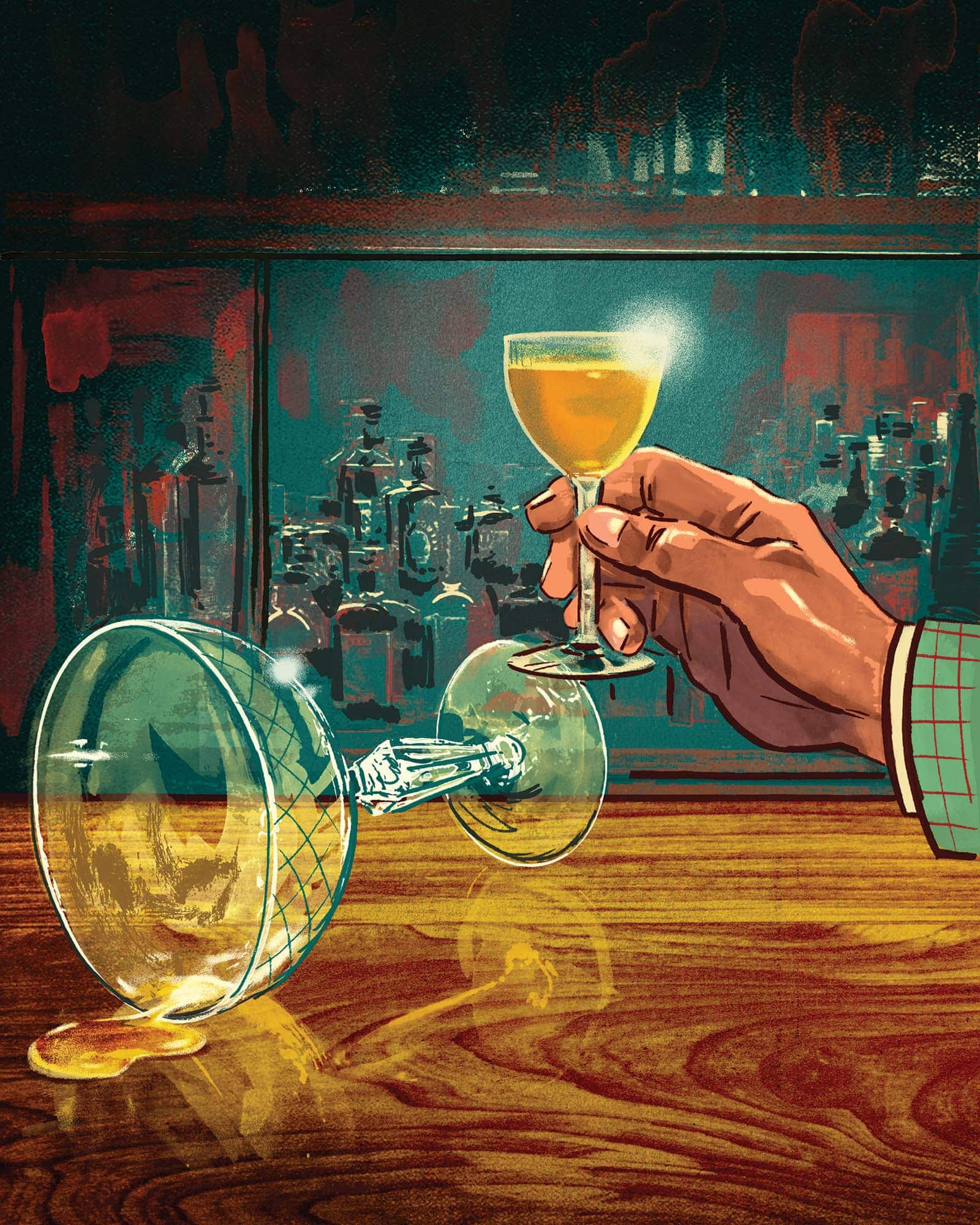
When the modern cocktail revival first took root a quarter-century ago, the prevailing aesthetics of glassware were grand, oversized, and often borderline absurd. Drinking establishments routinely served libations in colossal vessels: Martini glasses resembling residential birdbaths, heavy rocks glasses thick enough to double as German beer steins, and Margarita glasses featuring shallow, wide bowls perched precariously atop saguaro-cactus-shaped stems.
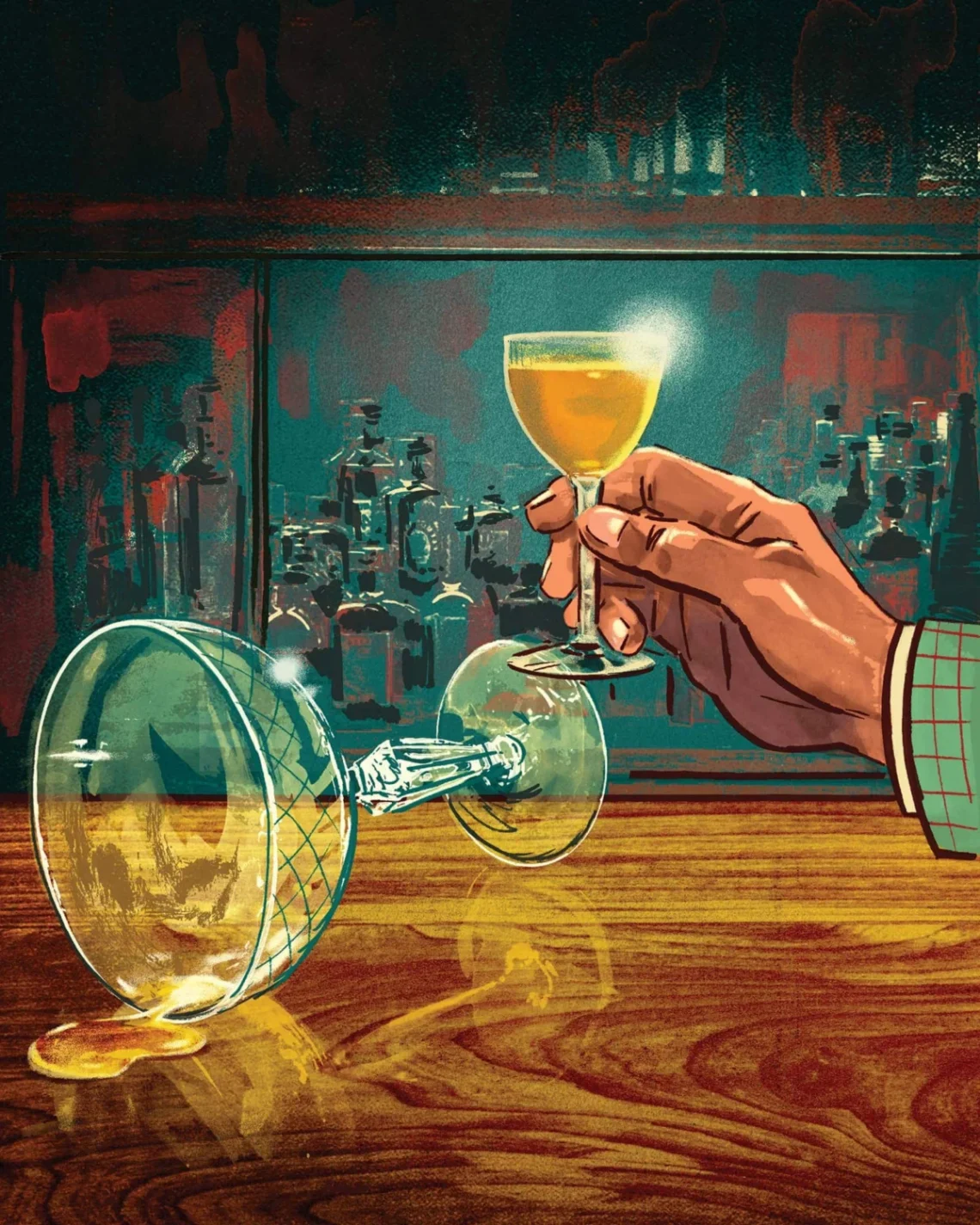
Today, the landscape of craft mixology looks remarkably different. Driven by historical research, sensory science, shifting consumer habits, and contemporary wellness trends, the cocktail world has experienced a profound downsizing. Modern mixologists have largely replaced gargantuan glassware with sensible, historically accurate, and intimate vessels—ranging from revived coupes and Nick & Nora glasses to tiny, two-ounce pony glasses. This shift represents more than just a passing design trend; it reflects a fundamental re-evaluation of how a drink is experienced, consumed, and appreciated.
Chronology: From Excess to Intention
The Era of Supersizing (Late 20th Century)
In the decades leading up to the turn of the 21st century, the bar industry was dominated by a philosophy of excess. Influenced by commercial volume and a cultural appetite for "supersized" portions, cocktail glassware ballooned. The classic Martini glass, once a refined and modest vessel, expanded into an unwieldy V-shaped cone capable of holding nearly half a gallon of liquid. These massive containers came with practical drawbacks: drinks quickly warmed up, the alcohol-to-dilution ratio drifted off-balance, and the glasses themselves were prone to tipping and spilling.
The Archaeological Phase of the Cocktail Renaissance (Early 2000s)
As the craft cocktail movement began to coalesce, early pioneers turned their attention to historical manuals, treating vintage cocktail guides like the Rosetta Stone of drinking culture. These researchers made a striking discovery: early American and European cocktail glasses were remarkably Lilliputian by modern standards. Classic recipes from the late 19th and early 20th centuries were designed to be served in vessels holding no more than three ounces.

Emulating forebears meant bringing back forgotten ingredients—such as complex amari, historic styles of gin, and artisanal bitters—as well as the physical vessels meant to cradle them. Thrift shops and antique markets were suddenly scoured for forgotten stemware, footed tumblers, and elegant sherbets.
The Seattle Experiment (2009)
The practical viability of downsizing was tested early on by visionary bartenders. In 2009, noted Seattle bartender Jamie Boudreau transitioned to smaller glassware at two of his overseen venues, Tini Bigs and Vessel. Anticipating pushback from patrons accustomed to oversized portions, Boudreau deployed a clever strategy: he cut menu prices slightly and filled every smaller glass to the brim.
The psychological effect was immediate. Customer complaints about partial pours vanished. Patrons ordered more drinks overall because the physical presentation felt abundant and satisfying, even though the total alcohol volume remained consistent. Furthermore, customers praised the fact that their drinks remained icy-cold from the first drop to the last—realizing the ideal famously championed by Art Deco-era bartender Harry Craddock, who believed a cocktail should be consumed while it was "still laughing at you."
The Modern Minimalist Shift (Present Day)
Entering the mid-2020s, the trend toward smaller glassware has accelerated due to compounding cultural forces. Heightened health consciousness, changing social behaviors, and the widespread popularity of GLP-1 appetite-suppressants have driven consumers toward lower-volume, higher-intention consumption. Once-forgotten pony glasses—historically used for cordials and tiny pours—are now vanishing from thrift store shelves as craft bars scramble to source them for micro-martinis.
Supporting Data and Sensory Science
The transition to smaller glassware is supported by modern psychological and sensory research. Experimental physiologist Charles Spence coined the term "affective ventriloquism" to describe the phenomenon by which one sensory input heavily influences another. In the context of dining and drinking, tactile feedback directly shapes perceived taste.
Spence’s psychological and physiological experiments demonstrated that diners consistently rated identical meals higher when consumed with heavy, well-balanced flatware compared to flimsy alternatives. Similarly, the tactile experience of lifting a delicate, perfectly weighted, ice-cold vintage glass primes the palate, elevating the psychological perception of the liquid inside.
Furthermore, data from bar operators over the last fifteen years indicates that smaller glassware fundamentally alters consumer pacing:
- Temperature Maintenance: A two-to-three-ounce drink consumed from a compact vessel maintains its optimal chilling temperature for the entirety of its lifespan, preventing the watery dilution common in 12-ounce modern glasses.
- Economic and Perceptual Equilibrium: Guests drinking from downsized glasses report a higher perceived value of the overall experience, even when consuming the same absolute quantity of alcohol across an evening.
- Flavor Concentration: Aromatics are concentrated in smaller, tapered bowls (such as the Nick & Nora), enhancing the olfactory component of tasting craft spirits.
Official Responses and Industry Perspectives
Leading voices in the hospitality and mixology sectors have widely embraced the smaller glassware revolution, noting that it elevates the craft as a whole.
- Jamie Boudreau (Owner of Canon, Seattle): Reflecting on his early experiments with downsized barware, Boudreau noted, "You’re getting the same amount of alcohol, but you’re getting more of an experience." He emphasizes that the aesthetic and thermal benefits vastly outweigh any initial customer hesitation.
- Wayne Curtis (Imbibe Contributing Editor and Historian): Observing the broader cultural arc of the movement, Curtis notes that the shift mirrors the craft cocktail revival itself: "A slow, long return to the idea that pleasure, properly concentrated, needs no supersizing." He points out that the giants roaming the earth twenty-five years ago have given way to meticulous curation, where every two-ounce pour is matched to a vessel chosen with deliberate care.
Implications
The lasting normalization of compact glassware carries profound implications for the future of the hospitality industry, consumer health, and bar design:
1. Shifts in Drinking Culture and Wellness
As consumers increasingly prioritize mindful drinking and health-conscious alternatives, the bar industry must adapt. Smaller glassware allows venues to offer sophisticated, complex, and spirit-forward drinks that satisfy the ritual of social drinking without encouraging over-intoxication or excessive volume. This aligns seamlessly with modern wellness goals and shifting demographic preferences.
2. The Economics of Craft Barware
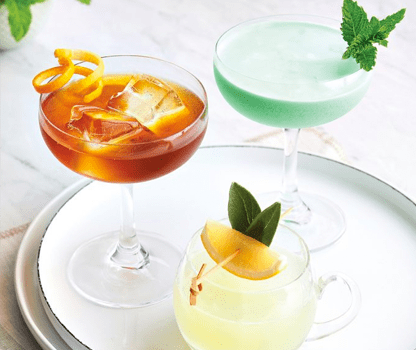
The surging demand for vintage-inspired coupes, Nick & Nora glasses, and antique pony glasses has transformed barware manufacturing and sourcing. Glassware producers are moving away from heavy, industrial-grade restaurant glassware in favor of delicate, thin-walled, yet durable stemware designed specifically to evoke historical elegance while withstanding high-volume commercial dishwashing.
3. A Return to Intentional Hospitality
Ultimately, the downsizing of cocktail glassware signals a philosophical maturation in modern mixology. When a drink is served in an appropriately scaled vessel, the focus shifts away from spectacle, novelty, and sheer volume, returning squarely to the quality of the ingredients, the precision of the technique, and the timeless pleasure of a well-made drink.