Main Facts: The Indestructible Autumn Star of the Garden
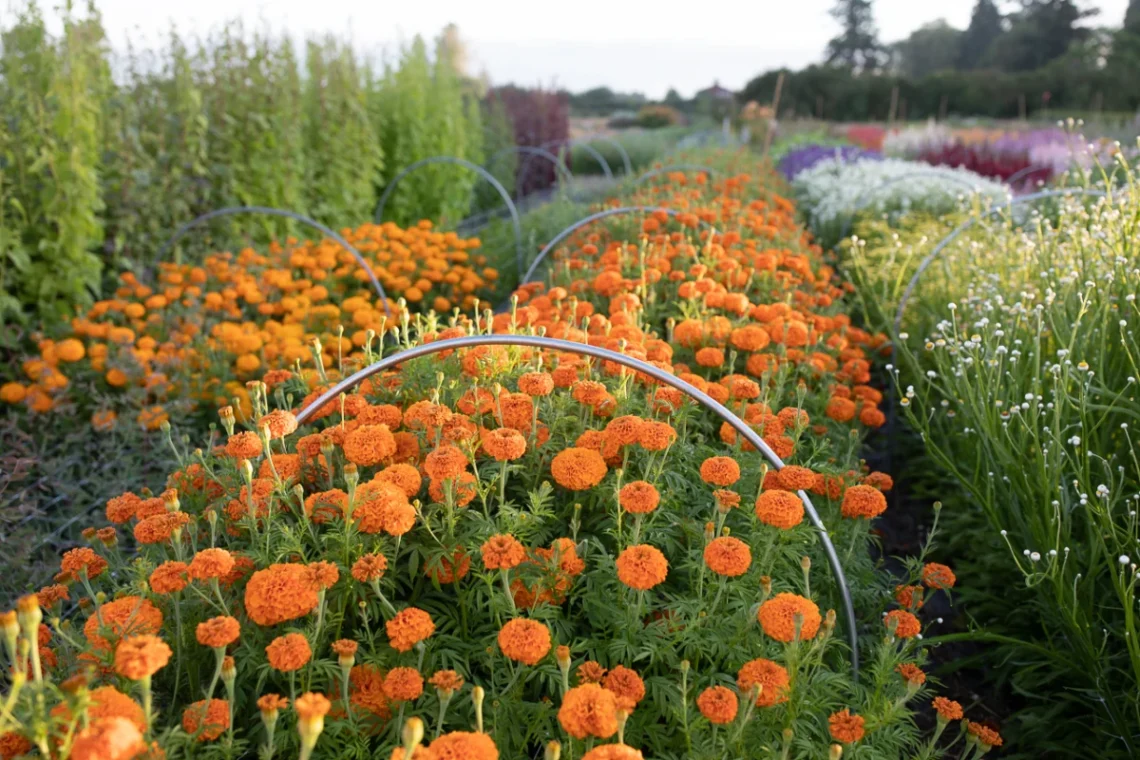
As the calendar turns and gardens across the northern hemisphere begin their slow, melancholic slide into autumn, a single botanical family stubbornly defies the chill. While the delicate petals of summer perennials wither and curl with each passing week, marigolds step into their prime, offering a vibrant, cheerful bastion of color. Unfazed by stormy autumn weather, torrential rains, or early-season frosts, marigolds remain a testament to endurance in the landscape.
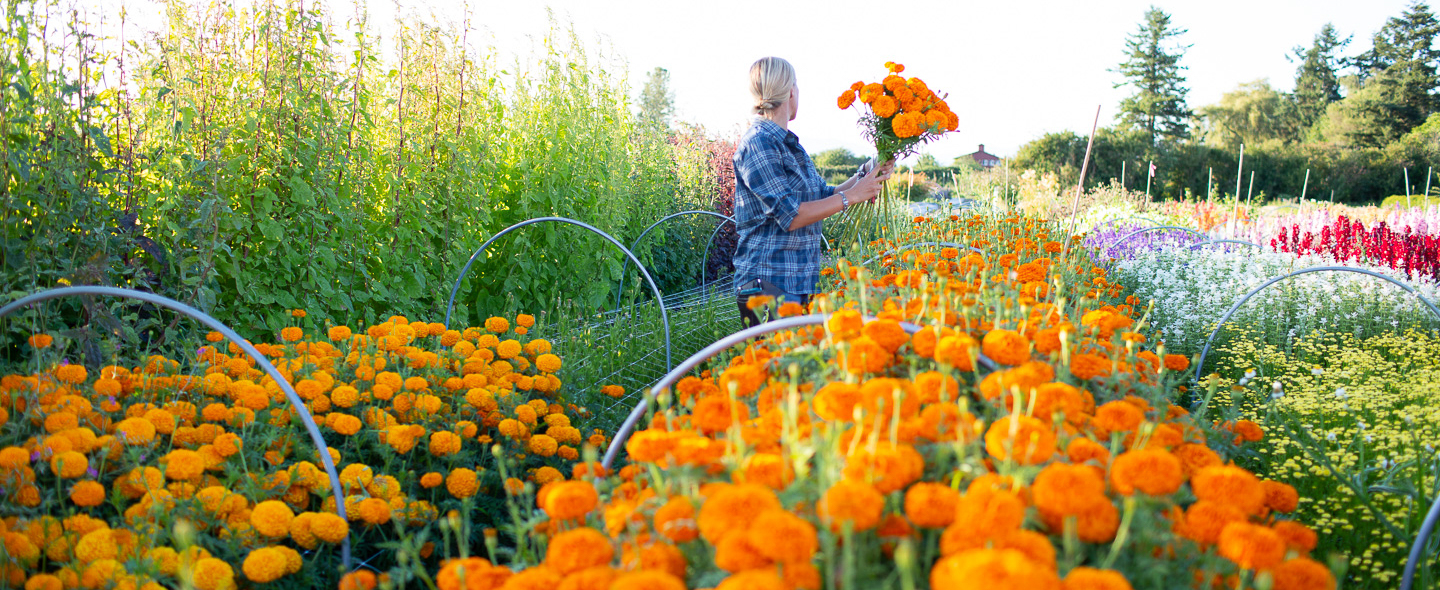
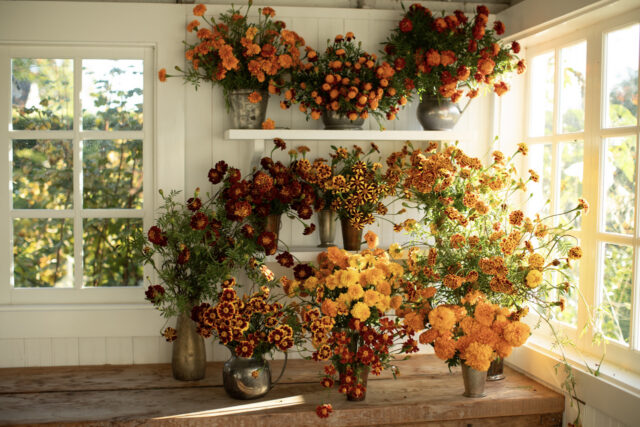
Botanically diverse and exceptionally tough, marigolds (Tagetes species) are among the most abundant-flowering plants available to home gardeners and commercial flower farmers alike. Ranging from compact, pot-friendly miniatures to towering, shoulder-high specimens by season’s end, their blooms span sizes from tiny pennies to sprawling palms. Their color palette is a quintessential celebration of harvest hues: luminous yellows, rich golds, fiery oranges, and deep, velvety reds. Beyond their visual appeal, these versatile plants yield natural dyes, produce edible petals, and serve as structural staples for festive garlands and fragrant leis.
Despite boasting a polarizing, pungent foliage fragrance that evokes strong reactions—eliciting either deep affection or instant aversion—marigolds have secured their place as agricultural and horticultural workhorses. Thriving in intense heat with minimal intervention, they deliver a non-stop cascade of blooms from midsummer right through to the bitter end of the growing season.
Chronology: From Seed to Season’s End
Cultivating marigolds successfully requires an understanding of their lifecycle, timing, and growth habits, which follow a predictable seasonal cadence:
- Late Winter to Early Spring (Indoor Germination): Seeds should be started indoors in propagation trays approximately four to six weeks prior to the region’s final projected frost date.
- Late Spring (Transplanting and Direct Sowing): Once all danger of frost has officially passed and the soil has thoroughly warmed, hardened-off seedlings can be safely transplanted into outdoor beds, containers, or borders. Alternatively, gardeners can direct-seed marigolds straight into the garden soil once warm weather takes hold.
- Midsummer (Establishment and Initial Flowering): Plants enter a vigorous vegetative phase. Taller varieties require structural support, such as staking or corralling, to prevent them from toppling under the weight of heavy blossoms. Compact French varieties maintain a tidy, bushy stature that typically requires no extra intervention.
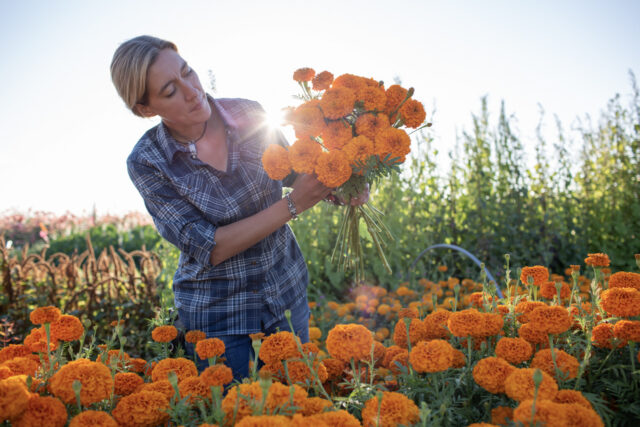
- Late Summer to Early Autumn (The Harvesting Window): Flowers open in succession, stair-stepping up the stems as they mature. Harvest occurs when blooms are roughly halfway open. Harvesters must strip the lower, tattered foliage and older blossoms from the base of the stems, preparing the flowers for mixed bouquets where they boast a reliable vase life of 7 to 10 days.
- Late Autumn (Final Harvest and Season’s Close): Stems reach their maximum height, particularly in French and specialty hybrid varieties, allowing for maximum stem length. The season concludes as hard frosts finally halt growth, though marigolds often outlast nearly all other annual companion plants.
Supporting Data: Group-by-Group Horticultural Breakdown
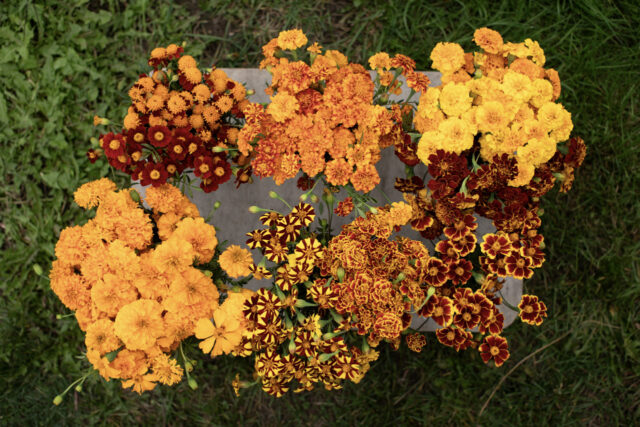
Marigolds are broadly categorized into three primary cultivation groups: African, French, and Gem/Signet. Extensive agricultural trials highlight the specific performance metrics, growth habit variations, and ideal applications for each group:
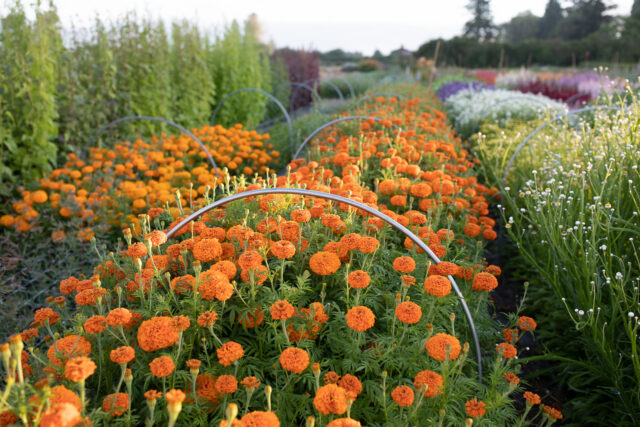
1. African Marigolds (Tagetes erecta)
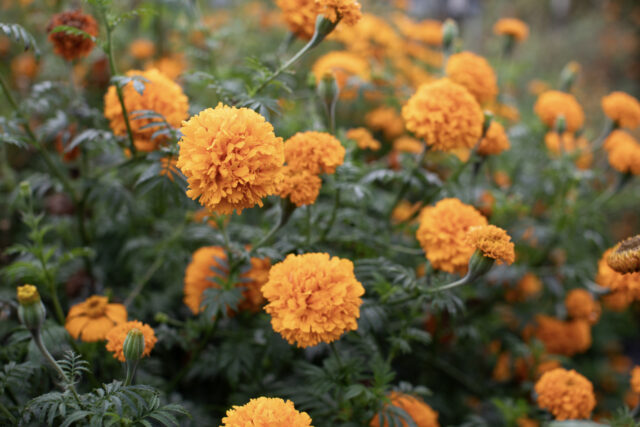
Characterized by large, exceptionally long-lasting, sturdy blooms, African marigolds are popular for commercial flower production and ceremonial garlands. They feature fragrant leafy stems that can double as textural foliage in arrangements.
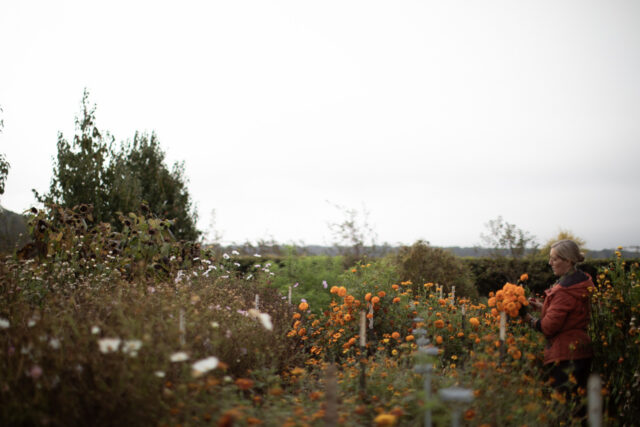
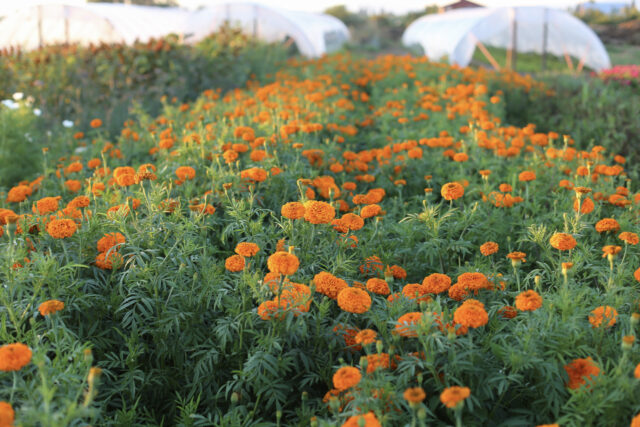
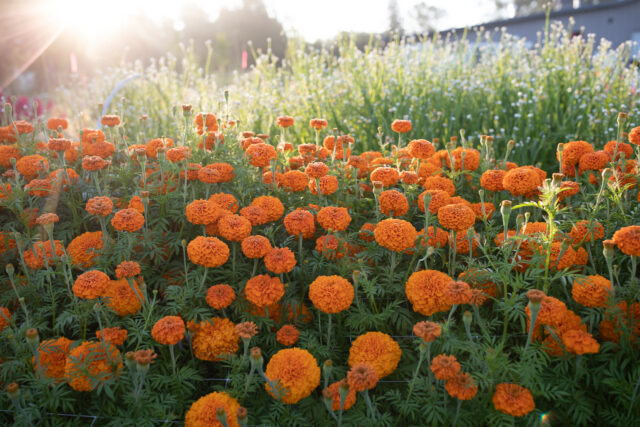
- ‘Giant Orange’: Produces 6 to 10 long, robust, branching stems topped with glowing saffron-colored blooms. The super-ruffled flowers feature tight green centers and lacy, scented foliage, making them a premier choice for summer and autumn mixed bouquets.
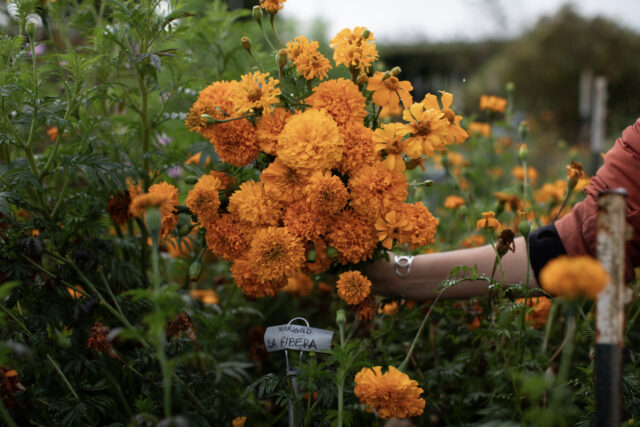
- ‘La Ribera’: Features large, fuzzy tangerine flowers in various forms—fully double, semi-double, single, and occasionally petal-less. While too inconsistent for commercial cut flower production due to its wild variations, its massive, vigorous plants make it a favorite novelty garden variety.
2. French Marigolds (Tagetes patula)
Compact and colorful, French marigolds feature stunning color combinations and intricate flower forms. While traditionally suited for containers or front-row borders, many varieties struggle with short stem lengths until late in the season.
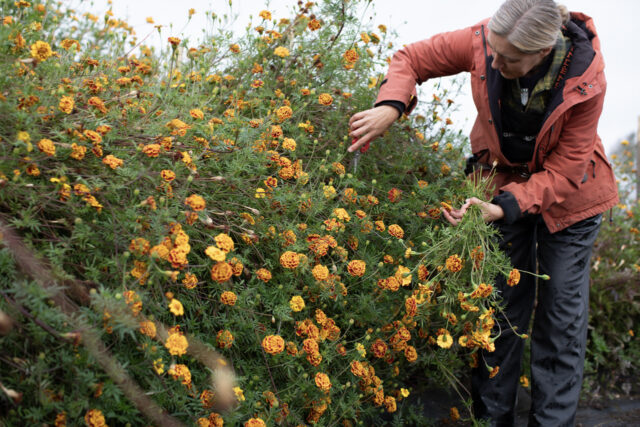
- Brocade Mix: Stocky, low-growing plants bearing small, double, red-orange bicolor flowers. Excellent for pots and containers, though harvesters must wait until late-season stem stretching occurs to utilize them in arrangements.
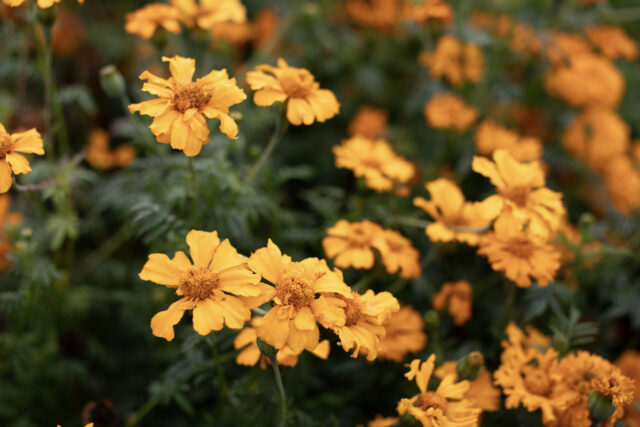
- ‘Dainty Marietta’: A petite variety featuring small, single yellow flowers with dark burnt-red petal centers. Ideal for containers, though stems are barely long enough for cutting by the end of the season.
- ‘Fireball’: Displays an arresting combination of blackish-red and burnt-orange blooms on bushy, low-profile plants. Grown primarily for its striking color performance in pots rather than cutting.
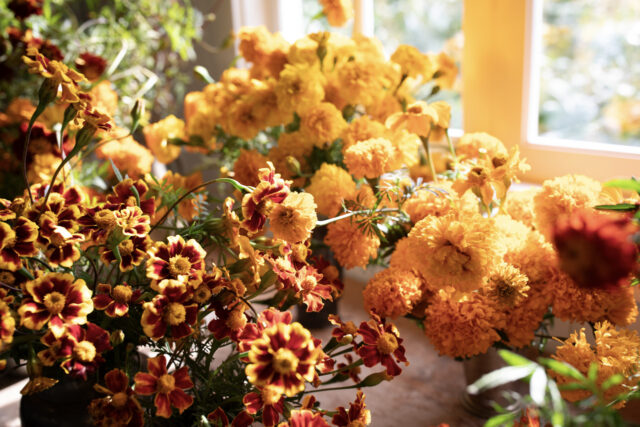
- ‘Harlequin’ / ‘Court Jester’: A unique heirloom producing medium-sized, maroon-and-gold-striped single blooms on airy, branching stems. The striped pattern introduces a dynamic, playful twist to late-season bouquets.
- ‘Naughty Marietta’: A charming, wildflower-like variety with single gold flowers marked by burnt-red centers and tips. Well-suited for containers and late-season harvests.
- ‘Strawberry Blonde’: A compact bedding plant exhibiting breathtaking color transitions from rusty red to buttercream and peach. Despite pinching, tight spacing, and end-of-season waiting, stems remain too short for cutting, anchoring its role as an elite container plant.
- ‘Tiger Eyes’: A novelty featuring exaggerated golden-orange, fuzzy centers surrounded by short burgundy petals. Reaching roughly 2 feet in height late in the season, it can be harvested with patience but is not optimized for field-grown cutting.
3. Peace Seedlings Introductions (French x African Crosses)
Bred by Mario and Dylana Kapuler of Oregon-based Peace Seedlings (building on prior work by Peace Seeds), these innovative hybrids bridge the gap between French and African lineages. They inherit the rich, nuanced coloring and smaller flower scale of French marigolds, combined with the robust growth habit, tall stature, and long stems of African marigolds.
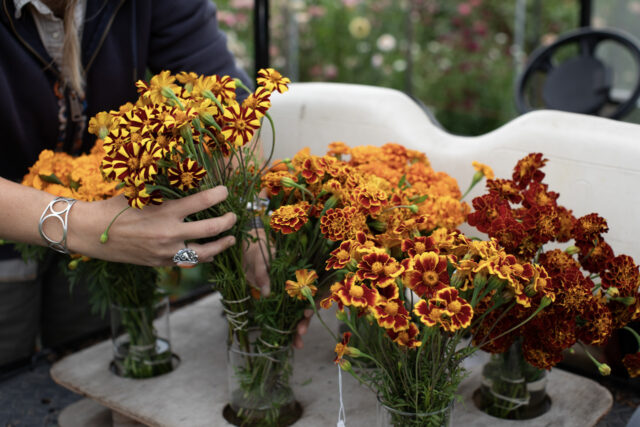
- ‘Burgundy Bliss’: Deep rusty-red double flowers outlined in glowing golden-orange on the back of the petals. Tall, heavily branching plants produce long, willowy stems with abundant side buds.
- ‘Frances’s Choice’: A standout variety featuring medium-sized, single rusty-red blooms edged in gold. Towering, densely branching plants yield long, thin stems tailored for high-end autumn bouquets.
- ‘Mushroom’s Sol’: The shortest of the Peace-bred selections, featuring small-to-medium tangerine flowers marked with rich red inner stripes. Stems stretch sufficiently by season’s end to accommodate mixed bouquets.
- ‘Red Metamorph’: Knee-high plants with thick foliage producing upward-facing single golden blooms streaked with varying saturations of red.
- ‘Sparkler’: Tall, heavily branching plants generating an abundance of medium-sized golden flowers centered with a distinct rusty-red band. Ideal for bunching and mixed arrangements.
- ‘Sunbright Mix’: The newest introduction, displaying a bushy habit and a striking palette reminiscent of candy corn (sunny yellow with orange edges, tangerine with yellow stripes, and solid tangerine).
4. Gem / Signet Marigolds (Tagetes tenuifolia)
Miniature-flowered marvels producing dozens of penny-sized, glowing blooms on branching stems above wilt-resistant, citrus-scented ferny foliage.
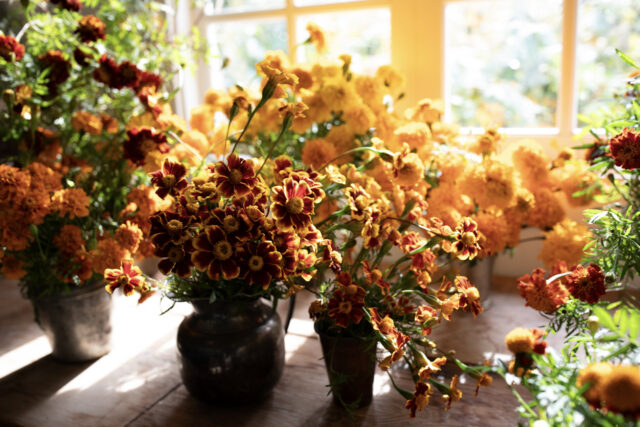
- Starfire Mix: A cheerful blend growing over 30 inches tall, packed with red, orange, and gold bicolors. A premier choice for summer bouquet work.
- ‘Tangerine Gem’ & ‘Red Gem’: Similar to Starfire Mix, but stabilizing at a slightly shorter 24-inch height, featuring intense tangerine or brick-red petals.
Official Expert Perspectives and Cultivation Insights
Growers and agricultural researchers emphasize that marigolds function as vital "ecosystem anchors" in modern farming and gardening operations. According to professional cut-flower producers, the integration of specialized breeding lines—particularly the interspecific crosses developed by independent operations like Peace Seedlings—has fundamentally altered the commercial viability of the crop.
"The convergence of French color variation with African architectural vigor has solved long-standing structural limitations in cut-flower farming," notes horticultural evaluation reports. "Growers are no longer restricted to short-stemmed borders; they can now harvest elegant, willowy sprays that elevate autumn floral design."
Furthermore, agricultural extension specialists underscore the utilitarian value of the plants. Beyond aesthetic metrics, marigold foliage and roots exude compounds that naturally deter common garden nematodes and insect pests, cementing their dual status as companion-planting guardians and high-performance cash crops.
Implications: The Future of Sustainable Floriculture and Garden Design
The resurgence of interest in heirloom and specialty marigold varieties carries significant implications for sustainable horticulture, local flower farming, and home gardening economics.
As climate volatility increases erratic weather patterns during seasonal transitions, the demand for climate-resilient flora is surging. Marigolds require comparatively modest water inputs, resist common foliar diseases when spaced adequately, and tolerate thermal stress far better than traditional autumn cool-season crops like chrysanthemums or dahlias. By extending the productive window of the garden well into late autumn, these plants provide essential late-season foraging resources for declining pollinator populations, including bees and beneficial insects preparing for dormancy.
In the realm of commercial floristry, the shift toward farm-grown, distinct botanical textures favors varieties like ‘Frances’s Choice’ and Starfire Mix. Their ability to withstand rigorous handling, combined with a dependable 7-to-10-day vase life, positions marigolds as economically efficient crops for small-scale local growers seeking to maximize yield per square foot.
Ultimately, moving past the historical perception of marigolds as mere garden-edge novelties opens up new horizons in creative floral design, natural dyeing, and resilient, low-input urban and rural agriculture.