By Global Health & Nutrition Desk
Published: October 2023
Main Facts: The Great Electrolyte Imbalance
In contemporary nutritional science, few statistics are as jarring as this: a staggering 99.99% of Americans fail to hit the combined daily targets for sodium and potassium intake. According to recent public health data, roughly only 1 in every 6,000 individuals simultaneously consumes a diet that restricts sodium below recommended thresholds while achieving the necessary minimum intake of potassium.
This vast, silent dietary failure represents a profound departure from human evolutionary biology. While physical inactivity claims millions of healthy years of life worldwide, what humanity chooses to eat exacts a toll nearly twenty times greater. Unhealthy diets shave hundreds of millions of disability-free years off people’s lives annually. At the center of this dietary catastrophe is a dangerous paradox: we gorge ourselves on sodium while drastically starving our bodies of potassium.
The consequences of this imbalance ripple through nearly every major organ system, fueling epidemics of hypertension, stroke, kidney disease, and chronic inflammation. As public health officials grapple with these numbers, a growing consensus suggests that the normalization of high-sodium, low-potassium processed foods is the single greatest nutritional threat to modern civilization.
Chronology: From Ancestral Diets to the Modern Supermarket
To understand how modern populations arrived at this nutritional precipice, researchers look backward through the lens of evolutionary medicine.
The Paleolithic Baseline
For hundreds of thousands of years, human physiology evolved under vastly different nutritional conditions. Our hunter-gatherer ancestors operated on whole-food diets rich in foraged plants, tubers, and lean game.
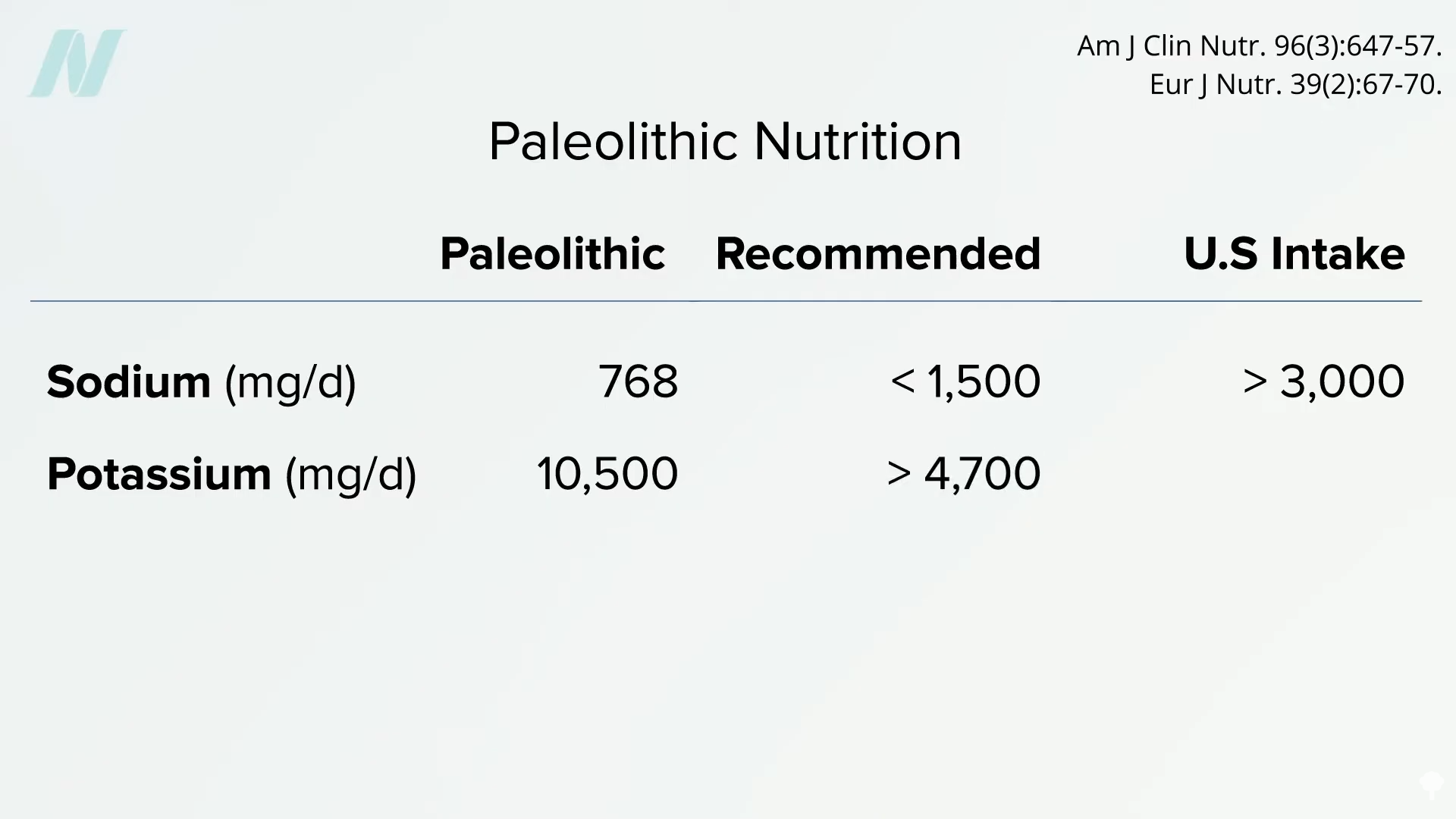
- Sodium Intake: Evolutionary biologists estimate that early humans consumed roughly 750 milligrams of sodium per day.
- Potassium Intake: Conversely, because their diets were heavily plant-based, their potassium consumption soared, frequently exceeding 10,000 milligrams daily.
Our metabolic machinery was fine-tuned to conserve sodium in environments where salt was scarce, while easily processing massive quantities of potassium.
The Industrial Food Shift
The agricultural and industrial revolutions upended this balance. The invention of refrigeration, food preservation, and mass-market ultra-processed foods introduced cheap, shelf-stable sodium chloride (table salt) into virtually every packaged item on grocery store shelves. Concurrently, the mass adoption of the Western diet—low in fruits, vegetables, nuts, and whole grains—caused a precipitous collapse in potassium intake.
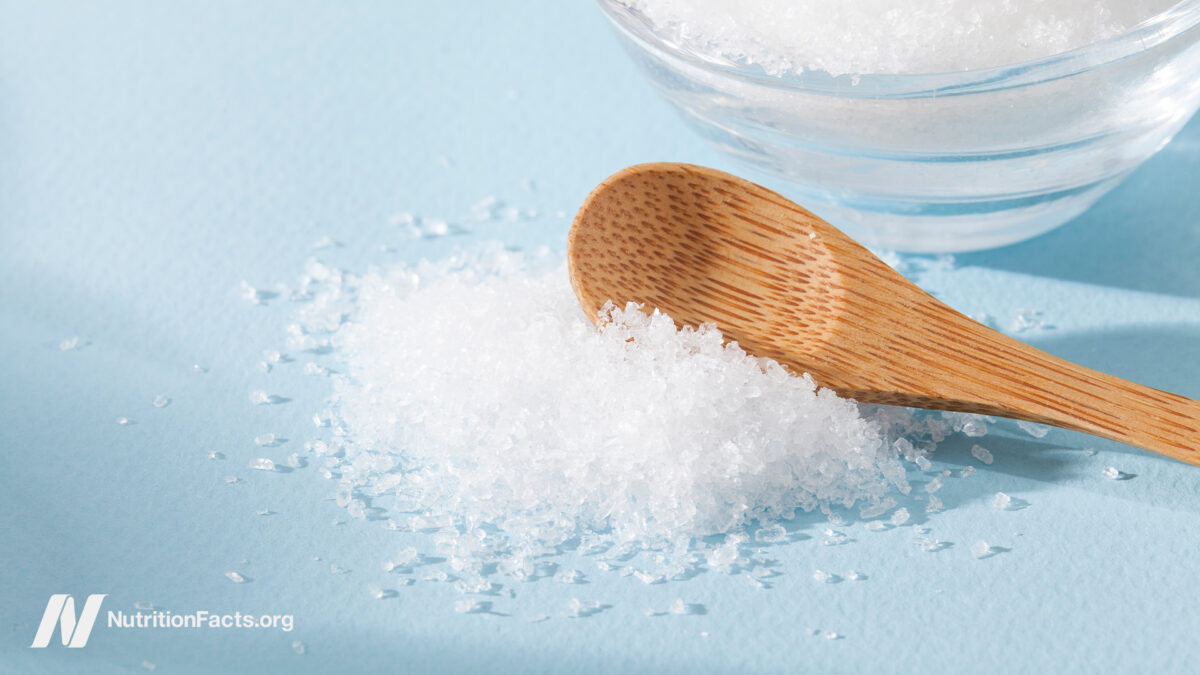
Over the last several decades, this divergence has only accelerated. Even as health agencies issued warnings throughout the late 20th and early 21st centuries, average daily sodium consumption climbed to more than four times our ancestral norm, while potassium intake plummeted to a fraction of historical levels.
Supporting Data: The Fatal Flaws of the Western Plate
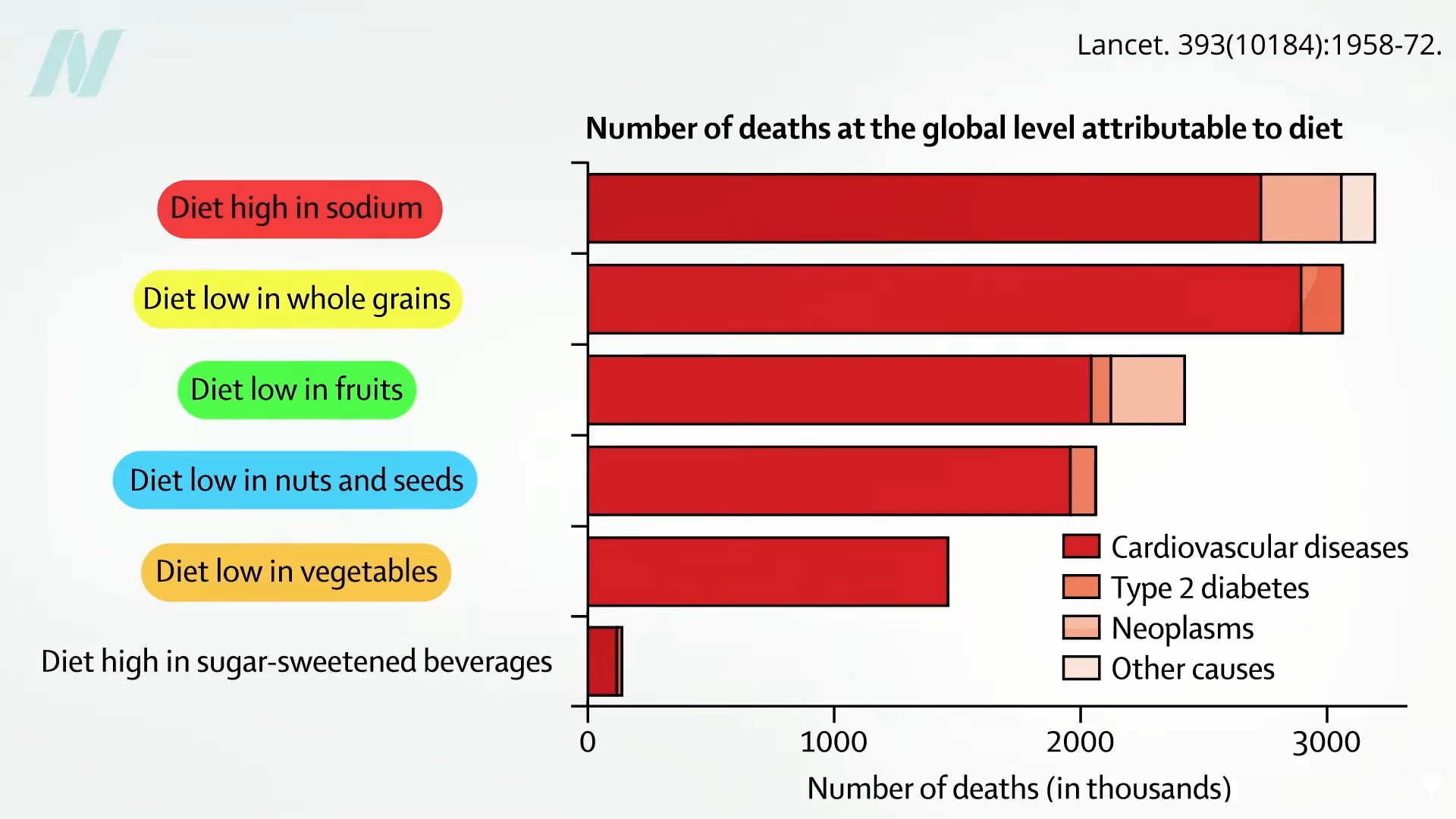
Global dietary analyses highlight a sobering hierarchy of nutritional risks. When looking at the five deadliest dietary traps identified by large-scale epidemiological studies, four involve eating too little of protective foods:
- Insufficient whole grains
- Insufficient fruits
- Insufficient nuts and seeds
- Insufficient vegetables
However, ranking above all these deficiencies as our single most fatal dietary flaw is excess sodium. To put the scale of the crisis in perspective, diets too high in sodium are roughly 15 times deadlier globally than diets high in sugary sodas.
The Sodium Epidemic
Despite official upper-limit recommendations suggesting adults stay below 1,500 to 2,300 milligrams of sodium per day, compliance is virtually nonexistent. More than 98% of the U.S. population exceeds these conservative thresholds—a trend that has worsened steadily over the past decade.
The Potassium Drought
The flip side of the coin is equally grim. Less than 2% of U.S. adults consume the recommended daily minimum intake of potassium. This means more than 98% of Americans suffer from potassium-deficient diets. Because potassium naturally lowers blood pressure and counteracts the stiffening effects of sodium on blood vessels, this widespread deficiency acts as an accelerant for cardiovascular disease.
When researchers aggregate these metrics, the math reveals the stark reality: fewer than 0.015% of Americans successfully manage both minerals simultaneously, resulting in a 99.99% noncompliance rate with combined national guidelines.
Official Responses: Warnings, Regulations, and the Push for Reform
Governments and health authorities have struggled to mount an effective counter-offensive against the omnipresence of salt in the food supply. Because sodium is deeply embedded in commercially prepared and restaurant foods, individual willpower alone has proven insufficient.
Regulatory Warnings
National and international health organizations have increasingly advocated for aggressive interventions. Some public health advocates have called for explicit warning labels on salt packets and salt shakers—similar to those found on tobacco products—bearing messages such as:
"Too much sodium in the diet causes high blood pressure and increases risk of stomach cancer, stroke, heart disease, and kidney disease. Limit your use."
Perspectives from Public Health Leadership
Former commissioners of the U.S. Food and Drug Administration (FDA) have been blunt in their assessments. As one former commissioner noted:
"There remains no single more effective public health action related to nutrition than the reduction of sodium in the diet."
Despite these declarations, the food industry’s heavy reliance on sodium as a cheap flavor enhancer and preservative has made systemic reform an uphill legislative battle.
Implications: Inflammation, Autoimmune Disease, and the Microbiome
The medical implications of our modern electrolyte profile extend far beyond simple hypertension. High sodium intake triggers systemic inflammation and disrupts delicate physiological pathways.
Cardiovascular and Renal Damage
More than a hundred randomized controlled trials have confirmed a direct cause-and-effect relationship between added salt and elevated blood pressure. The more sodium is reduced, the more blood pressure falls. Part of this pathological mechanism stems from the damage excess salt inflicts on the gut microbiome—the friendly flora inhabiting our digestive tracts, which play a crucial role in immune and metabolic regulation.
Autoimmune Exacerbations
Emerging research links high sodium intake to the severity of inflammatory autoimmune conditions:
- Multiple Sclerosis (MS): Studies show that sodium intake is directly linked to increased disease activity in MS patients. Individuals with medium or high sodium intakes experience roughly three to four times the exacerbation rate of those consuming less than a teaspoon of salt per day. Furthermore, high sodium levels correlate with decreased structural integrity in the spinal cords of MS sufferers.
- Lupus: Elevated sodium levels have similarly been detected in the tissues of patients suffering from lupus, pointing to a broader immunological consequence of salt-heavy diets.
Looking Forward: Can Salt Substitutes Turn the Tide?
Given the failure of public education campaigns to curb sodium consumption through dietary restraint alone, researchers and food scientists are exploring structural alternatives.
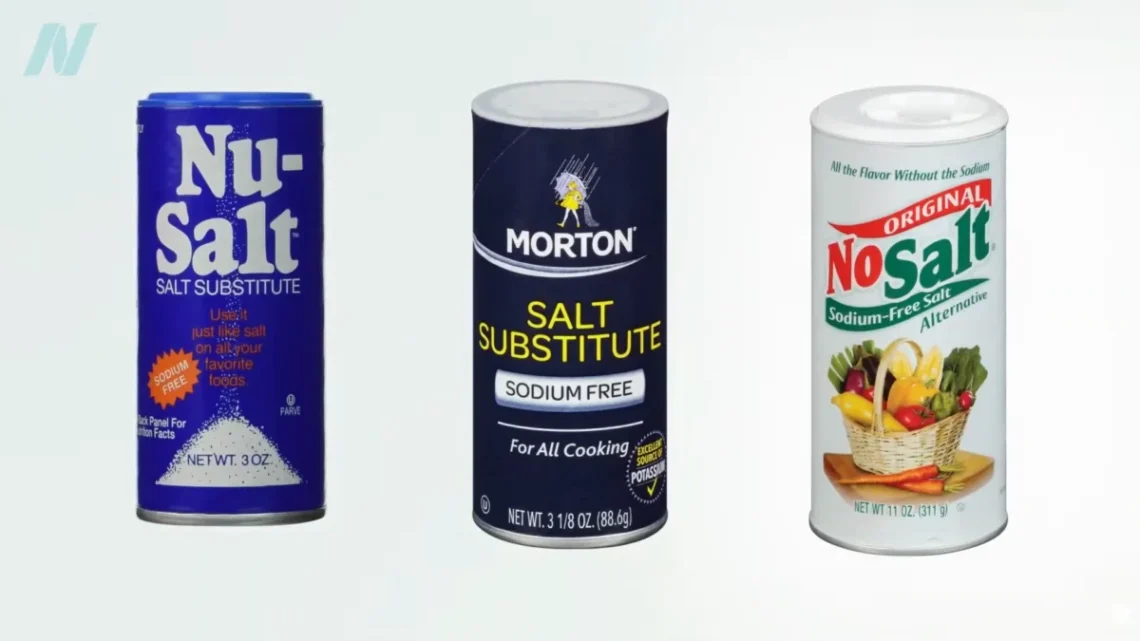
Why not replace sodium chloride (traditional table salt) with potassium chloride?
Potassium-based salt substitutes offer an intriguing paradox: they deliver the familiar salty taste craved by consumers while simultaneously ticking two crucial boxes—slashing dietary sodium and dramatically boosting potassium intake.
However, critical questions remain. Are these potassium-based alternatives safe for populations with compromised kidney function? Are they effective at scale?
As public health agencies evaluate these novel interventions, the medical community agrees on one fundamental truth: until the modern diet undergoes a radical restructuring that restores the ancestral balance of electrolytes, the 99.99% crisis will continue to cast a long shadow over global health.
Stay tuned for upcoming segments in this series, exploring whether potassium chloride salt substitutes are worth trying, and whether they can be implemented safely and effectively on a population scale.