September 09, 2026
Sponsored by Attica Wines
Just a half-hour drive from the legendary slopes of the Acropolis lies a sprawling, fragmented, and deeply historic wine region that challenges almost every modern convention of winemaking geography. While the global wine market is accustomed to viewing appellations as a rigid hierarchy—a broad regional name at the base, increasingly tight and prestigious zones stacked above it, and the underlying assumption that a regional label is merely a fallback for lesser grapes—Attica plays by entirely different rules.
Here, there is one major appellation: PGI Attiki. It encompasses a singular, sun-drenched Mediterranean climate, yet it fractures into four distinct microclimates shaped by topography, altitude, and proximity to the sea. At the heart of this landscape is Savatiano, Greece’s most widely planted grape variety. Far from being a homogeneous workhorse, Savatiano acts as a vinous chameleon, changing its character dramatically across the region’s diverse terroirs. Supported by an army of 7,000 small-scale growers and an irreplaceable inheritance of 70-year-old dry-farmed bush vines, Attica is quietly staging a vinous renaissance just minutes away from the bustling center of modern Athens.
Main Facts: The Anatomy of PGI Attiki
To understand the scope of Attica’s wine production, one must first look at the hard data defining the region. PGI Attiki covers slightly more than 6,200 hectares of vineyards, distributed among roughly 7,000 independent growers. This results in an average holding of less than one hectare per farmer—a striking level of fragmentation born from generations of inheritance laws.

- Vineyard Elevation and Terrain: Fruit is sourced from vines planted at elevations starting at 30 meters above sea level and climbing significantly higher in the mountainous sectors. The terrain spans lowland, semi-mountainous, and rugged high-altitude sites.
- Soils: The soils are diverse yet lean, naturally yield-limiting, and heavily dominated by limestone and calcareous-clay formations.
- Grape Varieties: While white varieties reign supreme—led overwhelmingly by Savatiano, which accounts for approximately 5,500 hectares of the regional total—the appellation also supports qualitative plantings of Assyrtiko, Malagousia, and Roditis. Though traditionally known for whites, the PGI also permits red grapes such as Agiorgitiko, Limniona, Mandilaria, Mouchtaro, alongside international staples like Cabernet Sauvignon, Carignan, Grenache Rouge, Merlot, and Syrah, yielding balanced dry reds and vibrant rosés.
- Wine Styles: The appellation legal framework permits white, red, and rosé wines, ranging from bone-dry table styles to rich, sweet dessert wines crafted from sun-dried grapes. However, the undisputed lifeblood of the region remains fresh, crisp, dry white wines.
Chronology: From Ancient Roots to Modern Revival
The history of winemaking in Attica is as old as Western civilization itself, inextricably linked to the mythos, trade, and daily life of ancient Athens.
- Ancient Antiquity to Byzantine Era: Attica has produced wine for millennia, serving as the primary source of hydration, trade, and ritual for the ancient Athenians. The region’s limestone soils and intense sun made it an ideal cradle for viticulture long before modern appellation laws existed.
- The 20th Century Milestone (1935): The aging potential of Attica’s flagship grape is far from a modern marketing discovery. Historical records prove that as early as 1935, a commercially released Savatiano from the region was aged for eight years in bottle before hitting the market in a massive production run of 200,000 bottles—shattering the modern myth that these wines are strictly meant for immediate, unaged consumption.
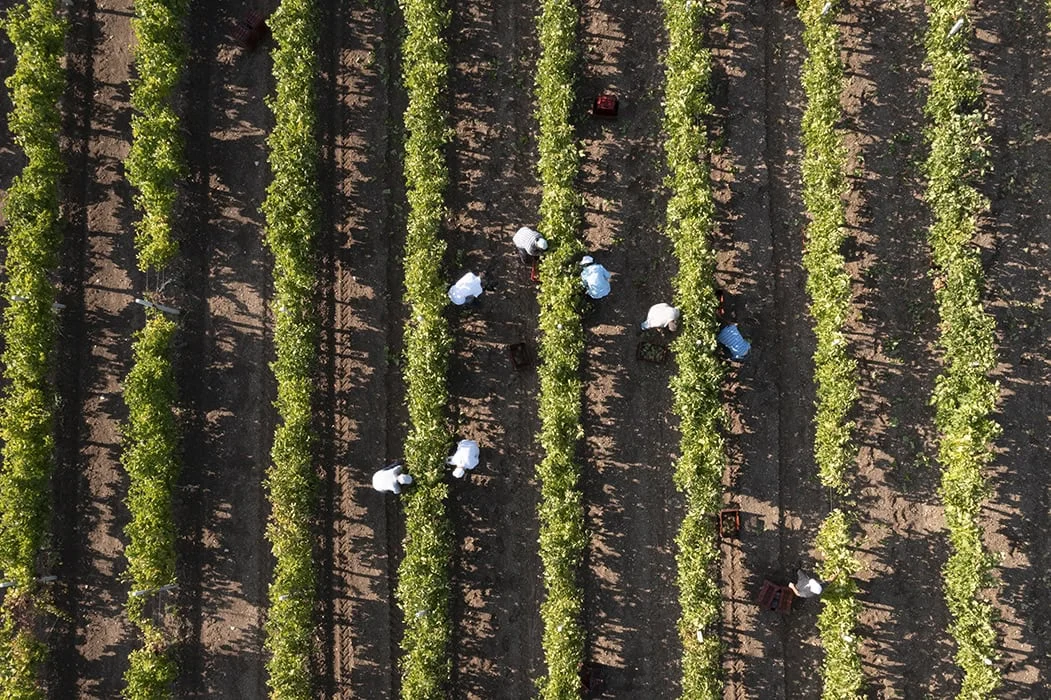
- The Post-War Fragmentation: Through the mid-20th century, land distribution laws divided agricultural plots among heirs. Rather than consolidating land into large industrial estates, families held onto tiny parcels. In the 1950s, widespread plantings of gobelet-trained bush vines took root across these poor, limestone-rich soils. Because no single owner ever held enough acreage to justify the immense capital expenditure required to clear and mechanically replant these blocks, the old vines survived, tended by hand generation after generation.
- The 2020s Renaissance: Today, Attica stands at a critical juncture. Backed by concerted promotional efforts from organizations like Wines of Attica, the region is shedding its historical reputation for simple, rustic table wines and gaining international acclaim for its complex, terroir-driven expressions of Savatiano.
Supporting Data: Four Expressions of One Mediterranean Climate
Geographically, the whole of Attica—with the exception of its rugged west-north-western corner—is framed by the sea. Cool marine breezes sweep inland during the summer months, acting as a natural air conditioner that mitigates the searing Mediterranean heat. Yet, the region’s varied topography blocks these maritime influences in certain pockets, creating four distinct microclimates defined by coastal proximity, aspect, and altitude:
- The Eastern Zone (Warm and Dry): The eastern part of Attica is the warmest and driest sector. Vineyards here bask in roughly 2,900 hours of sunshine annually while receiving less than 400 to 450 millimeters of rain. The resulting wines tend to be ripe, rich, and deeply textured.
- The Western Zone (Saronic and Corinthian Influence): Situated between the Saronic and Corinthian gulfs, the western sector is noticeably cooler. Here, vineyards climb the slopes of Mount Geraneia, reaching elevations of up to 700 meters, which preserves vibrant natural acidity in the grapes.
- The North-Western Zone (Continental Touch): Moving toward the slopes of Mount Kithaironas in the north-west, the climate takes on a distinct continental character, experiencing sharper seasonal and diurnal temperature swings.
- The Northern Sector (High-Altitude Coolness): Encompassing the foothills of Mount Parnitha and Mount Penteli, northern Attica is the coolest part of the region. At high-altitude pockets like Stamata and Kapandriti (reaching 400 meters), autumn arrives early, bringing sharp cold nights and cool days that forge wines of striking elegance and restraint.
The Contrast of Viticultural Management
The expression of Savatiano changes drastically depending on how and where it is farmed:
- The Valley Floor: On flat, fertile, and often irrigated lowlands, Savatiano yields high volumes of neutral, easy-drinking wine.
- The Ancient Bush Vines: On untamed, dry-farmed, gobelet-trained bush vines planted in the late 1950s over poor limestone soils without irrigation, yields plummet to a sustainable 28 to 35 hectoliters per hectare. The resulting grapes produce a radically different wine: intensely concentrated, driven by minerality, and structurally equipped to age gracefully for a decade or more.
Official Responses and Industry Perspectives
Wine critics, agronomists, and regional producers emphasize that Attica’s greatest asset is its authenticity, which is directly tied to its fragmented vineyard landscape.
Because many small-scale growers farm tiny, inherited parcels scattered across different kilometers and soil types, a single local winery often sources fruit from multiple microclimates. Winemakers note that using the broad regional designation—PGI Attiki—is not a sign of a wine failing to meet stricter sub-regional standards, but rather an honest, factual description of a multi-parcel blend that captures the true mosaic of the region.
Furthermore, trade bodies and regional producers point out that consumers are often shocked by the versatility of a horizontal tasting of Savatiano. For instance, wines sourced from the warmer, limestone-heavy soils of Keratea typically showcase distinctively herbal and mineral profiles. In contrast, bottles from the elevated, cooler northern terroir of Stamata present a lean, highly elegant profile defined by piercing acidity and moderate alcohol levels.
Implications: The Future of Attica on the Global Stage
The revival of PGI Attiki carries profound implications for the global wine community, Greek oenology, and local agritourism:
- Redefining Greek White Wine: While varieties like Assyrtiko from Santorini have captured international headlines, Savatiano’s resurgence proves that mainland Greece possesses world-class indigenous white grapes capable of extended aging and profound terroir expression.
- Preservation of Heritage Agriculture: The survival of 70-year-old dry-farmed bush vines highlights the ecological and cultural value of resisting hyper-industrialized farming. These ancient root systems serve as a living museum of viticultural history.
- Proximity and Agritourism: Situated a mere 30-minute drive from the heart of Athens, Attica represents a massive untapped market for wine tourism. Travelers visiting the Acropolis can seamlessly transition from ancient history to contemporary wine bars and vineyard tours, experiencing the exact terroir that fueled the ancient world, poured fresh into a modern glass.
PGI Attiki is no longer just a backdrop to Greece’s capital city; it is a vibrant, multi-faceted appellation offering a masterclass in how one Mediterranean climate, filtered through varied altitudes, soils, and ancient vines, can tell four distinct stories through a single grape.