Introduction: The Modern Protein Paradox
In the industrialized world, the cultural obsession with protein has reached an all-time high. Walk down any grocery store aisle, and you will find protein-infused waters, specialized bars, and heavily marketed powders. The prevailing societal narrative is simple: protein is unequivocally “good,” and when it comes to daily consumption, more is always better.
However, this reductionist view creates a profound public health paradox. Traditional definitions of "protein quality"—largely rooted in 20th-century biochemistry—tend to favor animal-derived sources like meat, eggs, and dairy. This creates a direct contradiction with modern dietary guidelines, which consistently urge populations to pivot toward plant-rich diets to combat chronic disease.
While protein-energy malnutrition, such as kwashiorkor, remains a devastating reality in developing regions, it is virtually nonexistent in wealthy, industrialized nations. Here, the primary health threats are no longer acute nutritional deficiencies, but rather lifestyle-driven chronic illnesses. Consequently, a growing body of researchers is arguing that it is time to modernize the definition of protein quality, shifting our focus away from outdated biochemical metrics and toward long-term human survival and well-being.
Main Facts: Animal vs. Plant Protein and Mortality
At the heart of the debate is a fundamental question: Is all protein created equal? From a metabolic standpoint, the human body does not process plant-derived and animal-derived proteins in the exact same manner.
Accumulating epidemiological data reveals a stark divergence in health outcomes based on the source of our dietary protein. While overall high protein intake has sometimes been correlated with shorter lifespans, subsequent analyses demonstrate that this trend is almost entirely driven by the adverse health associations tied to animal protein. Conversely, high intakes of plant protein are consistently linked to lower overall mortality rates.
Several physiological mechanisms explain this divergence:
- Branched-Chain Amino Acids (BCAAs): Plant proteins generally feature lower concentrations of BCAAs compared to animal proteins. Research indicates that reducing BCAA consumption can significantly improve metabolic health.
- Insulin-like Growth Factor 1 (IGF-1): High-quality animal protein intake stimulates the production of IGF-1, a growth hormone that promotes cancer cell proliferation when elevated. Individuals born with naturally higher IGF-1 levels also face increased risks of type 2 diabetes and cardiovascular disease.
- Environmental Pollutants: Animal products frequently accumulate fat-soluble environmental toxins—such as dioxins and polychlorinated biphenyls (PCBs)—that travel up the food chain. Shifting to plant-based proteins effectively reduces the body’s toxic burden.
Chronology: The Evolution of Nutritional Science
To understand how the medical community arrived at this paradigm shift, it is helpful to trace the milestone studies that reshaped our understanding of dietary protein over the last decade.

2016: The Harvard Landmark Study
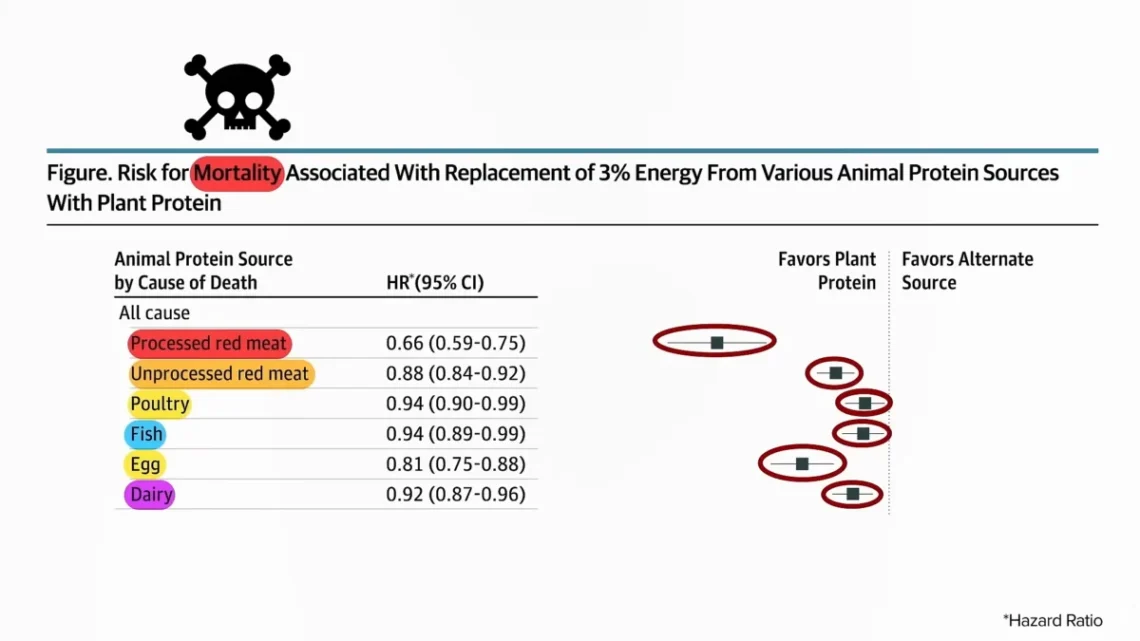
A pivotal moment arrived in 2016 with the publication of a landmark Harvard study tracking more than 100,000 participants over decades. Researchers investigated the impacts of swapping various protein sources. The findings were clear: replacing animal protein with plant protein was associated with a substantially lower risk of premature death.
While processed meats (like bacon) and egg whites emerged as the most harmful contributors, swapping even a minuscule 3% of daily calories from any animal protein source—including unprocessed red meat, poultry, fish, eggs, or dairy—for plant protein yielded a measurable decrease in overall mortality. Crucially, the researchers adjusted for saturated fat intake, proving that the negative health impacts could not be blamed solely on animal fats.
2019: The Public Health Case for Modernization
Recognizing the widening gap between antiquated biochemical metrics and modern epidemiology, Dr. David Katz, alongside renowned researcher Dr. David Jenkins and their colleagues, published a formal paper in 2019 titled "The Public Health Case for Modernizing the Definition of Protein Quality." This paper argued that the old definition focused too narrowly on amino acid profiles and digestibility in a laboratory setting, ignoring the epidemiological realities of chronic disease in populations with abundant food supplies.
2020: The NIH-AARP Cohort Validation
If a study of 100,000 participants raised eyebrows, subsequent research erased lingering doubts. Data from the U.S. National Institutes of Health (NIH)–AARP Diet and Health Study—the largest dietary cohort study in history, encompassing roughly 400,000 individuals—reaffirmed the 2016 findings. Researchers observed that substituting just 3% of animal protein calories with plant protein corresponded to a 10% reduction in overall mortality. Furthermore, eliminating eggs from the equation doubled that protective benefit, aligning with broader research linking chronic egg consumption to elevated cardiovascular disease risk.
Supporting Data: What the Population Studies Show
When researchers aggregate the data from major global cohorts regarding dietary protein intake and mortality, a clear visual and statistical trend emerges.
[Protein Source] ---> [Impact on Lifespan & Health]
  |
  +---> Animal Protein (Meat, Dairy, Eggs) ---> Correlated with Increased Mortality & Chronic Disease
  |
  +---> Plant Protein (Legumes, Grains, Nuts) ---> Inversely Correlated with Mortality (Increased Longevity)
The data shows that higher overall protein intake is not inherently protective if sourced from animals. While animal protein consumption scales upward alongside mortality risk, plant protein intake does the exact opposite. It displays an inverse correlation with death rates: the more plant protein individuals incorporate into their daily diets, the lower their risk of premature mortality.
Furthermore, recent meta-analyses have solidified this consensus, explicitly recommending that public health authorities encourage populations to increase plant protein intake to mitigate the risk of lifestyle-related death.
Official Responses and Medical Perspectives
Public health organizations and medical professionals are slowly adapting to these revelations, though ingrained cultural habits and powerful agricultural lobbies complicate the transition.
Dietary guidelines are increasingly emphasizing planetary health and chronic disease prevention, quietly steering populations away from heavy meat consumption. However, institutional definitions of nutritional adequacy have been slow to catch up to the science. Nutritionists note that legacy definitions of protein "completeness"—the idea that every meal must contain all essential amino acids simultaneously, or that plant proteins are inherently inferior—are largely myths. The human body maintains an internal pool of amino acids, easily satisfying daily nutritional requirements through a varied plant-based diet without the need for obsessive "protein combining" (such as pairing rice and beans at every single sitting).
Medical experts also point out fascinating crossovers in longevity research. For instance, the well-documented health benefits of caloric restriction may actually be driven, in large part, by the concurrent drop in animal protein intake rather than the reduction in calories alone.
Implications for the Future of Public Health
The modernization of protein quality definitions carries profound implications for clinical practice, agricultural policy, and individual consumer choices.
- Revisifying Dietary Guidelines: Nutritional advisories must pivot away from promoting animal-centric protein goals. Public messaging should explicitly distinguish between protein sources, discouraging heavy reliance on processed meats, red meat, and eggs while championing legumes, lentils, nuts, seeds, and whole grains.
- The Rise of Plant-Based Alternatives: The growing market for plant-based meat substitutes (such as Beyond Meat and Impossible Foods) offers transitional options for consumers accustomed to traditional textures and flavors. While whole-food plant sources remain the gold standard, these alternatives provide a stepping stone away from environmental toxins and high BCAA/IGF-1 burdens found in animal tissues.
- Redefining Nutritional Literacy: Educational curricula in medicine and dietetics must update their pedagogical frameworks. Teaching future healthcare providers that plant proteins are fully adequate—and vastly superior for long-term health span—will empower a new generation of patients to make informed dietary modifications.
Ultimately, modernizing our understanding of protein is no longer an academic exercise in biochemistry. It is an urgent public health imperative capable of saving hundreds of thousands of lives from preventable chronic diseases.