
Introduction & Main Facts
In the ongoing debate over public health and dietary recommendations, a familiar and insidious strategy has resurfaced. For decades, multinational conglomerates—ranging from agrochemical giants to the architects of high-fructose corn syrup—have systematically worked to undermine scientific consensus regarding the dangers of added dietary sugars.
The mechanics of this manipulation were laid bare in 2016, when a Washington-based lobbying group published a high-profile scientific review. Funded by a consortium of major food and agrochemical corporations, including Coca-Cola and Monsanto, the paper drew a startling conclusion: the scientific evidence underpinning guidelines that recommend limiting added dietary sugar was "low quality" and failed to "meet criteria for trustworthy recommendations."
Critics and public health advocates were quick to sound the alarm, accusing corporate entities of hijacking the scientific process in a disingenuously orchestrated campaign designed to sow doubt and jeopardize public health. But how did these corporate titans manage to weaponize the scientific framework to protect their bottom lines?
The answer lies in the strategic hijacking of evidentiary standards—a calculated playbook originally written, tested, and perfected by the tobacco industry.
Chronology of Corporate Science Manipulation
To understand how the food industry successfully cast doubt on established nutritional science, it is necessary to examine the historical trajectory of corporate-backed skepticism, which traces back to the mid-to-late 20th century.
The Tobacco Precedent (1980s–1990s)
Long before "Big Corn Syrup" targeted sugar guidelines, the tobacco industry faced an existential crisis. Faced with mounting epidemiological evidence linking smoking—and later, secondhand smoke—to cancer and cardiovascular disease, companies like Philip Morris realized they could not win a direct debate on the health impacts of their products. Instead, they changed the terms of engagement.
Working hand-in-hand with specialized public relations firms and corporate defense lawyers, tobacco executives launched the "sound science" campaign. The goal was not merely to create controversy, but to fundamentally alter the accepted standards of scientific proof. They sought to enshrine rigid epidemiological practices that would make it virtually impossible to scientifically prove that environmental toxins or secondhand smoke caused disease. By demanding an impossible threshold of certainty, the industry successfully delayed regulatory action for decades.
The Adoption of Clinical Standards in Nutrition (Early 2000s)
As the public health community pushed for more rigorous methods to guide medical and clinical decision-making, the Grading of Recommendations Assessment, Development and Evaluation (GRADE) framework was introduced. Developed to make clinical guidelines more transparent and evidence-based—moving away from the old-fashioned "Good Old Boys Sat Around the Table" (GOBSAT) consensus method—GRADE became the gold standard for clinical medicine.
However, GRADE was intentionally designed for pharmacology: evaluating whether a specific drug works better than a placebo. In drug trials, randomized, double-blind, placebo-controlled trials (RCTs) are not only desirable; they are ethically and practically mandatory.
The 2016 Sugar Lobby Offensive
Recognizing a vulnerability in how nutritional epidemiology worked compared to pharmacology, corporate lobby groups weaponized the GRADE framework. In 2016, industry-backed researchers applied strict pharmacological criteria to nutritional science, evaluating decades of observational nutrition studies through a lens built for clinical drug trials.
By demanding randomized, double-blind, placebo-controlled trials for dietary guidelines—types of studies that are largely impossible or unethical to conduct on human dietary patterns—the lobby group dismissed decades of robust public health research as "low to very low quality."
Supporting Data and Methodological Realities
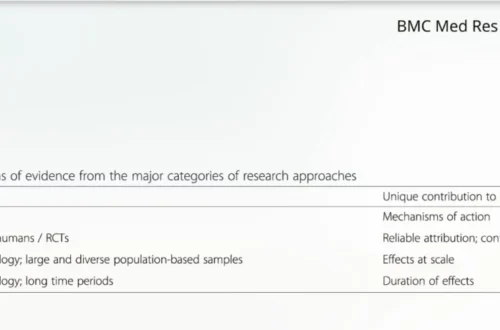
The core argument deployed by the sugar lobby rests on a fundamental misrepresentation of how scientific research operates across different disciplines. While randomized controlled trials (RCTs) are the undisputed gold standard for testing pharmaceutical drugs, applying this exact standard to nutritional science is both practically absurd and methodologically flawed.
Why Dietary RCTs Fail
- The Absence of a Placebo Diet: In pharmaceutical trials, participants can be randomized to receive either an active drug or an inert placebo without knowing which they are consuming. Conversely, there is no such thing as a placebo diet. Humans notice the food they consume; blinding participants to lifelong dietary patterns is impossible.
- The Duration Dilemma: RCTs are exceptionally expensive and typically run for only weeks or months. However, chronic conditions associated with poor diets—such as cardiovascular disease, type 2 diabetes, and various cancers—often take decades to develop. Short-term dietary trials cannot capture these long-term endpoints.
- Ethical Constraints: Just as researchers cannot ethically randomize thousands of healthy individuals to smoke cigarettes for decades to see if they contract lung cancer, they cannot force populations into extreme, potentially harmful dietary regimens over a lifetime.
Evidence Beyond the RCT
Public health breakthroughs frequently rely on observational cohorts, epidemiological tracking, and mechanistic studies rather than short-term RCTs.
A prime historical example is the discovery of the risk factors associated with Sudden Infant Death Syndrome (SIDS), or "crib death." Pivotal observational studies examining the sleeping habits of infants who tragically died revealed that stomach-sleeping was a major risk factor. Public health campaigns subsequently educated parents with the simple directive: "face up to wake up." Consequently, SIDS rates plummeted globally.
Asking whether it would have been ethical to randomize thousands of babies to sleep on their stomachs to satisfy a rigid, pharmaceutical-grade evidentiary standard highlights the absurdity of demanding RCTs for every public health intervention.
Even Sir Austin Bradford Hill—the pioneer of the randomized controlled trial—warned against dogmatic adherence to a single methodology. Hill famously noted that “any belief that the controlled trial is the only way would mean not that the pendulum had swung too far but that it had come right off its hook.”
Official Responses and Public Health Implications
The fallout from the 2016 sugar review triggered widespread condemnation from independent scientists, epidemiologists, and medical ethicists, who recognized the alarming parallels between the food industry’s tactics and historical corporate malfeasance.
The Pushback Against Corporate Interference
In the wake of the controversy, major food corporations faced intense public and internal pressure regarding their associations with lobby groups like the International Life Sciences Institute (ILSI). Notably, in February 2018, multinational food giant Mars announced it was breaking away from ILSI in a bid for corporate transparency, explicitly distancing itself from organizations accused of manipulating science to obscure health risks.
Public health professionals, meanwhile, have issued stern warnings regarding the infiltration of corporate interests into scientific discourse. Experts emphasize that the "sound science" movement is not an organic, internal effort by researchers to elevate academic standards. Rather, it represents a sophisticated public relations maneuver orchestrated by corporate executives and legal teams designed to manipulate the rules of scientific proof to protect profit margins.
Broader Implications for Public Policy
The implications of this corporate playbook extend far beyond the sugar aisle. The strategy of demanding impossible burdens of proof has been systematically exported from tobacco and sugar to other industries, including plastics, chemicals, ultra-processed foods, and fossil fuels.
When corporations succeed in convincing policymakers that nutritional guidelines are built on "low quality" evidence because they lack decades-long, blinded dietary RCTs, they effectively paralyze public health policymaking. The result is delayed regulatory action, continued consumer confusion, and an escalating global burden of diet-related chronic illnesses.
As public health advocates continue to unravel these tactics, the medical community faces an urgent imperative: to defend the validity of diverse scientific methodologies—including epidemiology, cohort studies, and nutritional science—against well-funded corporate attempts to move the goalposts of truth.