
For decades, the public health community has grappled with a fundamental question: When individual responsibility fails to curb the consumption of hazardous substances, how can policy intervene without infringing upon personal liberty? The triumph of the trans-fat ban stands as a definitive case study in how to regulate a recalcitrant food industry. While past attempts to curb unhealthy dietary trends often stalled under the weight of "nanny state" accusations, the trans-fat saga reveals a more nuanced strategy—one that leveraged transparency to eventually render industry opposition obsolete.
The Spectrum of Public Health Intervention
In the architecture of public health, there are three primary tiers for mitigating risky behavior: informing, nudging, and direct intervention.
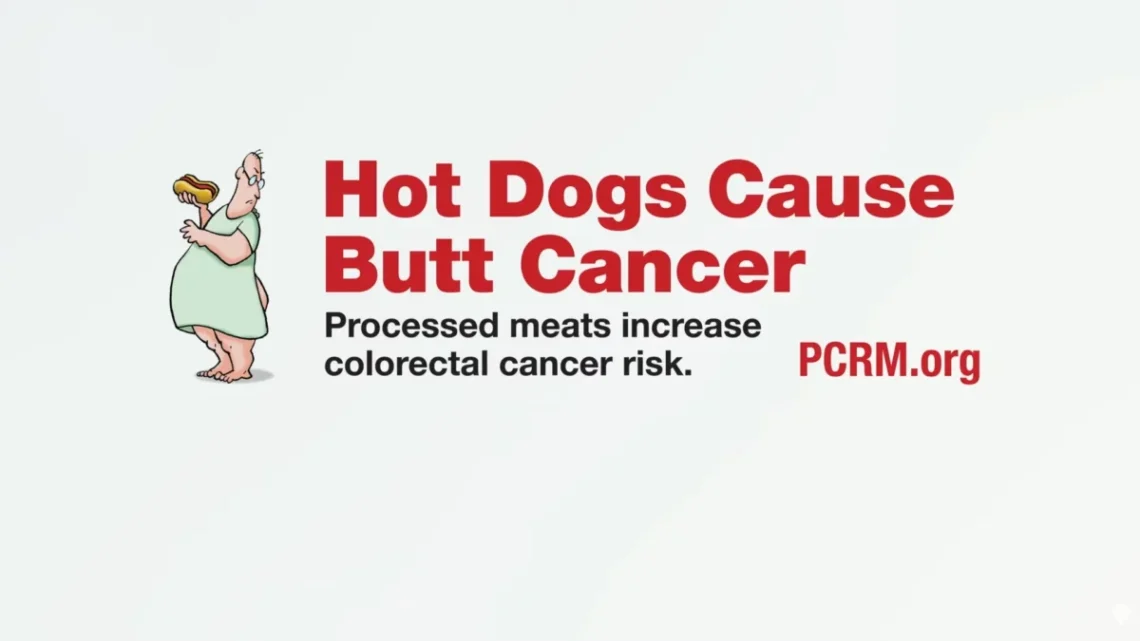
"Informing" relies on the assumption that if consumers know the risks, they will make better choices. This is the logic behind nutritional labeling and public awareness campaigns, such as transit advertisements highlighting sugar content in soft drinks or graphic billboards warning of the link between processed meats and colorectal cancer.
"Nudging" attempts to tilt the playing field through financial incentives or behavioral architecture. However, as seen in the debate over calorie counts on menus, these methods often fail to move the needle on long-term health outcomes.
"Direct intervention"—the final tier—removes the hazard entirely. Using the automotive industry as an analogy, we do not simply put labels on cars explaining the risk of death in a crash; we mandate the installation of airbags. The question for public health advocates became: Is there a way to make food products safer by design, rather than by consumer choice?
A Chronology of the Trans-Fat Battle
The story of the trans-fat ban is one of global divergence. In 1993, the landmark Harvard Nurses’ Study provided the scientific "smoking gun," suggesting that a high intake of trans fats could increase the risk of heart disease by up to 50%.
Denmark acted with unprecedented speed, implementing a ban on industrially produced trans fats in 2003. Yet, the United States remained paralyzed by inaction for another decade. During this interim, tens of thousands of Americans died annually from complications related to trans-fat consumption—a public health toll comparable to the combined impact of meningitis, cervical cancer, and multiple sclerosis.
The turning point arrived in New York City. Despite fierce pushback from the food and restaurant industries, New York successfully implemented a municipal ban. This move was not merely a local success; it served as a laboratory for the nation. By comparing cardiovascular outcomes in New York counties before and after the ban, researchers observed a roughly 5% reduction in cardiovascular deaths. This data provided the necessary momentum to force the federal government’s hand, eventually leading to a nationwide prohibition.
Supporting Data and the "Slippery Slope" Fallacy
Opponents of regulation frequently invoked the "slippery slope" argument. They claimed that if the government restricted trans fats, it would inevitably lead to a "vegetarian state" where the government dictated individual vegetable consumption. This fear reached the highest levels of the American judiciary. During the Supreme Court arguments regarding the Affordable Care Act, Chief Justice John Roberts posed a hypothetical scenario where Congress could mandate the purchase of vegetables.

Justice Ruth Bader Ginsburg famously dismissed this as the "broccoli horror," noting that while Congress might theoretically have the power to regulate food, it is not a credible basis for policy paralysis. Legal scholars have since argued that while judges and lawyers live on the slippery slope of analogies, they are not intended to "ski them to the bottom."
The reality, as documented by medical research, was far more pragmatic. The food industry’s argument against regulation was often built on the premise that "everything should be eaten in moderation." However, this ignored the reality that the food industry had fundamentally polluted the food supply, stripping consumers of the ability to choose healthier options even if they desired them.
The Industry Response: From Defiance to Reformulation
The food industry’s resistance was characterized by a potent mix of political lobbying and rhetoric. They framed regulations as "government intrusion" and labeled proponents as "food fascists." Yet, beneath this public defiance, a quiet, market-driven transformation was occurring.
The secret to the public health triumph was not immediate prohibition, but rather the initial requirement of mandatory labeling. In the early 2000s, the FDA mandated that manufacturers list trans-fat content on the Nutrition Facts label. This move was intended to inform consumers, but it had a more profound effect on producers.
Once the "truth" was forced into the light, the competitive landscape shifted. Companies realized that "zero trans fat" was a powerful marketing tool. A race to the bottom—in terms of dangerous ingredients—became a race to the top—in terms of reformulated products. Within a few years, thousands of products were reformulated.
Take, for example, Kentucky Fried Chicken (KFC). Once a target of litigation for its high trans-fat content, the company eventually shifted its business model, running national television campaigns touting its transition to zero-trans-fat oil. Once the major industry players had already reformulated their products to gain a competitive edge, the financial incentive to fight the government ban evaporated. With the industry’s "skin in the game" removed, the political will to oppose the ban crumbled.
Implications for Future Policy
The trans-fat ban serves as a blueprint for future public health challenges. It demonstrates that the most effective path to regulation is not always a direct frontal assault, but a multi-stage process of transparency followed by market-driven adoption.
However, the victory is incomplete. The current ban on trans fats does not extend to the trans fats found naturally in meat and dairy, highlighting that industrial chemical additives remain a lower-hanging fruit for regulation than traditional agricultural products. Furthermore, the debate continues to evolve, with current research shifting toward the impact of ultra-processed foods—a category that makes up a significant portion of the modern American diet.
Key Lessons Learned:
- Transparency as a Catalyst: Mandatory labeling creates a market environment where companies compete on health metrics, often leading to voluntary reformulation.
- The "Nanny State" Myth: When regulations are framed around objective, science-based safety standards rather than behavioral coercion, industry opposition loses its moral high ground.
- The Power of Local Precedent: Municipal success stories provide the longitudinal data necessary to overcome federal stagnation.
- Avoiding the "Slippery Slope": Public health policy is most effective when it targets specific, scientifically identified hazards, thereby neutralizing fear-based arguments about government overreach.
The triumph of the trans-fat ban suggests that when the public health community speaks with the weight of data and employs strategic, incremental regulation, it can successfully navigate the interests of powerful corporations. The "secret" was not just the ban itself, but the years of meticulous documentation and market pressure that rendered the ban an inevitability rather than a disruption. As we look toward the future of nutrition policy, the lessons of this victory—that we can indeed make the food supply safer by design—remain more relevant than ever.