Main Facts: A Seasonal Shift Met with Culinary Defiance
As September brings an unwelcome convergence of 85-degree afternoons and aggressive retail displays of pumpkin spice and Halloween decorations, a quiet culinary rebellion is taking shape in home kitchens. While the commercial calendar insists on bypassing the remainder of warm weather in favor of wool coats, root vegetables, and stew, a dedicated faction of seasonal purists is pushing back.
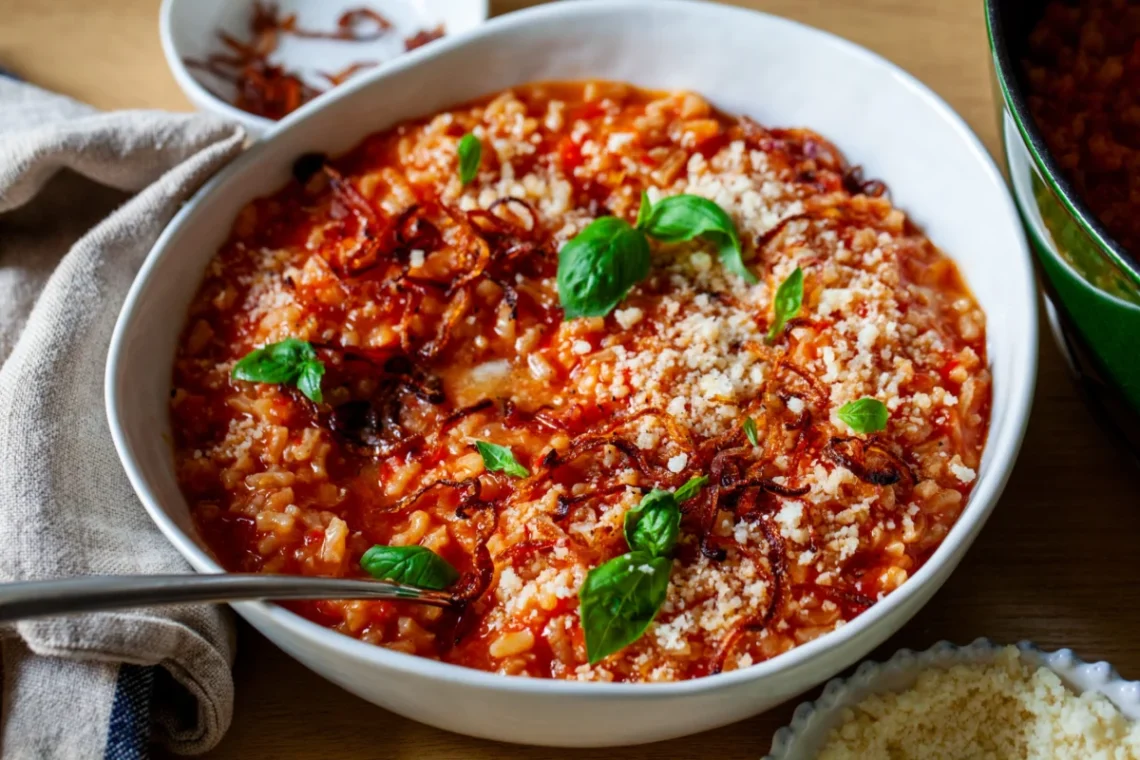
At the forefront of this late-summer resistance is a commitment to utilizing peak-season produce before it disappears for the year. Rejecting the societal rush toward autumn, culinary creators are leaning heavily into the vibrant, sun-ripened flavors of August and September. The centerpiece of this movement is a newly popularized recipe that bridges the gap between summer abundance and comforting warmth: a streamlined, oven-baked Tomato Risotto topped with crispy, frizzled red onions.

Rather than relying on traditional, labor-intensive risotto techniques—such as standing over a hot stove for an hour, constantly stirring, and dumping in endless ladles of warm broth—this modern approach simplifies the process. By utilizing grated fresh tomato pulp, a splash of wine, and water instead of heavy stock, the dish achieves an intense, unadulterated tomato flavor that honors the closing weeks of the harvest season.
Chronology: From Stuffed Tomatoes to Oven-Baked Simplicity
The intellectual evolution of this late-summer tomato risotto can be traced through a lineage of classic home-cooking experiments:

- Years Prior: The obsession began with traditional rice-stuffed tomatoes, a dish prized for the way short-grain rice greedily absorbs pure, bright tomato juices during baking.
- The Conceptual Leap: Wondering if that standalone filling could be translated into a pot-based meal, the focus shifted to stripping away unnecessary culinary steps. The goal was a clean, minimalist risotto that tasted exclusively of fresh tomatoes, garlic, onion, and wine.
- Challenging Tradition: Building on previous culinary revelations—such as the viability of oven-baked risotto over stovetop stirring—the recipe eschews standard rules. It abandons constant stirring, heavy butter loads, and expensive broths.
- The Frizzled Onion Innovation: To add texture without resorting to standard toppings like pan-crisped prosciutto or bacon, thinly sliced red onions are fried early in the cooking process until deeply golden and crisp. Half are folded into the rice; the rest crown the dish at service.
- Present Day: The resulting recipe offers a seamless bridge between the fading heat of summer and the desire for a warm, comforting evening meal.
Supporting Data: The Anatomy of a Minimalist Tomato Risotto
To understand the mechanics of this dish is to understand a deliberate subversion of traditional Italian cooking dogma. Traditional risotto recipes demand absolute adherence to specific protocols. This recipe systematically dismantles those rules:
- The Tomato Base: Instead of canned pastes or heavy purees, the recipe calls for 2.5 to 3 cups of fresh tomato pulp. This is achieved by pressing halved tomatoes cut-side down against the large holes of a box grater, discarding the tough outer skins while capturing every ounce of flesh and juice.
- The Liquid Element: Eschewing chicken or vegetable broth—which can muddy or overpower the delicate fruit notes of late-season tomatoes—plain water is used alongside a splash of dry white wine.
- The Cooking Method: Prepared in a 4-quart Dutch oven or a deep, oven-safe braiser, the rice is lightly toasted in olive oil with garlic, onion, and red pepper flakes before the liquids are added. The pot is covered and baked at 350°F for 25 to 30 minutes, drastically reducing active labor time.
- The Finish: Once removed from the oven, the mixture is vigorously stirred for two minutes off-heat to release starches and create the signature creamy texture. It is finished with a knob of butter or olive oil, freshly grated Parmesan, torn basil leaves, and a generous scattering of crisp, frizzled red onions.
Recipe At-a-Glance
- Prep & Cook Time: Approximately 40–45 minutes total.
- Oven Temperature: 350°F.
- Key Ingredients: Short-grain rice, fresh tomato pulp, garlic, red onion, white wine, olive oil, butter, fresh basil, and Parmesan cheese (optional for a vegan variation).
Official Responses: Cultural Commentary on Seasonal Fatigue
The cultural phenomenon of "autumn creep"—where fall marketing begins as early as July or August—has long been a source of annoyance for those who prefer to experience the calendar year at a natural pace. Cultural commentators and home cooks alike have voiced exhaustion over the premature marketing of heavy winter fare during heatwaves.

Food writers and recipe developers have increasingly used their platforms to push back against this commercial pressure. By championing recipes that celebrate late-season harvests, they provide a form of seasonal mindfulness.
"There are what will feel like infinite months left to spend shivering and longing for stew," notes the culinary community at large. "There’s no reason to beckon them any sooner."

This sentiment is echoed by home cooks who find themselves balancing complex personal milestones—such as children transitioning into middle or high school—while attempting to anchor themselves in the tangible comfort of seasonal produce. The kitchen becomes a sanctuary from the relentless march of retail calendars, offering a tactile connection to the present moment through the simple act of grating tomatoes and frying onions.
Implications: Embracing Flexibility in Modern Home Cooking
The popularity of simplified, oven-baked dishes like the Tomato Risotto with Frizzled Red Onions points to broader shifts in how contemporary home cooks approach traditional techniques.

- Demystifying Complex Techniques: By proving that risotto can be successfully baked in an oven rather than constantly stirred over a burner, home cooks are encouraged to experiment without fear of culinary failure. This lowers the barrier to entry for complex-seeming dishes on busy weeknights.
- Dietary Adaptability: The recipe’s inherent flexibility—easily shifting from a dairy-enriched comfort food to a completely vegan meal by swapping butter for olive oil and omitting cheese—reflects modern demands for inclusive, adaptable recipes that do not sacrifice flavor.
- Mindful Consumption of Produce: As climate shifts and global supply chains make all fruits and vegetables available year-round, intentional seasonal cooking acts as an anchor. Using fresh tomatoes until they are entirely gone, rather than jumping ahead to squash and pumpkins, fosters a deeper appreciation for agricultural cycles.
Ultimately, this culinary movement serves as a reminder that the kitchen is a space for personal pacing. Whether battling the psychological fatigue of premature autumn marketing or simply looking for a new way to utilize a glut of late-summer tomatoes, home cooks can find solace in a pot of rice, a handful of onions, and the refusal to rush the seasons.