Introduction: The Lunchtime Dilemma
Picture this scenario: You are sitting in a crowded cafe during a lunch break, observing the patrons around you. If a diner at the next table were to casually pull out a pack of cigarettes and light up before and after their meal, heads would turn in disbelief. In modern society, public health messaging has successfully positioned smoking as a socially unacceptable, high-risk hazard to personal well-being. Yet, many of those same disapproving diners might head straight to a fast-food drive-thru afterward, ordering a double-patty cheeseburger and a side of bacon-topped fries without a second thought.
According to a growing body of epidemiological research, that mental disconnect between smoking and diet might be fundamentally flawed. Public health data increasingly suggests that the choices we make at the dinner table carry profound, quantifiable consequences for our long-term survival. When evaluated through the lens of modern biostatistics, everyday dietary staples—particularly processed and red meats—may be shaving precious time off our lives in ways that rival the chronic risks of tobacco use.
To bridge the gap between abstract statistical data and daily human behavior, researchers have developed novel ways to communicate risk. By breaking down lifetime habits into digestible units of measurement, scientists are challenging how we perceive our daily plates, urging us to reconsider whether a meaty burrito is truly worth the biological cost.
Main Facts: The Hidden Toll of Processed and Red Meats
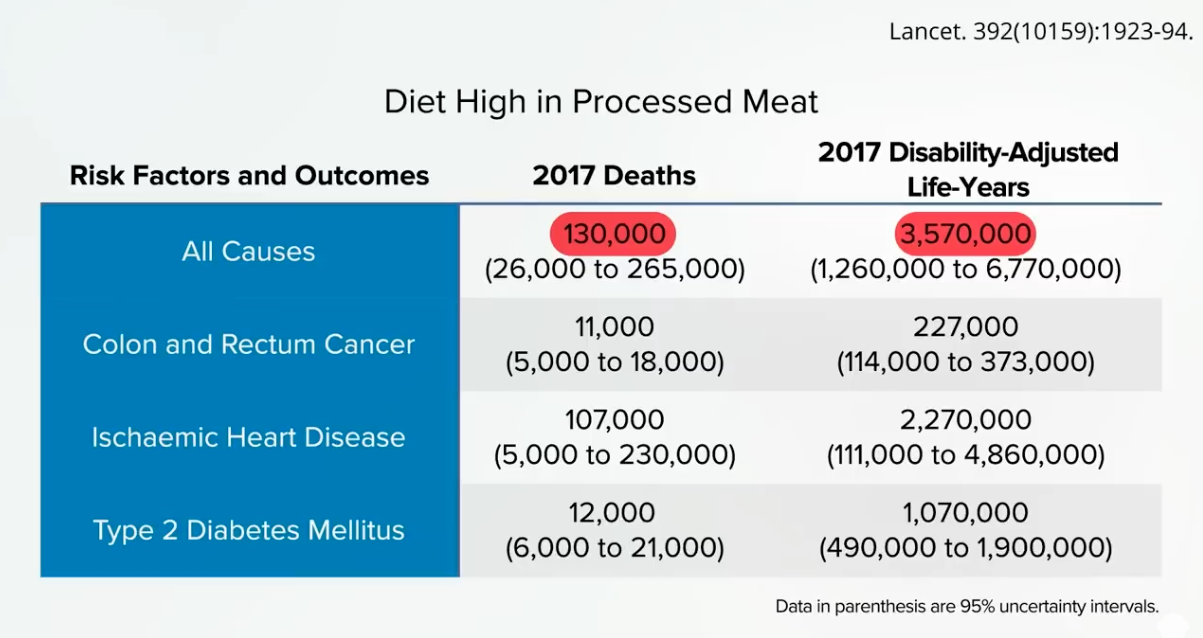
The global burden of diet-related illness is staggering. According to the landmark Global Burden of Disease Study, diets high in processed meats—including bacon, ham, hot dogs, cold cuts, and mass-produced sausages—may contribute to more than 100,000 deaths annually worldwide. The primary driver of these fatalities is cardiovascular disease, closely followed by various forms of cancer (most notably colorectal cancer) and type 2 diabetes.
This mortality rate translates into millions of healthy years of life lost globally every year. Crucially, it does not take an extreme lifestyle to trigger these risks. Research compiled by the Union of Concerned Scientists estimated that if the American population could collectively reduce its processed meat intake to just a single ounce per week, thousands of preventable cancer deaths could be averted annually.
However, population-level statistics often feel too abstract to alter individual behavior. To make these risks tangible, researchers frequently examine relative risk reductions. For instance, recent analyses published in academic journals evaluating red and meat consumption indicate that scaling back on red and processed meats is associated with roughly a 13% lower risk of premature death. But what does a “13% difference in mortality risk” actually mean for an individual striving to live a long, healthy life?
Chronology and Context: The Evolution of Dietary Guidelines
The debate surrounding meat consumption and its impact on human longevity is not new, but the scientific discourse has shifted dramatically over the decades.
- Late 20th Century: Early epidemiological studies began drawing correlations between high-fat, meat-heavy Western diets and the soaring rates of ischemic heart disease and specific cancers. Public health agencies slowly integrated these findings into early dietary frameworks, recommending moderation.
- The 2010s: Comprehensive global assessments, such as the Global Burden of Disease studies, began quantifying lifestyle risks with unprecedented precision, placing dietary risks alongside traditional hazards like physical inactivity and high blood pressure.
- Late 2019: The publication of the controversial NutriRECS meat papers in the Annals of Internal Medicine sparked a fierce international debate. The panel suggested that adults could continue eating red and processed meat at their current levels, arguing that the evidence linking meat to disease was of low certainty.
- Post-2019 Backlash: The scientific community pushed back swiftly. Prominent nutritionists, epidemiologists, and cardiologists criticized the methodology of the NutriRECS panel, arguing that it mismanaged nutritional evidence and ignored extensive clinical trial data—such as Dr. Dean Ornish’s Lifestyle Heart Trial, which demonstrated that comprehensive plant-based lifestyle changes could halt or reverse coronary heart disease.
This historical tug-of-war highlights the ongoing battle between industry-influenced interpretations of nutrition science and rigorous, public-health-focused consensus.
Supporting Data: Understanding "Microlives" and Daily Trade-Offs
To help individuals comprehend how chronic lifestyle choices affect lifespan without relying on terrifying, distant statistics, statisticians have popularized the concept of the microlife.
What is a Microlife?
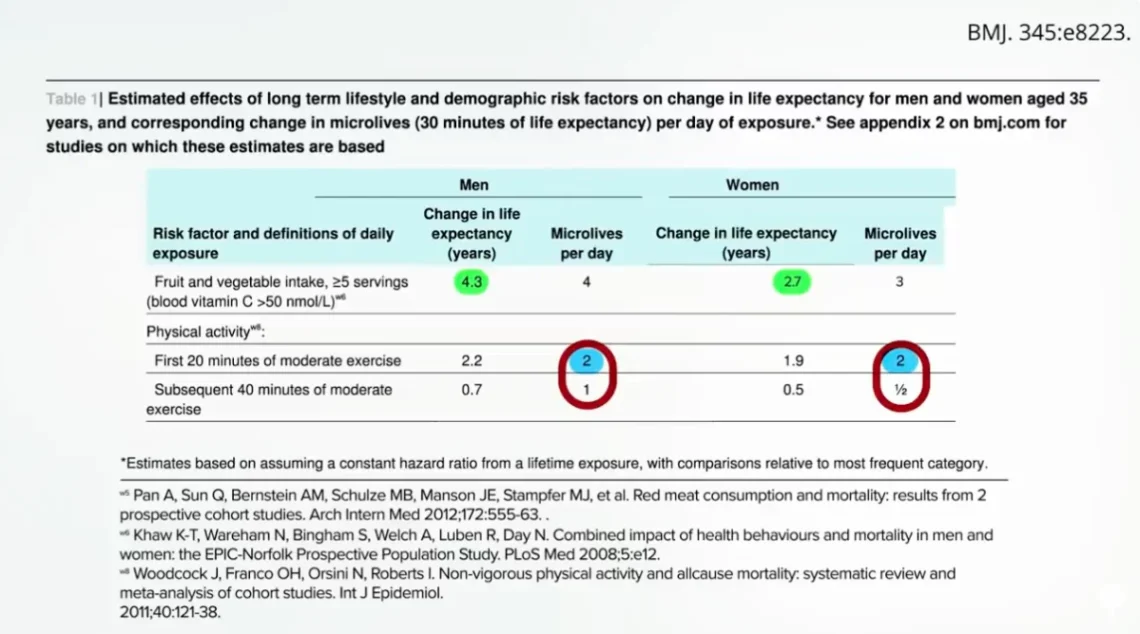
While acute hazards—like skydiving or driving a motorcycle—are measured in micromorts (a one-in-a-million chance of sudden death), chronic lifestyle frailties require a different metric. A microlife is defined as 30 minutes of lost life expectancy.
The math behind this is straightforward. Consider a young adult in their early twenties—say, a 22-year-old man or a 26-year-old woman—who statistically has roughly 57 years of life remaining. That equates to approximately 20,000 days, or 500,000 hours, or one million half-hours. Therefore, a microlife represents the loss of a single half-hour out of that remaining million.
Comparing Daily Habits
Using the microlife framework, researchers can map out how common habits stack up against one another:
- Alcohol vs. Tobacco: Drinking a pint of strong beer shortened life expectancy by roughly the same amount as smoking a single cigarette.
- Weight Management: Carrying just 11 pounds of excess weight costs an individual a microlife per day, making it comparable to smoking two cigarettes daily.
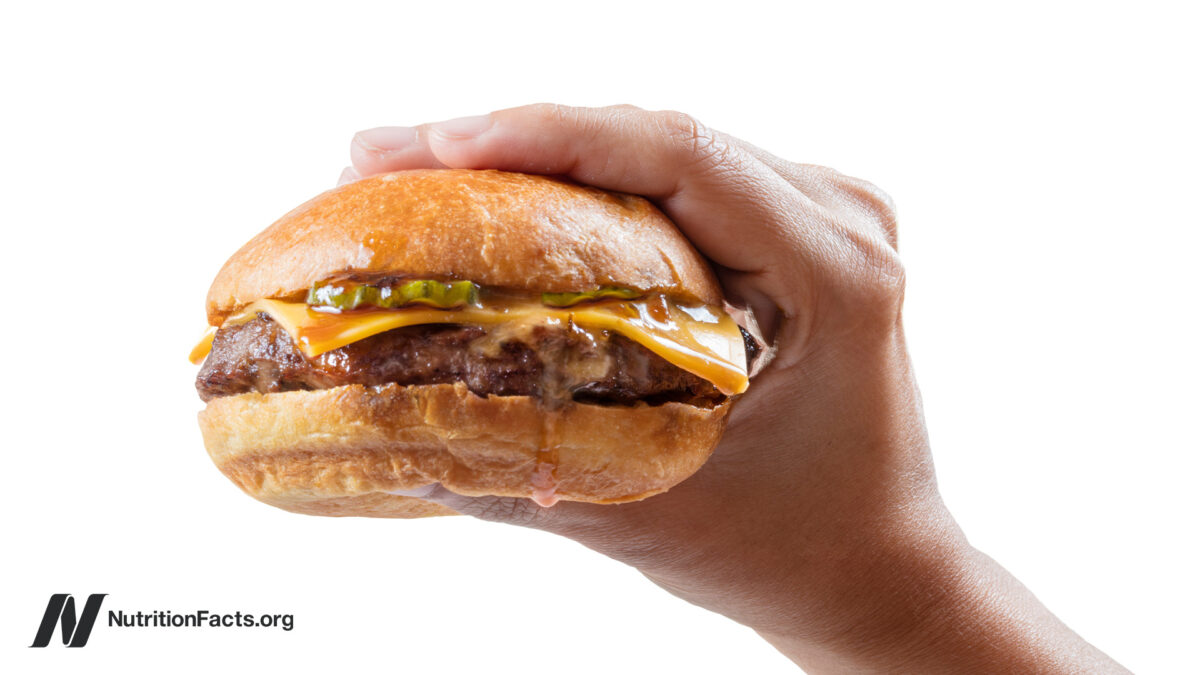
- The Cost of a Burger: Epidemiological evaluations suggest that consuming a standard beef burger is associated with the loss of one microlife—effectively shaving 30 minutes off your expected lifespan. In comparative terms, one burger extracts a biological toll roughly equal to two cigarettes.
The Return on Investment for Healthy Habits
Fortunately, the microlife concept works in reverse for health-promoting behaviors:
- Fruits and Vegetables: Consuming at least five servings of fruits and vegetables daily can add an average of four years to a man’s lifespan and three years to a woman’s.
- Physical Activity: Exercising for just 20 minutes yields a net positive return on investment. The physical effort costs a fraction of an hour, but the physiological payoff returns an extra hour of life—effectively a 3-to-1 return on time invested (two microlives gained). While there are diminishing returns for extreme over-exercise, committing to moderate daily activity regularly yields more time than it consumes.
Official Responses and Scientific Consensus
The publication of conflicting dietary reviews has forced major public health institutions to clarify their stances. Leading nutritional scientists have been vocal in defending established dietary principles.
Following the release of the contentious 2019 meat recommendations, the chair of nutrition at Harvard University and a coalition of international colleagues published formal critiques. They asserted that the panel’s recommendations "suffered from important methodological limitations and involve misinterpretations of nutritional evidence."
The scientific consensus remains firm: to optimize both human longevity and planetary health, dietary guidelines must continue to emphasize eating patterns that are low in red and processed meats. In their place, guidelines advocate for nutrient-dense, minimally processed plant foods—such as fruits, vegetables, whole grains, nuts, and legumes (including beans, split peas, chickpeas, and lentils).
Dr. Dean Ornish, a pioneer in lifestyle medicine, offered a stark warning regarding the integrity of nutritional research. Reflecting on studies that attempt to normalize high meat consumption while ignoring robust reversal trials for heart disease, Ornish remarked:
"I take solace in knowing that the light drives out the darkness. But, these days, the light has to be very bright indeed. Caveat emptor. Don’t be fooled. Your life may depend on it."
Implications for the Future of Public Health and Personal Choices
The implications of translating dietary habits into microlives extend far beyond individual diet choices. They point toward a necessary evolution in how public health is communicated.
1. Re-framing Dietary Education
Traditional nutritional advice often relies on vague prohibitions: "eat less fat," "reduce processed foods," or "watch your red meat." By utilizing concrete, relatable units like microlives, educators can empower consumers to make informed micro-decisions throughout their day. When a consumer realizes that choosing a bean burrito over a bacon-wrapped burger isn’t just about managing cholesterol, but actively preserving their biological time, the psychological barrier to change shifts.
2. Policy and Institutional Shifts
On a systemic scale, understanding the heavy toll of processed meat on cardiovascular health and diabetes rates underscores the need for institutional reform. Public health advocates argue that institutional purchasers—such as schools, hospitals, and government agencies—should phase out processed meats in favor of plant-forward alternatives. Furthermore, taxation and labeling policies, which have proven effective in curbing tobacco and sugary beverage consumption, could eventually be adapted to account for the heavy public health burdens imposed by ultra-processed meats.
3. Personal Agency and Empowerment
Ultimately, the power lies with the individual consumer. Armed with a clearer understanding of how lifestyle habits compound over decades, people can reclaim agency over their health trajectory. Whether it is committing to a 20-minute daily walk to net a positive time return or swapping out processed luncheon meats for a handful of lentils and whole grains, every choice acts as an investment in our future.
Just as society successfully reframed the cultural perception of smoking decades ago, our relationship with processed foods is undergoing a critical re-evaluation. The next time you sit down for a meal, the quiet ticking of your personal microlives might just make you think twice about what’s on your plate.