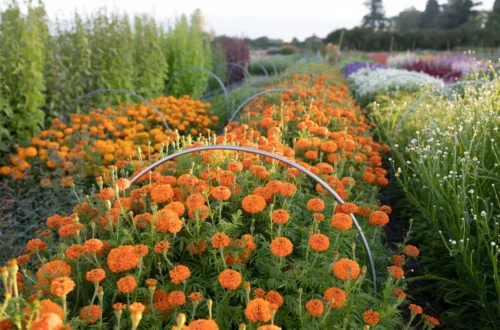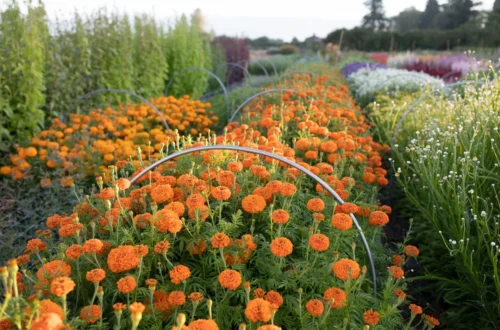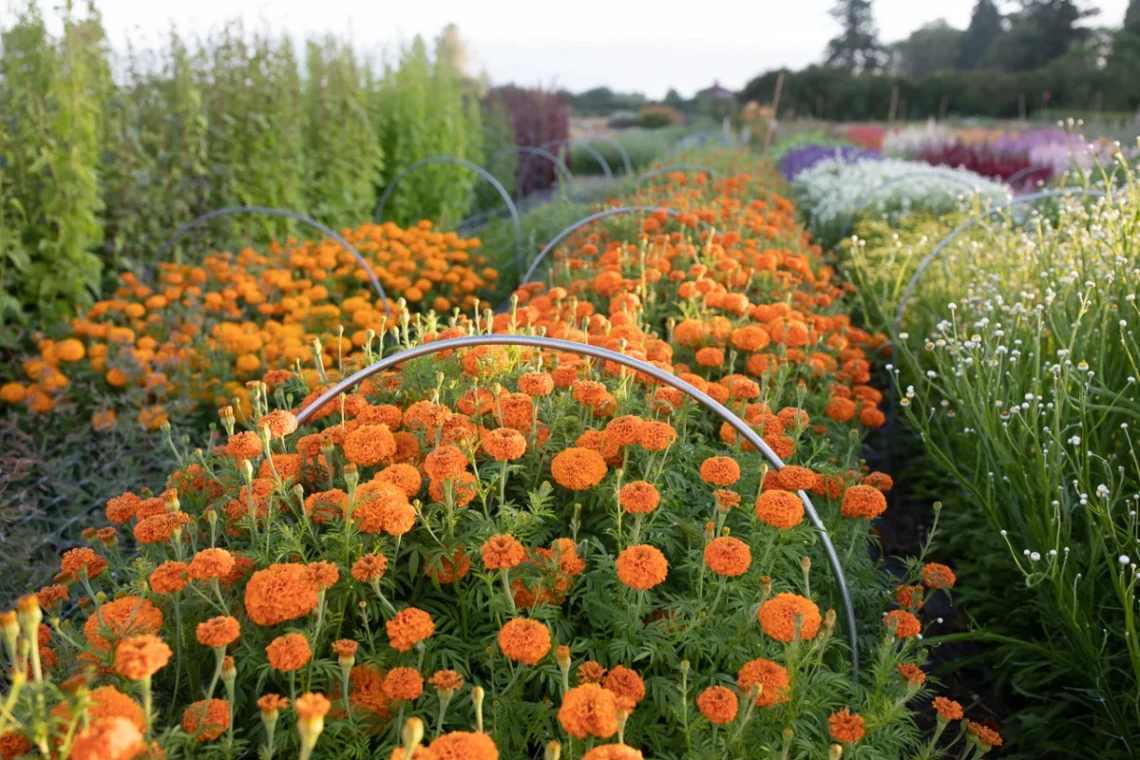
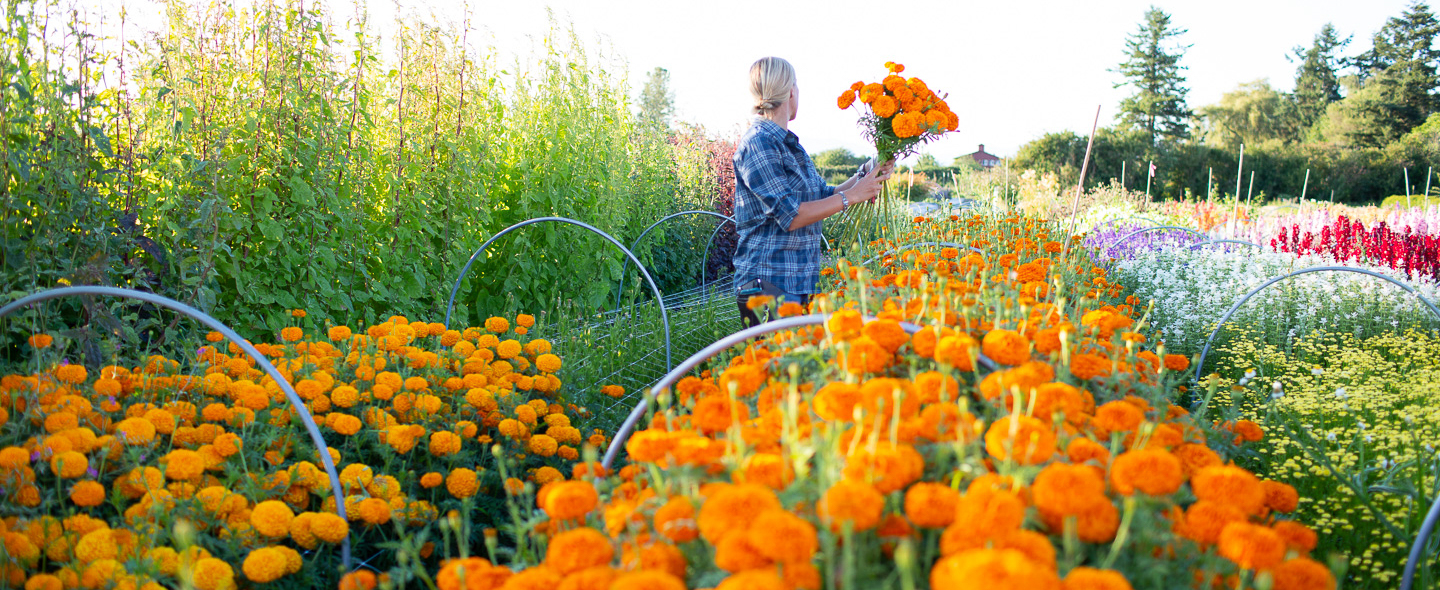
As the garden begins its slow, melancholic slide into autumn and the vibrant perennials of summer become tattered with each passing week, marigolds step up to claim center stage. While other flora wind down their growing seasons, the marigold patch remains remarkably vibrant and cheerful. Their bright-colored flowers mirror the changing landscape, completely unfazed by stormy fall weather. Their resilient foliage continues to look pristine right up until the season’s first hard frost, proving that this humble flower is much more than a mere garden-variety afterthought.
Main Facts: Resilient, Versatile, and Tough
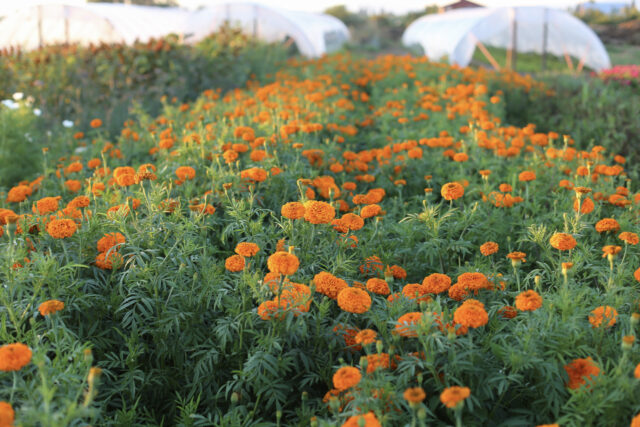
Marigolds are widely recognized as some of the toughest, most abundant-flowering plants available to home gardeners and commercial growers alike. This diverse botanical group spans a wide range of both plant and bloom sizes. They include compact varieties tailored for containers and towering species that reach shoulder-high by the end of the season. Blooms can range from tiny, penny-sized buttons to expansive cushions as large as the palm of a hand.
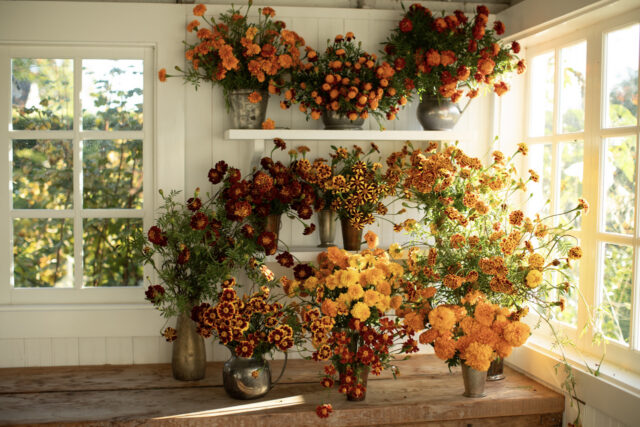
Thriving with minimal care, marigolds have an affinity for heat and produce blossoms from midsummer through the bitter end of the season. Their vivid color palette encompasses numerous shades of yellow, gold, orange, and red. Beyond their ornamental value, these pigments make excellent natural dyes, and several varieties are entirely edible. Because their petal structures are remarkably sturdy, marigolds are historically favored for traditional garlands and leis. Meanwhile, their aromatic foliage features a potent, unmistakable fragrance that evokes strong, polarized opinions from gardeners everywhere.
Chronology of Cultivation: From Seed to Vase
Cultivating marigolds successfully requires an understanding of their growth timeline and seasonal lifecycle.
- Late Winter/Early Spring (4 to 6 Weeks Before Last Frost): Seeds for these tender annuals are traditionally started indoors in propagation trays. This head start ensures strong root development before transplanting.
- Late Spring (Post-Frost): Once all danger of frost has officially passed, gardeners can safely transition indoor seedlings outdoors. Alternatively, growers can direct-seed marigolds straight into garden beds once ambient weather warms significantly.
- Midsummer to Early Fall: Plants enter peak blooming phases. Taller varieties may require structural staking or corralling to prevent toppling under their heavy floral weight, while bushy French varieties remain self-supporting.
- Late Season Harvest: Gardeners harvest stems when flowers are roughly halfway open, stripping the main stems of excess foliage. Because marigolds bloom from the base upward in succession, lower, tattered flowers are typically pruned away prior to arranging. In a vase, they maintain peak freshness for an impressive 7 to 10 days.
Supporting Data: Breaking Down the Three Major Marigold Groups
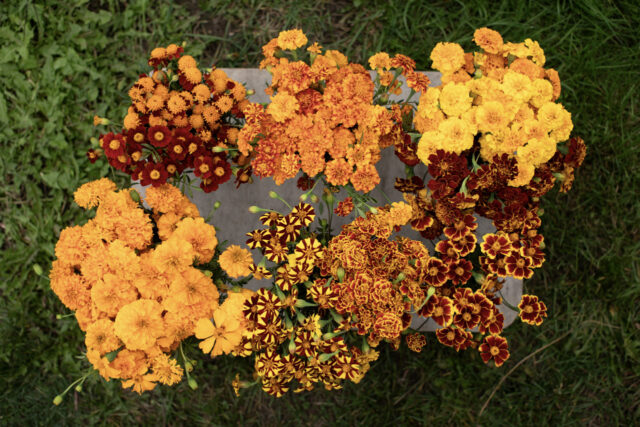
Extensive trials conducted by professional flower farms highlight the distinct characteristics of the three primary marigold categories: African, French, and Gem/Signet.
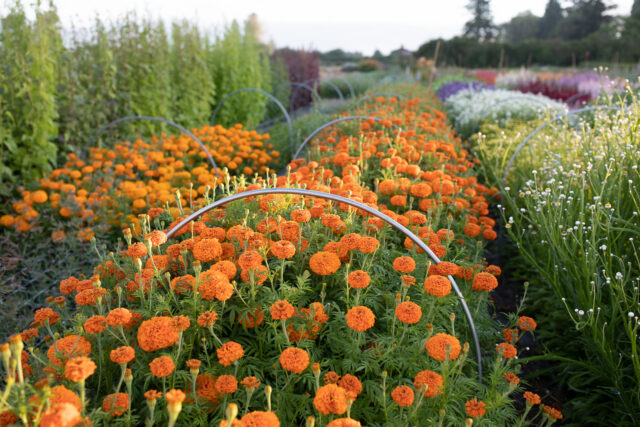
1. African Marigolds
Characterized by large, exceptionally long-lasting blooms and sturdy structures, African marigolds excel in large-scale floral displays and market bouquets.
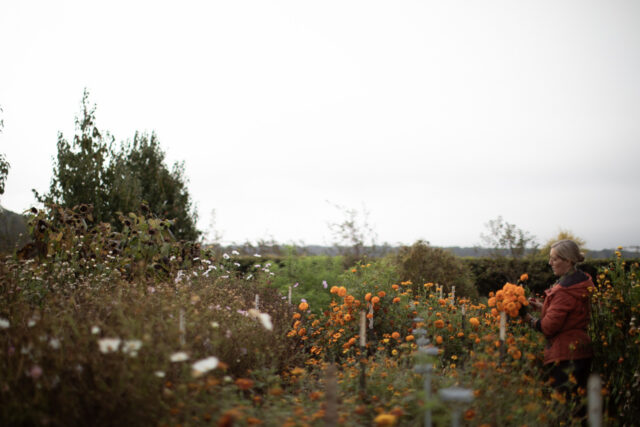
- ‘Giant Orange’: Produces 6 to 10 long, robust, branching stems topped with glowing saffron-colored blooms. This super-ruffled variety features tight green centers and lacy, fragrant foliage, making it a standout for summer-to-autumn arrangements.
- ‘La Ribera’: Features enormous, fuzzy tangerine flowers in various forms—fully double, semi-double, single, and even petal-less iterations. While too inconsistent for commercial cut-flower production, its sheer vigor makes it a beloved garden novelty.
2. French Marigolds
Compact and rich in color, French marigolds are traditionally utilized for borders and containers, though select strains adapt well to late-season cutting.
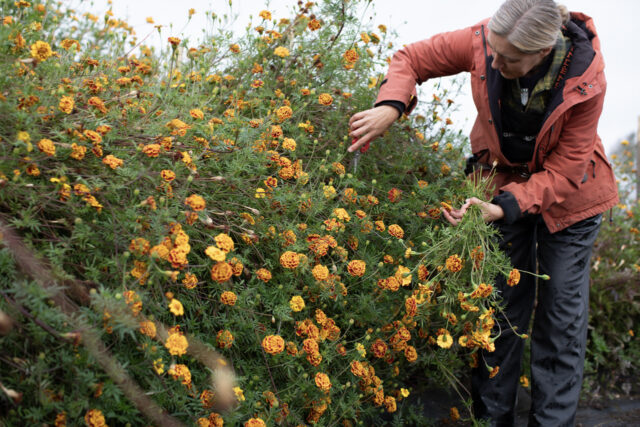
- ‘Brocade Mix’: Compact, stocky plants yielding small, double, red-orange bicolors. Ideal for containers, requiring late-season harvesting for optimal stem length.
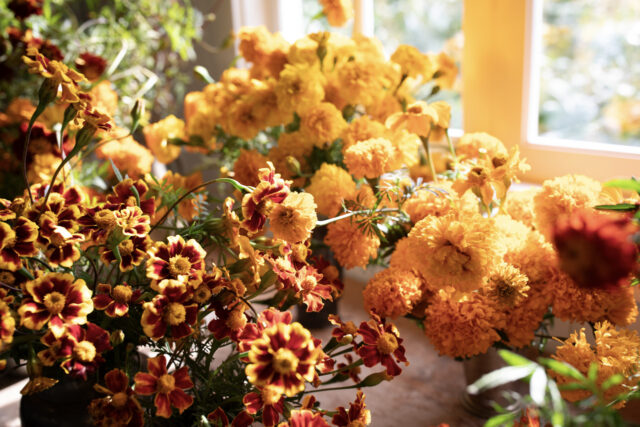
- ‘Dainty Marietta’: Petite plants bearing single yellow flowers accented by dark burnt-red centers.
- ‘Fireball’: Showcases a striking combination of blackish-red and burnt orange. While stems remain too short for cutting, its rich color profile makes it an essential container plant.
- ‘Harlequin’ (or ‘Court Jester’): An airy heirloom featuring medium-sized, maroon-and-gold striped single blooms on long, branching stems suited for late-season bouquets.
- ‘Naughty Marietta’ & ‘Strawberry Blonde’: Compact selections prized primarily for intense rust, peach, and buttercream tones, though limited stem lengths restrict their use to bedding and pots.
- ‘Tiger Eyes’: A novelty variety featuring golden-orange fuzzy centers enveloped by short burgundy petals, reaching roughly two feet by season’s end.
3. Peace Seedlings Introductions
Recent breeding innovations from Oregon-based Peace Seedlings have bridged the gap between French and African traits. By crossing the two, breeders produced plants with the compact coloration and flower size of French marigolds combined with the robust growth habits and elongated stems of African types.
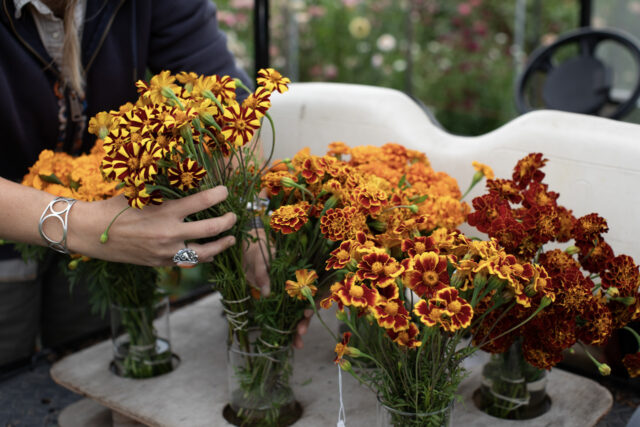
- ‘Burgundy Bliss’: Deep rusty-red double flowers outlined in glowing golden-orange, supported by willowy yet strong stems.
- ‘Frances’s Choice’: Medium-sized single blooms in rusty-red edged with gold, borne on towering, densely branching plants.
- ‘Mushroom’s Sol’: Tangerine flowers featuring rich red inner stripes, stretching to usable lengths by autumn.
- ‘Red Metamorph’ & ‘Sparkler’: Knee-high plants producing abundant golden flowers streaked with varying saturations of red.
- ‘Sunbright Mix’: A bushy introduction displaying candy corn-esque colorations of yellow, orange, and tangerine.
4. Gem and Signet Marigolds
Miniature-flowered varieties produce abundant, branching stems packed with dozens of penny-sized, citrus-scented blooms.
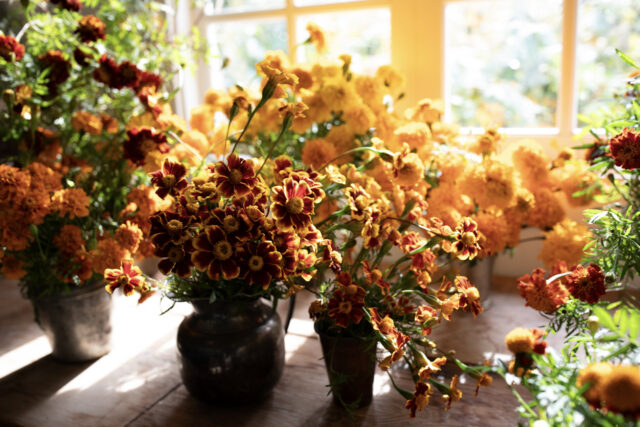
- ‘Starfire Mix’: Reaches over 30 inches, bearing dense clusters of red, orange, and gold bicolors.
- ‘Tangerine Gem’ & ‘Red Gem’: Compact alternatives peaking at approximately 24 inches with vibrant, glowing palettes.
Official Perspectives and Expert Insights
Horticultural experts emphasize the underappreciated value of marigolds within both domestic and agricultural settings. Professional flower farmers note that beyond their visual appeal, marigolds serve as powerful natural attractants for beneficial insects while acting as a deterrent for specific soil nematodes. Master gardeners consistently point out that their resilience against volatile autumn weather patterns makes them one of the most reliable investments for seasonal color transitions. Furthermore, culinary and craft specialists highlight their utility in sustainable practices, ranging from natural textile dyeing to edible petal garnishes.
Implications for Modern Horticulture and Floral Design
The evolving perception of marigolds marks a significant shift in modern floriculture. Once widely dismissed as common "bedding plants" or utilitarian pest deterrents, contemporary breeding programs—such as those pioneered by independent farms like Peace Seedlings—have elevated the marigold into a high-end design asset.
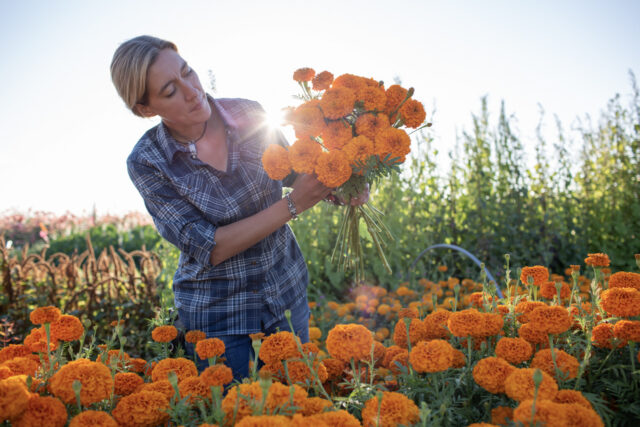
For commercial flower farmers, the introduction of long-stemmed, complexly colored varieties expands late-season inventory options at a time when conventional crops are failing. For home gardeners, the plant’s drought tolerance, extended blooming window, and adaptability to containers offer a low-maintenance, high-reward solution to garden fatigue as summer fades. Ultimately, the humble marigold is reclaiming its status as an indispensable cornerstone of autumn agriculture.