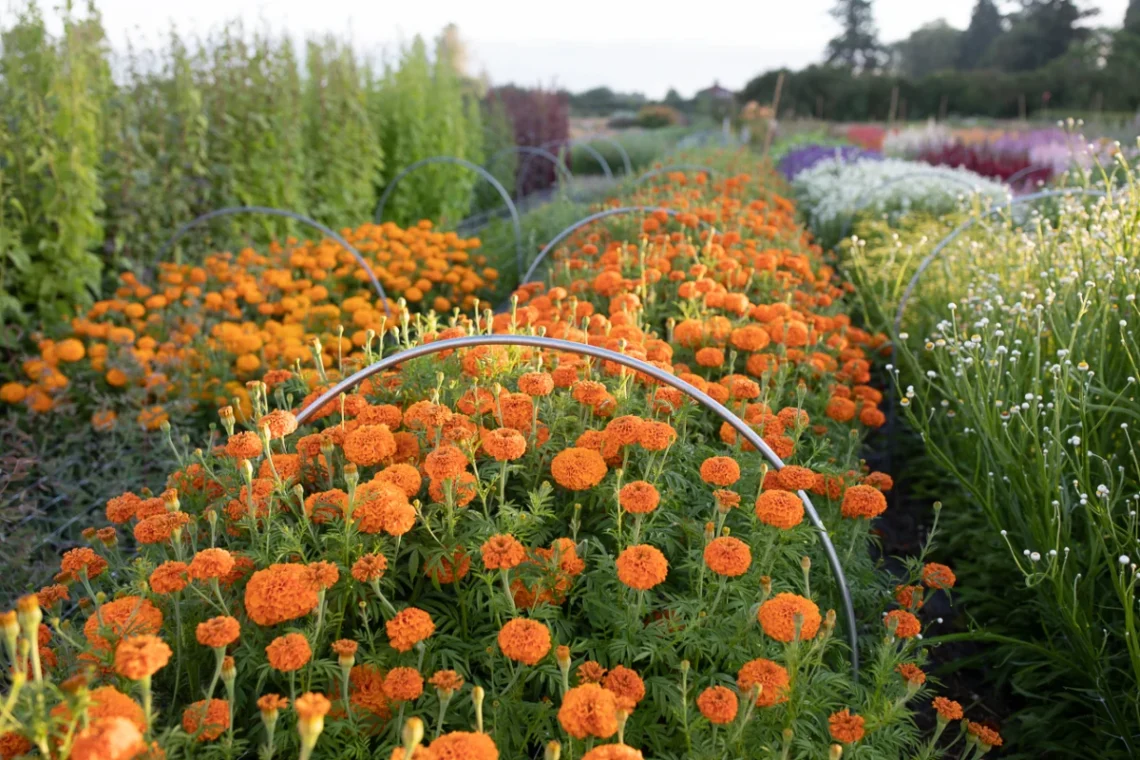
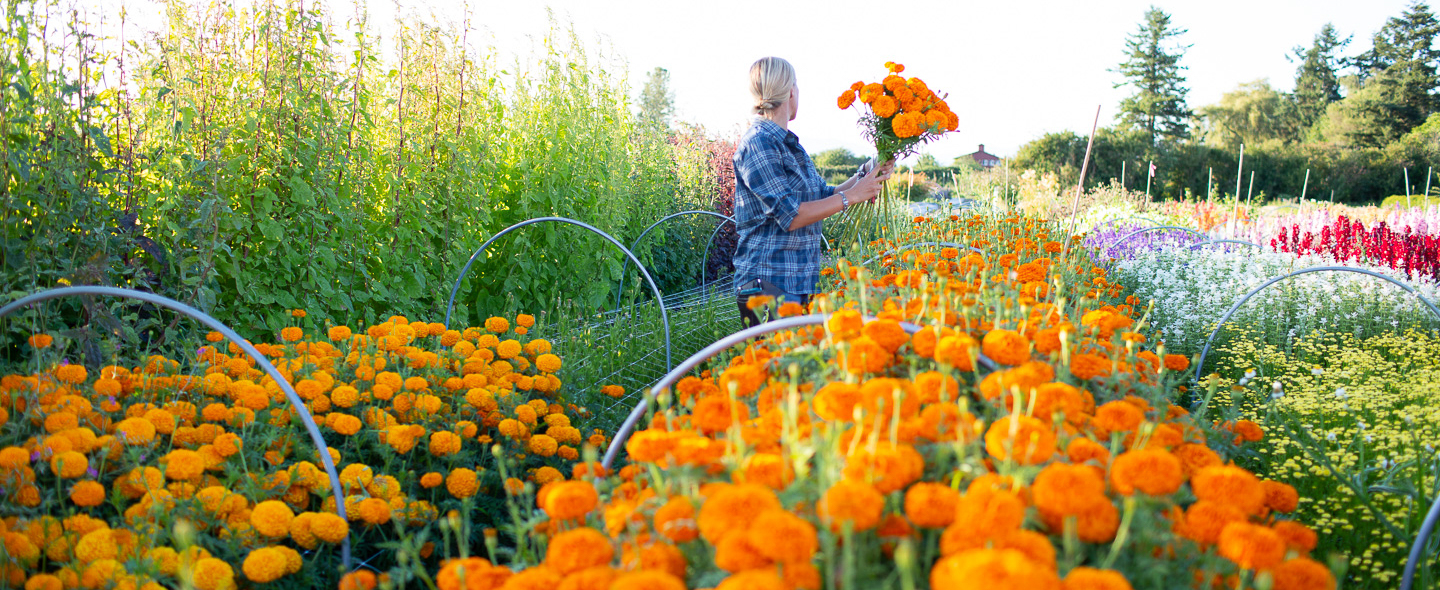
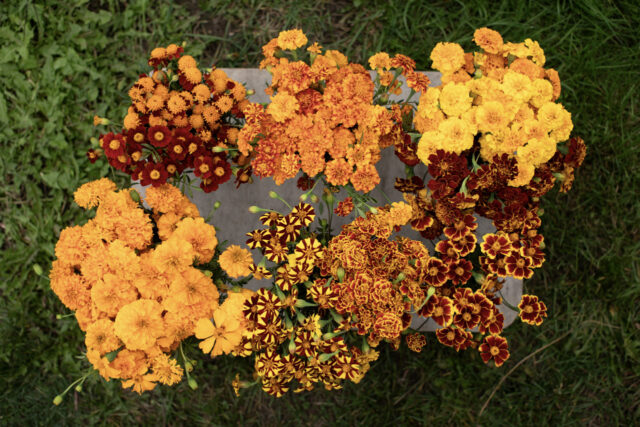
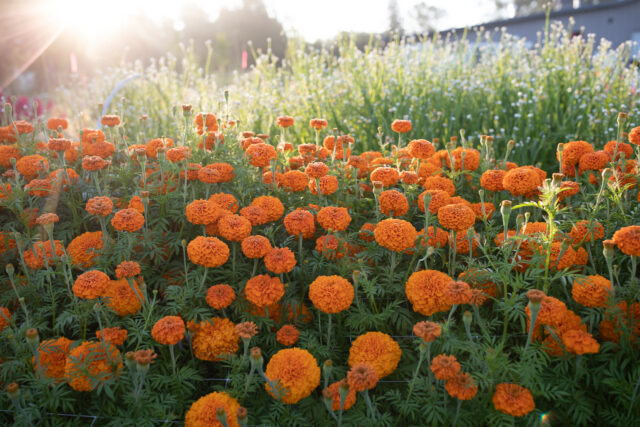
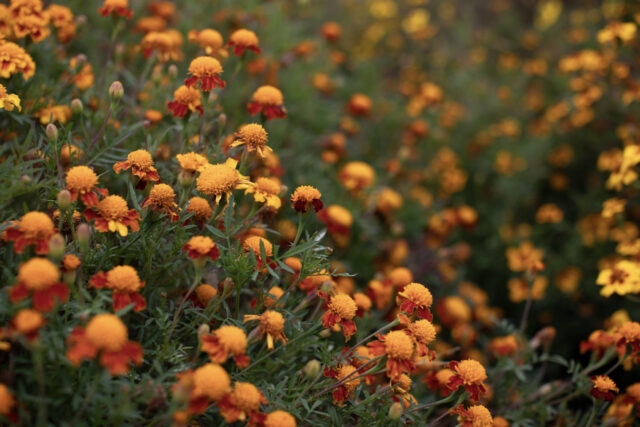
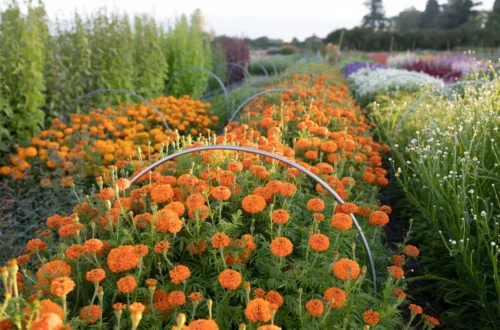
As the vibrant landscape of summer slowly fades and autumn descends upon flower farms and backyard gardens alike, most annuals begin to look tattered, weary, and wind-whipped. Yet, rising above the seasonal decline, marigolds step into their absolute prime. Remaining defiant against stormy fall weather, frosty mornings, and declining daylight, marigolds offer a final, brilliant burst of saturated color—spanning deep burgundies, glowing saffron, brilliant tangerines, and sunny yellows.
Far from being mere background filler, marigolds (Tagetes spp.) are among the toughest, most resilient, and most prolific flowering plants available to gardeners and cut-flower growers. Cultivated across three primary groups—African, French, and Gem/Signet—the diversity within this genus is staggering. Plant sizes range from compact, 8-inch bedding selections tailored for containers to towering, shoulder-high specimens that reach over three feet by season’s end. Bloom sizes vary just as dramatically, from penny-sized buttons to heavy, palm-sized ruffles.
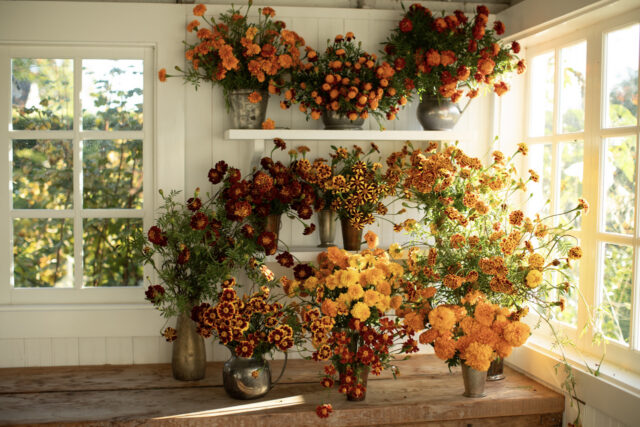
Beyond their visual appeal in the garden landscape, marigolds serve multifaceted roles. Their robust, sturdy blooms are exceptionally well-suited for crafting traditional garlands and ceremonial leis. Certain varieties produce edible petals, while others yield rich natural dyes. Though their pungent, highly fragrant foliage remains a point of debate among gardeners—drawing equal amounts of deep affection and intense aversion—it plays an undeniable role in deterring pests and providing a rich, herbaceous texture to mixed floral arrangements. With a reliable vase life of seven to ten days, marigolds are quietly revolutionizing late-season floral design.
Chronology
Understanding the lifecycle of marigolds and tracking a successful growing season requires a structured timeline, from early indoor propagation to the final late-autumn harvest.
1. Late Winter to Early Spring: Indoor Sowing (4 to 6 Weeks Pre-Frost)
Action: Sow marigold seeds indoors in plug trays or containers approximately four to six weeks before the anticipated final spring frost date.
Details: Provide adequate warmth and light to encourage strong, stocky germination. Pinching young plants can be practiced on select varieties to encourage bushier growth, though some dwarf varieties fail to respond with increased stem length.
2. Late Spring: Transplanting and Direct Seeding
Action: Transplant hardened-off seedlings directly into garden beds or field rows only after all absolute danger of frost has passed and soil temperatures have thoroughly warmed.
Alternative: Alternatively, marigolds can be successfully direct-seeded straight into the garden once the weather stabilizes and ambient temperatures rise.
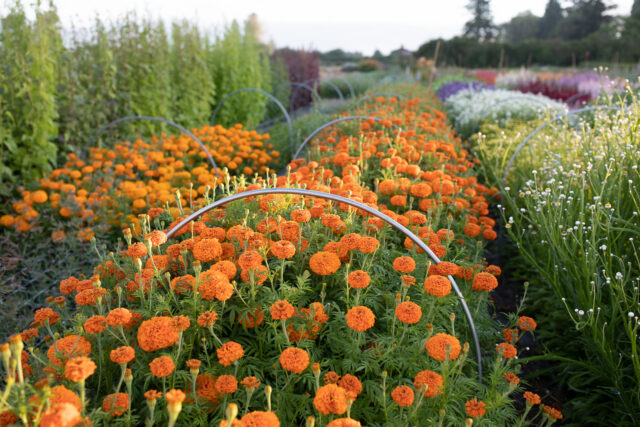
Support Setup: For taller African varieties and vigorous interspecific hybrids, install staking systems, netting, or corrals early to prevent the heavy, flower-laden branches from toppling under their own weight later in the season.
3. Midsummer to Early Fall: The Peak Growing Season
Action: Plants thrive under intense heat with minimal supplemental care, continuously setting buds and expanding their root systems.
Maintenance: Regular monitoring for pests, light weeding, and initial harvesting of early-flowering gem varieties takes place during this period.
4. Late Autumn: The Ultimate Harvest and Peak Stems
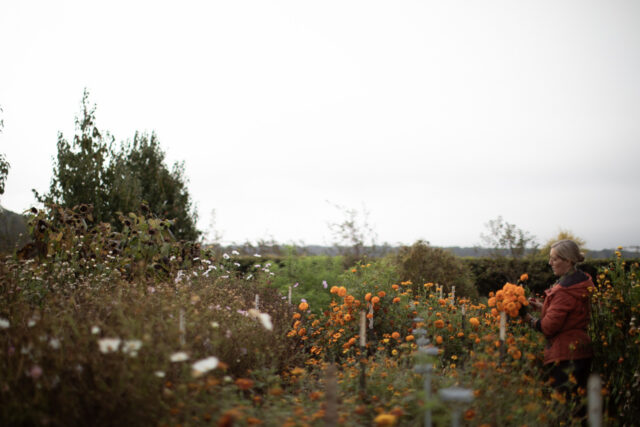
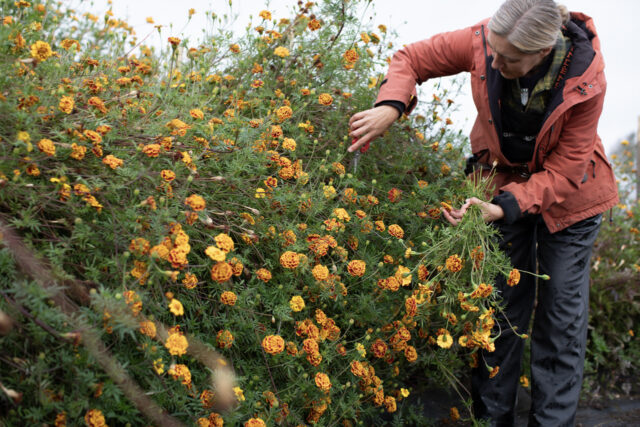
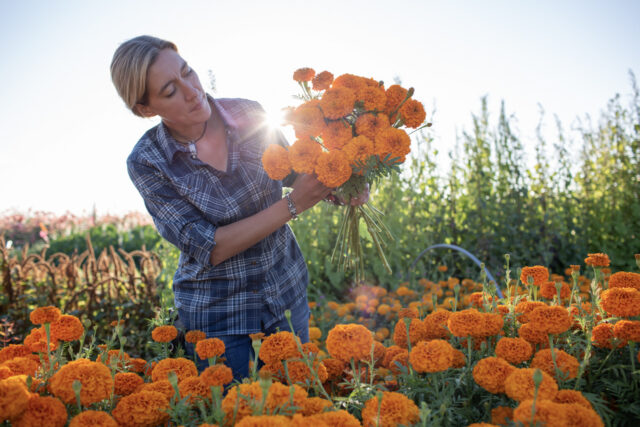
Action: As cooler weather sets in, harvest marigolds when the blossoms are roughly halfway open. Strip the lower, tattered foliage from the stems.
Technique: Because marigolds bloom sequentially from the base upward, removing older, lower blossoms allows designers to access the pristine, stair-stepped blooms ripening higher up the stem.
Final Cut: For short-statured French varieties, growers must wait until late in the season when stem stretching peaks to harvest usable lengths for floral arrangements.
Supporting Data
Extensive field trials conducted over multiple growing seasons have categorized marigold varieties into distinct classes, detailing their growth habits, stem lengths, and suitability for professional floral design.
1. African Marigolds (Tagetes erecta)
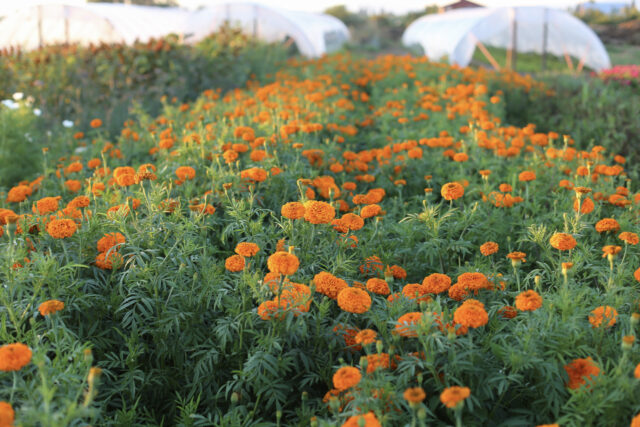
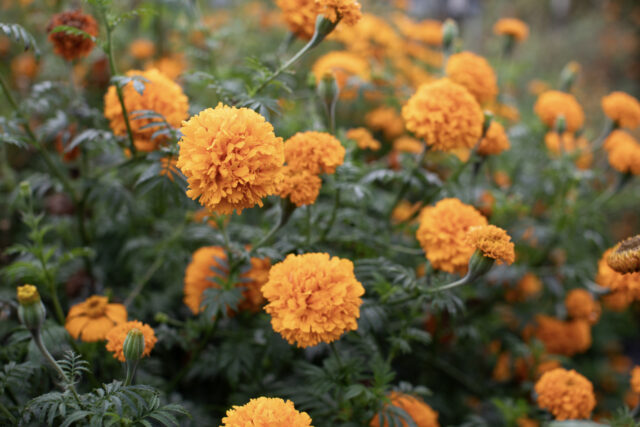
Characterized by large, fully double flowers, exceptionally sturdy stems, and a long vase life, African marigolds are a staple for late-season market bouquets and heavy floral installations.
‘Giant Orange’: Produces 6 to 10 long, strong, branching stems per plant, topped with large, glowing saffron-colored ruffles, tight green centers, and scented, lacy foliage. Highly versatile for garden and vase use.
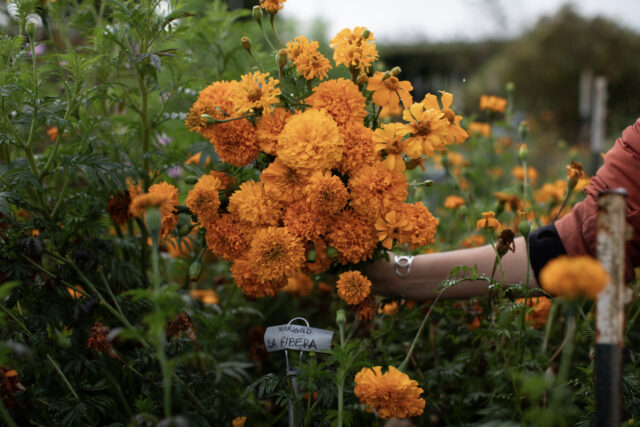
‘La Ribera’: Features massive, fuzzy tangerine flowers in various forms (single, semi-double, and fully double, alongside occasional petal-less anomalies). While too inconsistent for commercial cut-flower production due to variable forms, its vigorous, oversized plants make it a favorite novelty garden specimen.
2. French Marigolds (Tagetes patula)
Compact, stocky, and brimming with intricate bicolors, French marigolds excel in containers, borders, and tight spaces.
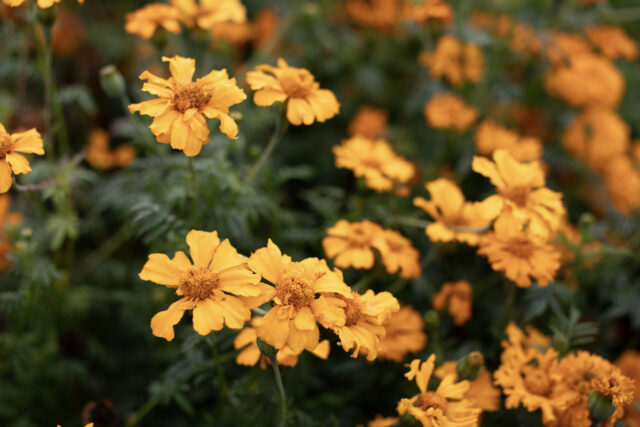
‘Dainty Marietta’: Petite plants displaying small, single, yellow flowers highlighted by dark, burnt-red petal centers. Best utilized in pots and containers due to restricted height.
‘Fireball’: Bushy plants showcasing a striking color blend of blackish-red and burnt orange. Cultivated primarily for its vibrant bedding color rather than cutting.
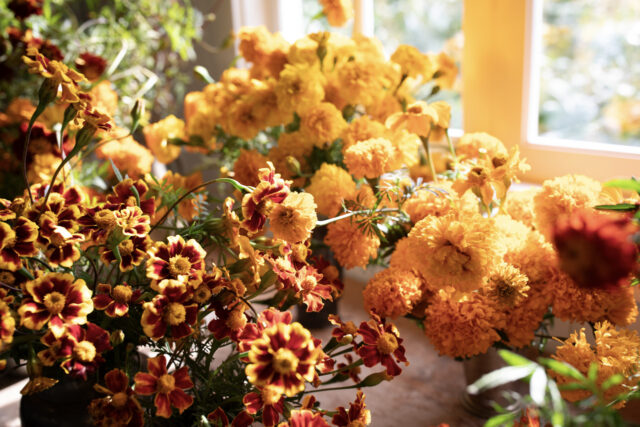
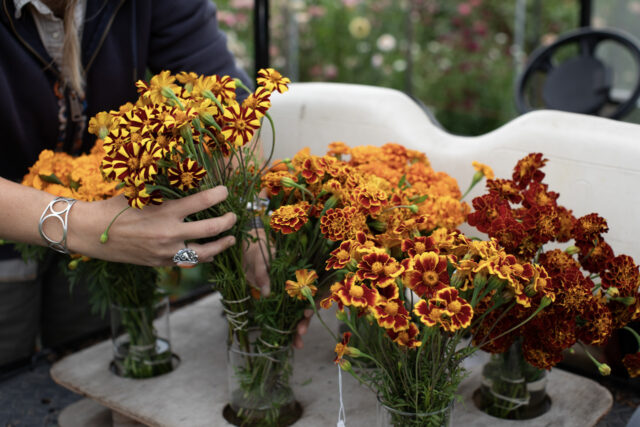
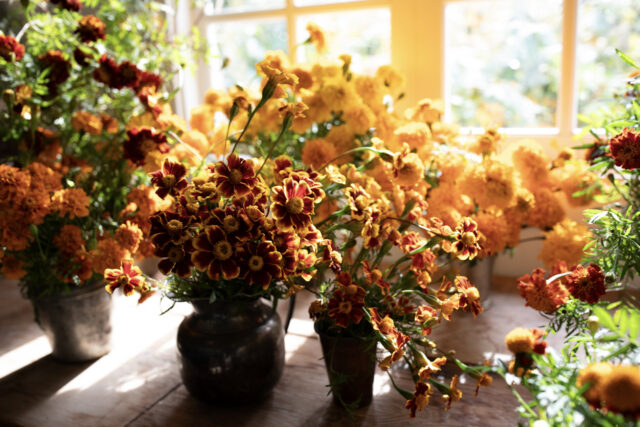
‘Harlequin’ (‘Court Jester’): An heirloom variety with airy, long, branching stems and medium-sized, maroon-and-gold striped single blooms that inject unique texture into autumn bouquets.
‘Naughty Marietta’: Compact plants bearing single gold flowers with dramatic burnt-red markings around the centers and tips. Possesses a charming wildflower aesthetic.
‘Strawberry Blonde’: A striking color mutation featuring rusty red, buttercream, and peach tones. Despite trials involving tight spacing and pinching, plants remain too short for cutting, making them ideal exclusively for containers and garden beds.
‘Tiger Eyes’: Novelty plants reaching roughly two feet by season’s end, featuring exaggerated, fuzzy golden-orange centers encircled by short burgundy petals.
Bred by Mario and Dylana Kapuler (and building upon earlier work by Peace Seeds), these innovative varieties cross French and African strains. They combine the unique, intricate coloration and smaller flower size of French marigolds with the vigorous growth habit, tall stature, and long, willowy stems of African marigolds.
‘Burgundy Bliss’: Deep rusty-red double flowers outlined in glowing golden-orange on both sides of the petals. Tall, heavily branching plants yield strong, thin stems ideal for advanced floral designers.
‘Frances’s Choice’: A standout variety producing medium-sized, single, rusty-red blooms edged in gold atop towering, densely branching, thin stems.
‘Mushroom’s Sol’: The most compact of the Peace-bred selection, yielding small-to-medium tangerine flowers with rich red inner stripes. Requires a full season to stretch into usable cut-flower lengths.
‘Red Metamorph’: Knee-high plants with dense foliage and upward-facing, single golden blooms featuring variable red streaks and blotches.
‘Sparkler’: Tall, heavily branching plants producing abundant medium-sized golden flowers featuring distinctive rusty-red central bands.
Sunbright Mix: A bushy, tall introduction featuring vibrant color combinations reminiscent of candy corn: sunny yellow with orange edges, tangerine with yellow stripes, and solid tangerine.
4. Gem and Signet Marigolds (Tagetes tenuifolia)
Miniature-flowered, wilt-resistant selections featuring fine, ferny foliage with a clean citrus aroma and dozens of penny-sized blossoms per stem.
Starfire Mix: Vigorous plants producing branching stems that exceed 30 inches, loaded with red, orange, and gold bicolors. A premier choice for mixed bouquets.
‘Tangerine Gem’ & ‘Red Gem’: Slightly shorter variations reaching roughly 24 inches, featuring glowing tangerine blooms with darker centers (‘Tangerine Gem’) and brick-red petals with lighter orange centers (‘Red Gem’).
Official Responses
Horticultural experts, professional flower farmers, and specialized breeders have increasingly championed the marigold, shifting its public perception from a common, old-fashioned bedding plant to an elite, high-performance botanical asset.
"While other plants are winding down, the marigold patch is still vibrant and cheerful, and their bright-colored flowers mirror the changing landscape. The blooms are unfazed by stormy fall weather and the foliage continues to look great right up until frost."
— Leading Cut-Flower Farmer and Floriculturist
Reflecting on the collaborative breeding breakthroughs achieved by small independent farms, agricultural observers note the profound impact of interspecific hybridization:
"By crossing French and African varieties, breeders have unlocked a new generation of plants that merge the delicate, multifaceted coloration of dwarf selections with the commanding height, robust vigor, and cutting-length stems required by modern florists."
— Seed Breeding and Trial Evaluation Specialist
Implications
The modern resurgence and re-evaluation of the marigold carry significant implications for home gardeners, commercial cut-flower growers, and the broader floral design industry.
For home gardeners, embracing diverse marigold varieties—particularly disease-resistant signets and heavy-blooming hybrids—provides an extended season of ecological and visual benefits well into late autumn. Their natural pest-deterrent properties protect adjacent vegetable crops, while their low-maintenance care requirements democratize high-yield gardening for novices.
For commercial flower farmers, marigolds represent a vital economic bridge. As traditional summer crops succumb to early frosts, farm-grown marigolds fill market tables with high-margin, long-lasting product. Varieties bred specifically for long, willowy stems—such as those originating from Peace Seedlings—reduce waste and expand the commercial viability of a crop once dismissed as too short or rangy for professional use.
Finally, within the floral design sector, marigolds challenge rigid definitions of luxury flowers. Their textured foliage, complex bicolors, citrus-scented or pungent profiles, and impressive 7-to-10-day vase life offer designers organic, earthy materials that anchor autumn tablescapes, hand-tied market bunches, and large-scale architectural installations with unmatched resilience and charm.