In the landscape of public health nutrition, few controversies have matched the fiery uproar sparked by a series of papers published in the Annals of Internal Medicine. Amid a mountain of consensus advising individuals to moderate their intake of red and processed meats, a newly formed international panel reached a starkly different conclusion: people should ignore contemporary dietary guidelines and continue eating meat to their heart’s content.
This unexpected stance sent shockwaves through the medical community. Critics, epidemiologists, and public health officials quickly mobilized, arguing that the findings were the product of flawed methodologies, cherry-picked data, and troubling industry alignments. To understand how a body of research showing clear statistical harms could morph into a recommendation to maintain status-quo consumption, one must examine the timeline, the data, the institutional responses, and the profound implications for global health.
Main Facts: What the Science Actually Showed
At the core of the controversy is a series of systematic reviews and meta-analyses published by the NutriRECS consortium. Paradoxically, even the panel’s own data revealed a statistically significant association between lower consumption of red and processed meats and reduced total mortality (living a longer life), lower cardiovascular disease mortality, and a lower risk of dying from cancer.
According to their meta-analyses of large cohort studies, dietary patterns featuring even moderate reductions in red and processed meats were associated with:
- A 13% reduction in total mortality.
- A 14% reduction in cardiovascular disease mortality.
- An 11% reduction in cancer mortality.
- A 24% reduced risk of developing type 2 diabetes.
Despite these clear indicators of harm reduction, the panel asserted that the absolute magnitude of these effects was "very small" and insufficiently robust to warrant public health warnings advising people to cut back. Instead, they leaned heavily on subjective metrics like taste preference and participant compliance, upending decades of nutritional epidemiology.
Chronology: The Anatomy of a Scientific Controversy
The timeline of events surrounding the NutriRECS publication reveals a carefully orchestrated challenge to established dietary norms:
- Decades Prior to 2019: Nutritional epidemiology steadily builds a robust consensus linking high consumption of red and processed meats to elevated risks of heart disease, stroke, type 2 diabetes, and various forms of cancer—comparable in many ways to public health data surrounding secondhand smoke.
- Late September 2019: The Annals of Internal Medicine publishes the NutriRECS consortium papers. The researchers advocate against reducing red or processed meat consumption for healthy adults, sparking immediate international pushback from organizations like the Harvard T.H. Chan School of Public Health and the American Heart Association.
- October 2019: Investigative reports and public health watchdogs reveal that the NutriRECS panel partnered with and received funding connections to institutions like Texas A&M AgriLife, which historically receives millions of dollars annually from the meat industry. Petitions are filed with the Federal Trade Commission (FTC) challenging the integrity of the guidelines.
- 2020 and Beyond: Leading physicians and epidemiologists—such as Dr. Dean Ornish and researchers from major academic centers—publish rigorous critiques dissecting the panel’s exclusion of major randomized controlled trials (RCTs), laying the groundwork for ongoing discussions about industry influence in dietary policymaking.
Supporting Data: Flawed Methods and Excluded Evidence
To justify their contrarian conclusions, the panel relied on three primary defenses, each of which has been heavily scrutinized by the broader scientific community.
1. Prioritizing Taste Over Health
The panel argued that people simply enjoy eating meat, framing dietary choices around personal gratification. Public health experts pushed back, noting that taste preferences have never dictated medical science. Millions of people enjoy smoking, drinking, or remaining sedentary, yet public health recommendations do not validate those habits simply because they bring temporary pleasure.
2. Inappropriate Application of the GRADE Framework
The panel utilized the GRADE (Grading of Recommendations, Assessment, Development, and Evaluation) system to assess the certainty of nutritional evidence. However, GRADE was originally engineered to evaluate short-term drug trials, not lifelong dietary patterns where randomized controlled trials (like forcing people to eat a specific diet for 40 years) are virtually impossible. Critics warned that misapplying GRADE to nutrition could effectively dismantle public health consensus on air pollution, secondhand smoke, trans fats, and physical inactivity.
3. Downplaying "Small Magnitude" Effects
The panel asserted that even if meat causes chronic illnesses, the absolute risk increase for an individual is too small to matter. Public health advocates countered this with a compelling smoking analogy.

Consider a hypothetical study that compares people who smoke 24 cigarettes a day to those who smoke 20 cigarettes a day, while carefully omitting anyone who smokes zero cigarettes. Finding only a negligible difference in disease rates between the two smoking groups, researchers might erroneously conclude that smoking isn’t particularly harmful to health.
Furthermore, by relying heavily on datasets like the Women’s Health Initiative—where the actual intervention achieved a reduction of only 1.4 servings of meat per week (about half an ounce per day)—the panel measured the effects of modest changes rather than meaningful dietary shifts. Modest changes yield modest benefits; that is an indictment of the dosage, not proof that the underlying hazard does not exist.
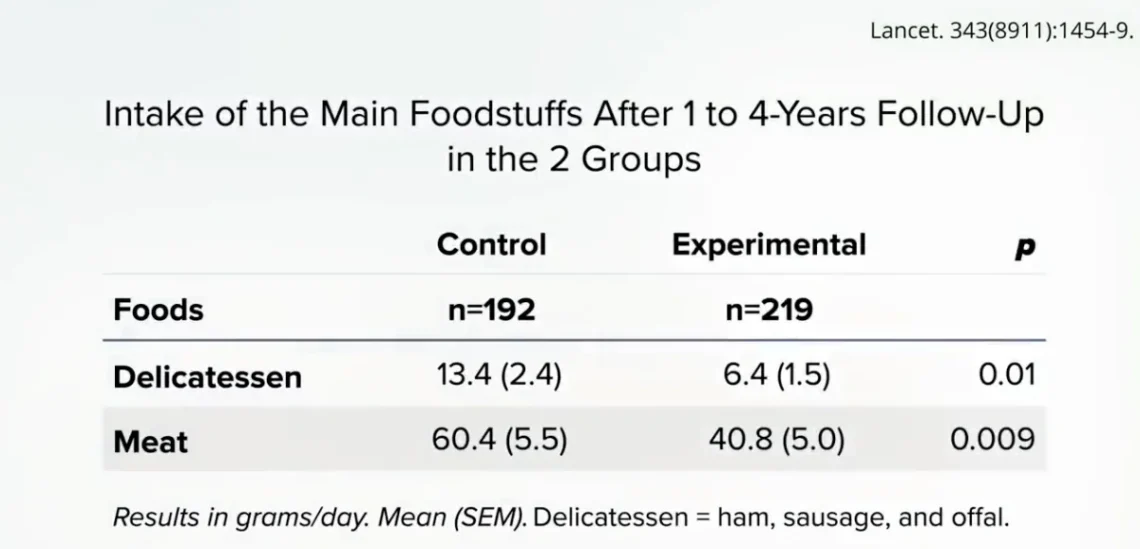
Most egregiously, the panel excluded major studies that showed dramatic health improvements from plant-forward diets. For instance, the Lyon Diet Heart Study—which randomized participants to a Mediterranean-style diet featuring a significant drop in meat consumption—found a staggering 70% reduction in all-cause mortality. The panel dismissed this pivotal trial as reporting an "implausibly large treatment effect"—essentially throwing out the study because it worked too well.
Official Responses and Institutional Conflict
The backlash from the global scientific community was swift and uncompromising. Leading nutrition scientists from Harvard and other prestigious institutions publicly denounced the guidelines as dangerous and misleading.
Dr. Frank Hu, chair of the nutrition department at the Harvard T.H. Chan School of Public Health, estimated that moderately reducing red meat consumption could prevent up to 200,000 deaths each year in the United States alone. To dismiss this impact as trivial, critics argued, is to ignore the profound grief of the families affected by preventable chronic diseases.
Financial transparency inquiries further complicated the panel’s standing. Investigative reporting uncovered structural ties between panel members and Texas A&M AgriLife, an organization heavily backed by agricultural and livestock industry grants. Petitioners pointed out that if a pharmaceutical company funded a trial that dismissed the side effects of a blockbuster drug while discarding contradictory data, it would trigger immediate federal investigations. Yet, nutritional science has historically operated in a regulatory grey area regarding corporate sponsorship.
Implications: The Broader Impact on Public Health
The fallout from the 2019 meat controversy extends far beyond academic journals; it touches the core of how public health information is communicated to the masses.
When contrarian studies are published under the banner of high-profile medical journals, they create widespread consumer confusion. Headlines declaring "Meat is Back on the Menu!" drown out nuanced epidemiological findings, feeding public skepticism toward science. This dynamic mirrors the historical playbook used by the tobacco industry in the mid-20th century. As noted in a landmark 1959 paper on smoking and lung cancer, if the mountain of evidence linking meat consumption to chronic illness "had been made on a new agent, to which hundreds of millions of adults were not already addicted, and on one which did not support a large industry, skilled in the arts of mass persuasion, the evidence for the hazardous nature of the agent would be generally regarded as beyond dispute."
The stakes could not be higher. Chronic conditions like heart disease, cancer, and type 2 diabetes place an astronomical burden on global healthcare systems. Interventions that reduce the risk of these diseases by double-digit percentages—such as replacing small amounts of animal protein with plant-based alternatives—are rare and immensely powerful.
Ultimately, treating public health recommendations as negotiable commodities in service of palate preference or corporate interests undermines the very purpose of nutritional science. As the dust settles on the NutriRECS debate, the medical community is reminded of a timeless truth: ignoring a health hazard does not make it disappear, and the cost of scientific obfuscation is ultimately measured in human lives.