By Investigative Food Desk
Published: October 2023
When consumers think of the American fast-food landscape, two distinct institutions immediately spring to mind: McDonald’s and Five Guys. While both have secured an unshakeable foothold in the hearts—and stomachs—of millions worldwide, they operate at opposite ends of the quick-service spectrum. McDonald’s, the undisputed global titan, is synonymous with rapid efficiency, standardized consistency, and unmatched scale. Five Guys, a rising giant that emerged decades later, champions a slightly higher-end, "better burger" philosophy that commands a premium price point.
Yet, despite their different business models, positioning, and pricing strategies, both chains share a foundational promise: 100% pure beef with no fillers, extenders, or chemical additives. But how do their patties actually stack up when subjected to culinary scrutiny? From the specific cuts of meat and supply chain logistics to preparation methods and flavor profiles, the differences between McDonald’s and Five Guys beef run far deeper than skin—or bun—deep.
1. Main Facts: The Core Differences in Meat, Freshness, and Preparation
At the most fundamental level, a hamburger consists of ground beef cooked on a flat surface. However, the similarities between McDonald’s and Five Guys largely end at this basic definition. A side-by-side comparison reveals stark contrasts in how each corporation sources, processes, and cooks its signature protein.
The Freshness Factor: Frozen vs. Never-Frozen
The most publicized point of divergence between the two chains lies in their freezing processes. Five Guys maintains a strict, unyielding commitment to never-frozen beef. Every patty served across its roughly 2,000 global locations is shaped from fresh meat that has never seen the inside of a commercial freezer.
McDonald’s, by contrast, relies predominantly on frozen patties. The fast-food pioneer freezes the vast majority of its beef at the supplier level, allowing the product to travel through its massive logistics network and reach restaurant kitchens roughly two to three weeks after initial formation. However, McDonald’s introduced a major operational shift in 2018: for its Quarter Pounder line, the chain transitioned to fresh, 100% beef cooked to order in the vast majority of its contiguous U.S. locations. For its standard single and double hamburger patties, however, frozen remains the industry standard.
Cuts and Composition
Both chains pledge allegiance to 100% pure beef, but the anatomical makeup of their patties differs significantly:
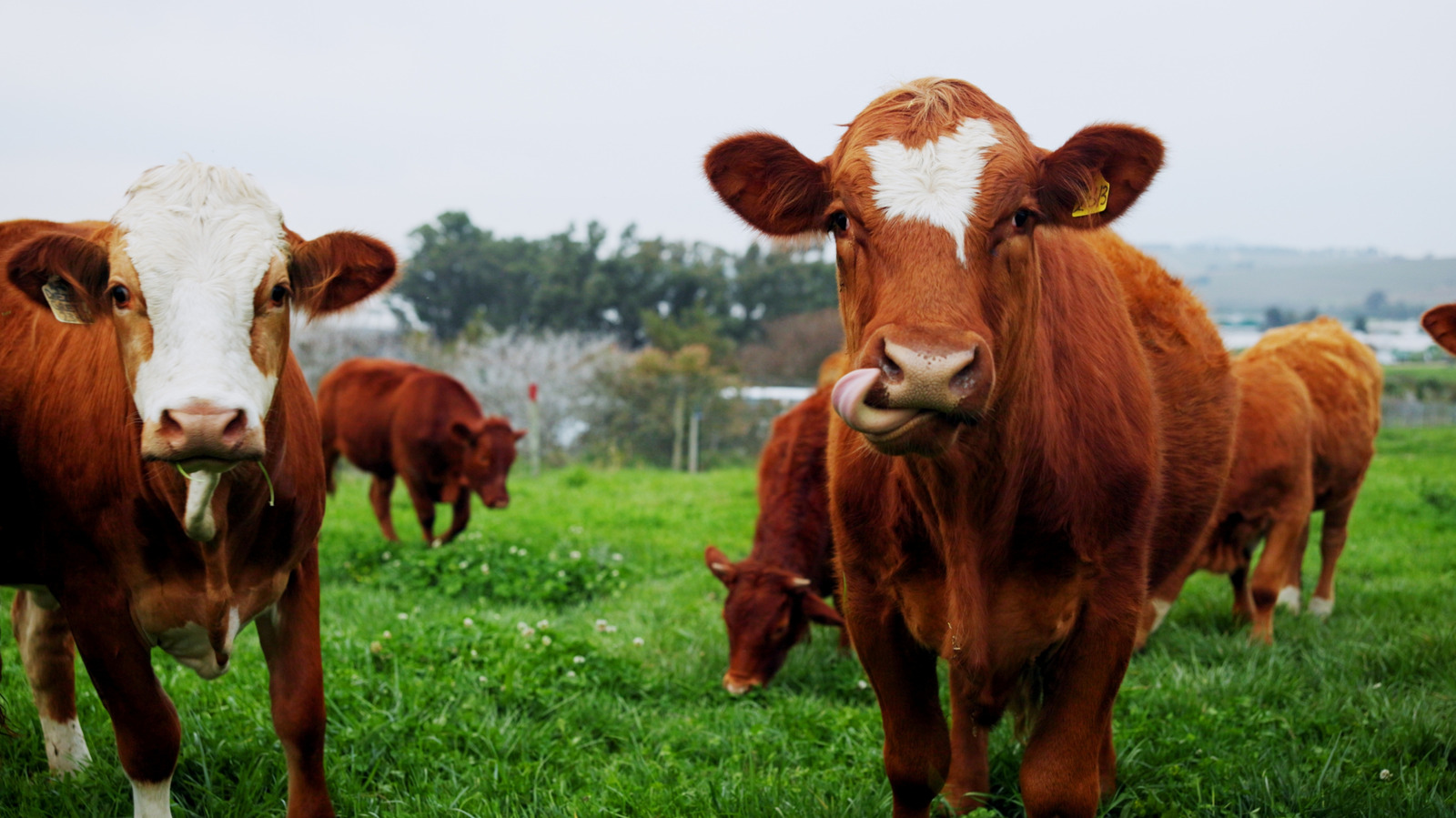
- McDonald’s Blend: The golden arches utilize a proprietary blend of trimmings sourced from three primary primal cuts: the chuck (heavily marbled, high in fat and collagen for juiciness), the sirloin (lean, providing a robust, meaty substance), and the round (the leanest of the three, offering a mild flavor profile). While the ratio of lean meat to fat remains a closely guarded corporate secret, the patties are pre-formed at the supplier level.
- Five Guys Blend: Transparency is a cornerstone of the Five Guys ethos. The chain exclusively uses ground chuck, specifically calibrated to an 80/20 lean-to-fat ratio. This industry-standard composition provides an ideal balance of moisture and beef flavor without becoming overly greasy. Furthermore, Five Guys completely eschews binders, spices, flour, breadcrumbs, and soy sauce, ensuring the patty is strictly unadulterated meat.
Seasoning Philosophies
The divergence continues right up to the flat-top grill. McDonald’s enhances its patties with a direct application of salt and pepper during the cooking process, ensuring that the seasoning penetrates the seared crust of the meat. Five Guys, conversely, takes a minimalist approach, leaving its patties entirely unseasoned on the flat-top, allowing the natural flavor of the 80/20 ground chuck to speak for itself.
2. Chronology: The Evolution of Two Fast-Food Empires
To understand how these two giants arrived at their current beef philosophies, one must trace their distinct historical trajectories across the decades.
The McDonald’s Timeline: Industrializing the American Burger
- 1940s–1950s: Richard and Maurice McDonald open their revolutionary "Speedee Service System" restaurant in San Bernardino, California, in 1940. By streamlining kitchen operations, they reduce hamburger delivery times to seconds. In 1955, franchising agent Ray Kroc joins the enterprise, purchasing the company and transforming it into a global franchising machine.
- 1970s–1980s: As McDonald’s expands internationally, it standardizes its supply chain. To ensure identical taste and texture in Tokyo, London, and Chicago, the company implements centralized processing, relying on frozen, pre-formed beef patties to guarantee safety, shelf-life, and absolute consistency.
- 2018: Responding to shifting consumer demands for fresher, higher-quality ingredients, McDonald’s rolls out fresh beef for its Quarter Pounder lineup across most U.S. restaurants, marking the most significant operational shift in its flagship burger program in decades.
The Five Guys Timeline: From Regional Joint to Global Contender
- 1986: Janie and Jerry Murrell, along with their four sons (the original "Five Guys"), open a modest carry-out burger joint in Arlington, Virginia. Their focus is laser-sharp: hand-formed burgers cooked fresh, paired with fries fried exclusively in peanut oil.
- 2003: Having built a fiercely loyal local following with five locations in the Washington, D.C. area, the Murrell family decides to franchise the concept. The brand experiences explosive, unprecedented growth, scaling from a regional novelty into an international phenomenon boasting roughly 2,000 locations.
- Present Day: Five Guys maintains its foundational commitment to fresh ingredients, refusing to install freezers in the vast majority of its kitchen spaces—only walk-in coolers are utilized to store the fresh ground chuck.
3. Supporting Data: Nutritional and Sourcing Metrics
| Metric | McDonald’s (Standard Beef) | Five Guys (Hamburger Patty) |
|---|---|---|
| Meat Source | 100% USDA-certified beef trimmings (chuck, sirloin, round) | 100% Fresh Ground Chuck (80/20 ratio) |
| Freezing Status | Mostly frozen (Fresh for Quarter Pounder lines) | 100% Never-Frozen |
| Additives/Fillers | None (100% beef) | None (100% beef, no spices or binders) |
| Seasoning | Salt and pepper applied on the grill | Unseasoned on the grill |
| Preparation | Pre-formed at supplier, cooked on flat-top | Hand-formed in-store, cooked well-done on flat-top |
| Price Point | Budget / Value-oriented | Premium / Higher-tier fast-casual |
4. Official Corporate Stances and Industry Responses
Both corporations have leaned heavily into their respective manufacturing and sourcing decisions through official communications, marketing campaigns, and consumer transparency initiatives.
McDonald’s: Consistency Through Innovation
McDonald’s has consistently defended its supply chain and freezing processes, noting that modern flash-freezing technology locks in flavor and juices immediately after the meat is ground and formed. In response to consumer skepticism regarding frozen beef, McDonald’s launched targeted marketing campaigns highlighting that its Quarter Pounder patties are cooked fresh to order from refrigerated, never-frozen beef.
Corporate communications consistently emphasize food safety, rigorous quality controls, and the traceability of their USDA-inspected beef. Executives have argued that while fresh beef offers a distinct mouthfeel, frozen patties remain the most effective vehicle for maintaining identical flavor profiles across tens of thousands of autonomous franchise locations globally.
Five Guys: The Radical Transparency of Freshness
Five Guys takes a radically different promotional route, often relying on word-of-mouth and the sheer visibility of its operations. Many Five Guys locations feature open kitchens and transparent storage areas where customers can visibly confirm the absence of industrial freezers. Bags of potatoes sit openly in the dining rooms, and signs proudly proclaim that the restaurants do not possess freezers—only coolers.
In corporate statements, Five Guys executives stress that their higher price point is a direct reflection of ingredient integrity. By refusing to use frozen product, absorbing higher logistics and storage costs, and hand-forming patties daily, the company positions itself not merely as a fast-food joint, but as a leader in the fast-casual "better burger" movement.
5. Implications: What This Means for the Consumer and the Industry
The philosophical divide between McDonald’s and Five Guys beef carries significant implications for both consumer choice and the broader quick-service restaurant industry.
The Price-to-Quality Equation
For the everyday consumer, the choice between McDonald’s and Five Guys ultimately boils down to a calculation of value versus experience. McDonald’s offers hyper-convenience and affordability. Its seasoned, frozen-to-grill patties provide a nostalgic, reliable flavor profile that can be acquired rapidly and cheaply.
Five Guys, conversely, demands a higher financial investment—frequently charging upwards of $10 for a single burger. In exchange, the consumer receives a thicker, unseasoned, never-frozen ground chuck patty that delivers a meatier, juicier, and more customizable culinary experience. Food critics and consumer reviews generally acknowledge that Five Guys delivers a superior baseline of meat quality, yet McDonald’s continues to win praise for its remarkable consistency and operational efficiency.
Industry-Wide Trends
The strategies deployed by these two giants reflect a broader schism in the modern American food economy. As consumers become increasingly health-conscious and discerning about food provenance, legacy fast-food giants are under mounting pressure to upgrade their ingredients. McDonald’s successful integration of fresh beef for its Quarter Pounder line serves as proof that even the most deeply entrenched industrial operators must adapt to the "fresh is best" ethos popularized by fast-casual competitors like Five Guys.
Ultimately, whether one prefers the seasoned, savory efficiency of a McDonald’s double cheeseburger or the hefty, unadulterated richness of a hand-pattied Five Guys classic, the enduring rivalry between these two titans ensures that the American hamburger remains as dynamic, contested, and culturally significant as ever.