Introduction and Main Facts
For generations, modern Western plumbing has relied on a uniform design: the standard sitting toilet. While this apparatus offers undeniable comfort and prevents accidental waste elimination during everyday activities, a growing body of medical and ergonomic research suggests it fundamentally conflicts with human physiology.
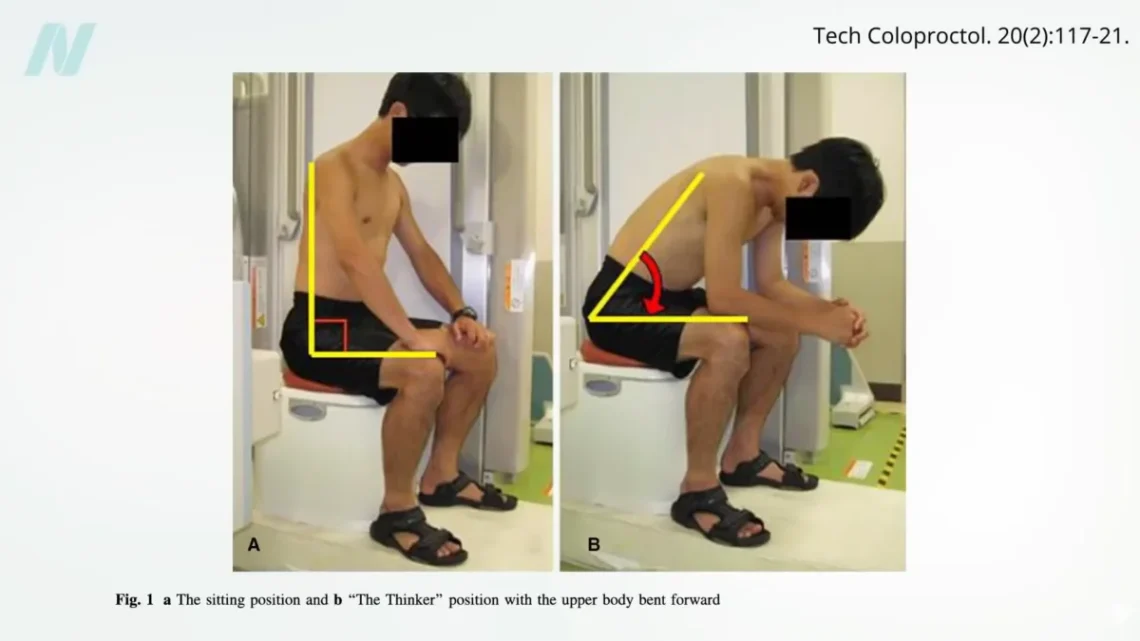
When humans sit upright on a standard toilet seat, the puborectalis muscle—a sling-like muscle that forms a crucial part of the pelvic floor—remains partially contracted. This creates a sharp, roughly 90-degree bend known as the anorectal angle. While this acute angle acts as a natural continence mechanism to keep us from soiling ourselves throughout the day, it also effectively kinks the colon.
In contrast, the traditional squatting posture, which remains standard across much of Africa and Asia, relaxes the puborectalis muscle entirely, straightening the anorectal canal and aligning the intestinal tract for optimal, unhindered evacuation.
To bridge this anatomical gap, devices like the Squatty Potty have entered the mainstream consumer market, promising to mimic a natural squat by elevating the user’s knees. Recent clinical studies indicate that these devices do indeed offer benefits, such as reducing the time spent straining and increasing subjective feelings of bowel emptiness. However, other anatomical solutions, such as "The Thinker" leaning posture and fundamental dietary interventions like high-fiber intake, challenge the narrative that expensive bathroom accessories are the only path to digestive health.
Chronology of the Toilet Posture Debate
The Historical and Evolutionary Baseline
For the vast majority of human history, squatting was the universal, undisputed posture for elimination. Anthropological and medical observations noted that populations utilizing traditional squatting latrines rarely suffered from the chronic constipation, hemorrhoids, diverticular disease, and appendicitis that plague Western industrialized societies.
The Introduction of Modern Plumbing
The late 19th and 20th centuries saw the widespread adoption of the flush toilet, elevating humans from floor-level squatting pits to raised porcelain thrones. While hailed as a triumph of public sanitation that drastically reduced the spread of waterborne diseases, this architectural shift introduced a novel biomechanical challenge: the upright sitting position.
Early Medical Inquiries and Skepticism
For decades, mainstream medical professionals largely ignored the physiological implications of toilet posture. Physicians rarely questioned the mechanics of defecation, viewing it as a taboo or trivial topic. Early ergonomic footstools designed to lift the knees by a modest four inches were evaluated in clinical settings but initially failed to show statistically significant improvements in self-reported difficulty or total bowel-emptying time.
The Rise of Modern Devices and Clinical Validation
In recent years, researchers began taking a closer look at taller defecation posture modification devices (DPMDs)—specifically, six-inch risers like the Squatty Potty. Clinical trials implemented these devices and found measurable benefits, including reduced straining and shorter bathroom visits. Concurrently, specialized imaging techniques like cinedefecography allowed researchers at institutions like the Cleveland Clinic to map the exact internal mechanics of alternative postures, ushering in a data-driven era for bathroom ergonomics.
Supporting Data and Clinical Evidence
The physiological debate surrounding bowel movements is heavily supported by imaging studies, ergonomic trials, and epidemiological data.
The Anorectal Angle and Imaging Studies
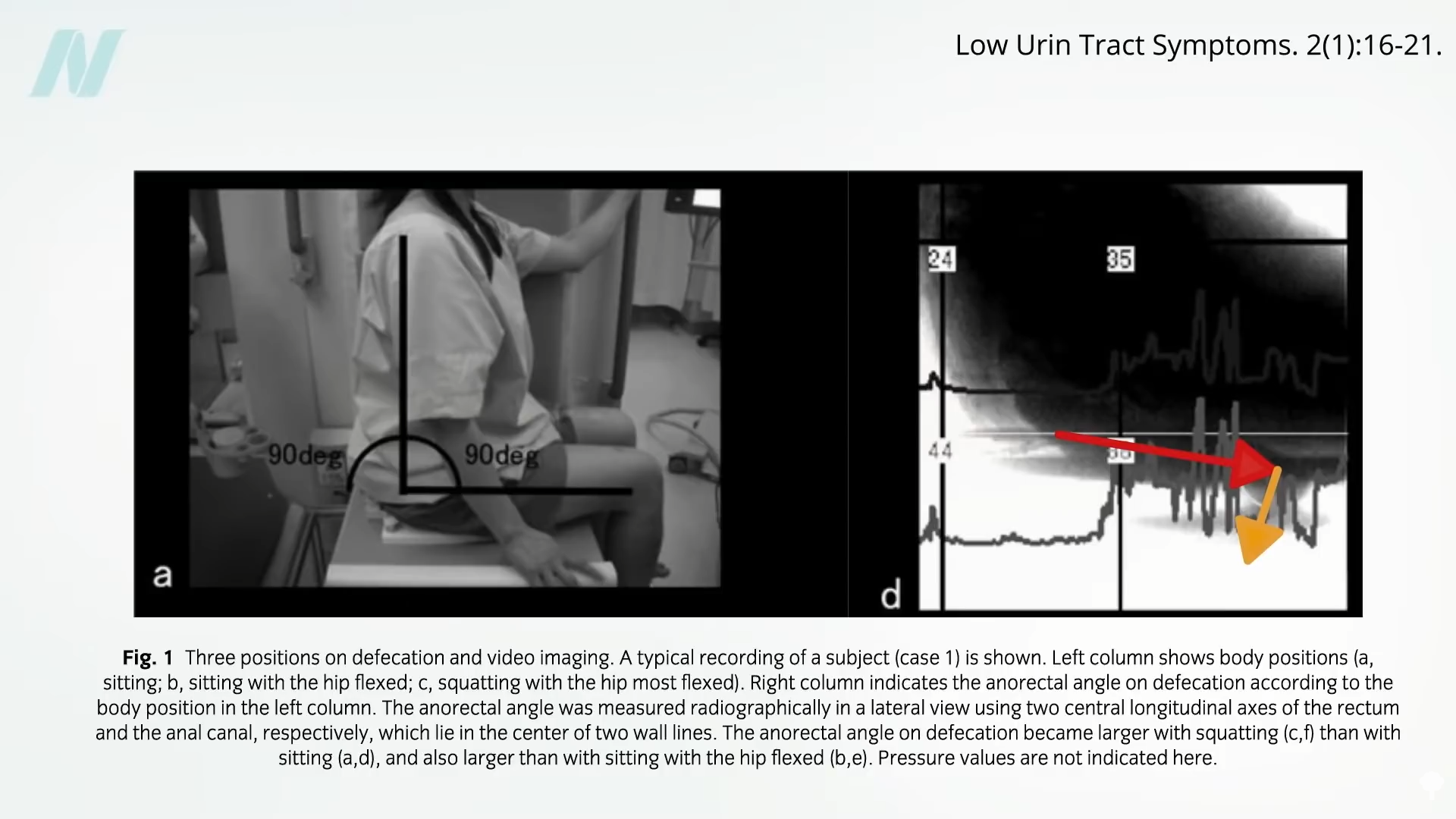
Using cinedefecography—an X-ray imaging technique that captures real-time bowel movements (colloquially described as an "X-ray poop movie")—researchers have quantified how posture alters the anatomy.
- The Sitting Position: The standard upright posture maintains an anorectal angle of approximately 90 degrees, forcing the body to exert significantly more abdominal pressure to push waste around a sharp corner.
- The Squatting Position / Footstools: Utilizing a six-inch footstool opens up the anorectal angle, though it can sometimes introduce physical discomfort for unaccustomed users.
- "The Thinker" Position: Cleveland Clinic researchers analyzed a leaning forward posture—reminiscent of Auguste Rodin’s famous sculpture The Thinker—and discovered that leaning the torso forward while seated opens the anorectal angle to more than 130 degrees. This exceeds the mechanical straightening achieved by merely elevating the feet on a standard low stool, presenting an efficient, zero-cost alternative.
The DPMD Trial Results
When researchers formally tested the six-inch footstool (DPMD), participants reported:
- Increased subjective feelings of complete bowel evacuation.
- A notable reduction in the amount of physical straining required.
- Approximately one minute less time spent reading or sitting idly on the toilet per session.
The Cardiovascular Risks of Straining
The data also highlights severe risks associated with difficult bowel movements. Straining induces a sharp spike in blood pressure within the heart and brain. Epidemiological data indicates that straining during elimination is frequently associated with sudden cardiac events and strokes. In nations like Japan, straining on the toilet is recorded as one of the most common daily activities occurring at the exact time of fatal cardiovascular events—a risk disproportionately borne by bedridden patients forced to use flat bedpans. Elevating patients into an upright or semi-sitting position helps mitigate this severe systemic strain.
Official Responses and Medical Perspectives
The medical community’s response to the posture debate spans skepticism, ergonomic endorsement, and a call for dietary fundamentalism.
The Doctor’s Hesitancy
Historically, physicians have been hesitant to discuss elimination posture, dismissing it as an uncomfortable or unmentionable bodily function. Critics in the medical field have occasionally noted that "doctors don’t know squat" about the biomechanics of the lower GI tract, leaving patients to navigate chronic digestive issues through over-the-counter laxatives rather than postural education.
The Ergonomic Advocacy
Proponents of DPMDs argue that re-engineering the modern bathroom is a vital, non-invasive intervention for pelvic floor disorders. By reducing the physical effort required to pass stool, these devices aim to lower the incidence of hemorrhoids and chronic straining injuries.
The Dietary Counter-Perspective: A Fifty-Year-Old Warning
Despite the enthusiasm for specialized bathroom hardware, some medical historians and gastroenterologists urge a return to a more foundational debate, echoing concerns raised in medical literature nearly 50 years ago.
Critics point out that populations using traditional squatting positions historically consumed diets rich in unrefined, natural, high-fiber foods. When researchers examine whether posture truly makes a difference independent of diet, a critical question emerges: Does posture matter if you are eating the right foods?
Medical consensus increasingly points out that individuals who squat due to a lack of modern plumbing also tend to consume diets heavy in natural, unprocessed fiber. Adding adequate fiber to a constipated patient’s diet can often enable effortless elimination, rendering specialized plumbing modifications secondary. In essence, changing the design of our diets may alleviate the need to fundamentally redesign our plumbing.
Implications for Public Health and Daily Life
The intersection of posture, diet, and modern plumbing carries significant implications for public health, lifestyle, and consumer habits.
A Multi-Pronged Approach to Digestive Wellness
Solving the Western world’s chronic constipation crisis requires looking beyond a single gadget or quick fix. While tools like the Squatty Potty and posture adaptations like "The Thinker" lean offer immediate biomechanical advantages—widening the anorectal angle past 130 degrees and reducing strain on the cardiovascular system—they represent only one piece of the puzzle.
The Paramount Importance of Nutrition
Public health messaging must continue to emphasize dietary fundamentals. Increasing daily consumption of natural, high-fiber foods—such as vegetables, whole grains, beans, dried figs, and prunes—remains the most robust defense against constipation. When the stool is bulky, soft, and well-formed, the body’s transit time decreases, minimizing the need for excessive mechanical straining regardless of whether one is sitting on a porcelain throne or squatting in a field.
Shifting Cultural Norms
Finally, breaking the cultural taboo surrounding discussions of bowel health is crucial. As medical professionals become more vocal about pelvic floor mechanics, and as consumers embrace evidence-based ergonomic adjustments, public health outcomes surrounding colorectal health, cardiovascular safety during elimination, and overall quality of life stand to improve significantly.