Long before the life-saving discovery of insulin transformed modern endocrinology, physicians fought the rising tide of diabetes with an unlikely weapon: a bowl of plain porridge. Today, modern nutritional science and a renewed focus on the gut microbiome are validating what early 20th-century clinicians called "magic." Recent clinical trials reveal that a short-term oatmeal intervention can drastically reduce insulin dependence and dramatically improve blood sugar control for weeks after patients return to their regular diets.
As researchers dive deeper into the mechanics of whole grains, dietary fiber, and gut flora, the humble oat is staging a major medical comeback.
Main Facts: The Power of the Porridge Protocol
At its core, the modern rediscovery of the oatmeal diet centers on the profound metabolic impact of whole grains, specifically the unique fermentable fiber known as beta-glucan.
More than a dozen randomized controlled trials have demonstrated that oats significantly improve both short-term and long-term blood sugar regulation while simultaneously lowering LDL cholesterol levels. Unlike refined carbohydrates that cause rapid glycemic spikes, intact whole grains process slowly through the digestive tract.
The mechanism behind this metabolic stability lies heavily in the gut. The beta-glucan found in oats acts as a powerful prebiotic, selectively fueling beneficial gut bacteria such as Lactobacillus and Bifidobacteria. When these microbes consume prebiotic fiber, they produce short-chain fatty acids (SCFAs)—compounds clinically proven to exert powerful anti-inflammatory effects and enhance systemic insulin sensitivity.
Furthermore, historical observations paired with modern nutritional biochemistry highlight a critical caveat: early clinicians realized that animal protein strictly had to be excluded during oatmeal interventions, as animal protein and fat tend to intensify insulin resistance. By contrast, a plant-based matrix rich in oats, beans, fruits, vegetables, and nuts actively repairs metabolic pathways, dropping fasting blood sugar levels by approximately 25% within a single month.

Chronology: From 1903 Skepticism to Microbiome Science
To understand how a carbohydrate-rich food like oatmeal became a historical and modern treatment for a disease characterized by carbohydrate intolerance, we must trace a century of medical observation.
- 1903: German physician Carl von Noorden published his findings on the "oatmeal cure," detailing how a strict diet of oatmeal, butter (which was later eliminated as understanding evolved), and plant-based elements could successfully manage severe cases of diabetes. The medical community initially met his claims with deep skepticism.
- 1909: Acclaimed Chicago physician James B. Herrick decided to test Von Noorden’s protocol on his own patients. Overcoming his initial doubts, Herrick became astonished by the clinical results, prompting him to publicly proclaim that no case of juvenile or adolescent diabetes should be denied the benefits of the oatmeal cure.
- Early Mid-20th Century: Dr. Elliott Joslin, founder of what would become the world’s oldest and largest diabetes clinic, described the therapeutic effects of oatmeal as "sometimes magical." Yet, lacking modern biochemical tools, he famously referred to the protocol as an unsolved mystery and "one of the greatest puzzles in diabetes."
- The Late 20th and Early 21st Centuries: Nutritional epidemiologists established clear links between high whole-grain consumption and a drastically reduced risk of developing type 2 diabetes.
- Present Day: Modern randomized controlled trials evaluate the gut microbiome, proving that oat-derived beta-glucans and short-chain fatty acids actively repair the cellular mechanisms underlying insulin resistance.
Supporting Data: Clinical Trials and Lasting Results
Recent clinical investigations have put historical observations to the rigorous test of modern statistics.
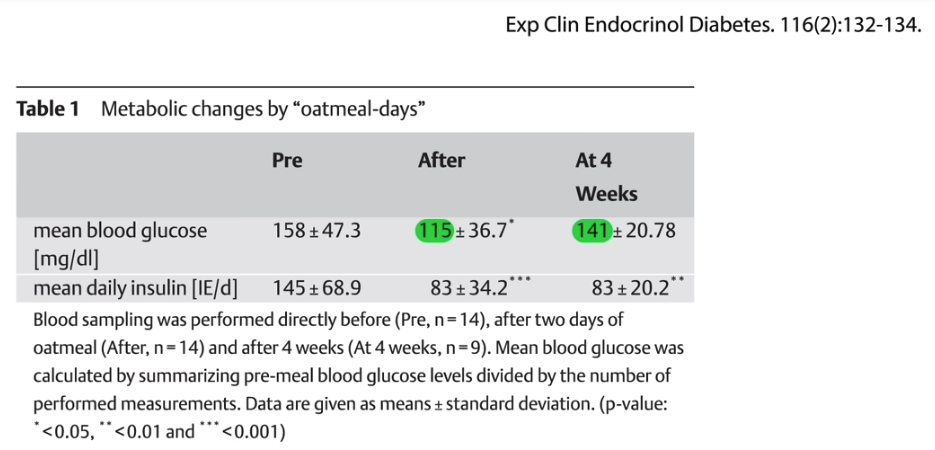
In randomized, controlled crossover trials, researchers evaluated the immediate and prolonged impacts of a strict two-day oatmeal intervention on patients struggling with uncontrolled type 2 diabetes. The findings were striking: participants experienced a 40% reduction in daily insulin requirements over just 48 hours compared to conventional hypocaloric diabetic diets alone.
Even more remarkably, the clinical benefits did not vanish when the oatmeal days ended. When researchers evaluated the patients weeks later—after they had returned to their standard diets—they observed a lasting, significant reduction in required insulin dosages alongside a nearly normalized mean blood sugar level.
Additional data maps out the mechanism: when populations adopt fiber-rich diets packed with oats, beans, and nuts, the population of SCFA-producing gut bacteria surges. The greater the diversity and abundance of these fiber-metabolizing microbes, the more pronounced the improvement in hemoglobin A1c (HbA1c) levels, the gold standard for measuring long-term blood sugar management.
Choosing the Right Oat: Understanding the Glycemic Index
Not all oats are created equal. While all whole grains offer health benefits, the physical structure of the grain heavily influences how quickly it breaks down into glucose in the bloodstream.
- Oat Groats (The Wholiest Grain): Oat groats are whole oat kernels that have had only their inedible outer husks removed. They retain maximum structural integrity and require significant digestive effort, resulting in a very low glycemic impact.
- Steel-Cut (Pinhead or Irish) Oats: Created by slicing oat groats into two or three pieces, these maintain a dense structure and boast a low glycemic index averaging under 55.
- Rolled (Old-Fashioned) Oats: Steamed and flattened oat groats, rolled oats maintain a glycemic index right around 55, making them a steady energy source.
- Instant Oats: Steamed longer and rolled exceptionally thin for rapid preparation, instant oats score around 79 on the glycemic index, placing them in the high-glycemic category—though still preferable to highly processed sugary breakfast cereals.
Official Responses and Medical Implications
While the data supporting oat-based interventions is robust, the medical community emphasizes a crucial warning regarding implementation.
Because a targeted, high-fiber oatmeal intervention can dramatically improve insulin sensitivity in a matter of days, it can easily lead to overmedication if pharmaceuticals are not adjusted concurrently. Physicians and endocrinologists stress that patients attempting intensive therapeutic oatmeal days must do so under close clinical supervision. Healthcare providers must be prepared to rapidly deprescribe blood sugar-lowering medications and insulin to prevent dangerous episodes of hypoglycemia (low blood sugar). Furthermore, these intensive dietary shifts are contraindicated for patients who struggle to reliably recognize or report symptoms of low blood sugar.
From a broader public health perspective, these findings underscore a massive shift in how chronic metabolic diseases are managed. Rather than relying solely on pharmacological suppression of symptoms, modern nutritional therapy increasingly targets the root causes of metabolic syndrome: chronic systemic inflammation and gut dysbiosis.
By weaponizing prebiotic fibers like beta-glucan and eliminating the inflammatory cascades triggered by heavy animal protein and fat intake, modern medicine is coming full circle. The wisdom of 1903, backed by the genomic and microbiome tools of the 21st century, proves that sometimes the most powerful medicine is already sitting quietly in the pantry.