GLOBAL — For years, the modern globetrotter has lived with a persistent, low-grade logistical headache: the airport SIM card scramble. Whether hunting for a sketchy kiosk upon landing in a new country, desperately scanning QR codes over unstable airport Wi-Fi, or dealing with jaw-dropping roaming charges from traditional home carriers, staying connected while crossing international borders has historically been a fragmented, stressful chore.
Now, a major shift in the travel-tech landscape is aiming to eliminate those friction points entirely.
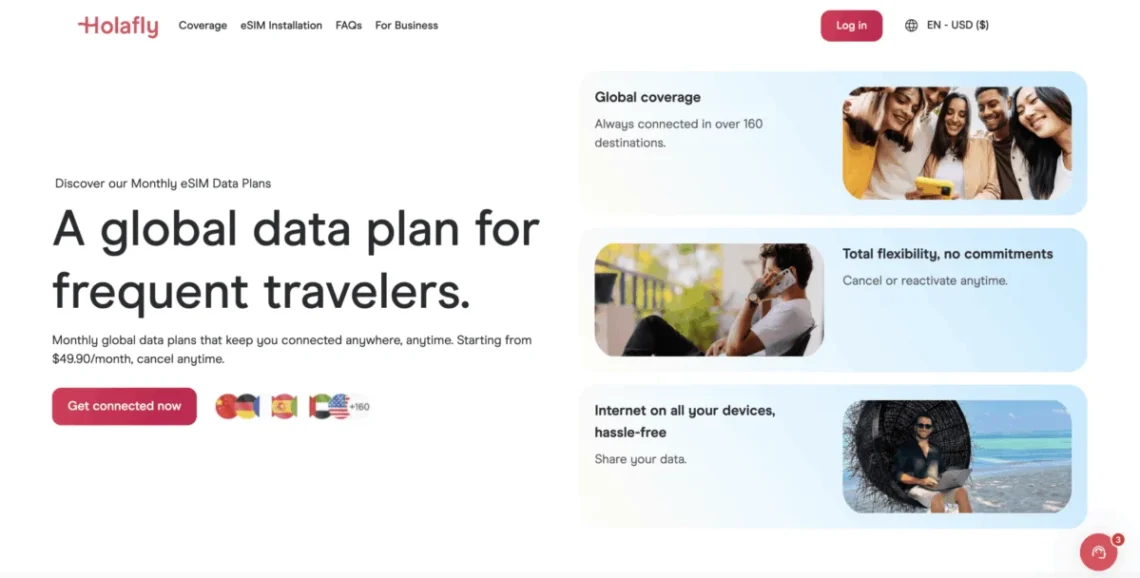
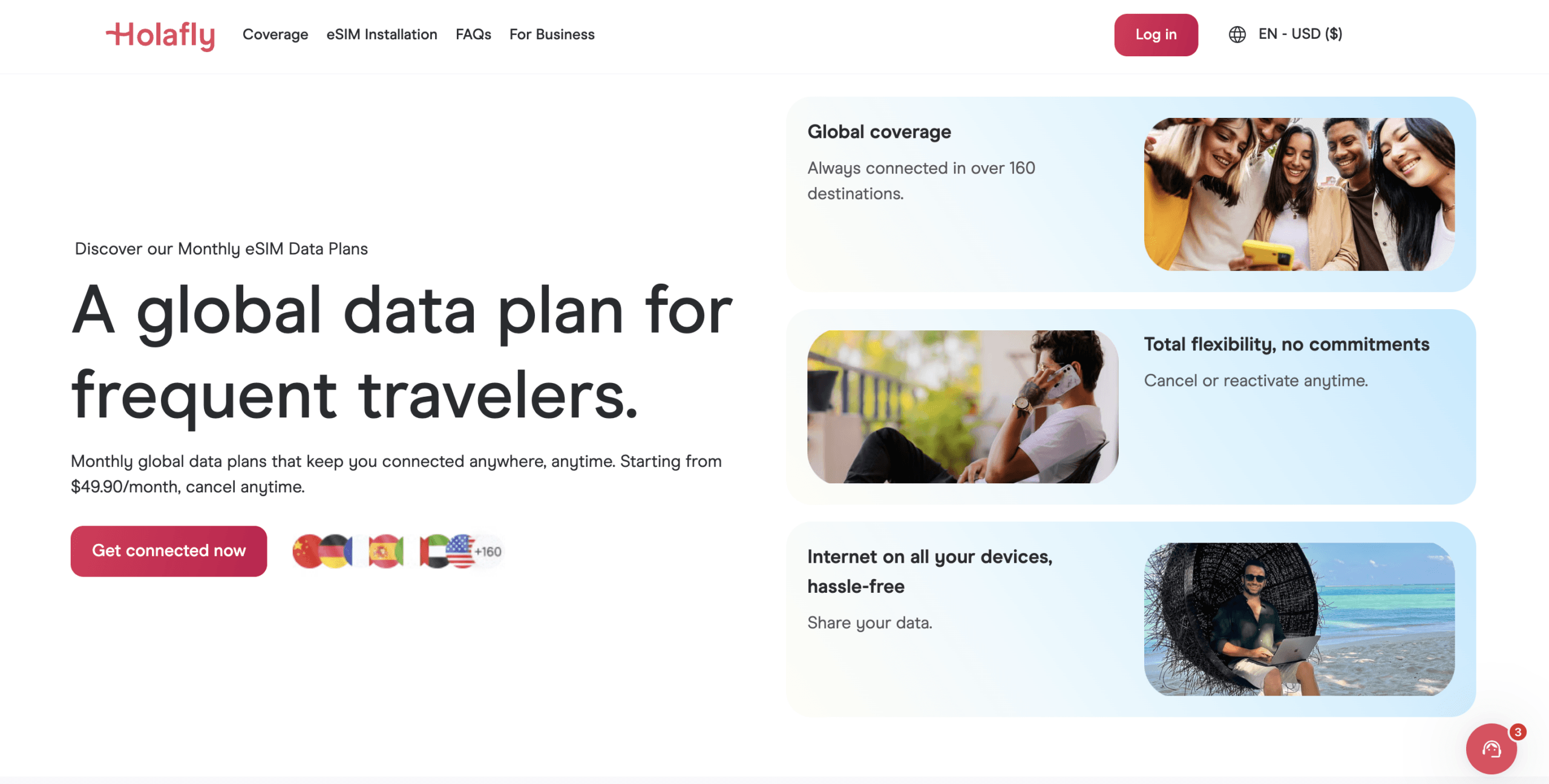
Holafly, a prominent player in the digital SIM card (eSIM) sector, has officially launched Holafly Plans—an ongoing, subscription-based global eSIM product designed to function seamlessly across more than 160 destinations. Rather than purchasing a piecemeal, destination-specific data package for every single stamp in your passport, users can now buy a single digital profile that travels with them indefinitely.
For the rapidly expanding global workforce of digital nomads, perpetual travelers, and frequent flyers, the product signals a potential turning point in how international mobile data is consumed, priced, and managed.
Main Facts: What Are Holafly Plans?
At its core, an eSIM is a digital SIM card built directly into the hardware of modern smartphones. There is no physical plastic card to swap or lose; instead, users activate profiles digitally via apps or QR codes. While standard eSIMs have democratized short-term travel connectivity, they still require users to purchase a new plan every time their itinerary shifts.

Holafly Plans fundamentally alters this dynamic by introducing a standing, multi-destination subscription model. Key facts surrounding the rollout include:
- Global Footprint: A single installation covers over 160 countries worldwide.
- Subscription Tiers: Available in two distinct categories—Light and Unlimited—offering monthly, quarterly, or annual payment options.
- The Unlimited Option: Features uncapped data, an unlimited mobile hotspot for tethering laptops and other devices, and a localized phone number from the United States, United Kingdom, or Canada capable of receiving SMS messages.
- The Light Option: Provides 25GB of high-speed data per month, alongside hotspot capabilities and the same 160+ destination coverage.
- Always-On Feature: Both plans include an automatic lifetime backup feature granting 1GB of emergency data per month, which persists even if the main subscription is ultimately canceled.
- Pricing Structure: Rates vary by region and billing cycle, but long-term commitments yield discounts (e.g., quarterly plans save roughly 10%, while annual plans drop costs by about 15%). The unlimited tier prices out at roughly $55 USD per month on an annual commitment.
Chronology: The Evolution from Single-Trip eSIMs to Global Subscriptions
The journey toward frictionless global telecommunications has evolved rapidly over the past decade, moving away from traditional carrier monopolies toward flexible, software-driven solutions.
- Early 2010s (The Physical Era): Travelers relied heavily on localized physical SIM cards. Landing in a new country meant queuing at airport kiosks, swapping tiny plastic chips with paper-clip tools, and risking the loss of one’s domestic SIM.
- Late 2010s to Early 2020s (The Rise of Standard eSIMs): Apple and other major smartphone manufacturers began integrating eSIM technology into device hardware. Companies like Holafly emerged to capitalize on this shift, offering regional and country-specific digital data packages that could be purchased online prior to departure. While vastly superior to physical swapping, travelers hopping across multiple borders in a single month still had to manage multiple distinct digital profiles.
- Mid-2020s (The Subscription Pivot): Recognizing the pain points of multi-destination itineraries—particularly for the surging digital nomad demographic—travel tech companies began conceptualizing unified, borderless solutions.
- The Launch of Holafly Plans: Holafly officially introduced its standing subscription service to bridge the gap between traditional telecom giants (like T-Mobile or Vodafone) and short-term travel eSIMs, offering a permanent digital infrastructure for mobile workers.
Supporting Data: Comparing the Marketplace
To understand why Holafly Plans are generating significant buzz within the travel community, one must examine how the economics and logistics stack up against traditional roaming alternatives.
Traditional major U.S. carriers, for example, typically charge upwards of $10 per day for international roaming passes, which routinely translate to monthly bills between $100 and $300, often accompanied by strict speed throttling after a baseline data limit is reached.
| Feature / Cost | Holafly Plans (Unlimited Tier) | US Major Carrier Roaming Pass | Traditional Local SIMs / Single eSIMs |
|---|---|---|---|
| Monthly Cost | ~$55 – $65 / month (depending on billing cycle) | $100 – $300 / month ($10/day add-ons) | $60 – $120 / month (varies widely by region) |
| Data Allowance | Strictly Unlimited | Capped at high speeds, then severely throttled | Varies (typically bundled in 5GB–10GB packages) |
| Hassle Factor | Zero. Installed once; auto-connects across 160+ countries. | Low, but financially punishing. | High. Requires constant re-purchasing, new QR codes, and risks border blackouts. |
| Hotspotting | Fully included for multiple devices | Frequently restricted, metered, or throttled | Varies heavily by local carrier terms |
Furthermore, financial savings scale with commitment length. Quarterly subscriptions shave approximately 10% off the standard rate, while annual commitments reduce overall expenses by 15%, undercutting standard domestic mobile carrier international fees by half or more.
Official Responses and Industry Context
Industry analysts note that telecommunications companies have historically relied on exorbitant international roaming fees as high-margin revenue streams. The rise of independent eSIM providers has steadily chipped away at those margins, forcing a reactive posture from legacy providers.
While official statements from legacy carriers continue to emphasize the "convenience" of keeping a home-number roaming pass active, consumer advocacy groups and frequent travel advocates have pointed out the prohibitive cost barriers for remote workers who spend months outside their home countries.
Holafly’s positioning with its new plans leans heavily into this market gap. By bundling unlimited hotspot capabilities—a feature historically restricted or heavily charged by traditional providers—the company is deliberately targeting remote professionals who require robust, multi-device connectivity on the go. Additionally, the inclusion of a 6-month refund policy represents an unusually generous consumer protection window within the digital eSIM market, signaling strong corporate confidence in the product’s reliability.
Implications: Who Benefits and What’s Next?
The introduction of unified, ongoing global eSIM subscriptions carries broad implications for various classes of travelers, remote workers, and the telecom industry at large.
1. The Digital Nomad Economy
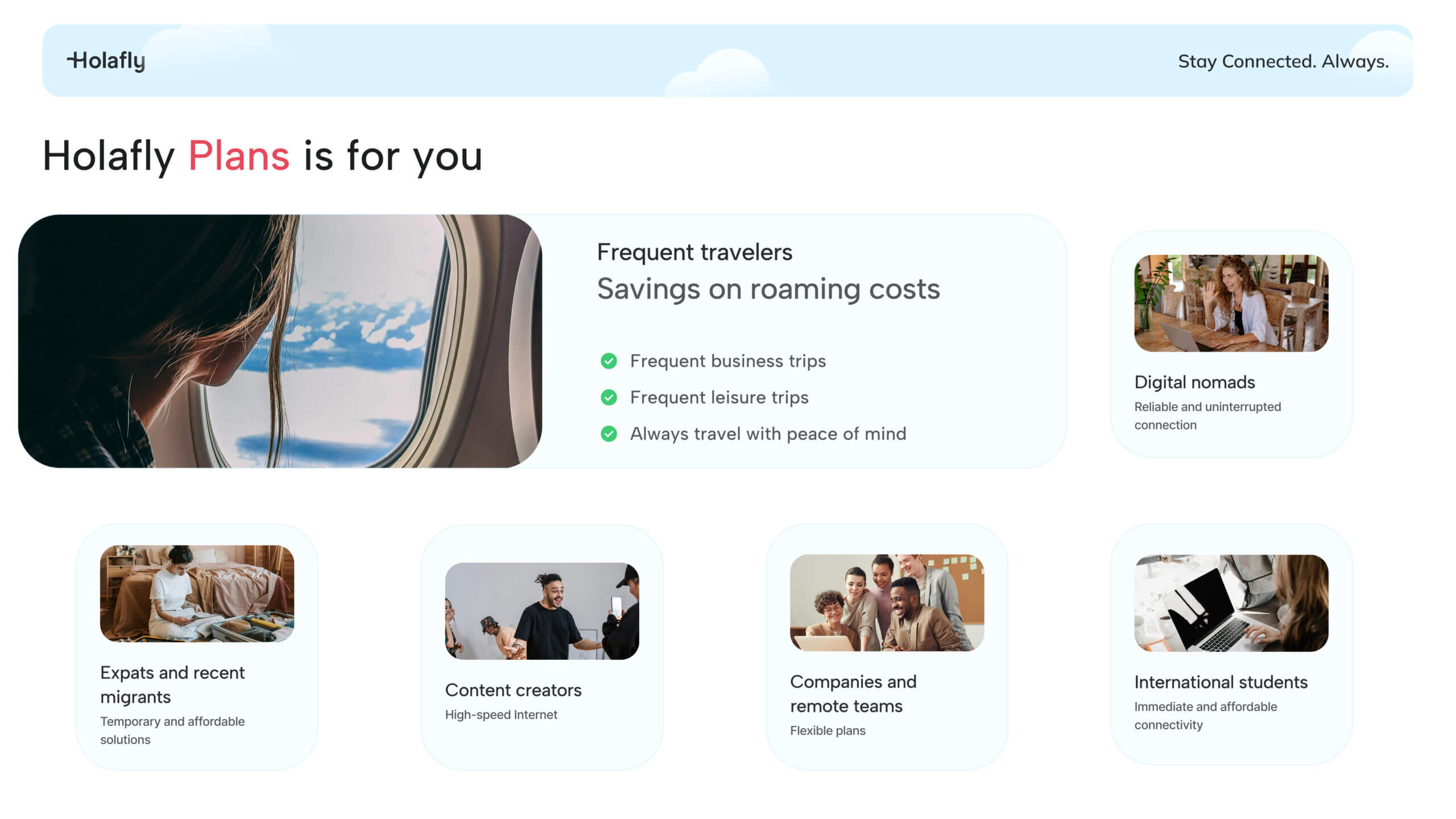
For digital nomads, software engineers, and freelance writers constantly moving between Southeast Asia, Europe, and Latin America, the implications are profound. Eliminating the administrative overhead of managing connectivity means fewer dropped work calls, smoother transitions during border crossings, and predictable monthly overhead.
2. The Casual Vacationer vs. The Globetrotter
Industry experts emphasize that Holafly Plans are not designed for everyone. For a standard two-week family vacation to a single country (e.g., a fortnight in Portugal), traditional single-destination eSIMs remain the simpler, more economical choice. Holafly Plans are purpose-built for high-frequency, multi-destination travel patterns where the administrative burden of constant re-subscribing outweighs a simple one-off purchase.
3. Future Outlook for Telecom
As hardware manufacturers continue to phase out physical SIM trays entirely—a trend spearheaded by Apple’s removal of physical SIM slots in U.S. iPhone models—the demand for flexible, software-first global connectivity will only accelerate. Products like Holafly Plans foreshadow a future where mobile numbers and data carriers are entirely decoupled from physical geography, giving rise to truly borderless digital citizens.