By Aleks Zecevic | September 17, 2026
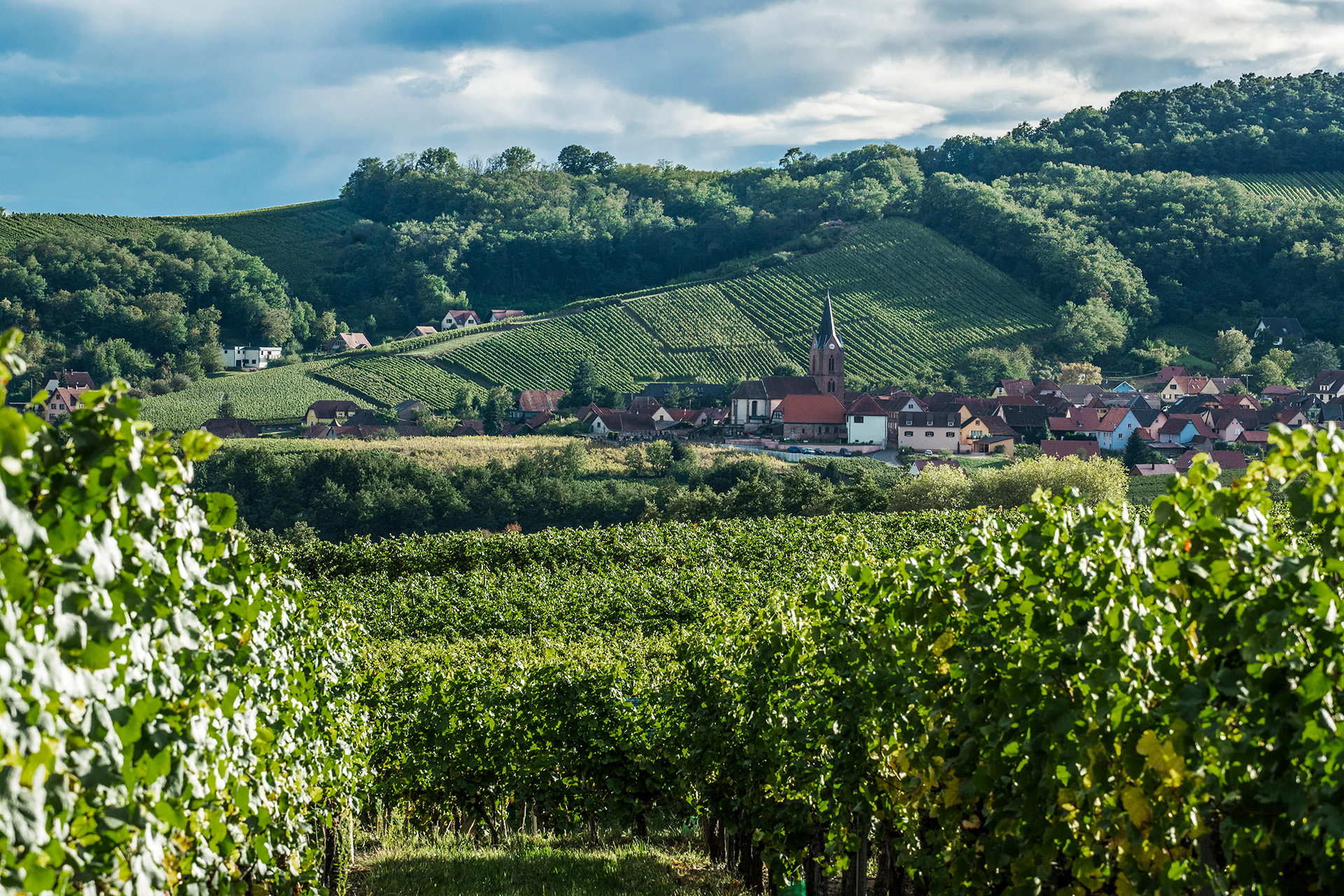
For decades, the mention of Alsace conjured a singular image: tall, slender bottles filled with aromatic, high-acid white wines. Nestled between the Vosges Mountains and the Rhine River, the region has long been perceived as a French outlier—a terroir that speaks with the precision of Germany but dances with the elegance of France. For most of the 20th century, Alsace was defined by its Riesling, Gewürztraminer, and Pinot Gris. Red wine was, at best, a peripheral sidebar.
However, a profound, under-the-radar shift has occurred. Without the massive marketing machinery of Burgundy or the trendy, global spotlight currently shining on German Spätburgunder, Pinot Noir in Alsace has quietly evolved from an afterthought into a serious, world-class category. Today, the best Alsatian Pinot Noirs are no longer merely "interesting"; they are formidable wines that challenge the status quo, offering a level of complexity and site-expression that often makes them the greatest value proposition in the world of fine wine.
The Main Facts: A Paradigm Shift in the Glass
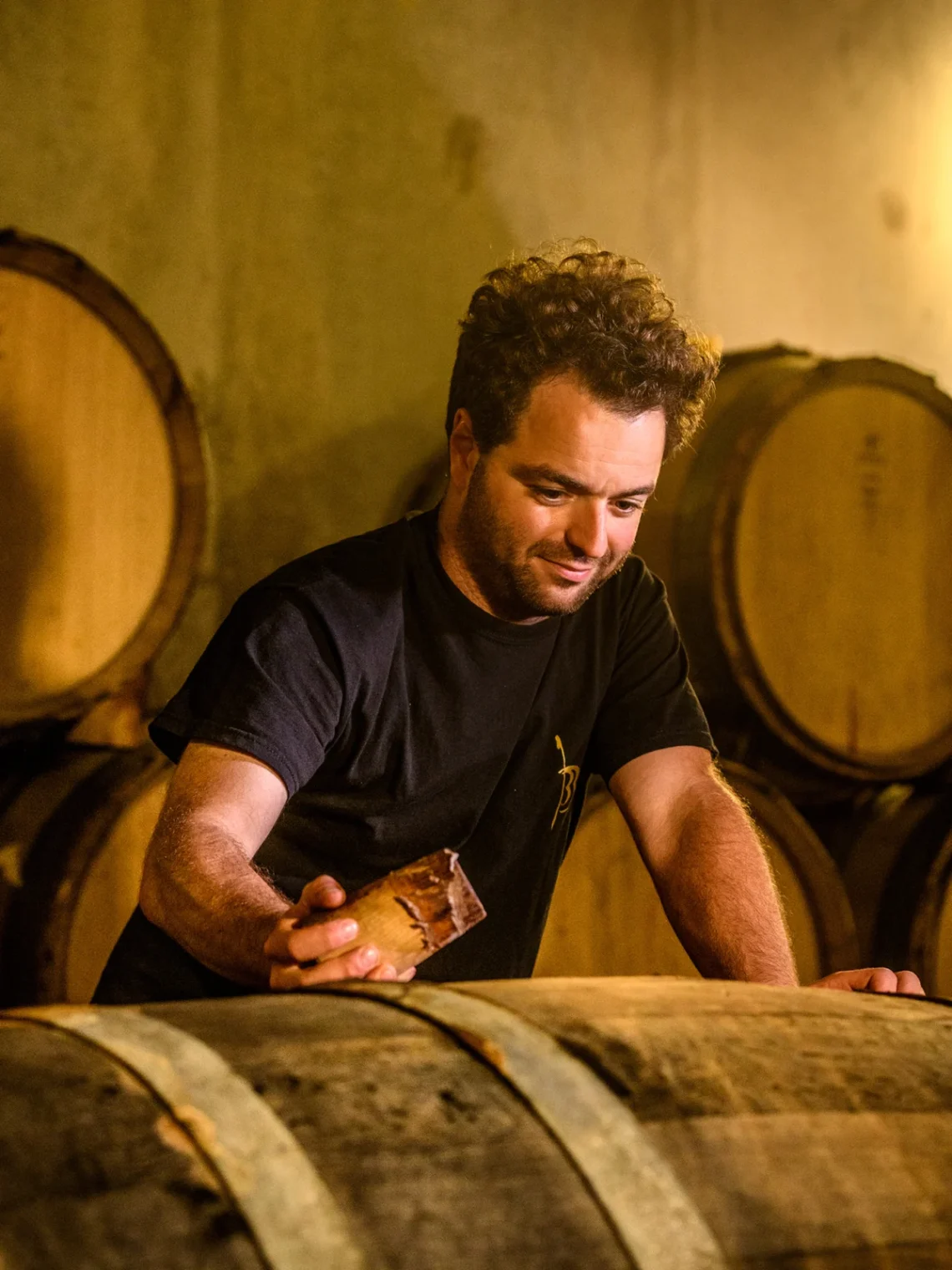
The transformation of Alsatian Pinot Noir is not a sudden accident of climate, but a calculated pivot in philosophy. As Maxime Barmès of the esteemed Domaine Barmès-Buecher puts it, “If you blind taste a great Alsace Pinot and a great Burgundy, Alsace has a good chance of competing with wines ten times more expensive.”
This isn’t just hyperbole. The quality trajectory has been steepening for three decades, with a dramatic acceleration in the last ten years. While casual observers might point to warmer vintages as the primary driver, the growers themselves tell a more nuanced story. Climate change has provided the heat necessary for consistent ripening, but it has also brought the risk of losing the very aromatic finesse that defines the grape. Therefore, the "Alsatian Renaissance" is a result of human intervention—a rigorous refinement of viticultural techniques and a departure from the high-yield, quantity-over-quality mentality that crippled the region’s red wine reputation in the 19th and 20th centuries.
A Chronology of Decline and Redemption
To understand the current heights of Alsatian Pinot Noir, one must look back at its volatile history. The grape is not a newcomer to the region; in fact, its roots run deep into the era of the Holy Roman Empire, when the region was celebrated for red wines grown in the complex limestone, granite, and marl soils that define its landscape today.
The Era of Disruption (1618–1970s)
The decline began with the Thirty Years’ War, which decimated the local population and culture. As the region was repopulated under Louis XIII and Louis XIV, the incoming families from Switzerland, Austria, and Germany brought with them a lack of tradition for serious red winemaking. By the time Alsace was annexed by the German Empire, the region was pivoted toward the production of inexpensive, high-yield wine. Pinot Noir was relegated to the most fertile, flat sites, forced to produce massive quantities of thin, simple, and unmemorable juice. By the 1970s, the variety was virtually irrelevant to the global wine conversation.
The Intellectual Revival (1970s–1990s)
The seeds of the current success were sown not in the soil, but in the classroom. In the 1970s, a new generation of Alsatian winemakers turned their backs on the Geisenheim tradition and looked toward the Université de Bourgogne. They sought to replicate the Burgundian philosophy: prioritizing low yields, site-specific expression, careful élevage in oak, and longer macerations.

The Modern Era (2000–Present)
By the late 1980s, the terroir-driven movement was in full swing. Domaine Albert Mann, for instance, transitioned from having just 1% of its vineyard dedicated to Pinot Noir in 1962 to planting the grape on its most prestigious sites, such as Hengst and Pfersigberg. This shift was monumental. As Antoine Barthelmé notes, "Before climate change, there was a change of vision. We stopped treating Pinot Noir like a white wine."
Supporting Data: By the Numbers
The statistical growth of the variety reflects a region regaining its confidence. In 2008, Pinot Noir accounted for approximately 8% of Alsace’s total plantings. By 2026, that figure has climbed to roughly 13%.
While this growth may seem modest, it is highly targeted. Growers are moving away from standardized clones in favor of massal selection—the propagation of vines from the best-performing individual plants in a vineyard. This approach fosters genetic diversity and smaller, more concentrated berries. Furthermore, yield management has become the industry standard, with top-tier estates capping production at 30 to 35 hectoliters per hectare to ensure maximum concentration and flavor development.
Official Perspectives: The Experts Speak
Foulques Aulagnon, export marketing manager of the Alsace Wine Board (CIVA), is adamant about the nature of this change. "It is a revival, not an evolution," he insists. This sentiment is echoed by the growers who are on the front lines of this movement.

Maxime Barmès emphasizes that modern winemaking in Alsace is about "precision." In the cellar, this translates to gentle extraction and a move away from aggressive techniques. Many estates have adopted full destemming and the use of older, neutral oak barrels to ensure that the delicate aromatics of the grape remain the protagonist of the wine.
Conversely, the debate over terroir continues to energize the region. While some argue that Pinot Noir thrives on all Alsatian soil types—provided the viticulture is impeccable—others, like Antoine Barthelmé, are more dogmatic. "There is no debate," he asserts. "The matrix of Pinot Noir is limestone." This disagreement is healthy; it represents a region that is still exploring the boundaries of its identity.
Implications: The Future of the Region
The implications of this shift are significant for both the consumer and the broader wine industry. For the consumer, Alsace represents one of the few remaining frontiers for high-quality Pinot Noir that has not yet been subjected to the astronomical price inflation seen in Burgundy.
For the industry, the success of Alsace Pinot Noir challenges the rigid categorization of wine regions. It proves that a region long defined by white wine can pivot to produce reds that are not merely "alternative" but are, in many cases, superior in balance and longevity.

As winemakers like Catherine Riss and Christoph Binner push toward more minimal intervention, the category of "Alsace Pinot Noir" is becoming increasingly dynamic. It is no longer a monolithic style; it is a spectrum ranging from ethereal and lifted expressions to deeper, more structured wines that demand years in the cellar.
Conclusion: A Category in Motion
Alsace is no longer an outlier in the French wine world; it is a region in the midst of a refined self-discovery. By reclaiming its history and embracing a new, rigorous philosophy of winemaking, the region has transformed its "sidebar" variety into a beacon of quality.
While the world may still look to Burgundy for the benchmark, those in the know are increasingly looking toward the Rhine. With 13% of its acreage now dedicated to the grape and a new generation of winemakers committed to precision over production, Alsace is proving that the best way to move forward is to refine what was, for too long, underestimated. The tall, slender bottles of Alsace may still be home to world-class whites, but today, they also contain some of the most exciting red wines in the world.
Notable Bottles to Watch
For those looking to explore the current state of the art, the following selections represent the pinnacle of the Alsatian revival:
- Domaine Muré 2023 Clos Saint Landelin Pinot Noir (93 Points): A masterclass in elegance. This wine showcases a sophisticated profile of cherry, violet, and sandalwood. Its polished tannins and poised acidity make it a benchmark for the region’s potential.
- Trimbach 2023 Réserve Pinot Noir (91 Points): A wine of absolute purity. It offers a detailed aromatic profile of pomegranate and rose, supported by melting tannins and a mouthwatering finish. It is a testament to the "precision" that now defines the region’s best work.