In the modern landscape of convenience, the "standard" high-fat, high-sodium meal has become a dietary staple. While many people view the occasional fast-food indulgence as a harmless pleasure, emerging medical research suggests that the damage inflicted on our vascular system is both immediate and measurable. Our arteries, the vital conduits of our circulatory system, do not merely store the long-term effects of poor nutrition; they respond in real-time to every bite we take.
Recent studies have illuminated a sobering reality: within hours of consuming a meal heavy in saturated fats and sodium, the body’s arterial function is significantly impaired. However, emerging data also provides a glimmer of hope, suggesting that strategic physical activity may act as a physiological "firewall," mitigating some of the most acute damage caused by these dietary choices.
The Physiology of Damage: How a Meal "Clamps Down" on the Heart
To understand the impact of a high-fat meal, one must look at the concept of "coronary flow reserve." Under normal conditions, our coronary arteries possess the remarkable ability to expand, ensuring that the heart muscle receives adequate blood flow, even when there are underlying blockages or high physical demands.
The Widow-Maker and the Milkshake Effect
When a person consumes a meal comprising more than 60% fat—particularly saturated fat—the body experiences a phenomenon often described by researchers as "postprandial lipemia." Blood tests taken hours after such a meal reveal a serum so saturated with lipids that it takes on a milky, opaque consistency, resembling a milkshake.
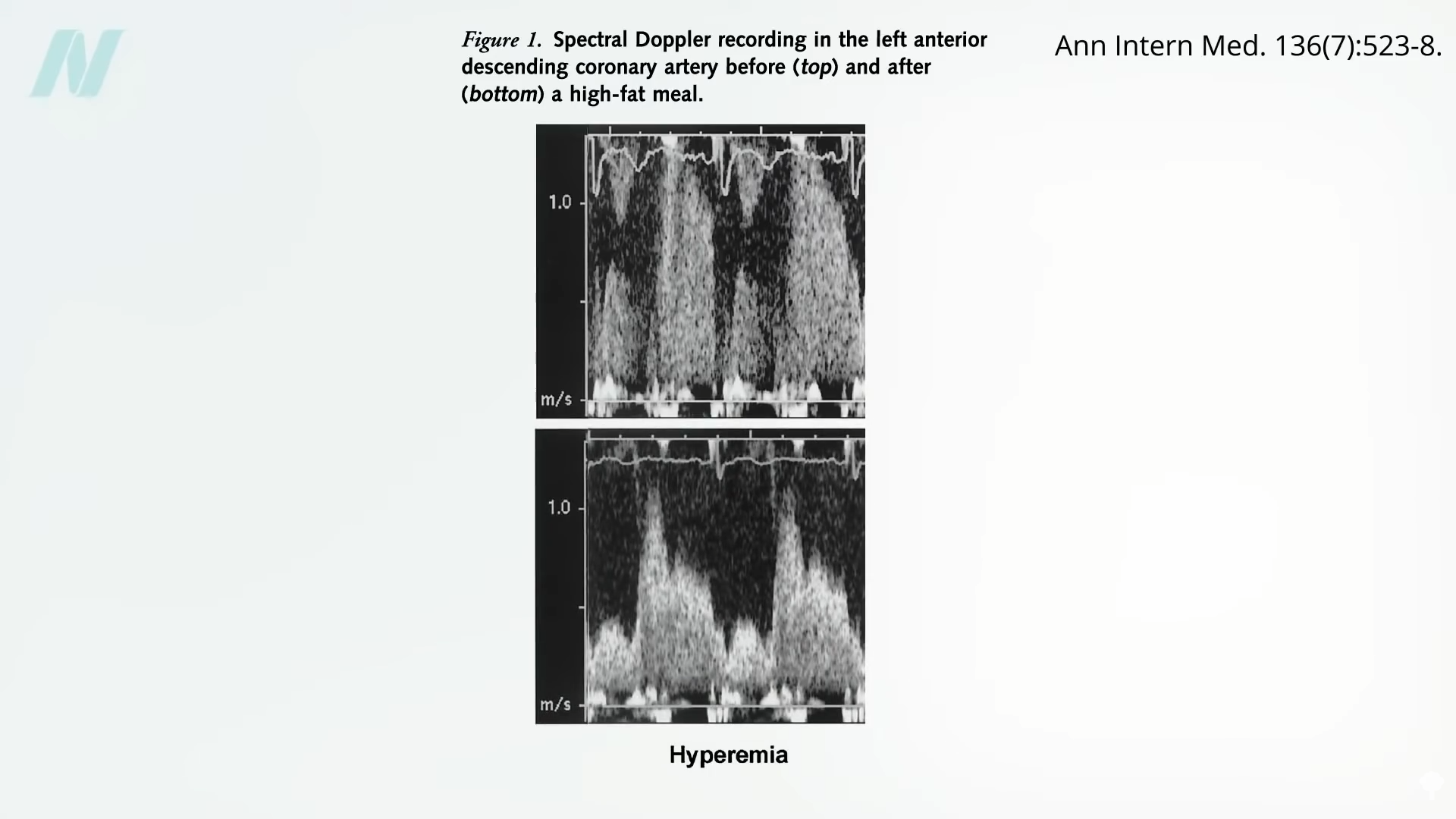
This is not merely a cosmetic issue. Doppler ultrasound recordings of the left anterior descending coronary artery—famously dubbed the "widow-maker" due to its critical role in heart health—show a marked reduction in signal strength shortly after a fatty meal. The artery loses its ability to dilate effectively, essentially "clamping down." This reduction in coronary flow reserve means that when the heart needs to work harder, the vessels cannot compensate, leaving the heart vulnerable to ischemia.

The Role of Sodium
While saturated fat is a primary culprit in vascular constriction, sodium plays a parallel, equally destructive role. Many commercial breakfast meals, for example, contain over 2,000 mg of sodium—well beyond the American Heart Association’s recommended daily limit of 1,500 mg.
Research indicates that high sodium intake impairs arterial function within an hour of consumption, regardless of an individual’s blood pressure status. Even those who consider themselves "salt-resistant"—meaning their blood pressure does not spike significantly in response to sodium—suffer from diminished arterial flexibility. The notion that salt is "safe" for non-hypertensive individuals is a dangerous misconception; the vascular damage occurs at the structural level of the artery, independent of systemic pressure readings.
Chronology of Vascular Impact: From Ingestion to Inflammation
The timeline of cardiovascular distress following a poor meal is alarmingly short. Understanding this sequence is vital for those looking to protect their long-term health.
- 0–60 Minutes: The ingestion of high-sodium meals begins the process of endothelial dysfunction. The inner lining of the arteries (the endothelium) begins to struggle with vasodilation.
- 1–3 Hours: As fats enter the bloodstream, the blood’s viscosity changes. The "milky" blood circulating through the system begins to trigger systemic inflammation.
- 3–5 Hours: The coronary flow reserve reaches its nadir. During this window, the heart is at its most vulnerable, with the capacity for blood flow to the heart muscle significantly restricted compared to the pre-meal baseline.
- Post-5 Hours: If the individual remains sedentary, the inflammatory markers triggered by the meal can persist, potentially leading to cumulative stress on the cardiovascular system if such meals are eaten frequently.
Supporting Data: The Case for Acute Intervention
The most significant finding in recent nutritional science is not just the damage caused by these meals, but the discovery of a "therapeutic window" during which exercise can offset the harm.
The Exercise Buffer
Studies examining "acute exercise"—specifically moderate-intensity activity—show that it can help clear lipids from the bloodstream more rapidly. The most effective window for this intervention appears to be narrow: exercise performed between 18 hours before a meal and 90 minutes after a meal provides the most significant protection.
A landmark study involving a high-fat fast-food breakfast demonstrated that individuals who sat still for the four hours following the meal experienced a sharp decline in artery function. Conversely, those who performed as little as 20 minutes of stair-climbing (broken into five-minute intervals throughout the four-hour period) maintained healthy arterial function. This suggests that even "micro-doses" of movement can act as a counterbalance to the metabolic shock of a heavy meal.
Official Responses and Scientific Dissent
The consensus regarding the dangers of high-fat and high-sodium diets is overwhelming in the medical community. However, the field is not without controversy. There is a persistent, albeit shrinking, contingent of researchers—often associated with industry-funded studies—who suggest that the dangers of salt and saturated fats are overstated.
Major health organizations, including the American Heart Association and the World Health Organization, maintain that sodium reduction is a critical pillar of public health. The "dissenting" voices often focus on salt-sensitivity as a binary condition, arguing that for the "salt-resistant" population, consumption is harmless. However, as the latest data on arterial flow reserve demonstrates, the damage to the endothelium is universal. The scientific literature increasingly views sodium and saturated fat as the "real villains" in the development of chronic cardiovascular disease, regardless of individual genetic predispositions.
Implications for Modern Lifestyle Strategy
The implications of this research are twofold: we must reconsider the quality of our food, and we must rethink our sedentary habits.
1. The Strategy of Prevention
The most effective way to protect artery function is, predictably, to avoid the high-fat, high-sodium meals that trigger these responses. Avoiding fast-food breakfast options is the first line of defense. By choosing whole, plant-based foods that are naturally low in sodium and saturated fat, one avoids the "milky blood" phenomenon entirely.
2. The Strategy of Mitigation
For those occasions when a less-than-ideal meal is consumed, the "stair-climbing strategy" offers a practical, accessible solution. The ability to attenuate vascular damage through hourly, moderate activity—such as walking or climbing stairs—provides a sense of agency. We are not necessarily doomed by a single poor meal, provided we understand the importance of metabolic movement in the immediate post-meal period.
3. Long-Term Cardiovascular Health
This research serves as a reminder that cardiovascular disease is not merely the result of years of poor choices, but the cumulative effect of thousands of individual, acute vascular insults. By protecting our coronary flow reserve today through better nutrition and mindful movement, we preserve the structural integrity of our hearts for the decades to come.
Ultimately, the science is clear: our arteries are dynamic organs that reflect our daily choices. While we live in a world designed to make unhealthy eating easy, the tools to protect our vascular health—a commitment to better ingredients and a refusal to remain sedentary after eating—remain firmly within our control. As the medical community continues to peel back the layers of how nutrition dictates vascular performance, the message remains consistent: the heart requires both high-quality fuel and regular, consistent movement to function at its peak.