Main Facts: A Masterpiece of Ceramic Evolution
Villeroy & Boch, the heritage porcelain manufacturer synonymous with European ceramic excellence, has announced the latest expansion of its most iconic design series: the La Boule. First conceived in 1971 by Helen von Boch, the La Boule series redefined the relationship between utility and sculptural art. Today, the brand introduces the "Kyoto" edition, a design narrative that seeks to marry the functional rigor of German manufacturing with the tranquil, symbolic aesthetics of Japanese culture.
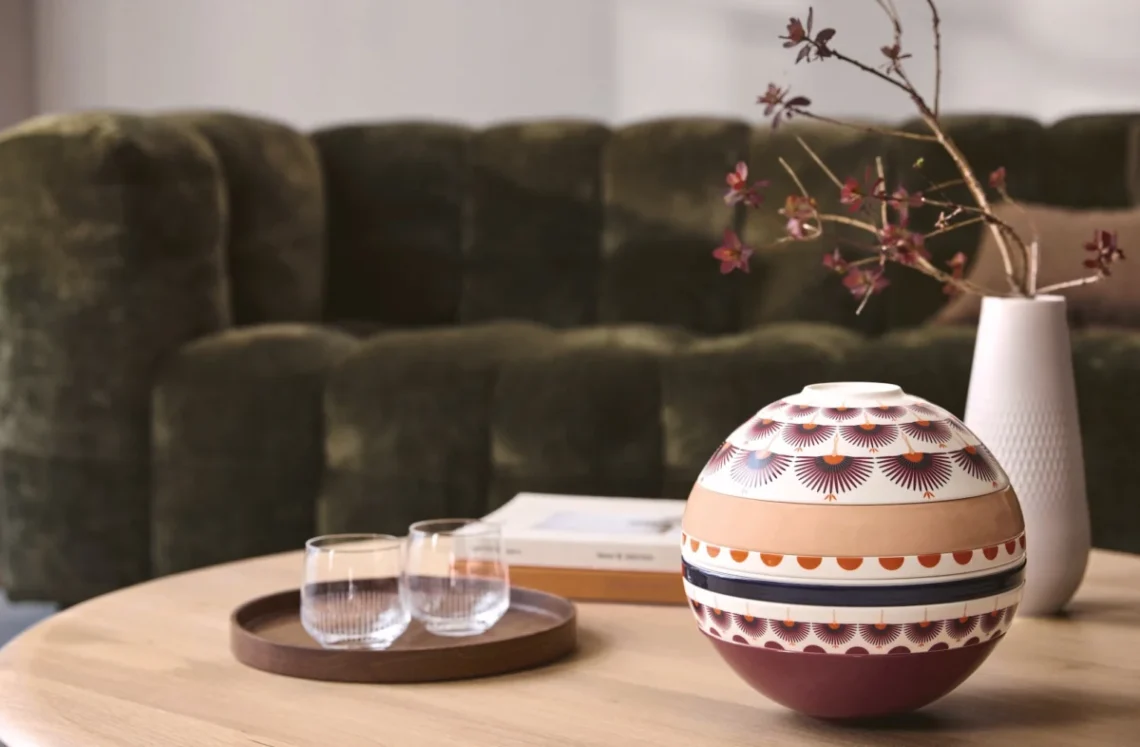
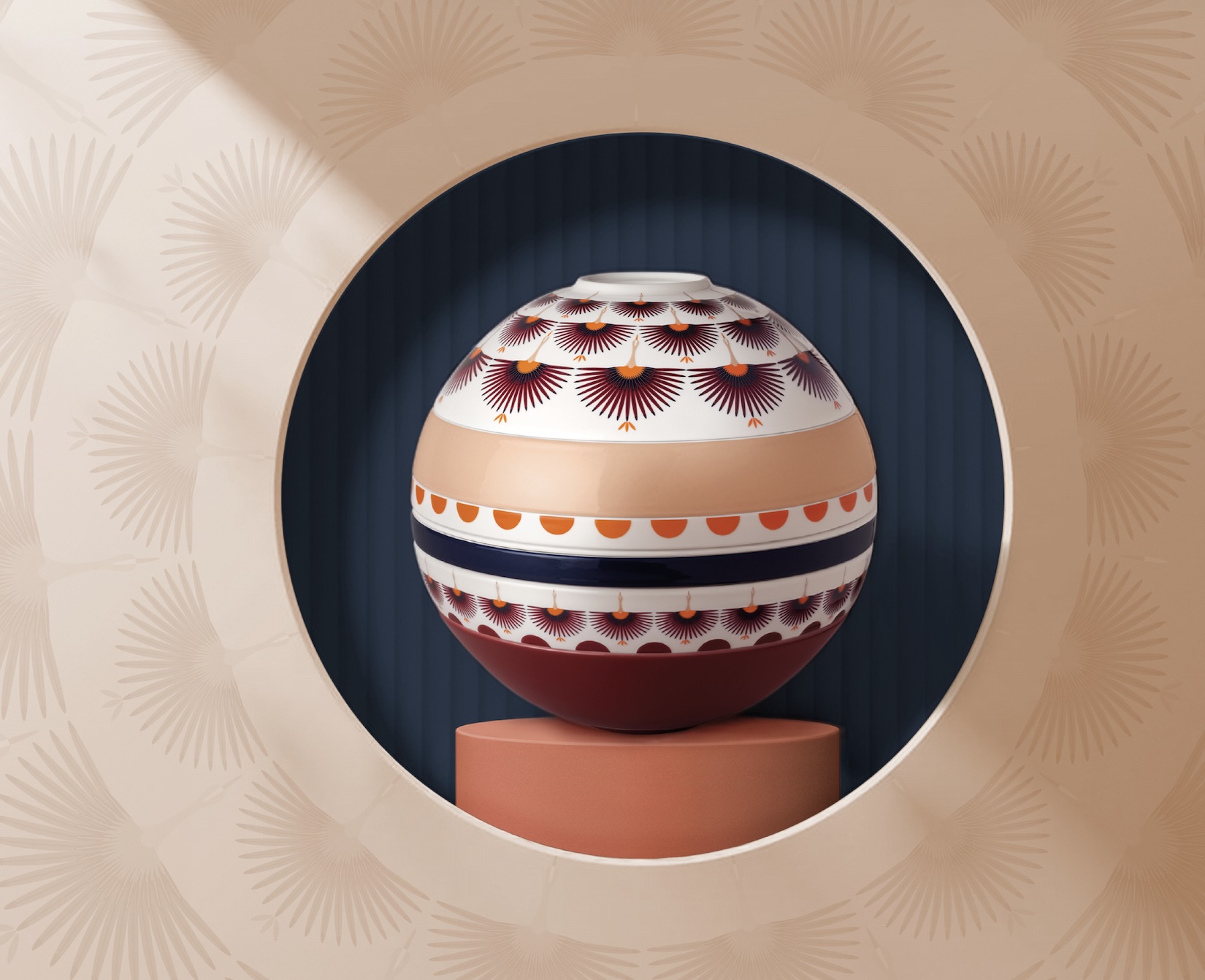
The La Boule Kyoto is not merely a piece of tableware; it is a conceptual design object. At its core, the piece functions as a seven-piece dinner set for two, encompassing two bowls, two shallow bowls, two flat plates, and a serving platter. When stacked, these components lock together to form a seamless, spherical object—a testament to the precision engineering that defines Villeroy & Boch’s premium porcelain. The Kyoto decor serves as a departure from the minimalist monochromatic versions of the past, opting instead for a vibrant, culturally rich motif that draws heavily on the symbolic language of Japan.
A Chronology of an Icon: From 1971 to the Present
To understand the significance of the La Boule Kyoto, one must revisit the origin of the La Boule concept.
The 1970s: The Birth of a Sculptural Revolution
In 1971, Villeroy & Boch released the original "La Boule" sphere. Designed by Helen von Boch, it was a response to the era’s desire for space-saving, multifunctional design. In the post-war industrial boom, households were shrinking, and the need for compact, aesthetically pleasing dinnerware became paramount. The original design was a sensation at the Museum of Modern Art (MoMA) in New York, where it was added to the collection for its revolutionary take on how a table setting could be stored and displayed.
The 2020s: The Modern Revival
After decades of dormancy, Villeroy & Boch reintroduced the concept in 2020. The modern iteration moved away from the retro-plastic feel of the original, transitioning to high-quality premium porcelain. Since its relaunch, the series has become a canvas for various artists and design philosophies, including minimalist, Bauhaus-inspired, and now, the culturally evocative "Kyoto" design. This evolution reflects the company’s current strategy: leveraging its deep historical archives while simultaneously responding to the contemporary demand for "art-as-utility."
Supporting Data: Design Philosophy and Symbolism
The Kyoto edition is a deliberate departure from the previous aesthetic direction of the brand, leaning into the Japanese concept of Wa (harmony).
The Palette of Symbolism
The designers at Villeroy & Boch have curated a color palette that is intentionally symbolic:
- Warm Beige: Represents the foundation of the home and stability.
- Deep Dark Red: A nod to traditional lacquerware and the energy of the Japanese sun.
- Elegant Dark Blue: Symbolizing the deep, serene waters surrounding the archipelago.
- Vibrant Orange: Serving as the "accent," this color provides an energetic burst that captures the modern spirit of the collection.
Cultural Motifs
The surface of the Kyoto edition features meticulously rendered cranes. In Japanese folklore, the crane (tsuru) is a symbol of longevity and happiness. By integrating these motifs with geometric patterns reminiscent of intricate kimono textiles, Villeroy & Boch has created a design that is visually dense yet balanced. The juxtaposition of the sphere—a shape that represents wholeness—with these symbols of life creates a compelling narrative of balance and serenity in the modern living space.
Official Responses: Insights from the Executive Suite
The launch of the La Boule Kyoto is a strategic move for the brand’s "Dining & Lifestyle" division. Claudia Knaupp, Executive Vice President of Marketing at Villeroy & Boch, emphasized that this product is designed to bridge the gap between interior design and culinary culture.
"La Boule Kyoto is more than just an iconic product," Knaupp stated during the product unveiling. "It is an expression of balance, harmony, and timeless elegance for modern living. We see this piece delighting consumers not just as a functional tableware set for two, but as a standalone design object. It fulfills the role of a special gift, a conversation starter, and an artifact of cultural appreciation."
Knaupp’s remarks highlight the "giftability" and "collectibility" of the piece, which is a core pillar of Villeroy & Boch’s current retail strategy. By positioning the product as a "collector’s item that tells stories," the company is effectively insulating itself against the commoditization of home goods.
Implications: The Future of Tableware in a Changing Market
The release of the La Boule Kyoto carries significant implications for the broader homeware industry.

The "Stage" Concept
Modern interior design has shifted toward the home as a "stage" for personal expression. Consumers are no longer buying complete 60-piece dinner sets; they are buying statement pieces that reflect their travels, values, and artistic tastes. The La Boule Kyoto fits perfectly into this "maximalist-curated" trend, where a single, high-impact object can define the mood of an entire dining room.
Craftsmanship vs. Convenience
In an age of mass-produced, disposable goods, Villeroy & Boch is doubling down on "Premium Porcelain." The manufacturing process of the Kyoto edition requires extreme precision—each bowl and plate must be calibrated to nest perfectly within the spherical frame. This level of German engineering, combined with the delicate artistic application of the Kyoto motifs, positions the product as an investment piece. It challenges the consumer to value longevity over the "fast-homeware" culture that has permeated the market.
Sustainability and Longevity
The design also speaks to a broader cultural push for sustainable consumption. Because the La Boule serves as both a sculptural object and a functional dining set, it eliminates the need for excess clutter. In a small apartment, the piece acts as a dual-purpose solution: it is a piece of art on a sideboard when not in use, and a complete, elegant dining solution for two when needed. This multifunctional utility is increasingly important for the urban demographic, which Villeroy & Boch is clearly targeting with this release.
Conclusion: A Synthesis of Two Worlds
The La Boule Kyoto represents a sophisticated synthesis of European manufacturing expertise and Japanese aesthetic traditions. By choosing the crane and the color palette of the Kyoto region, Villeroy & Boch has successfully modernized a 50-year-old icon, ensuring its relevance for another generation.
As we look toward the future of the home, the emphasis will continue to be on objects that are both meaningful and functional. In this regard, the La Boule Kyoto stands as a benchmark for how heritage brands can evolve without losing their identity. It is a product that invites the owner to slow down, find harmony, and celebrate the simple act of dining with a sense of ceremony—a philosophy that is, in itself, a timeless contribution to the modern home.
Whether displayed on a dining table or resting on a shelf, the La Boule Kyoto confirms that Villeroy & Boch remains a leader in the intersection of art and utility, proving that even a simple sphere can hold a world of meaning.