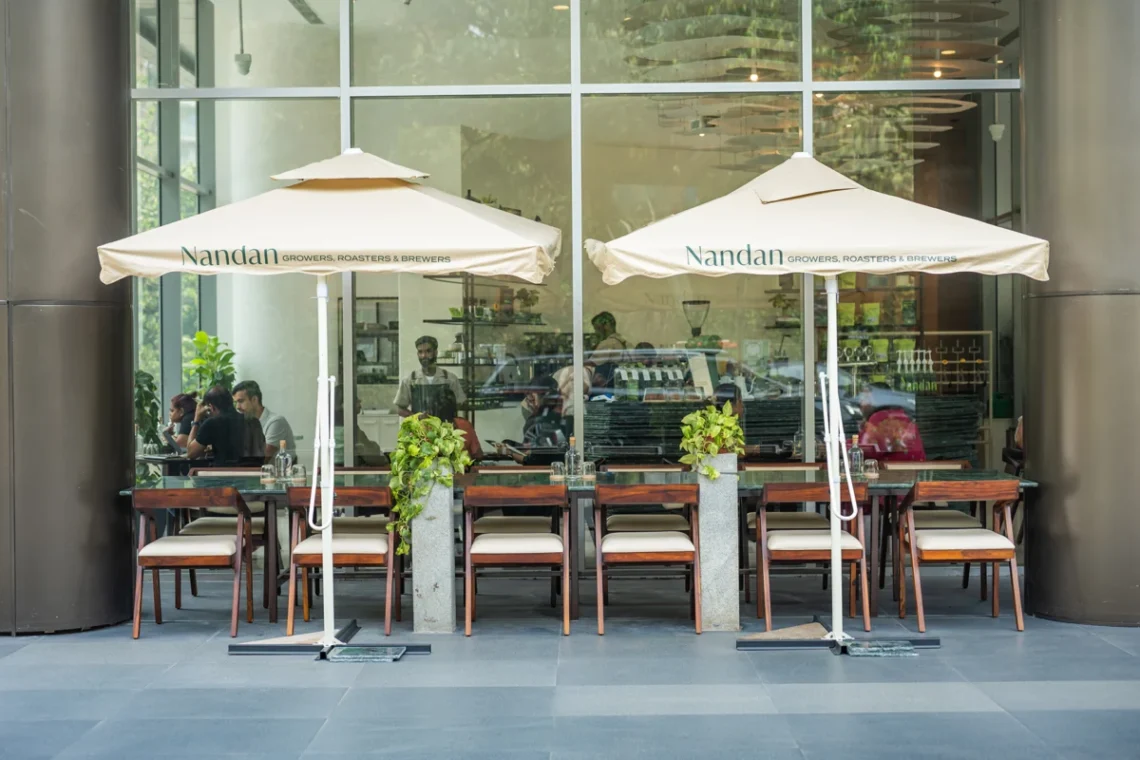
The global specialty coffee landscape is often defined by the distance between the roaster and the farm. Yet, in the heart of India’s high-tech capital, Bengaluru, a new paradigm is taking root. Nandan Coffee, a legacy brand with deep roots in the Palani Hills of Tamil Nadu, has unveiled a flagship space that serves as a physical bridge between the biodiversity of their Kodaikanal estate and the urban pulse of India’s Silicon Valley.
This 3,500-square-foot architectural project at Embassy One is not merely a cafe; it is a meticulously curated sensory experience that challenges the traditional coffee house model. By controlling every variable—from the organic soil in the Kodaikanal mountains to the precision-calibrated grinders in Bengaluru—Nandan Coffee is redefining the "farm-to-cup" narrative for a new generation of Indian consumers.
The Genesis: A Legacy of Stewardship
To understand the significance of the new Bengaluru flagship, one must look back three decades. Founded in the early 1990s by Hansraj and Hansa Mariwala, Nandan Coffee began with a vision of holistic cultivation at their Nandanvan Estate. Today, the operation is steered by third-generation steward Yahvi Mariwala, who has transitioned the company from a boutique estate into a vertically integrated powerhouse of transparency.
The company’s philosophy is rooted in a rare operational structure: they grow, process, roast, and serve their coffee exclusively from their own certified organic land. While most specialty roasters in the global market rely on complex supply chains and seasonal sourcing from various cooperatives, Nandan maintains a singular focus. By keeping the roastery at the point of origin, they ensure that the integrity of the bean remains uncompromised by transit times or mid-chain handling.
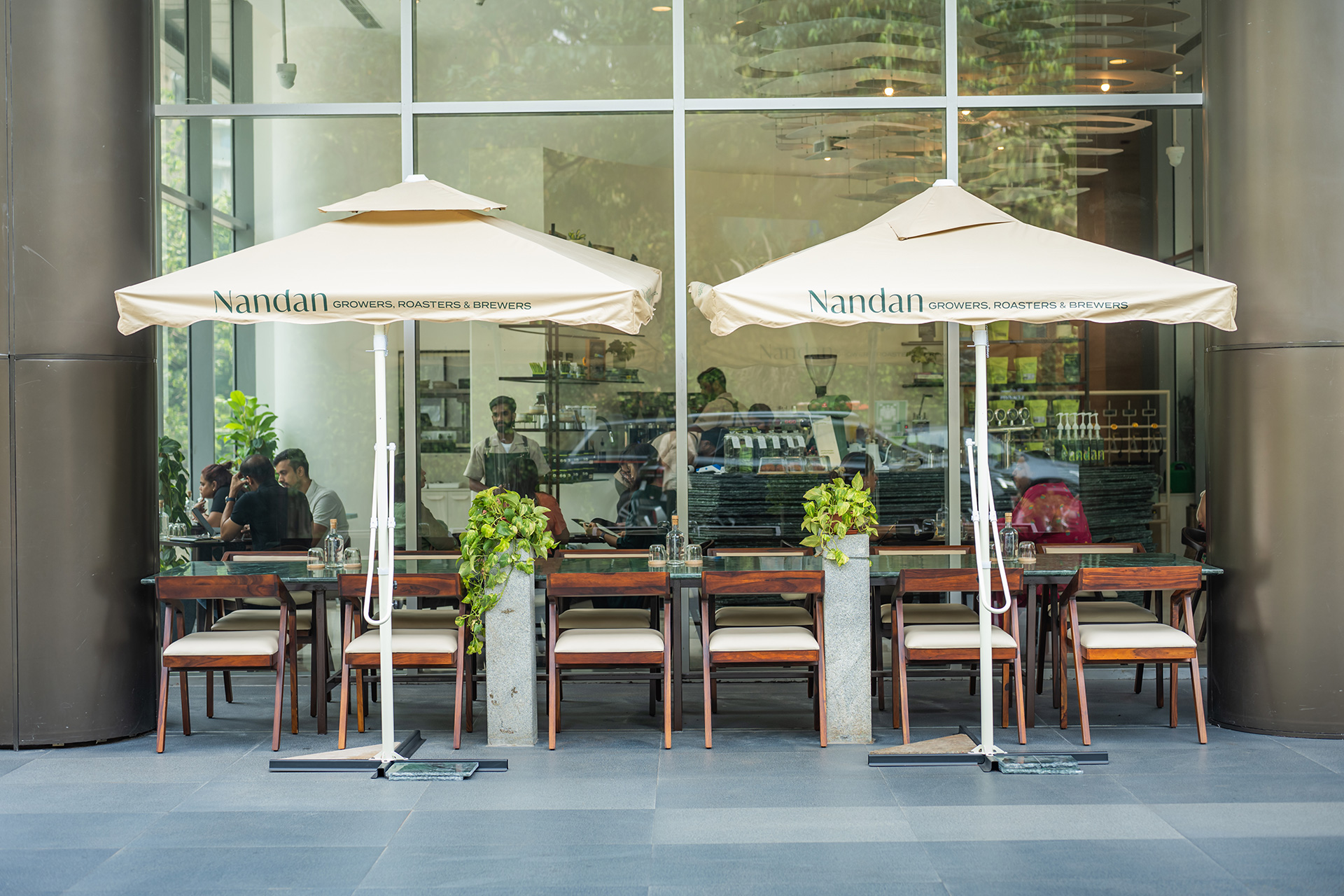
"We believe coffee should be approachable rather than intimidating," says Seher Shodhan, speaking on behalf of the team. "Our menu is designed for many different kinds of coffee drinkers. Someone looking for their daily cappuccino should feel just as welcome as someone interested in exploring roast profiles through a pour-over."
Architectural Harmony: Bringing the Estate to the City
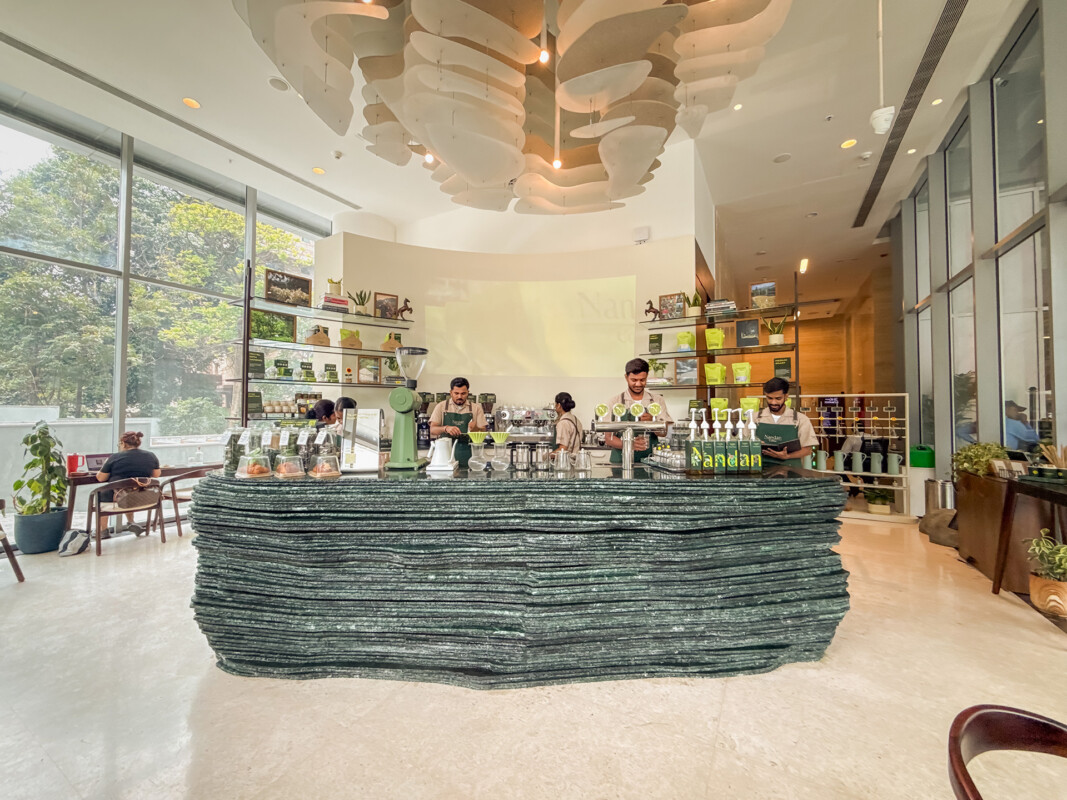
The design of the new space, located on the bustling Bellary Road, was a collaborative effort between Farida Mariwala Interiors and Faizan Khatri. The brief was complex: translate the spirit of the Nandanvan Estate—a high-altitude, biodiverse landscape—into a high-traffic urban environment without relying on literal or kitschy mimicry.
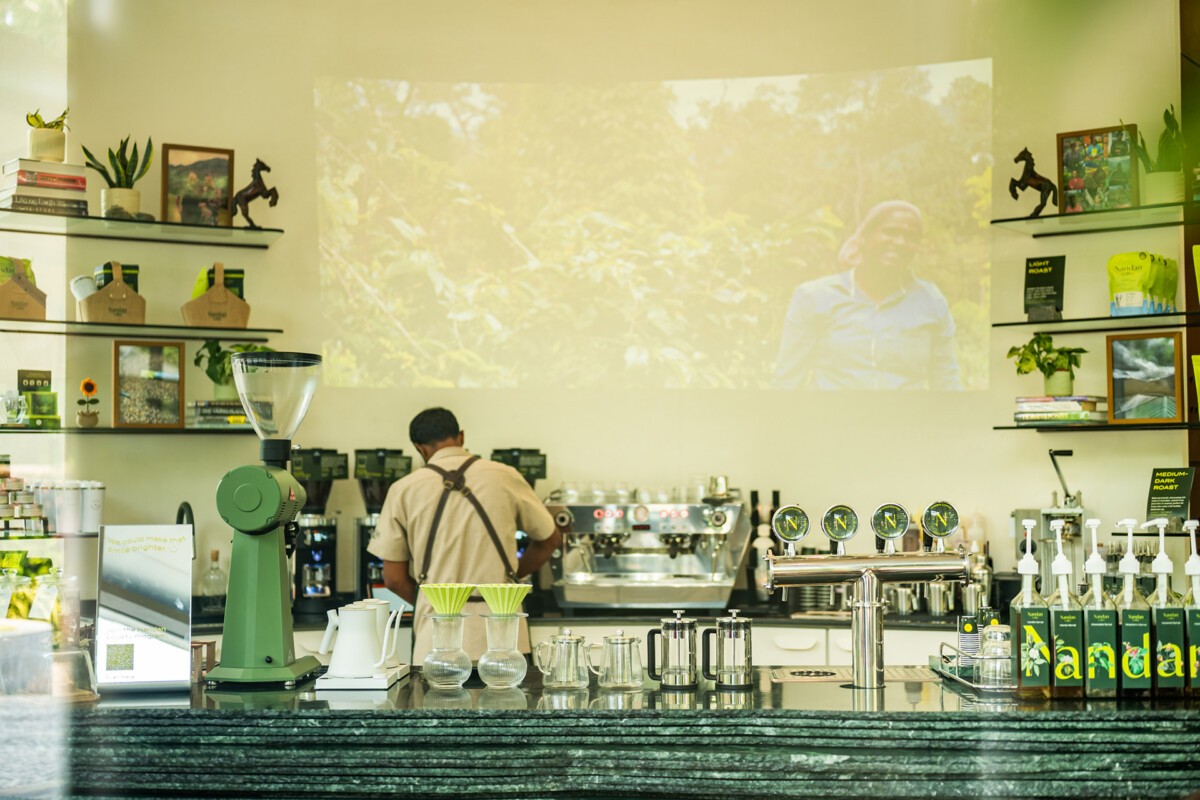
The result is a masterclass in material storytelling. The center of the cafe is anchored by a massive, sculptural island bar. Clad in layered Baroda Green marble, the bar’s contours are a direct homage to the topography of the Palani Hills. This choice of material creates a striking visual connection to the earth, grounded by 17-foot ceilings that provide an expansive, airy atmosphere.
The space is illuminated by three-sided floor-to-ceiling glazing, ensuring that the cafe evolves with the shifting light of the Bengaluru day. A custom lighting installation hangs above, designed to mimic the dappled light of the Kodaikanal canopy. This design choice serves a specific function: it de-emphasizes the barrier between the barista and the guest. By removing traditional service walls and "hiding" the equipment, the architects have turned the preparation process into a stage.

The Technical Edge: Precision Meets Provenance
While the aesthetic is inspired by nature, the technical infrastructure is strictly state-of-the-art. Nandan Coffee’s flagship is designed to be a laboratory of discovery.
The centerpiece of the equipment suite is the La Marzocco KB90, a machine renowned for its ergonomic efficiency and consistency. However, the true technical marvel lies in the grinding station. The cafe employs four Mahlkönig E65S GBW (Grind-by-Weight) grinders. This setup is deliberate: each grinder is dedicated to a specific roast profile, ensuring that every espresso pull—whether it be a single-origin delicate light roast or a robust dark roast—is calibrated with scientific precision.
Beyond the espresso bar, the cafe features:
- A Filter Kaapi Bar: A nod to the traditional Indian coffee culture, elevated with specialty, estate-grown beans.
- Cold Extraction Stations: Offering both Cold Brew and Cold Kaapi on tap.
- Sensory Discovery Station: An educational corner where guests are encouraged to smell and compare beans before making a purchase.
This equipment allows for a multi-faceted exploration of a single estate. By varying the brewing methods—from French press to manual pour-over—Nandan demonstrates that a single farm can offer a spectrum of flavor profiles, challenging the notion that "origin" is a static or singular taste.
A Commitment to Radical Sustainability
For Nandan Coffee, sustainability is not a marketing buzzword; it is an economic and ecological imperative. The Nandanvan Estate has been farmed organically since 2001, long before "organic" became a mainstream commercial requirement.
The estate is unique in its lack of fencing, a decision made to allow local wildlife to move freely through the coffee canopy. This biodiversity is not an accident; it is a core tenet of their cultivation strategy. By farming alongside native flora rather than in a monoculture, the estate creates a more resilient ecosystem, which in turn reflects in the complexity of the cup.
"Sustainability is not a separate initiative for us; it is embedded into how we grow coffee and how we build the business," says the leadership team. Because the company owns the entire supply chain, they exercise full control over the environmental impact of their operations. This allows them to prioritize long-term soil health and labor equity over the short-term gains that often plague the global coffee commodity market.
Implications: The Future of Indian Specialty Coffee
The opening of this flagship on April 31, 2026, marks a significant milestone in India’s maturing coffee scene. As Bengaluru continues to solidify its status as a global tech hub, the demand for high-end, transparent, and experiential retail spaces is at an all-time high.
Nandan Coffee’s approach provides a blueprint for how legacy brands can evolve. By marrying the traditional, storied history of Indian coffee cultivation with modern, design-forward retail environments, they are successfully capturing a new demographic of consumers who care as much about the provenance of their caffeine as they do about the quality of the brew.
The implications for the wider industry are clear: transparency is the new premium. As guests become more informed, the ability to trace a cup of coffee back to a specific hill, a specific harvest, and a specific processing method will become the baseline expectation. Nandan Coffee has not only met this expectation; they have created a space that celebrates it.
In a world where coffee is often stripped of its context, Nandan Coffee reminds us that the best cup is the one where the distance between the grower and the drinker is not measured in miles, but in the shared appreciation of the craft. Whether you are a local resident of Bengaluru or a traveler passing through, the Nandan Coffee flagship offers a rare opportunity to taste the landscape of the Palani Hills in the heart of the city—a testament to what happens when tradition is nurtured with modern vision.