The Democratic Republic of the Congo (DRC) stands at a precarious crossroads. As one of the world’s most vital ecological bastions, it serves as the home to the planet’s second-largest tropical rainforest and the sprawling, carbon-dense Cuvette Centrale peatlands. However, the nation is currently moving forward with an aggressive plan to auction off more than half of its total landmass—covering 306 million acres—for oil and gas exploration.
This expansive development, detailed in a sobering new report titled Forests to Frontlines: Oil Expansion Threats in the DRC, threatens to dismantle some of the most biodiverse regions on Earth. By opening vast tracts of intact tropical forest and critical habitat to industrial extraction, the Congolese government is inviting a transformation that could irreversibly alter the regional climate, displace millions, and release gigatons of stored carbon into the atmosphere.
Main Facts: The Scope of the Extraction Plan
The latest government initiative involves the auctioning of 52 new oil blocks, which, when combined with three previously awarded concessions, puts 64 percent of the country’s pristine forests at risk of industrial degradation. This is not merely a localized development issue; it is a global environmental concern.
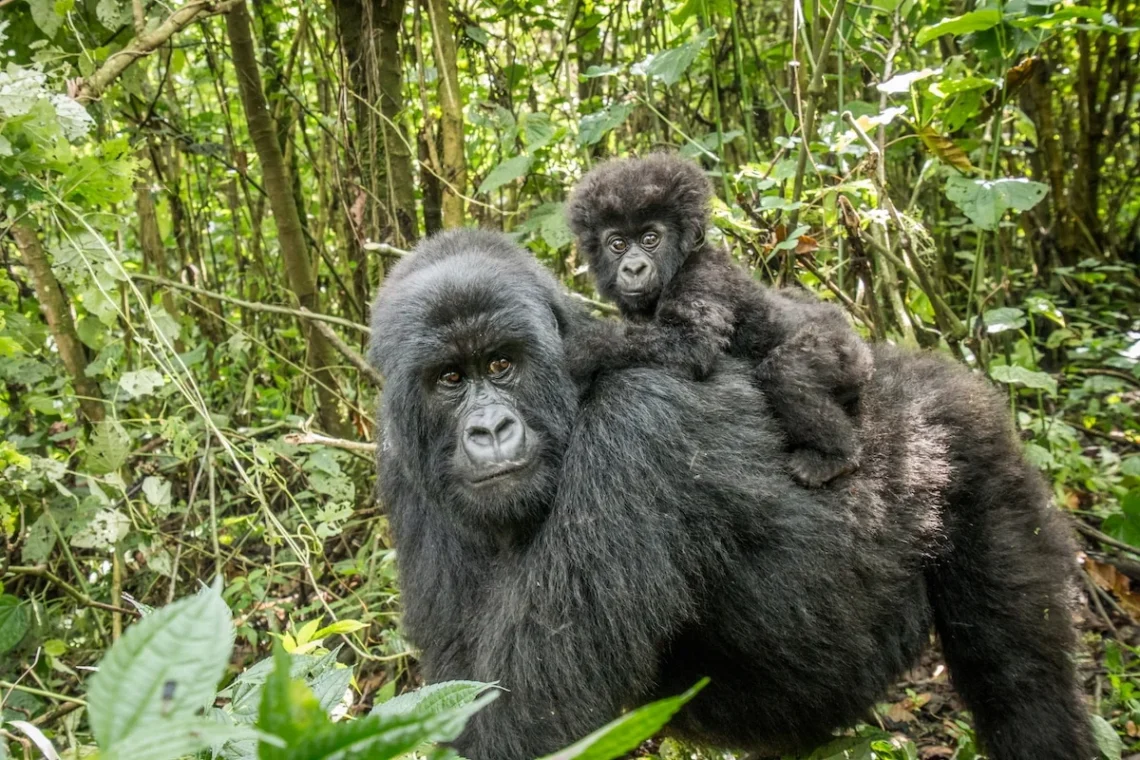
The targeted land includes critical habitats for endangered species, such as the mountain gorilla, the eastern lowland gorilla, and the bonobo. Furthermore, the oil blocks overlap with 20.5 million acres of officially protected areas and 21.3 million acres designated as Key Biodiversity Areas. Perhaps most alarmingly, 72 percent of the recently established Kivu-Kinshasa Green Corridor—a project ostensibly designed to promote ecological preservation and sustainable development—now falls within the proposed oil exploration zones.
The Cuvette Centrale, the world’s largest tropical peatland complex, is also directly in the crosshairs. Storing approximately 30 gigatons of carbon, this region acts as a massive natural carbon sink. Converting these lands into oil fields risks triggering the release of this trapped carbon, significantly undermining global efforts to curb climate change.
Chronology of a Controversial Policy
The current push for oil exploration is the culmination of a multi-year pivot toward fossil fuel dependency. The trajectory can be traced through several key developments:
- 2022: The Initial Pivot: The DRC government launched a controversial auction for 30 oil and gas blocks. At the time, environmentalists and human rights organizations raised alarms as many of these blocks directly overlapped with national parks, vital peatlands, and the ancestral lands of Indigenous and local communities.
- 2024-2025: Escalation: Rather than scaling back in response to international outcry, the government has moved to significantly broaden its scope. The latest licensing round represents a "drastic expansion" of the 2022 policy, effectively placing over 53 percent of the country’s land area under the potential jurisdiction of fossil fuel corporations.
- July 2025: The Forests to Frontlines Report: Earth Insight, in collaboration with organizations such as the Coalition des Organisations de la Société Civile pour le Suivi des Reformes et de Action Publique (CORAP) and Rainforest Foundation UK, released a comprehensive analysis exposing the overlap between these new oil blocks and critical conservation zones. The report serves as a formal call to action, demanding the immediate cancellation of the current licensing round.
Supporting Data: Why the Congo Basin Matters
To understand the scale of the threat, one must understand the ecological significance of the region. The Congo Basin is frequently referred to as the "second lung" of the planet. Its health is intrinsically linked to the stability of the global climate.
- Carbon Sequestration: The Cuvette Centrale peatlands alone contain an amount of carbon equivalent to three years of total global fossil fuel emissions. Disturbance to these water-logged landscapes would lead to rapid oxidation and the subsequent release of greenhouse gases.
- Biodiversity Hotspot: The region harbors thousands of endemic plant species and some of the most vulnerable primate populations on Earth. The disruption of these intact ecosystems threatens the survival of species that cannot adapt to the habitat fragmentation caused by roads, pipelines, and drilling infrastructure.
- Human Dependency: It is estimated that 39 million people reside within the areas targeted by these auctions. These populations rely directly on the forest’s resources—including rivers and non-timber forest products—for their daily subsistence, cultural identity, and climate resilience.
Official Responses and Civil Society Outcry
The government’s pursuit of oil wealth has met with intense opposition, both domestically and internationally. Pascal Mirindi, a campaign coordinator for the organization Notre Terre Sans Pétrole (Our Land Without Oil), has been a vocal critic of the policy’s inherent contradictions.
"Imagine: 39 million Congolese people… and 64% of our forests could be directly affected by the awarding of these oil blocks," Mirindi stated. "And all this while the government is promoting the Kivu-Kinshasa ecological corridor. Where is the logic? Where is the coherence? We are reminding our leaders that the Congolese people are the primary sovereign. We will not remain silent while certain people organize themselves to sell off our future."
The international community, including researchers and conservationists, has echoed these concerns. Anna Bebbington, a research manager at Earth Insight, emphasized the catastrophic potential of the project: "Oil and gas development in these fragile ecosystems would have devastating impacts on biodiversity, communities, land rights, and the global fight against climate change."

Despite these warnings, the government continues to frame fossil fuel exploration as a path toward economic development and national progress, creating a widening rift between official policy and the demands of its own civil society.
Implications: A Global Climate Collision Course
The implications of the DRC’s current trajectory are severe. If these 52 blocks are fully developed, the environmental consequences will extend far beyond the borders of the Democratic Republic of Congo.
1. Erosion of Climate Commitments
The DRC’s decision to open its forests contradicts its own international environmental commitments. By prioritizing short-term fossil fuel revenue, the nation risks losing credibility in global climate forums, where it has previously presented itself as a critical partner in the fight against planetary warming.
2. Human Rights and Displacement
The intersection of oil concessions with Indigenous lands poses a grave threat to human rights. Historically, industrial extraction in the Congo Basin has led to the displacement of forest-based communities, the degradation of water sources, and the marginalization of local governance. The Forests to Frontlines report stresses that any future governance must ensure that local communities are active participants in decision-making, rather than victims of industrial expansion.
3. The Death of the "Green Corridor"
The fact that 72 percent of the Kivu-Kinshasa Green Corridor overlaps with oil blocks is perhaps the most symbolic failure of the current strategy. The corridor was designed to be a model of sustainable, nature-based development. Its intersection with drilling blocks suggests that, under current policies, "green" initiatives may be subservient to the interests of extractive industries.
4. A Call for Transparency and Reform
The report from Earth Insight offers a clear path forward. It urges the government and its international partners to:
- Cancel the 2025 oil licensing round immediately.
- Cease all future hydrocarbon expansion in ecologically sensitive areas.
- Uphold the land rights of Indigenous Peoples and local communities.
- Align international financing with the country’s stated climate and biodiversity goals.
Conclusion: The Final Stand
The Democratic Republic of the Congo is at a turning point. The decisions made in the coming months will determine whether the nation continues to serve as a vital global carbon sink and a sanctuary for endangered life, or whether it becomes a major new front in the global fossil fuel industry.
As the global community shifts toward renewable energy, the wisdom of investing in massive new oil infrastructure—particularly in one of the most biodiverse regions on Earth—is increasingly questioned. The "forests to frontlines" dynamic represents a battle not just for the trees and the apes, but for the fundamental integrity of the Earth’s life-support systems.
For the people of the DRC, and for the global climate, the message from activists and scientists is clear: the cost of oil in the Congo Basin is far too high. True progress lies not in the extraction of the past, but in the preservation of the immense natural wealth that the DRC uniquely provides to the world. The world is watching to see if the government will heed the call to protect its most valuable, and most vulnerable, assets.