THIERS, FRANCE — Renowned French cutlery maker Claude Dozorme has injected a fresh burst of energy into one of its most celebrated tabletop lines. The heritage brand has officially announced the expansion of its distinctive 1902 Vichy series, introducing four contemporary, expressive colourways: café, olive, pink, and blue.
This latest release marries the storied traditions of French cutlery craftsmanship with a playful, modern aesthetic. The result is a collection designed to captivate both design enthusiasts and culinary traditionalists alike, bridging the gap between historical manufacturing methods and the shifting demands of modern interior styling.
Main Facts: The Art and Engineering of the 1902 Vichy Series
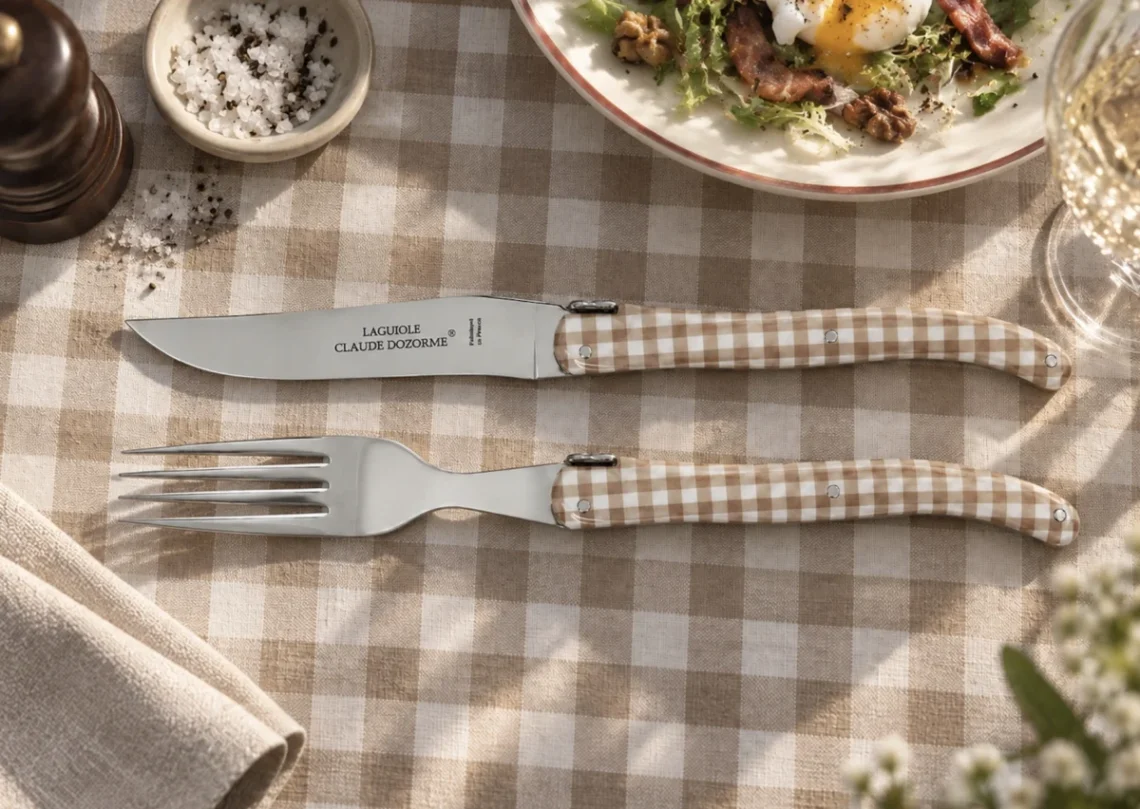
At the heart of the Claude Dozorme release is the enduring appeal of the classic checkerboard pattern, reimagined through a palette of vibrant yet sophisticated tones. However, the true distinction of the 1902 Vichy line lies not merely in its visual charm, but in the meticulous engineering required to craft each handle.
Unlike standard decorative cutlery where patterns are superficially printed, stenciled, or heat-transferred onto the surface, Claude Dozorme employs a specialized manufacturing technique. Real Vichy fabric is meticulously embedded directly into cast resin. The textile is physically woven into the handle’s core, ensuring that the iconic checkered pattern cannot chip, fade, or wear away over time. This technique yields a brilliant optical depth, allowing light to catch the resin and illuminate the fabric beneath with a tactile, layered dimension.
The name "1902" serves as a direct homage to the rich heritage of the brand, commemorating the year the Claude Dozorme cutlery workshop was established in Thiers, France—a town widely recognized as the capital of French cutlery. While each knife, fork, and spoon carries the substantial weight of more than a century of master craftsmanship, the contemporary handle design speaks a distinctly modern language.
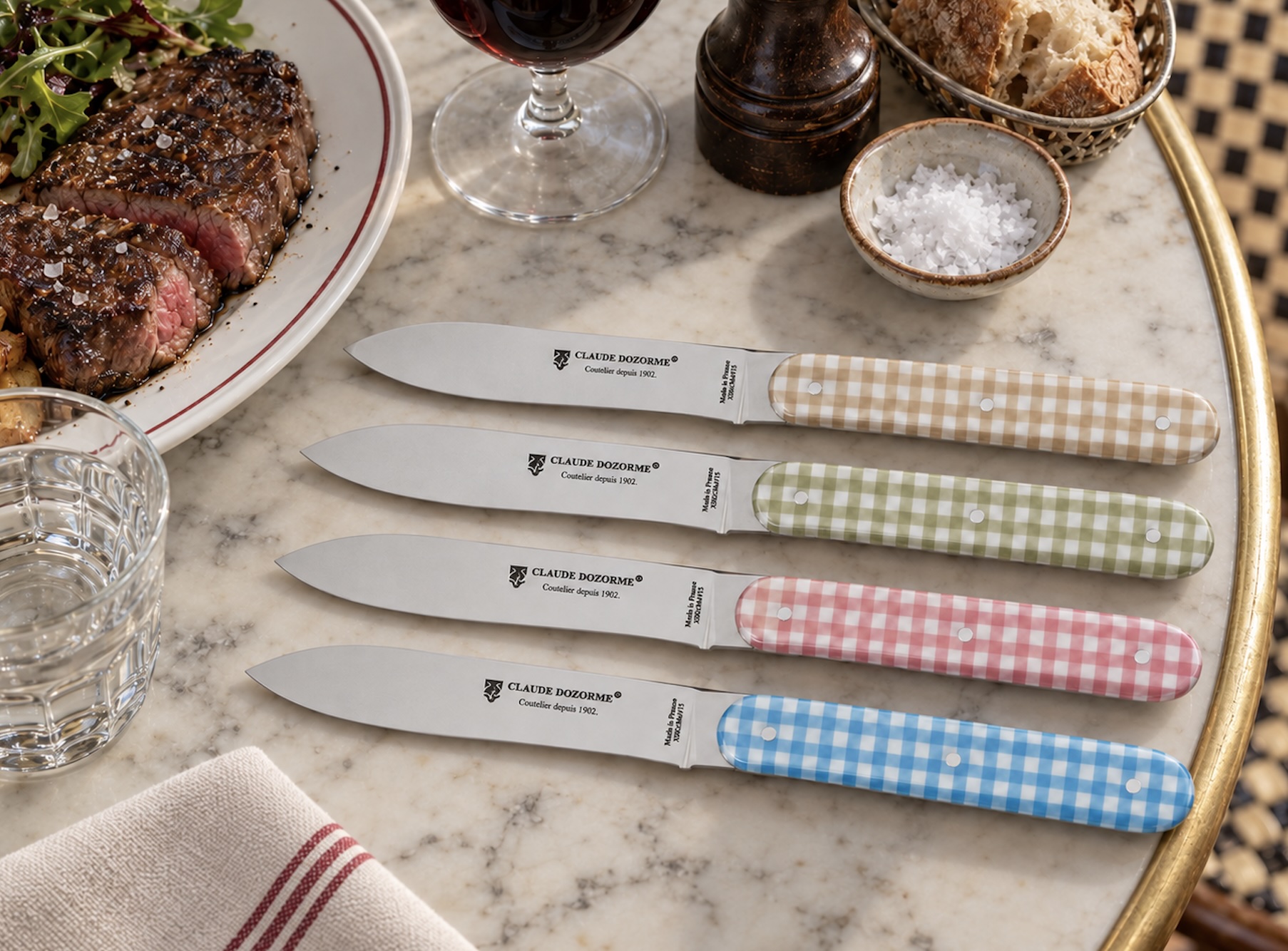
The Four New Colourways:
- Café: A rich, grounding brown that introduces warmth, earthiness, and understated sophistication to autumnal and neutral table settings.
- Olive: A subtle, organic green that captures the rustic elegance of Mediterranean dining, perfectly suited for botanical or nature-inspired tablescapes.
- Pink: A vibrant yet delicate pastel hue that brings a sense of whimsy, romance, and modern pop-art flair to contemporary dining rooms.
- Blue: A lively, maritime-inspired shade that offers crisp contrast and nautical charm, ideal for both indoor formal dining and relaxed alfresco meals.
Chronology: From Thiers Origins to Modern Tableware Icon
To fully appreciate the significance of the 1902 Vichy expansion, it is essential to trace the historical trajectory of both the region and the brand that calls it home.
1902: The Foundation in Thiers
The French commune of Thiers, situated in the Auvergne-Rhône-Alpes region, has been the undisputed epicenter of French cutlery manufacturing for over six centuries. Master bladesmiths in Thiers have long passed down secrets of forging, tempering, and sharpening from generation to generation. It was within this crucible of craftsmanship that Claude Dozorme established its roots in 1902, quickly earning a reputation for uncompromising quality and functional elegance.
Late 20th to Early 21st Century: Innovation Meets Tradition
While many legacy cutlery houses struggled to survive the industrial shifts of the late 20th century, Claude Dozorme embraced a dual strategy: preserving traditional hand-assembly methods while aggressively innovating in design and materials. The company expanded its portfolio from functional kitchen tools to high-end artistic tableware, collaborating with contemporary designers to push the boundaries of what cutlery could look like.
The Inception of the Vichy Concept
The introduction of the Vichy pattern into the brand’s repertoire marked a departure from monochromatic steel and traditional horn or wood handles. Inspired by the iconic French checkered textile—which originated in the town of Vichy and gained international fame through icons like Brigitte Bardot—Claude Dozorme sought to translate textile design into durable tableware. The technical breakthrough of casting real fabric inside transparent resin transformed a fleeting fashion trend into a timeless, durable tabletop staple.
October 2026: The Expansion Launch
Marking its latest milestone, Claude Dozorme officially unveils the café, olive, pink, and blue colourways. This release responds directly to global interior design trends that favor mixed materials, tactile experiences, and personalized tablescapes that defy rigid, monochromatic minimalism.

Supporting Data: The Global Tableware and Cutlery Market
The launch of the new Vichy colourways arrives at a fascinating juncture for the global homeware and tableware industry. Market insights underscore why heritage brands are increasingly investing in vibrant, expressive tabletop accessories.
- Rise of "Tablescapping": Over the past several years, the art of "tablescapping"—the deliberate, artistic styling of dining tables for everyday meals as well as special events—has surged globally, driven heavily by visual social media platforms like Instagram and Pinterest. Consumers are no longer satisfied with uniform, white-plate-and-silverware sets; they demand statement pieces that tell a story.
- Demand for Tactile Quality: According to retail analytics within the luxury homeware sector, consumer spending has pivoted firmly toward items that offer a sensory experience. Products that combine visual depth (such as resin-encased textiles) with ergonomic functionality command higher loyalty and repeat purchases.
- The Made-in-France Value Proposition: Despite global manufacturing shifts, goods bearing the "Made in France" designation—particularly from regions with Protected Geographical Indication (PGI) status like Thiers—continue to command premium pricing. Consumers view these items as heirloom investments rather than disposable commodities.
- Color Psychology in Dining: Post-pandemic interior design trends have heavily favored comforting, grounding tones (like café and olive) balanced by optimistic pops of color (like pink and blue). Claude Dozorme’s new palette precisely mirrors these broader macroeconomic and psychological shifts in consumer taste.
Official Responses and Industry Perspectives
Industry insiders and company representatives have highlighted the strategic importance of the 1902 Vichy expansion within the broader luxury tableware landscape.
While the technical details of the resin-encased weaving process remain closely guarded trade secrets within the Thiers workshop, representatives for Claude Dozorme have emphasized that the brand’s core mission is to inject joy back into daily dining rituals.
"Cutlery should never be treated as an afterthought," notes a brand spokesperson. "With the 1902 Vichy series, we wanted to honor our historical commitment to the art of French bladesmithing while offering our customers a way to express their personal style. By embedding real Vichy fabric into the handle, we are literally weaving French textile heritage into the fabric of daily life. The new café, olive, pink, and blue colourways open up endless possibilities for contemporary tablescapes."
Independent tableware curators and design critics have echoed this sentiment. High-end retail buyers attending European trade fairs have noted that the combination of nostalgic patterns with modern colourways fills a specific gap in the market. Consumers want nostalgia, but they want it executed with modern durability and a fresh, unexpected palette.

Implications: What the 1902 Vichy Expansion Means for the Industry
The introduction of these four new colourways carries several important implications for the tableware sector, interior design trends, and consumer buying habits.
1. The Redefinition of Everyday Luxury
For decades, fine cutlery was strictly reserved for special occasions and formal dinner parties, often locked away in velvet-lined boxes. Collections like Claude Dozorme’s 1902 Vichy challenge this paradigm. By combining dishwasher-safe, durable resin handles with cheerful, everyday designs, the brand encourages consumers to elevate their mundane Tuesday-night dinners into celebratory experiences. This reflects a broader cultural shift toward "everyday luxury"—investing in high-quality items designed to be used and enjoyed daily rather than saved for posterity.
2. A Masterclass in Heritage Branding
Heritage brands face a constant tension: how to honor their historical legacy without becoming obsolete or overly archaic. Claude Dozorme’s strategy offers a blueprint for success. By taking a foundational design element (the 1902 birthplace milestone) and pairing it with a playful, highly adaptable pattern (Vichy check) updated in modern hues, the brand bridges generational divides. Younger demographic cohorts—millennials and Gen Z consumers who value authenticity and aesthetic storytelling—are drawn to brands that respect history while speaking their aesthetic language.
3. Sustainability and Heirloom Longevity
In an era dominated by fast-furniture and disposable home goods, the enduring construction of Claude Dozorme cutlery stands as an antidote to throwaway culture. Because the Vichy fabric is structurally integrated into cast resin and paired with high-grade stainless steel forged in Thiers, these pieces are built to last for decades. The expansion into versatile new colours ensures that consumers can build cohesive, expandable collections that adapt to changing interior design trends over time, reducing the impulse for frequent replacement.
Conclusion
Claude Dozorme’s expansion of the 1902 Vichy collection with café, olive, pink, and blue colourways is much more than a routine product update; it is a masterclass in how historic craftsmanship can continually reinvent itself. By fusing the timeless charm of French textile design with the industrial rigor of Thiers bladesmithing, Claude Dozorme has ensured that the dining table remains a canvas for personal expression, artistry, and joy for years to come.