Main Facts
The exploration of dietary factors in the management and prevention of neurodegenerative conditions has advanced significantly since James Parkinson first documented the foundational symptoms of Parkinson’s disease two centuries ago. While early clinical definitions focused strictly on neurological presentation, modern research increasingly highlights the profound impact of nutrition on disease etiology and progression. Current scientific consensus suggests that dietary patterns rich in animal fats, mercury, iron, and dairy products correlate with an increased risk of developing Parkinson’s disease. Conversely, plant-based diets rich in antioxidants appear to offer a protective shield against the condition.
Plant-based nutrition operates heavily by preserving body tissues from oxidative stress and chronic inflammation—two core pathological hallmarks of chronic degenerative illnesses. However, the broader category of plant foods is not uniformly beneficial. A notable exception is graviola, commonly known as soursop. While consuming soursop can help lower blood pressure and reduce uric acid levels, it also introduces potent neurotoxic compounds into the body. Epidemiological and population studies demonstrate a distinct link between the overconsumption of soursop and the development of an atypical, highly destructive form of Parkinsonism.
Beyond risk reduction, researchers have spent decades investigating whether dietary interventions can actively manage existing Parkinson’s disease symptoms. Plant-based diets, whole grains, and antioxidant-dense fruits like strawberries have shown promise in anecdotal case reports and small-scale observations for mitigating motor and non-motor symptoms. Among the tens of thousands of edible plant varieties worldwide, coffee has emerged as a primary focus of neurological research. Observational data has long associated regular coffee and caffeinated tea consumption with a lower incidence of Parkinson’s disease, and some studies even suggest that diagnosed patients who consume caffeinated beverages may cut their risk of premature mortality in half.
Yet, epidemiological correlation does not establish direct causation. To determine whether caffeine acts as a true therapeutic agent rather than a mere marker of lifestyle habits, clinical researchers have subjected coffee’s primary active compound to rigorous, randomized, placebo-controlled trials. While short-term studies demonstrated undeniable, rapid improvements in motor symptoms within weeks, longer-term trials complicated this narrative, revealing a frustrating reality about the limits of caffeine as a sustained pharmacological intervention.
Chronology
To understand how the medical community’s perception of caffeine as a Parkinson’s treatment has evolved, it is essential to examine the chronological progression of clinical trials and nutritional research over the last several decades:
- Pre-2000s (Epidemiological Foundations): For years, population-based and prospective cohort studies consistently noted an inverse relationship between coffee consumption and the incidence of Parkinson’s disease. Individuals who regularly drank caffeinated beverages developed the condition at significantly lower rates than non-coffee drinkers.
- Early 2000s (The Search for Symptomatic Relief): Nutritional case reports began emerging that highlighted the potential of specialized diets—incorporating low animal fat intake, whole grains, and antioxidant-rich berries like strawberries—to ease existing Parkinson’s symptoms. This laid the groundwork for testing isolated plant components in clinical settings.
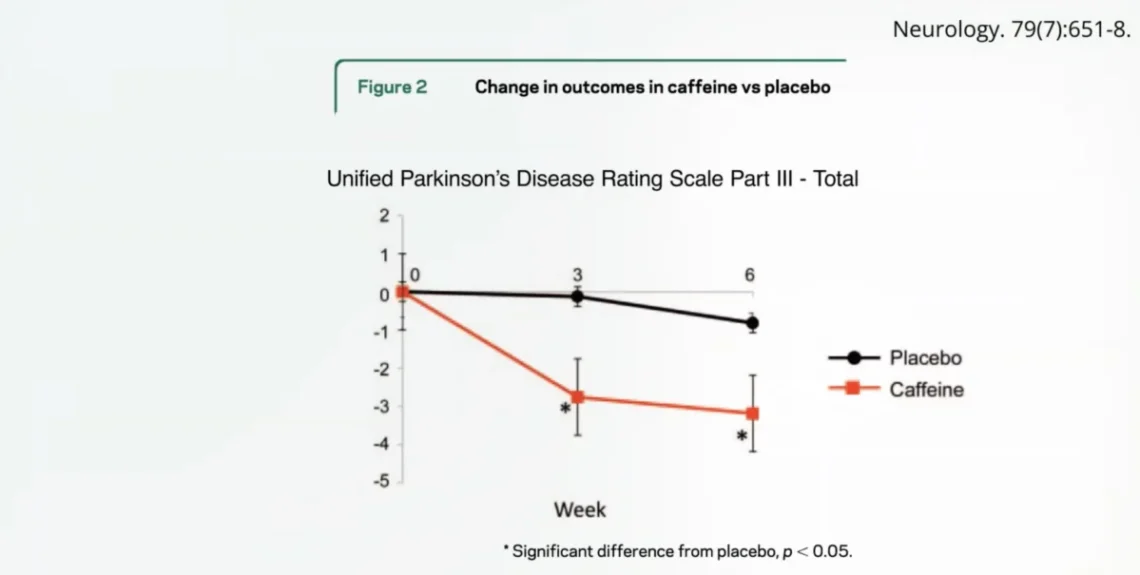
- The 2012 Breakthrough (Short-Term Trial): Researchers launched a pivotal six-week, randomized, placebo-controlled, double-blind trial to test caffeine as an active symptomatic treatment. Participants started with a modest dose (roughly equivalent to one cup of coffee twice daily) and escalated to two cups’ worth twice daily. The results were striking: within just three weeks, participants in the caffeine group experienced statistically significant improvements in their Parkinson’s symptoms compared to the placebo group.
- 2012–2017 (The Tachyphylaxis Hypothesis): Following the 2012 trial, neuroscientists debated the longevity of these benefits. Caffeine is well-known for its tachyphylactic properties—meaning its stimulating and physiological effects tend to diminish over time with repeated, chronic use, a phenomenon frequently observed when combating daytime sleepiness. This prompted calls for a longer-duration trial to see if the motor benefits would hold.
- The 2017 Reality Check (Long-Term Trial): Five years after the initial short-term success, a definitive, longer-term randomized trial was published. Parkinson’s patients were administered approximately two cups of coffee’s worth of caffeine twice daily for more than six months. The outcome disappointed researchers: at the conclusion of the trial, there was no statistically significant clinical benefit over the placebo group, demonstrating that caffeine’s symptomatic efficacy does not endure over extended periods.
Supporting Data
The scientific literature surrounding caffeine and Parkinson’s disease relies heavily on randomized controlled trials (RCTs), biochemical assays, and epidemiological tracking. Analyzing the data from both short- and long-term trials clarifies why initial optimism was ultimately tempered by clinical reality.
In the landmark 2012 short-term trial, researchers measured changes in motor function and overall symptom severity using standardized neurological scoring systems, such as the Unified Parkinson’s Disease Rating Scale (UPDRS). Participants randomized to the active treatment group ingested escalating doses of caffeine, reaching levels equivalent to several cups of black or green tea. Within 21 days, the data revealed a measurable reduction in motor rigidity and bradykinesia (slowness of movement) relative to the placebo cohort. For a brief window, coffee appeared to offer a remarkably safe, inexpensive, and accessible adjunct therapy for neurological management.
However, the 2017 long-term trial completely shifted the data profile. Spanning over six months and involving a larger, closely monitored patient demographic, this study tracked identical motor and functional endpoints. The quantitative data collected at the six-month mark showed that the initial divergence in symptom scores between the caffeine and placebo groups completely flattened. The body appeared to undergo neuro-adaptation or metabolic tolerance, neutralizing the acute dopaminergic or adenosine-receptor-blocking advantages initially conferred by the compound.
Furthermore, biochemical data regarding dietary risk factors provide vital context:
- Pro-inflammatory Diets: Diets heavy in animal proteins, saturated fats, and heavy metals (such as mercury and iron) accelerate systemic inflammation and oxidative stress, exacerbating neuronal death in the substantia nigra.
- Antioxidant Protection: Plant-based dietary patterns consistently demonstrate lower concentrations of inflammatory biomarkers, protecting neurological tissue from degenerative progression.
- The Soursop Anomaly: Chemical analyses of graviola identified specific lipophilic neurotoxins capable of inducing atypical Parkinsonism, proving that not all plant-derived substances possess neuroprotective properties.
Official Responses and Expert Consensus
The medical community, movement disorder specialists, and clinical nutritionists have evaluated the shifting data on coffee and caffeine, arriving at a cautious and unified consensus.
Neurological associations and clinical researchers emphasize that while epidemiological data strongly supports the preventative role of coffee in warding off the onset of Parkinson’s disease, the therapeutic landscape for active symptom management is vastly different. Leading movement disorder specialists note that the compelling results seen in three-week trials generated considerable clinical excitement, raising hopes for a cheap, universally available adjunct therapy.
However, following the publication of the six-month trial data, official medical recommendations shifted decisively. Governing bodies and expert consensus statements concluded that caffeine cannot be officially recommended as a reliable symptomatic therapy for parkinsonism. Because the pharmacological benefits dissipate due to tolerance or tachyphylaxis, prescribing or advising high caffeine intake for long-term motor management is clinically unjustified.
Nutrition experts and integrative medicine physicians similarly temper patient expectations. While encouraging plant-based diets rich in antioxidants, whole grains, and berries remains a cornerstone of holistic neurological care—largely due to systemic vascular and anti-inflammatory benefits—professionals warn patients against viewing coffee as a substitute for standard, evidence-based pharmacological treatments like levodopa or deep brain stimulation. The official stance balances appreciation for coffee’s preventative epidemiological profile with a realistic, evidence-based rejection of its long-term efficacy as a symptom-modifying drug.
Implications
The journey of testing coffee as a treatment for Parkinson’s disease carries profound implications for clinical research, nutritional science, and patient expectations.
1. The Danger of Short-Term Extrapolation in Clinical Trials
The stark contrast between the positive three-week trial and the null six-month trial serves as a cautionary tale for medical researchers. Interventions that show immediate symptomatic relief cannot be assumed to offer disease modification or lasting therapeutic value. Tachyphylaxis and physiological tolerance are formidable barriers in neuropharmacology. Future studies evaluating dietary supplements or mild stimulants must prioritize extended timeframes to ensure that observed benefits are durable rather than transient artifacts of acute metabolic shock.
2. Prevention Versus Treatment
A recurring theme in neurodegenerative research is the distinct boundary between primary prevention and tertiary treatment. Just because a dietary compound (such as caffeine or antioxidants) may reduce the lifetime risk of developing a disease does not automatically mean it can reverse or halt the progression of that same disease once clinical pathology is established. Public health messaging must clearly distinguish between dietary habits that foster long-term neurological resilience and treatments designed to manage active, advanced disease states.
3. The Holistic Role of Plant-Based Nutrition
While caffeine ultimately fell short as a long-term monotherapy, the broader framework of plant-based nutrition remains vital. The mechanisms linking high-antioxidant, low-animal-fat diets to reduced neuroinflammation suggest that what individuals eat plays an undeniable role in supporting overall brain health. Even if strawberries, whole grains, and plant-based patterns cannot cure Parkinson’s, optimizing systemic metabolic health reduces the burden of comorbidity and supports the neurological system against ongoing oxidative damage.
4. Patient Autonomy and Lifestyle Considerations
For millions of individuals living with Parkinson’s disease, the realization that coffee is not a miracle cure may feel disappointing. Yet, moderate coffee consumption remains generally safe for the vast majority of the population and continues to be supported by observational data pointing toward reduced overall mortality risk and lowered disease incidence. Patients should view coffee not as a prescription-strength medical intervention, but as part of a broader, enjoyable dietary pattern—always consulting their neurologist before making drastic alterations to their daily caffeine intake or medication regimens.