Please note: This report discusses the troubling issue of weight bias and discrimination, which may be a sensitive topic for some readers. This piece is part one of a two-part series adapted from Dr. Michael Greger’s bestselling book, How Not to Diet.
Main Facts: Unmasking Modern Society’s Hidden Prejudice
Often described by public health advocates as the last remaining "acceptable" form of social bias, weight stigma is a rampant, pervasive force characterized by the systemic discrimination, stereotyping, and marginalization of overweight and obese individuals. Unlike other forms of discrimination that have faced rigorous public condemnation and legal repercussion, weight bias remains deeply embedded in the cultural fabric, permeating everything from daily social interactions and employment opportunities to the very institutions designed to heal us: our health care systems.
The scope of this prejudice is staggering. Research indicates that weight stigma is not merely a collection of isolated incidents, but a continuous, daily barrage of indignities. Overweight and obese individuals—particularly women—frequently navigate a world that is physically unwelcoming and socially hostile. From navigating public infrastructure featuring physical barriers, such as inadequate seating in public transit and venues, to enduring micro-aggressions and outright hostility, the psychological and physical toll is immense.
While societal discourse often frames weight strictly through the lens of individual choices and public health crises, it rarely addresses the hostile environment faced by those living in larger bodies. This prejudice leaves victims vulnerable to systemic disadvantages in housing, employment, education, and medical care, creating a vicious cycle where the psychological toll of discrimination can actively undermine health and well-being.
Chronology: A Half-Century of Escalating Stigma
To understand how deeply ingrained weight bias is, one must look at how attitudes have shifted over generations. Contrary to the hope that societal progress would foster greater empathy, historical data reveals that weight stigma has actually worsened over time, taking root at astonishingly young ages.
Early Childhood Conditioning
Weight bias begins surprisingly early in human development. Studies examining social attitudes show that children as young as three years old already harbor negative stereotypes about overweight peers, readily describing them using derogatory terms such as "mean," "stupid," "lazy," and "ugly." As children age, this negative vocabulary expands and solidifies, reflecting a cultural conditioning that rewards thinness and punishes body diversity.
The Landmark 1961 Summer Camp Study
A famous study published in 1961 provided baseline empirical evidence of this phenomenon. Researchers presented children across various social, cultural, and ethnic backgrounds in California, Montana, and New York with a series of pictures depicting children with various medical conditions and physical differences. The lineup included a child with crutches and a leg brace, a child in a wheelchair, a child missing a hand, a facially disfigured child, and an obese child.
Across every demographic group tested, the results displayed "remarkable uniformity": the obese child consistently ranked dead last in social preference.
The 2003 Follow-Up: "Getting Worse"
Four decades later, in 2003, researchers published a long-awaited follow-up study replicating the 1961 experiment. The title of the published paper left no room for misinterpretation: "Getting Worse: The Stigmatization of Obese Children."
Astonishingly, the obese child was liked even less by children in the 2003 study than their counterpart had been in 1961. This chilling trajectory mirrors broader societal trends; national surveys tracking perceived weight discrimination have recorded a staggering nearly 70% increase since the mid-1990s.
Supporting Data: The Daily Toll and Institutional Attitudes
Quantifying weight stigma reveals a staggering frequency of discriminatory events. In a telling study, fifty overweight women were asked to keep a detailed daily diary recording every instance they felt stigmatized because of their weight. Over the course of a single week, the participants recorded more than 1,000 instances of perceived weight bias.
On average, an overweight woman can expect to encounter:
- Harassment, including verbal insults and name-calling.
- Physical barriers, such as being unable to fit into standard public seating.
- Discriminatory service, such as receiving poorer treatment in restaurants, retail stores, and service environments.
Altogether, these incidents occur roughly three times a day for overweight women. Obese men report roughly one-third of that frequency, though anti-fat bias still presents as a regular occurrence in their daily lives.
Employment and Professional Bias
This bias extends heavily into the professional sphere. Studies utilizing professional actors posing as job applicants—fitted with theatrical prostheses to simulate an overweight appearance—revealed that these actors were significantly more likely to face hiring discrimination compared to when they applied at their normal body weight. Employment bias was found to be exceptionally prejudiced against overweight women when compared directly to men.
Social Ranking Surveys
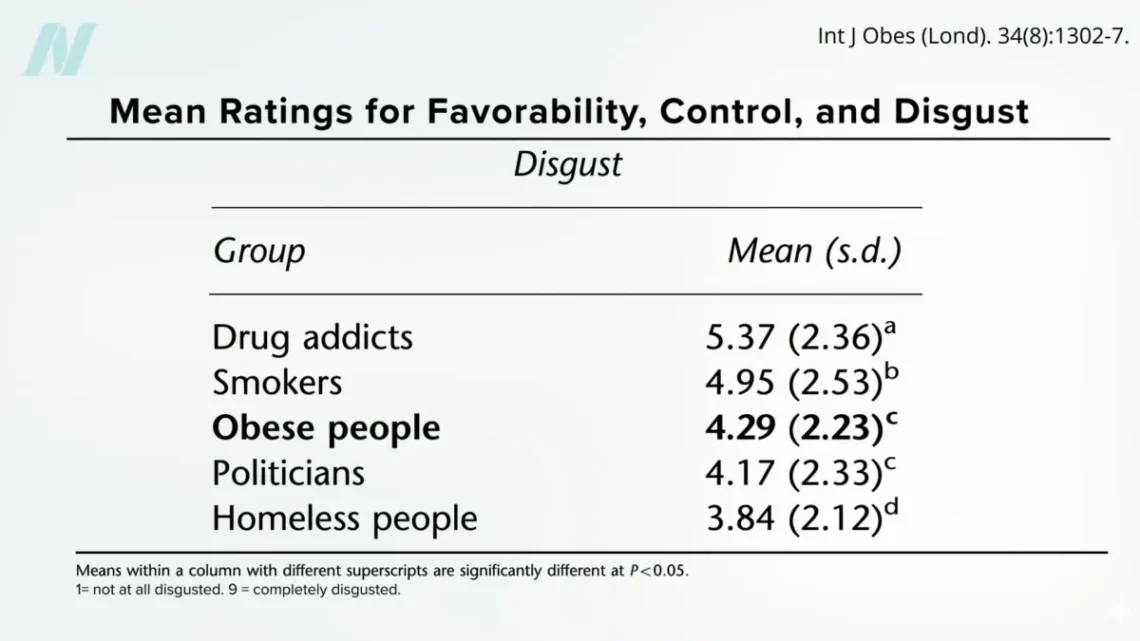
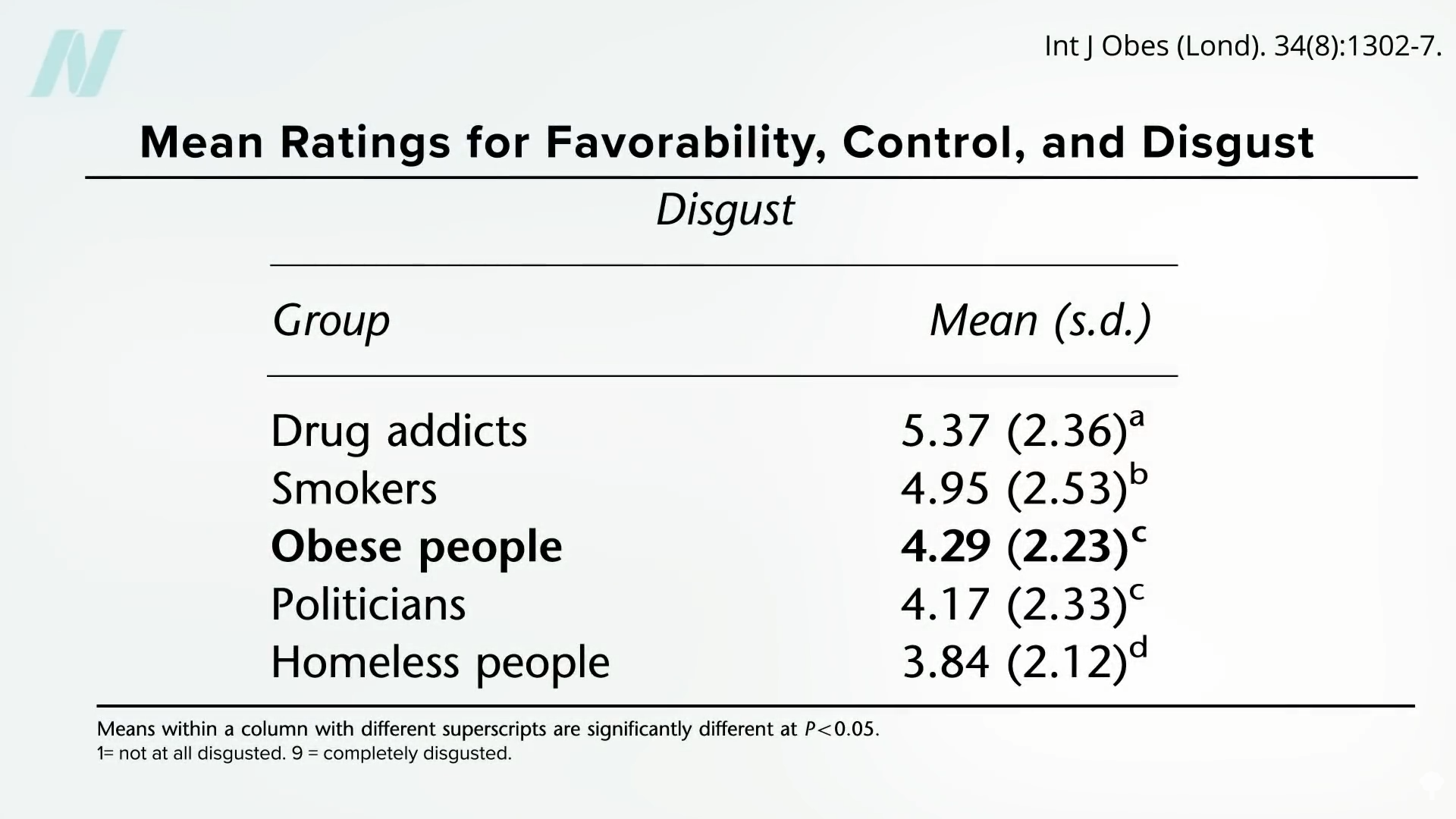
When compared against other stigmatized groups in sociological surveys, the depths of anti-fat attitudes become even clearer. Researchers compared public perceptions across 16 marginalized social groups, including individuals experiencing homelessness. The results showed that "only drug addicts and smokers were seen as more disgusting than obese people."
Remarkably, in the same data set, obese individuals effectively tied with politicians in public disgust ratings—a grim testament to how deeply vilified larger bodies are in the public consciousness.
Official Responses: Educators, Parents, and Medical Professionals
The institutional betrayal of overweight individuals is perhaps most evident when examining the attitudes of those in positions of trust, authority, and care: educators, parents, and medical professionals.
Educators and School Staff
School environments should be safe havens for developing children, yet surveys of teachers and school administrators reveal troubling levels of internal bias. More than a quarter of surveyed school staff members openly stated that becoming obese is "one of the worst things that could happen to a person." When teachers harbor these beliefs, the risk of unaddressed bullying, lower academic expectations, and emotional alienation for heavier students increases exponentially.
Parental Disconnect
Perhaps most heartbreaking is the presence of bias within families. Research demonstrates that parents can harbor severe weight prejudices against their own children. For instance, studies have noted instances where parents provided significantly less financial support for college to their overweight daughters compared to their thinner siblings. As prominent obesity researchers have noted: "It is strong prejudice indeed when parents discriminate against their own children."
The Medical Community: Doctors and Nurses
Perhaps most alarming is the pervasive presence of weight bias within the medical establishment. Rather than acting as a neutral sanctuary of healing, the doctor’s office is frequently a site of psychological distress for larger patients.
- Physician Attitudes: A representative national survey found that more than half of physicians viewed obese patients as "awkward, unattractive, ugly, and noncompliant."
- Nursing Staff: Approximately a quarter of surveyed nurses either agreed or strongly agreed with the explicit statement: "Caring for an obese patient usually repulses me."
- Specialized Biases: Even among obesity specialists—professionals whose entire careers are dedicated to treating the condition—explicit anti-fat attitudes worsened significantly in surveys taken between 2001 and 2013. Specialists increasingly described fat people as "significantly more lazy… stupid… and worthless… compared to thin people."
Even historical medical literature reflects this dark legacy. An excerpt from the Annals of Internal Medicine historically characterized the condition with the blunt declaration: "Obesity is an aesthetic crime: it is ugly."
Implications: Health Consequences and the Fractured Patient-Physician Relationship
The consequences of systemic weight bias in health care are not merely emotional; they are life-threatening. When medical professionals harbor disdain for their patients, the quality of care deteriorates, leading to catastrophic downstream health outcomes.
Avoidance of Preventive Care and Cancer Screenings
Because of anticipated or experienced mistreatment, many overweight and obese individuals delay or entirely avoid seeking medical attention. This avoidance is particularly lethal regarding routine cancer screenings.
- Obese women face a higher risk of developing cervical, endometrial, and ovarian cancers.
- Despite this elevated risk, they are statistically less likely to be screened.
- Morbidly obese patients exhibit only about half the odds of receiving recommended pelvic examinations compared to their thinner peers.
Direct Refusal of Care
In some cases, avoidance is compounded by direct refusal from medical providers. An investigative poll conducted by the Sun Sentinel revealed that as many as one in seven OB/GYN practices in South Florida refused to see heavier women, implementing strict weight cut-offs for new patients starting at just 200 pounds.
Short Shrift and Compromised Rapport
Even when physicians do accept obese patients, the quality of care often suffers. In experimental studies where physicians were randomized to review identical medical charts of a migraine patient—presented as either average weight, overweight, or obese—doctors stated they would give the obese patient roughly 28% less of their time.
Furthermore, analysis of recorded doctor-patient visits shows that physicians build significantly "less emotional rapport with overweight and obese patients," rushing appointments and focusing entirely on weight while ignoring other systemic health complaints.
The Illusion of Respect
Curiously, studies show a profound disconnect in how patients perceive this treatment. In a study tellingly titled "Obese Patients Overestimate Physicians’ Attitudes of Respect," researchers found that despite harboring clear negative attitudes and disdain, patients frequently reported high satisfaction with their providers.
While doctors may be successfully masking their disdain during consultations, researchers warn that this lack of authentic respect fundamentally undermines the integrity of the patient-physician relationship. True healing requires trust, safety, and mutual respect—elements that are systematically eroded by the quiet epidemic of weight bias.
The discussion continues in part two of this series: The Burden of Weight Bias, drawn from Dr. Michael Greger’s comprehensive work, How Not to Diet.