Main Facts: The Battle for September’s Kitchen
For anyone who has ever felt a twitch of irritation at the sudden, relentless onslaught of pumpkin spice lattes and faux-fall foliage during an 85-degree September afternoon, a culinary sanctuary has arrived. While retailers rush to usher in the months of heavy wool coats, shivering, and long-simmered stews, a counter-movement is quietly taking shape over a hot stove.
The core of this rebellion is simple: refusing to abandon peak summer produce just because the calendar says September. At the heart of this seasonal tug-of-war stands the tomato—vibrant, juicy, and at the absolute peak of its powers just as retail aisles begin pivoting toward apples and squash.

Rather than succumbing to the premature pressure of autumnal comfort foods, home cooks are being invited to embrace a brilliant, simplified take on a classic comfort dish: Tomato Risotto with Frizzled Red Onions. This dish strips away the fussy, labor-intensive dogma traditionally associated with Italian cooking—throwing out heavy broths, constant arm-aching stirring, and mountains of dairy—to let the pure, unadulterated flavor of late-summer tomatoes shine.
Chronology: From Stuffed Tomatoes to Oven-Baked Simplicity
The evolution of this ultimate late-summer comfort dish didn’t happen overnight. Its timeline stretches back through years of kitchen experiments, tracing a logical path from stuffed vegetables to streamlined one-pot wonders.

- The Inspiration Years: Years prior, a beloved recipe for rice-stuffed tomatoes captured the imaginations of home cooks everywhere. The defining characteristic of that dish was the way short-grain rice greedily absorbed the pure, bright, clear-noted tomato sauce surrounding it.
- The Epiphany: The obsession with that specific flavor profile eventually sparked a culinary lightbulb: Why not isolate that exact filling and turn it into a standalone, primary dish?
- Breaking the Rules: This led directly to the development of a streamlined tomato risotto. By ditching the traditional, time-consuming stovetop stirring method in favor of an oven-baked technique, the cooking process was modernized.
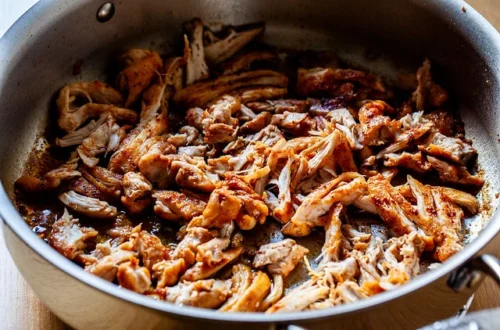
- The Final Touch: The addition of thinly sliced red onions, "frizzled" to a crisp, golden-brown perfection early in the cooking process, provided the final textural contrast needed to elevate a simple weeknight grain dish into a late-summer masterpiece.
Supporting Data & Recipe Mechanics: Deconstructing the Myth of Risotto
For decades, culinary orthodoxy has claimed that making a proper risotto requires adherence to strict, almost punishing rules. Traditionalists insist upon continuous, meditative stirring at the stove, pre-warmed broths infused with aromatics, and a heavy-handed finale of butter and cheese.
Recent kitchen science and practical testing, however, have systematically dismantled these mandatory hurdles. The tomato risotto technique proves that exceptional results can be achieved with a fraction of the effort:

- The Liquid Base: Instead of complex, pre-made vegetable or chicken broths that can mask delicate flavors, this recipe relies purely on grated tomato pulp and plain water. This ensures that the star ingredient—the tomato—tastes entirely like itself.
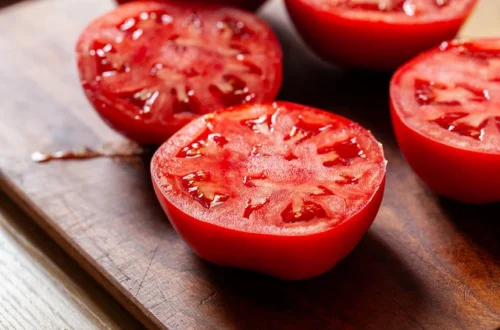
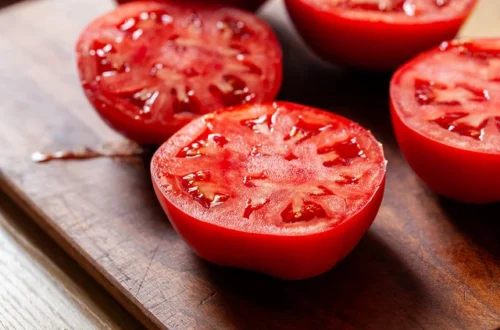
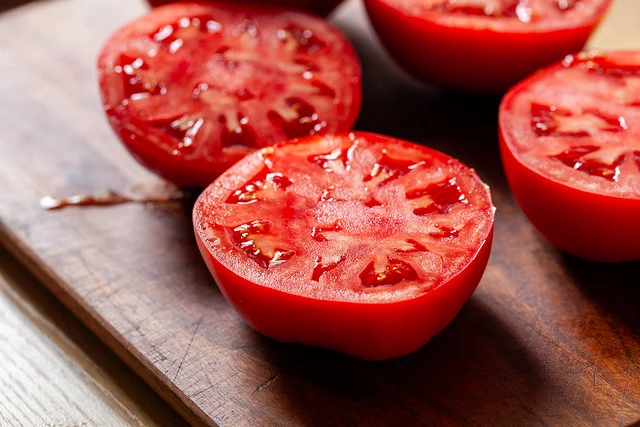
- The Prep: Halved tomatoes are pressed cut-side down against the large holes of a box grater. This extracts the lush flesh and juices while leaving the fibrous outer skins behind, yielding roughly 2.5 to 3 cups of pure tomato pulp.
- The Technique: Using a 4-quart Dutch oven or a deep, oven-safe braiser, thinly sliced red onions are cooked in olive oil until deeply golden and crisp. Half are reserved for a final garnish; the other half stays in the pot. Uncooked rice is toasted in the onion and garlic aromatics for three minutes, splashed with wine, combined with the tomato pulp and water, brought to a simmer, and covered.
- The Bake: Transferred to a 350°F oven for 25 to 30 minutes, the oven environment cooks the rice evenly without requiring a single minute of standing over the burner with a wooden spoon.
- The Finish: A brief two-minute post-bake vigor stirring creates the creamy, velvety texture characteristic of risotto, finished off with a knob of butter (or left entirely vegan with olive oil), torn basil, parmesan, and the reserved frizzled onions.
Official Responses: Navigating the Emotional Toll of Seasonal Transitions
While culinary debates often revolve around technique, food is deeply intertwined with psychological milestones. The rush toward autumn is rarely just about weather; it often coincides with major life transitions that leave families scrambling for grounding routines.
When asked whether the fierce defense of summer produce might be a psychological projection of complex emotional states—such as watching one child embark on middle school while another enters their final, high-stakes year of high school—the kitchen’s resident voice issued a swift and definitive statement:

"I also want to make it absolutely clear that no matter how it seems, I am not projecting my complicated feelings about one child starting middle school and the other, their senior year of high school, on dwindling summer produce. Not even a little."
Despite the tongue-in-cheek denial, food psychologists and home cooks alike recognize the kitchen as a vital theater for emotional processing. As schedules fill up with back-to-school carpools and autumn pressures mount, carving out thirty minutes to coax deep, sun-drenched flavors out of late-season tomatoes offers a therapeutic anchor against the rushing tide of time.

Implications: A Blueprint for Mindful, Seasonal Eating
The embrace of oven-baked tomato risotto with frizzled red onions carries broader implications for modern home cooking. It challenges the dogmatic traditions that often intimidate novice cooks away from making dishes like risotto, proving that comfort food does not need to be complicated or labor-intensive to be exceptional.
Furthermore, it champions a more mindful, flexible approach to seasonal eating. Rather than blindly flipping a psychological switch on September 1st to transition from fresh salads to heavy root vegetables, home cooks are encouraged to honor the overlap of the seasons. By celebrating the tail end of summer harvests while acknowledging the cooler nights ahead, the kitchen becomes a bridge rather than a battlefield between what was and what is next.

Whether served fully loaded with parmesan and butter or kept strictly plant-based with a drizzle of olive oil and fresh basil, this dish stands as a delicious reminder: there is always time to slow down, ignore the retail calendar, and enjoy another week of summer.