Main Facts: The Genesis of a Summer Phenomenon
In the ever-evolving landscape of modern home cooking, few culinary voices carry the weight of accessible, thoroughly tested ingenuity quite like Deb Perelman of Smitten Kitchen. Best known for demystifying complex baking and elevating weeknight dinners through her bestselling cookbooks and long-running food blog, Perelman has recently captured the culinary zeitgeist with a deceptively simple dish: a raw snow pea salad paired with creamy avocado and toasted walnuts.
Moving far beyond the traditional confines of the wok and the stir-fry pan, this recipe reimagines the humble snow pea. Once relegated to a supporting role tossed alongside water chestnuts and bell peppers over high heat, the snow pea is here celebrated for its crisp, vegetal architecture when consumed entirely raw. Inspired originally by a dish at the now-defunct, critically acclaimed NoMad restaurant in New York City, Perelman’s updated creation drops the pecorino cheese featured in her previous cookbook, Smitten Kitchen Keepers, in favor of a cleaner, brighter flavor profile.
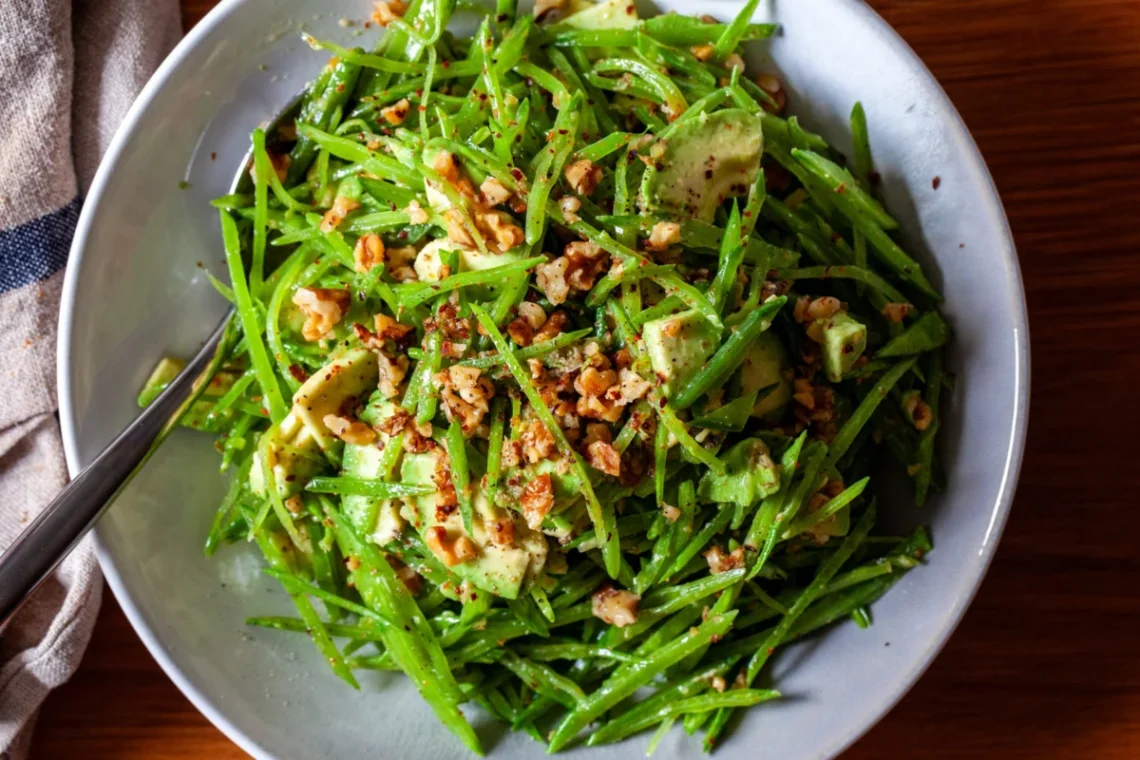
The resulting dish relies on a trifecta of textures: slaw-like ribbons of meticulously sliced snow peas, the rich crunch of toasted walnuts, and the velvety pillows of ripe avocado. Bound together by a vibrant dressing of fresh lemon juice, high-quality olive oil, kosher salt, black pepper, and crushed red pepper flakes, the salad has been hailed by early adopters as an essential antidote to summer heat waves and end-of-year culinary fatigue.
Chronology: From Fine Dining Inspiration to Weeknight Staple
The journey of this viral salad spans over a decade, tracing a path from upscale New York gastronomy to the harried kitchens of parents sprinting toward summer vacation.

- The NoMad Era (Early 2010s): Long before developing her own iteration, Perelman encountered a raw snow pea dish at the acclaimed NoMad restaurant. The concept of utilizing snow peas uncooked—harnessing their natural crispness and subtle sweetness without the intervention of heat—left a lasting impression.
- The Cookbook Iteration (Smitten Kitchen Keepers): Translating the fine-dining concept into a home-cook-friendly format, Perelman initially developed a version featuring pecorino cheese and walnuts. While well-received, the recipe served as a stepping stone.
- The Recent Cravings Pivot (Late Spring): Driven by intense seasonal cravings and the exhaustion typical of the final weeks of the academic year, Perelman streamlined the recipe further. She eliminated the cheese to let the bright, clean flavors of the produce shine through, officially introducing the avocado-and-walnut variation to her readership.
- Present Day: The recipe has established itself as a flagship dish for warm-weather cooking, designed specifically for days when culinary ambition hits a seasonal low, yet standards for flavor remain uncompromising.
Supporting Data: Anatomy of a Minimalist Masterpiece
While the ingredient list is remarkably concise—requiring fewer than half a dozen main components—the mechanics of the recipe rely heavily on technique and structural balance. Culinary data from test kitchens and home cooks highlight several key operational elements:
- Ice Bath Hydration: Snow peas must be soaked in a large bowl of ice water for 10 to 20 minutes prior to preparation. This step maximizes cell turgidity, ensuring the ultimate "crunch" factor upon consumption.
- The Toasting Principle: Walnuts undergo a chemical transformation when subjected to dry heat. Toasting them on a sheet pan at 350°F for 6 to 10 minutes releases essential oils, neutralizing bitterness and amplifying nutty depth.
- Dimensional Integrity: Rather than leaving the snow peas whole or roughly chopped, the recipe mandates cutting them lengthwise into thin ribbons after gathering them into small stacks. This mimics the mouthfeel of a delicate slaw and allows the citrus-olive oil emulsion to cling evenly to every surface.
- Acid-Timing Dynamics: Because raw snow peas are delicate, the acidity of the lemon juice in the dressing can slightly discolor the green pigment over time. Consequently, data and empirical kitchen tests confirm that the dressing must be applied immediately prior to serving to maintain visual appeal and textural integrity.
Official Responses: The Culinary Community and Home Cook Reactions
The reception within the food blogging community and among Perelman’s dedicated digital following has been overwhelmingly positive. Food critics and home cooks alike have praised the recipe for its adherence to the "less is more" philosophy.
Culinary analysts note that recipes requiring fewer than five core ingredients often face skepticism regarding depth of flavor, yet this dish successfully bridges the gap between simplicity and complexity. "When you strip away heavy proteins, complex sauces, and masking agents like aged cheeses, every single ingredient has to pull its weight," notes one independent food reviewer. "The pepper flake provides warmth, the lemon provides sharp high notes, the walnut offers earthy richness, and the avocado grounds the entire dish."
Furthermore, readers experiencing the universal late-spring burnout—often colloquially referred to as the "May slide"—have lauded the recipe for its minimal cleanup and rapid execution time. Official commentary across social media platforms underscores a collective cultural appreciation for food that feels restorative rather than demanding.

Implications: The Shift Toward Low-Effort, High-Impact Summer Cooking
The rapid popularity of the snow pea and avocado salad signals a broader cultural and culinary shift in how society approaches seasonal cooking during periods of elevated stress and environmental heat.
1. Redefining Produce Hierarchies
For decades, western culinary traditions have enforced strict boundaries regarding which vegetables are eaten raw versus cooked. Root vegetables are frequently grated, leafy greens are saladed, and pods like snow peas are almost universally blanched or stir-fried. By subverting this expectation, dishes like this challenge home cooks to re-evaluate the raw potential of everyday refrigerator staples. The success of the recipe proves that consumers are increasingly eager to experiment with texture over cooking technique.
2. The Psychology of "Exhaustion Cooking"
As modern lifestyles grow increasingly demanding, the traditional notion of spending hours over a multi-course meal is frequently sidelined in favor of survival gastronomy. However, contemporary consumers are unwilling to sacrifice quality or flavor in the name of speed. This salad represents a triumph of "exhaustion cooking"—a design philosophy where minimal effort yields maximum sensory reward. It proves that nutritious, sophisticated food does not require elaborate preparation, validating the needs of working parents, students, and busy professionals.
3. Economic and Logistical Accessibility
In an economic climate marked by fluctuating grocery prices and inflation, minimalist recipes utilizing versatile, accessible produce offer practical relief. Snow peas, walnuts, and avocados are widely available across mainstream supermarkets, requiring no specialized international ingredients or expensive specialty cuts of meat. As a result, the dish democratizes fine-dining inspiration, bringing a touch of NoMad-caliber sophistication directly to the everyday home table without straining household budgets.

Ultimately, the snow pea salad with avocado transcends its status as a simple seasonal side dish. It stands as a testament to the power of thoughtful ingredient pairing, proving that when technique meets high-quality raw produce, culinary magic can be achieved in a matter of minutes.