By Cindy Augustine | Updated: September 10, 2026
Twenty-five years have passed since the morning of September 11, 2001—a day that fundamentally altered the skyline of New York City and the collective consciousness of the world. As the city reflects on this somber quarter-century milestone, a new CNN documentary, Top of the World, offers a poignant retrospective on one of the most singular institutions in American culinary history: Windows on the World.
Perched atop the 106th and 107th floors of the North Tower of the World Trade Center, the restaurant was more than a dining destination; it was a symbol of mid-century optimism, a triumph of architectural ambition, and, ultimately, the site of an unfathomable tragedy. Through the firsthand accounts of those who lived it—including day-one wine director Kevin Zraly, hostess Nathalie Tolentino, prep cook Sekou Siby, and executive chef Michael Lomonaco—the film reconstructs the rise, the cultural zenith, and the final moments of a place that once stood as the highest-grossing restaurant in the United States.
The Vision: Architecture and Ambition
The story of Windows on the World began as an act of urban alchemy. When the Twin Towers were completed in the mid-1970s, they were widely viewed as cold, imposing monoliths of commerce. The Port Authority of New York and New Jersey, tasked with the operation of the towers, recognized that the structures needed a "humanizing" element—a way to invite the public into the sky.
They turned to Joe Baum, a legendary restaurateur whose pedigree included the transformation of Tavern on the Green and the management of the Rainbow Room. Baum was tasked with an impossible brief: create a world-class dining destination at an altitude where no one had dared to anchor a kitchen before.
Designed by architect Warren Platner, the space was an aesthetic masterpiece. Spanning 50,000 square feet, the restaurant was a symphony of brass, warm woods, and floor-to-ceiling glass that turned the Manhattan skyline into a living, breathing backdrop. The interior was characterized by a sense of "glamorous optimism," with staff uniforms serving as costumes for the stage. Under the culinary direction of James Beard, the menu set a new standard for fine dining, while the wine list—curated by the pioneering Kevin Zraly—was widely regarded as the most comprehensive collection in the city.
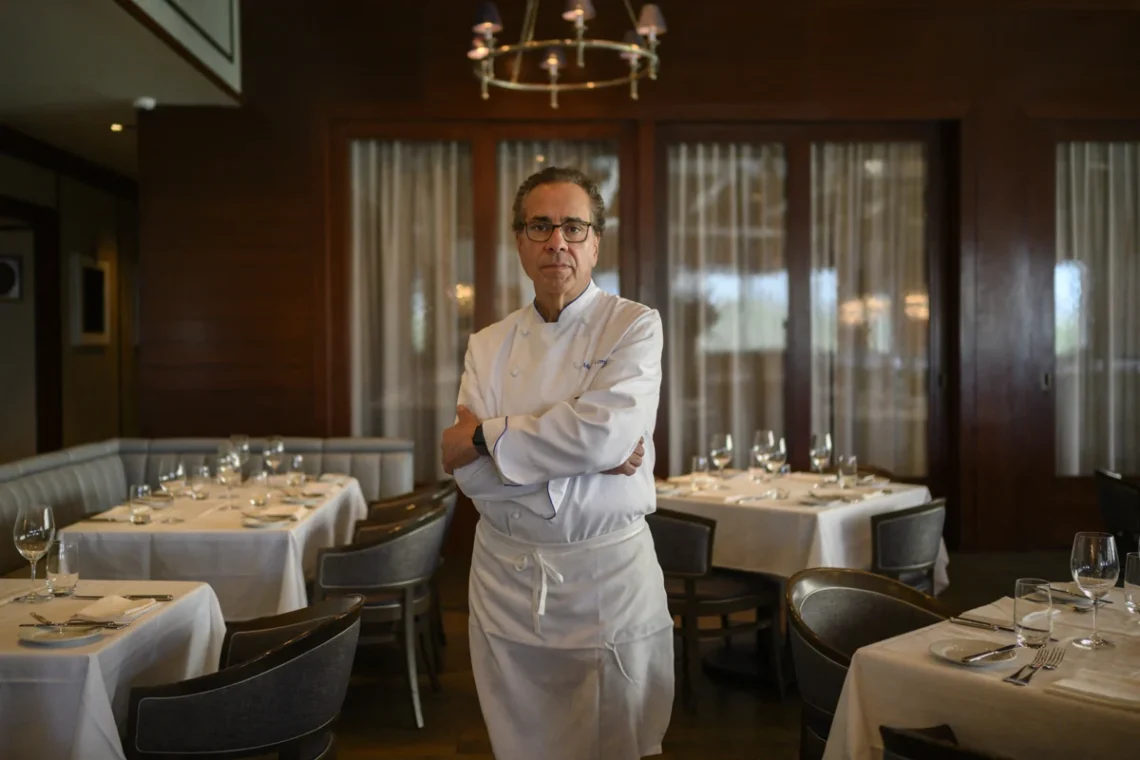
"Baum really was a visionary in so many ways," says Chef Michael Lomonaco, who serves as the documentary’s narrative anchor. "To put a restaurant on top of a building like that was unheard of. There weren’t a lot of buildings that had restaurants on higher floors—anywhere."
A Chronology of the Sky-High Stage
- 1976: Windows on the World opens to international acclaim. New York magazine dubs it "the most spectacular restaurant in the world."
- 1980s: The restaurant transitions through various management iterations as hotel groups take over from Baum’s original vision. During this period, the venue occasionally struggled with a reputation as a "tourist trap."
- 1993: The World Trade Center bombing forces the restaurant to close its doors. It remains shuttered for three years for extensive renovations.
- 1996: The Port Authority implores Joe Baum to return to oversee the reopening. Baum recruits Michael Lomonaco, a rising star from the 21 Club, to revitalize the culinary operations.
- 1997: Lomonaco takes the helm. New York Times critic Ruth Reichl awards the restaurant two stars, validating the massive effort to restore its reputation.
- 2001: The restaurant reaches its financial and operational peak, with preparations underway for its 25th-anniversary celebration.
- September 11, 2001: The restaurant is destroyed during the terrorist attacks.
- 2026: Top of the World premieres on CNN, marking the 25th anniversary of the tragedy.
The "United Nations" of Hospitality
What separated Windows on the World from other high-end venues was not merely the elevation, but the soul of its workforce. It was, as Lomonaco recalls, a "United Nations of the restaurant world." With a staff of over 500—including cooks, porters, and front-of-house personnel—the restaurant was a microcosm of New York City’s immigrant-driven workforce. Employees hailed from Peru, India, Morocco, Côte d’Ivoire, and dozens of other nations.
The operation was massive. Because the facility housed private dining rooms, the bar—which sat 300 people—and multiple distinct restaurant concepts like Wild Blue and Cellar in the Sky, it functioned like a small city. "You had private dining spaces, big rooms, small rooms," Lomonaco explains. "There were weddings and bar mitzvahs and corporate events there. New Year’s Eve celebrations. The bar itself seated 300 people!"

This scale required a near-constant workflow. Employees worked around the clock, fostering a deep, familial bond. Lomonaco notes that during holiday parties, the venue would host upwards of a thousand people, including the families of staff, cementing the restaurant’s reputation as a communal home rather than just a place of work.
A Culinary Renaissance (1997–2001)
When Lomonaco arrived in 1997, the restaurant was at a crossroads. His mission was to reorganize the kitchens and bring a contemporary edge to the menu. The success of this era was punctuated by Ruth Reichl’s 1997 review, which Lomonaco cites as a career highlight.
"Lomonaco’s food at Windows was nearly worthy of the view," Reichl wrote. For a chef serving 600 people a night at such a high-pressure location, the recognition was a validation of the team’s grueling effort. During the "heyday" of the late 90s, the restaurant was not just a destination for tourists; it had reclaimed its status as a serious culinary institution.
The Final Morning: September 11, 2001
The morning of September 11 remains a frozen moment in the lives of those who worked at Windows. There were 79 employees and 91 guests present for breakfast service when the first plane struck the North Tower. The team had been in the final stages of planning a grand 25th-anniversary gala, complete with 500 cases of specially labeled Veuve Clicquot Yellow Label champagne.
Today, one of those bottles sits in the Smithsonian Institution—a haunting artifact of a celebration that never took place. The loss was devastating, impacting families across the globe.
Implications and The Legacy of Healing
In the immediate aftermath of the attacks, the priority for survivors like Lomonaco shifted from hospitality to humanitarianism. Within a week, he helped establish Windows of Hope, a relief fund dedicated to supporting the families of the staff members who perished. The fund eventually raised tens of millions of dollars, providing a financial lifeline to those left behind.
For Lomonaco, the last 25 years have been defined by a commitment to memory. While he had opportunities to leave New York, he chose to stay. From his time at the Porter House in Columbus Circle to his current work at Brasserie Cognac Américain, Lomonaco has consistently hired former Windows staff, keeping the spirit of that "United Nations" team alive.
"I devoted and dedicated my life to the job that I do to honor the memory of those we lost," Lomonaco says. "That’s what the last 25 years has been for me. [Windows] is a constant memory. Through the work I do, I’m able to honor my friends and colleagues."
As the world watches Top of the World, the film serves as a reminder that the legacy of a restaurant is not measured by the height of its floor, but by the strength of the community it built—a community that, despite being shattered, continues to find ways to honor the people who once stood at the very top of the world.